4 November Professional Development Activities for Teachers (When Everyone Needs a Boost)
November is a tough month in schools.
The honeymoon of the new year is long gone. Report cards are due. Benchmark data is piling up. Behavior is… a lot. And winter break still feels approximately 8,000 years away.
Teachers are often at their lowest point of the fall semester right now. They’re overwhelmed with data, behavior, and expectations.
So what do we do, coach (or principal)? We don’t pile on. We help teachers sift through all of it and figure out what’s essential.
Here are four professional development activities for teachers that instructional coaches and school leaders can use in November, plus the coaching tasks, morale boosters, and planning tools I use to make this month a little lighter.
Why November Professional Development Activities for Teachers Need to Look Different
Here’s the thing: teachers don’t need MORE in November. They need LESS, done well.
Help them pick three things they can focus on to move the needle with their kids. Toss out what isn’t working, and find something that does.
The best November PD sessions:
- Solve a problem teachers already have. Kids who don’t know the content words. Writing that isn’t improving. A team that’s stuck.
- Let teachers try it, not just hear about it. They learn the strategy by doing it, then talk about where they’ll use it.
- Fit into the time you actually have. Between assemblies, parties, and Thanksgiving week, PD time is SHORT this month.
Tip: Sit down with your teams early in the month and map out what’s coming: assemblies, parties, field trips, anything that pulls kids from class. Keep the plan realistic and plan for engagement and purpose in the time that’s left.
Principals and assistant principals, this works for you too! Planning PD together with your coach? Read how principals and instructional coaches can partner to improve instruction.
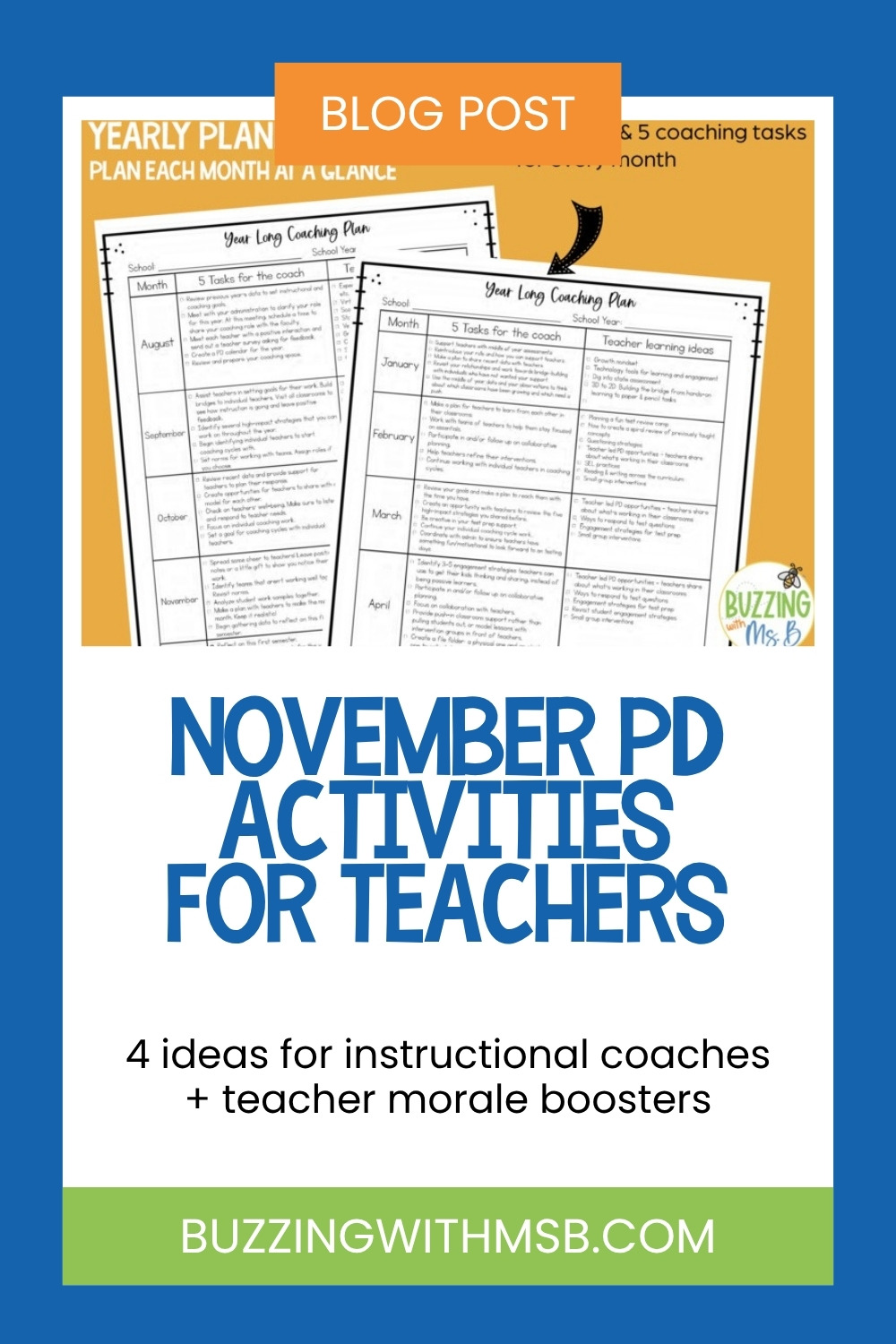
Want a month-by-month plan like this for the whole school year? It’s all in my Year-Long Instructional Coaching Planner (more on that below!).
1. Frayer Model: An Easy Academic Vocabulary PD Activity
By November, teachers are noticing something. Kids can read the words in a science or social studies lesson… but they don’t really know what they MEAN. And that’s where comprehension falls apart.
Academic vocabulary is one of my go-to PD topics for November because it works in every content area and teachers see the payoff fast. My favorite place to start? The Frayer Model.
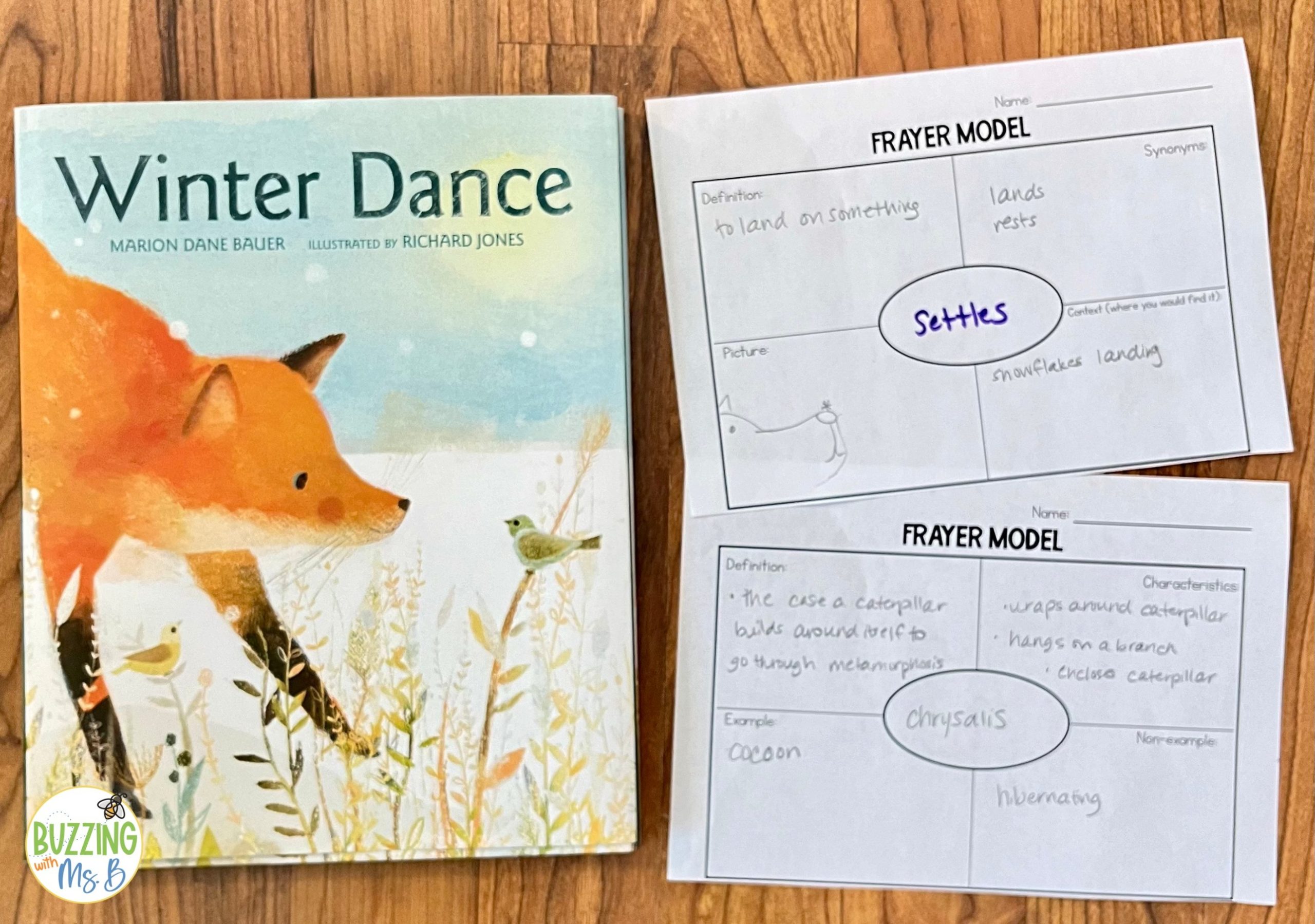
With the Frayer Model, kids define a word, then add its characteristics, examples, and non-examples. The non-examples are where the real thinking happens! Kids have to understand a word well enough to explain what it ISN’T.
The Frayer Model is flexible, too. Swap in synonyms, a picture, or where you’d find the word. Here it is with settles, a word from the read aloud Winter Dance by Marion Dane Bauer, and chrysalis, a science word:
How to Use the Frayer Model in Your PD
Have teachers complete a Frayer Model together, then make one with a word from THEIR next unit. They walk out with a vocabulary activity they can use tomorrow. Want even less prep? Put it in a Little Box of PD so teachers can learn it on their own time, with a quick guide and a BINGO board to keep things fun.
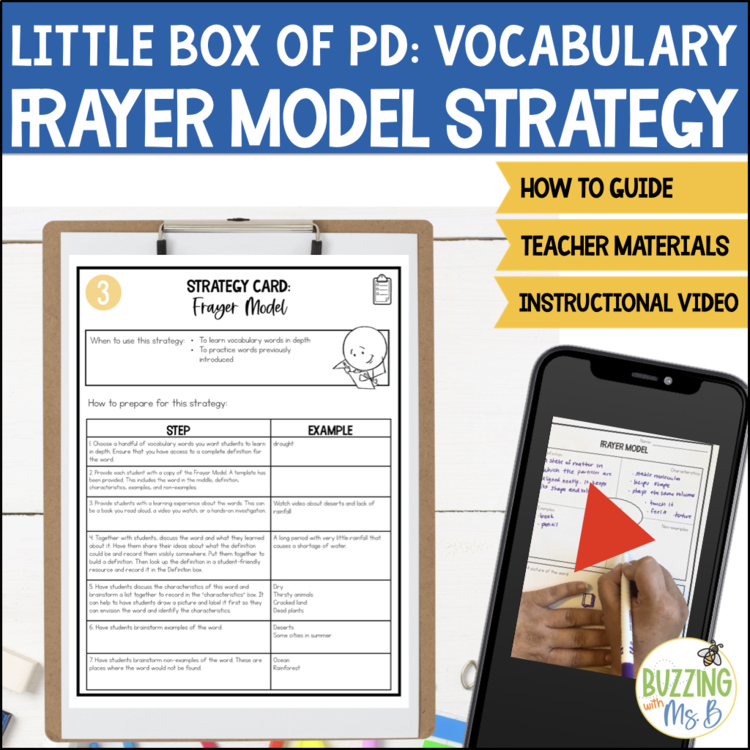
Grab the Frayer Model Little Box of PD Toolkit and you’re ready for your next PD!
Looking for more vocabulary strategies to share with teachers? Read my tips and tools for teaching vocabulary.
2. Look at Student Work Samples Together in PLCs
This is one of my favorite November PD activities because it changes the conversation completely.
Instead of talking about kids, teachers look at what kids actually DID. It leads to rigorous conversations about instruction and student progress, and it keeps everyone grounded in real evidence.
- Choose one assignment every teacher on the team gave.
- Agree on norms for looking at work (we’re looking at the work, not judging the teacher!).
- Use a rubric to sort samples and look for common strengths and needs.
- Decide on ONE next step for instruction, and plan when you’ll look again.
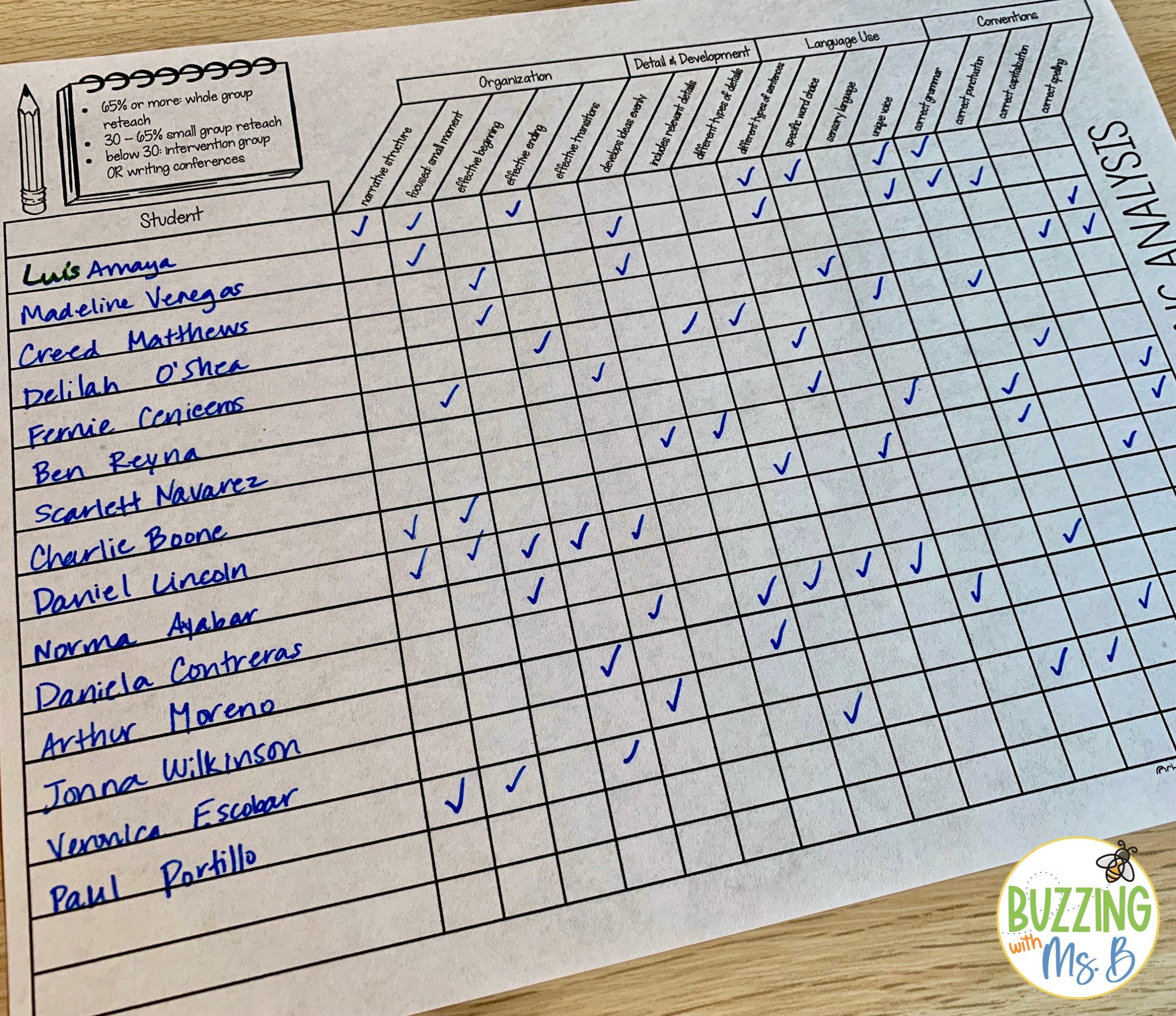
A simple rubric analysis sheet makes that last step SO much easier. List each student, mark their writing against each skill on the rubric, and look for patterns across the class. Then use the numbers to decide what’s next:
- 65% or more of the class: whole group reteach
- 30-65%: small group reteach
- Below 30%: intervention group or writing conferences
How to Use Student Work Samples in Your PD or PLC
Model the process with a set of work samples first, then let teams try it with their own. Writing samples are perfect for this because the rubric gives teachers a common language.
Running data meetings this month too? The Thanksgiving Data Dig Slides add a little fun to November data PLCs.
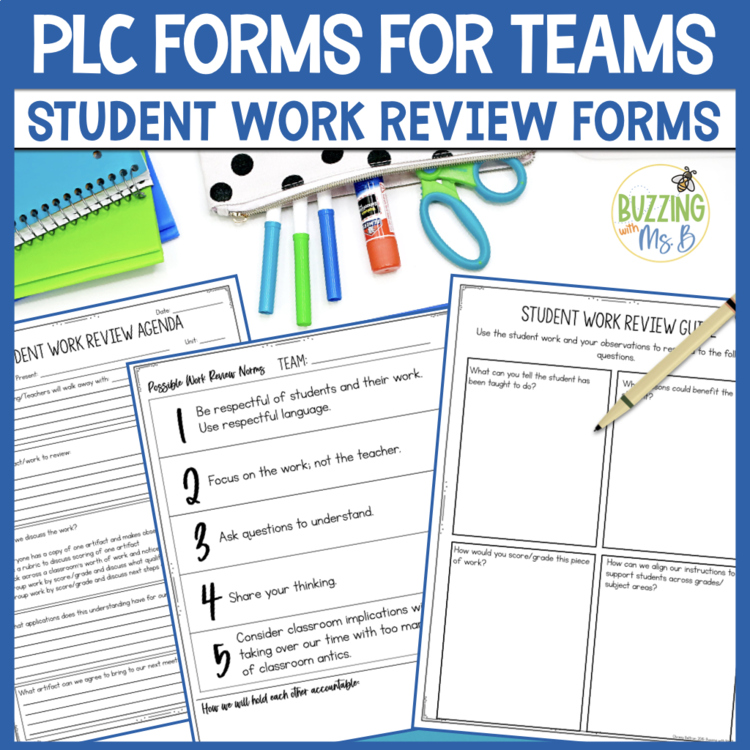
Get the PLC Forms for Looking at Student Work Together, or use the Literacy Coach PLC Forms for Reviewing Student Writing for writing samples.
3. Revisit PLC Norms When Teacher Teams Aren’t Working
By November, you know which teams are clicking… and which ones aren’t.
Maybe one person does all the talking. Maybe meetings start late and end with nothing decided. Maybe the team has quietly stopped following the norms they made in August.
November is a great time to revisit norms. Ask the team which norms are working, which ones aren’t, and how they’ll hold each other accountable. Then look at the meetings themselves: does every meeting have a clear purpose? Do teachers know what they’re walking away with?
Need examples? Read PLC norms examples for teachers and how to create norms your team will keep. And if your teams just aren’t on the same page, listen to 5 things to do if your teacher teams aren’t aligned.
4. Exit Tickets PD Activity: November’s Instructional Coaching Club Toolkit
This one comes straight from November’s PD Toolkit inside Instructional Coaching Club, and it’s perfect for this time of year.
Teachers are drowning in data right now. Exit tickets give them a quick check on what kids actually learned TODAY, so they know what to reteach tomorrow instead of waiting for the next benchmark.
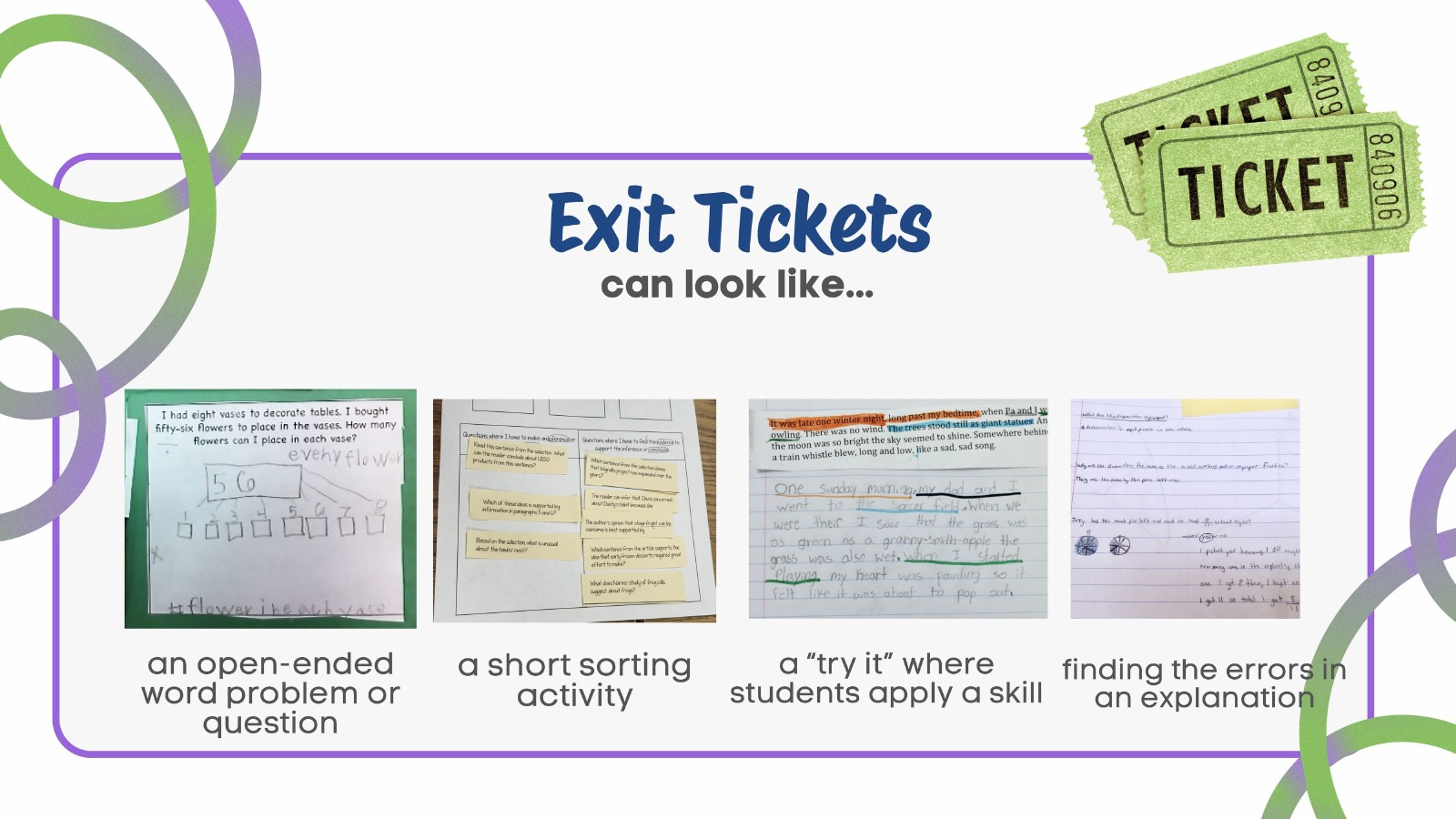
Here’s the big idea: a strong exit ticket matches the learning target. Then teachers USE the results. Sort the tickets into three piles (not yet, some mastery, got it!) and plan small groups or a quick reteach from there.
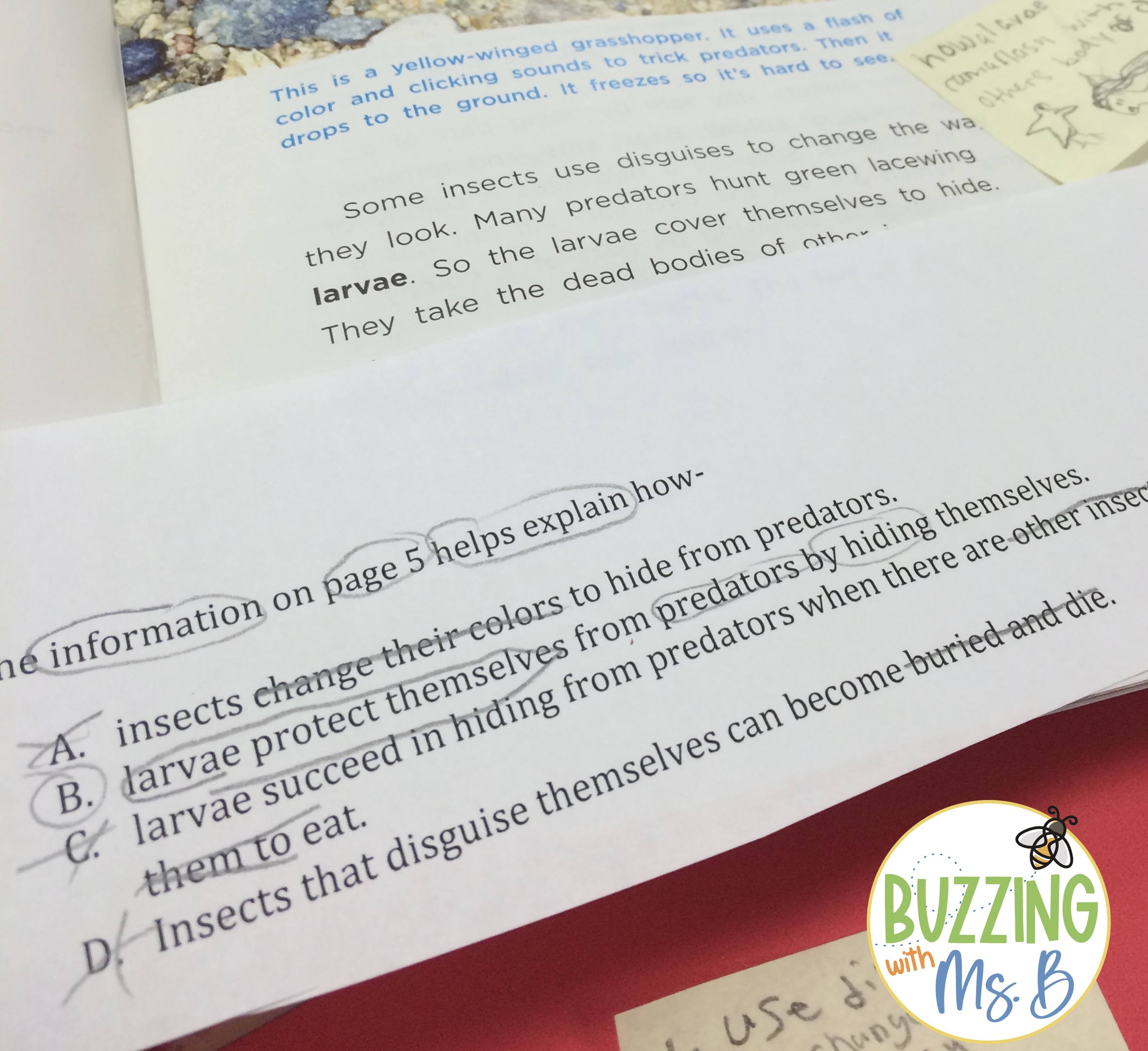
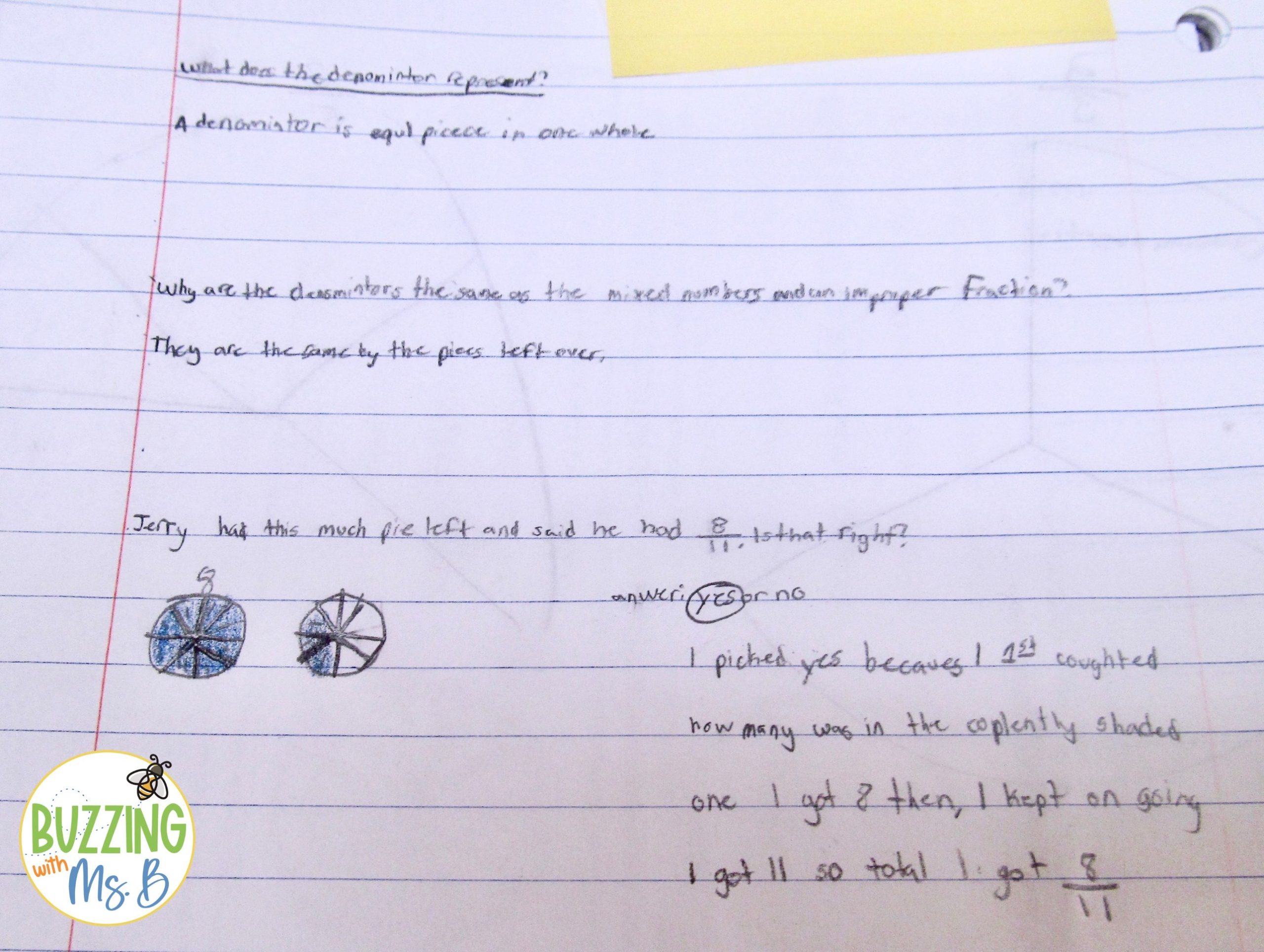
Exit tickets look a little different in every content area. In reading, kids might answer a question and prove it with the text (crossing out the answers that don’t fit!). In math, an open-ended question like “Is that right? How do you know?” shows you exactly how kids are thinking.
How to Use Exit Tickets in Your PD
Give teachers a few learning targets and a stack of exit tickets, and have them match each target to the ticket that checks it. The conversation about what alignment REALLY looks like is where the learning happens! And yes, end your session with an exit ticket of your own. For more quick checks for understanding, listen to formative assessments: quick and easy check-ins.
Club members can grab the full November toolkit, with slides, a strategy guide, and exit ticket templates ready for your next PD or PLC meeting. Join Instructional Coaching Club to get it, plus a brand-new toolkit every month!
Easy November Morale Boosters for Teachers
Teachers are at a low point in November. Let them know you notice how hard they’re working!
- Leave a note. A quick, specific sticky note on a teacher’s desk takes 30 seconds and can turn a whole day around.
- Share a little gratitude. It’s Thanksgiving month! Put up a gratitude wall in the workroom where teachers can thank each other.
- Bring a small treat. Coffee, snacks, or a little gift with a note that says “I see you.”
- Help teachers support each other. Pair teachers up to share one thing that’s working in their classrooms.
A Fun November Treat: Thanksgiving Snack Mix
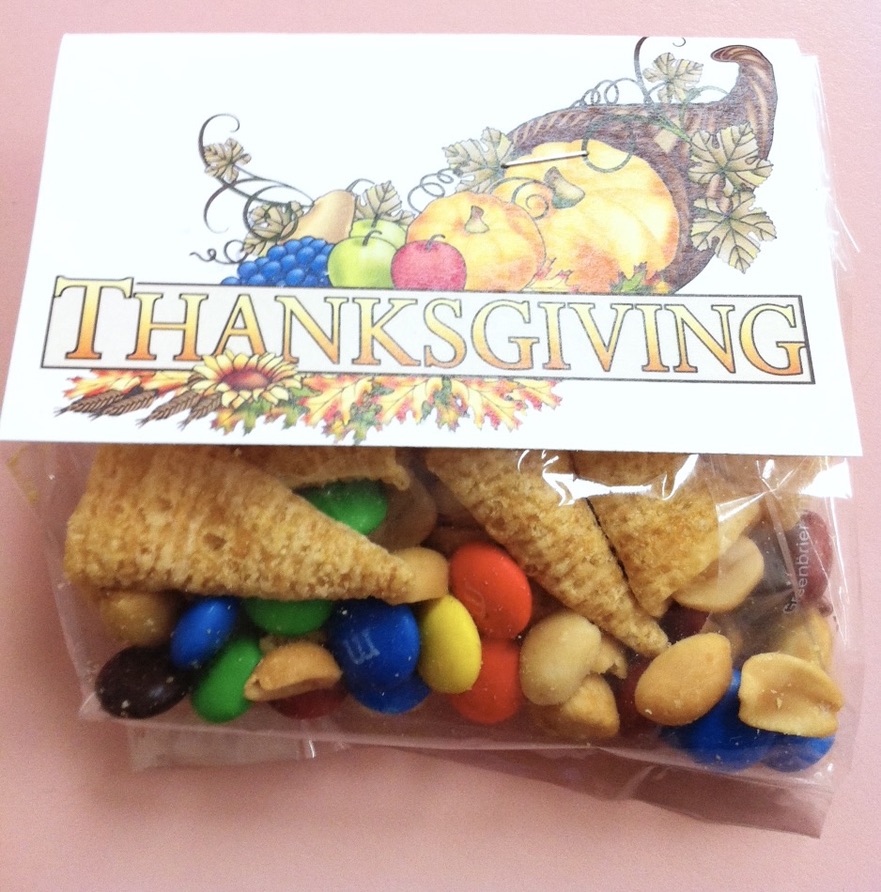
Want an easy treat that feels festive? Make a big batch of Thanksgiving snack mix! Bugles look like little cornucopias, so they’re perfect for November. Toss them with whatever you have: pretzels, Chex, popcorn, peanuts, candy corn, or M&Ms.
Then pick your style:
- Bag it up. Scoop the mix into little treat bags, staple a Thanksgiving topper on each one, and leave them in teachers’ boxes or on their desks.
- Make it a snack bar. Set out one BIG bowl, a few scoops, and a stack of fall treat bags, and let everyone fill their own. Bonus: teachers get a few minutes to chat while they scoop!
Tip: If anyone on your staff has a nut allergy, skip the peanuts or label the bags.

Want a whole year of ideas? Listen to my monthly morale boosters for teachers episode.
Gather Teacher Feedback for Your Fall Semester Coaching Reflection
One more November task: start collecting data to reflect on your first semester.
Think about how you approached your coaching goals and your relationships with teachers. Then ask teachers directly with a quick survey about your coaching, PD, PLCs, and team meetings. What helped? What didn’t? What do they want more of in the spring?
The Teacher Feedback Surveys for Instructional Coaches include 19 surveys in printable and Google Forms versions, so you don’t have to write them from scratch. For more ideas, listen to Reflecting on Your Fall Semester of Instructional Coaching.
Plan Monthly PD Topics With a Year-Long Instructional Coaching Planner
Wondering how I know what teachers need in November? Every month has a pattern. Teachers feel different in August than they do in November, February, or May.
When you know what’s coming, you can plan PD that meets teachers right where they are instead of scrambling every month.
That’s exactly why I made my Year-Long Instructional Coaching Planner. The PD topics and coaching tasks in this post come straight from its November pages! With the planner, you’ll:
- ✔ Know what teachers are feeling each month and how to support them
- ✔ Have possible PD topics ready for every month of the year
- ✔ Follow monthly coaching task checklists so nothing slips through the cracks
- ✔ Focus on your “Big 3” each month with editable calendars
- ✔ Track your PD, PLC meetings, and coaching cycles
- ✔ Reflect at the beginning and end of every month
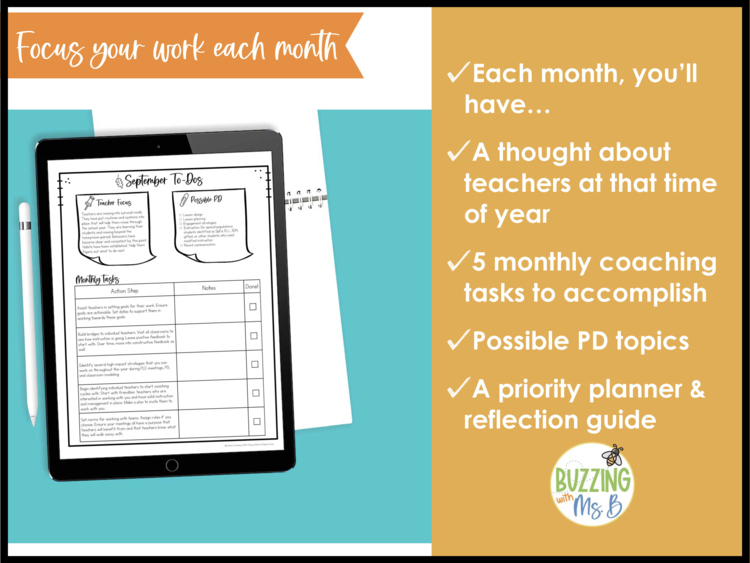
Get the Year-Long Instructional Coaching Planner here! Want a peek inside first? Read more about the instructional coaching planner’s monthly checklists, PD topics, and calendars.
More Professional Development Ideas for Instructional Coaches
- 5 No-Prep Professional Development Ideas for December
- Why You Need a Proactive PD Calendar as an Instructional Coach
- How to Make PD Extra Special and Fun with Jessica Whittaker
- PD and PL Strategies That Turn into Learning with Toni Rose Deanon
Get a Ready-to-Go PD Toolkit Every Month in Instructional Coaching Club
Coaching is hard. Planning PD from scratch on top of everything else? Exhausting.
That’s why I created Instructional Coaching Club. Every month, club members get a brand-new PD Toolkit with slides, a strategy guide, discussion cards, and a “My Plan” handout, ready for your next PD or PLC meeting. It’s my way of giving you your evenings back.
Join Instructional Coaching Club here!

November is hard. But with a realistic plan and professional development activities for teachers that actually help, you and your teachers can finish the semester strong. Happy coaching! 🐝
Grab the FREE Mix-Pair-Share PD Toolkit
Want to try a ready-to-go PD Toolkit before you join the club? Grab the Mix-Pair-Share Toolkit for FREE! You’ll get the slides, strategy guide, challenge cards, and planning pages for your next PD or PLC meeting.