PLC Norms Examples for Teachers + How to Create Norms Your Team Will Keep
Do your teams think “on the same page” is a bad word?
We’ve all been in that PLC meeting. One person is grading papers. Two people are having a sidebar conversation about the holiday party. Someone else is answering emails. And the meeting ends with… nothing. No plan. No next steps.
It’s rough.
Here’s the thing: that doesn’t mean your teachers don’t care. It usually means the team never agreed on how they would work together.
That’s where PLC norms come in. And the middle of the year is the PERFECT time to create them or give them a refresh.
What Are PLC Norms?
PLC norms are the agreements a team makes about how they will work together. They’re not rules handed down from the principal (or the coach!). They’re commitments the team creates and keeps together.
Strong teams decide how they will work together, make commitments, and keep those commitments. That’s it. That’s the whole idea.
Why PLC Norms Matter More Than You Think
When a team doesn’t have norms, a few things happen. Every. Single. Time.
- The loudest voice runs the meeting.
- Quiet teachers stop sharing (and you lose their GREAT ideas).
- Meetings drift into venting sessions or logistics about field trips.
- And you, coach, turn into the referee.
Ugh. Nobody wants to be the referee.
Norms change that. When the TEAM writes the norms, you’re not the bad guy for redirecting a conversation. You’re just helping everyone do what they already agreed to do.
So instead of awkwardly trying to get the meeting back on track, you can say something like, “I notice we’re having trouble with norm #3 today. Let’s try to stick to our agenda.” Kind. Clear. Done.
Norms also build something we don’t talk about enough: trust. Teachers who know how the meeting will go are a lot more willing to bring real problems from their classrooms. And that’s when PLCs actually start to help kids.
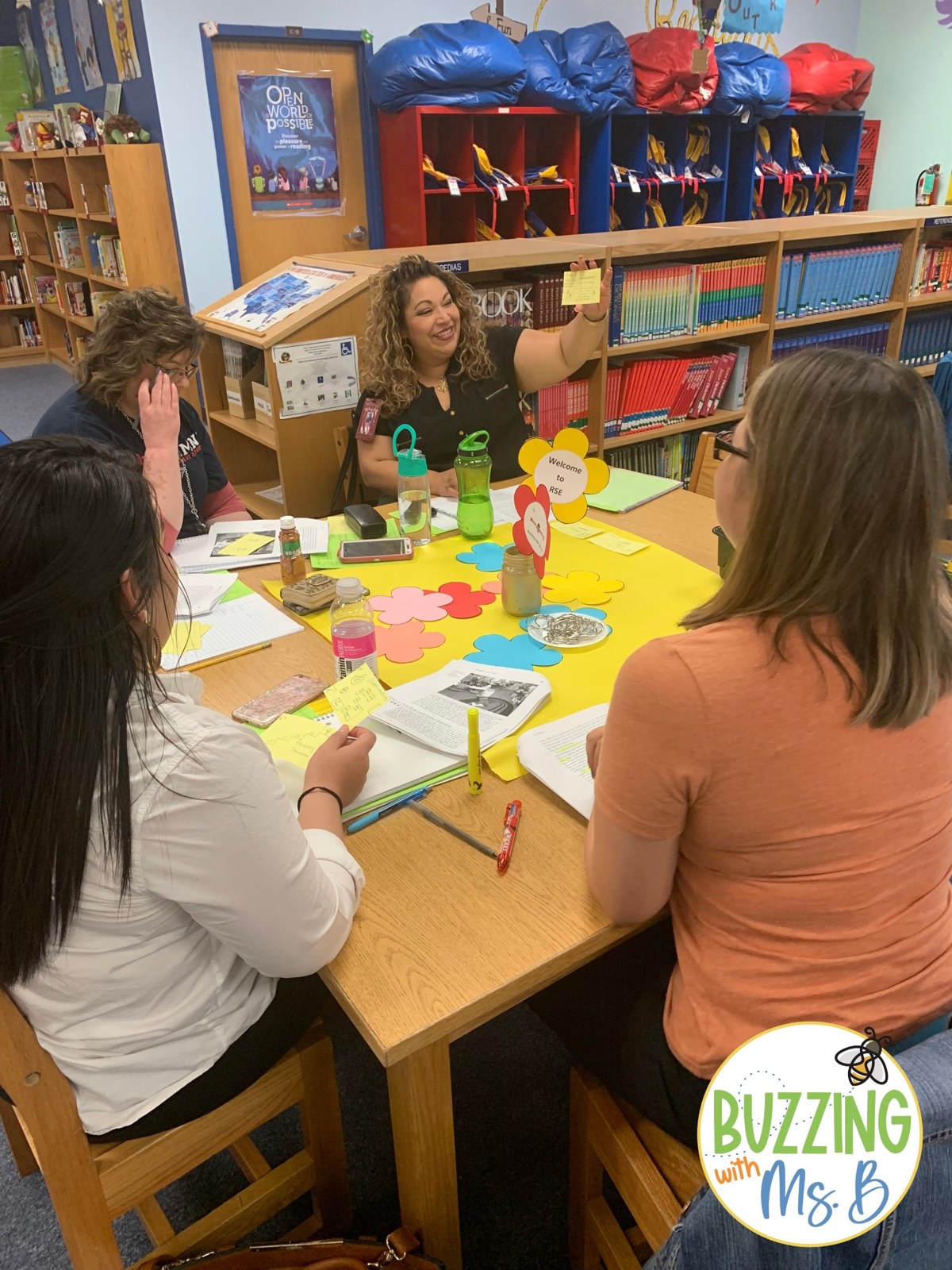
Why January Is the Best Time to Reset Your PLC Norms
By December, a lot of teams have drifted. The norms they wrote in August are buried in a binder somewhere. (If they wrote any at all!)
Coming back from winter break is a natural fresh start. Teachers are rested (ish), and everyone is ready to finish the year strong.
So plan your norms meeting now, in December, and run it in January. Future you will be SO grateful.
PLC Norms Examples for Teachers
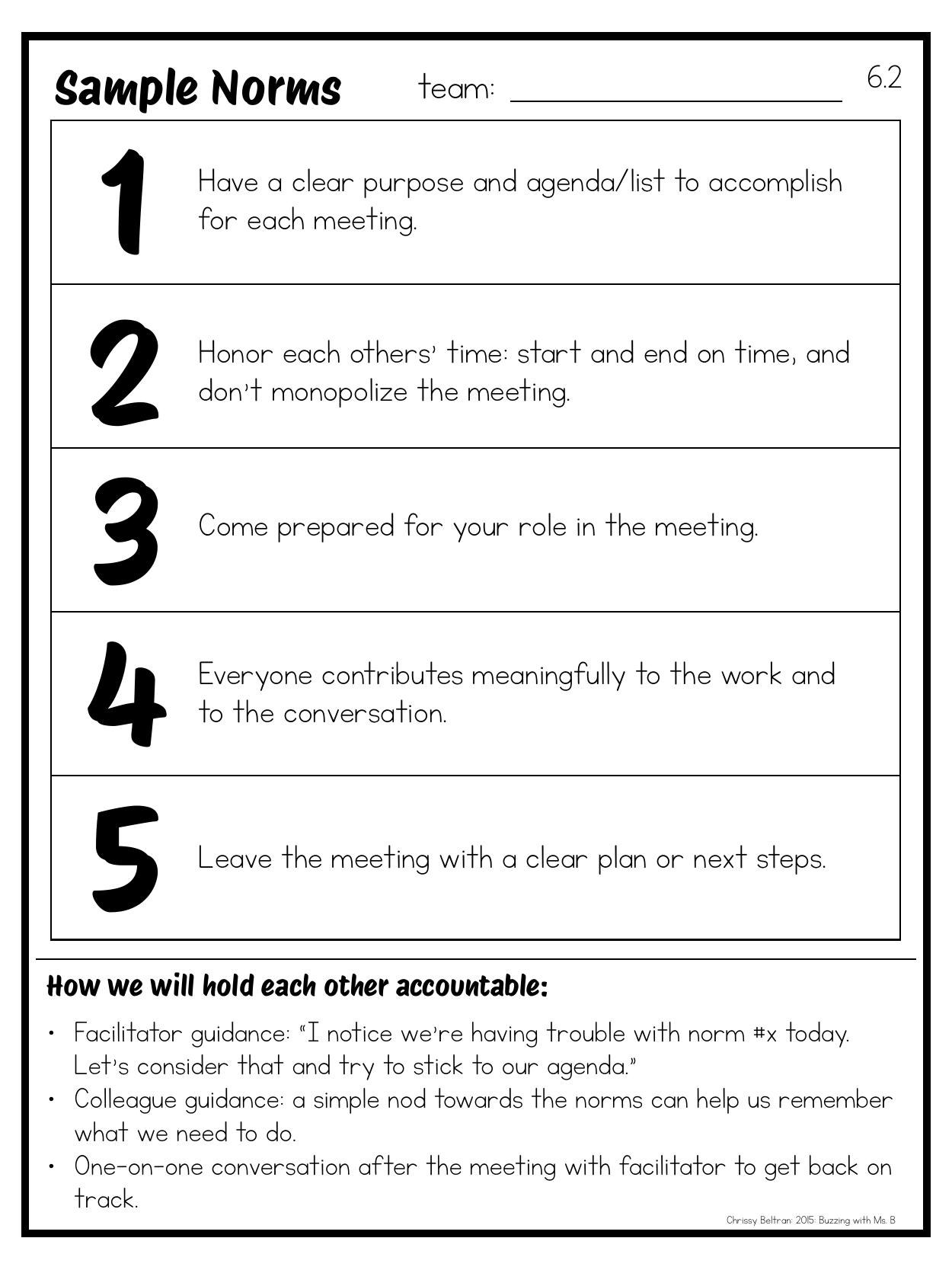
Here’s a set of sample norms from one of my teams:
- Have a clear purpose and agenda/list to accomplish for each meeting.
- Honor each other’s time: start and end on time, and don’t monopolize the meeting.
- Come prepared for your role in the meeting.
- Everyone contributes meaningfully to the work and to the conversation.
- Leave the meeting with a clear plan or next steps.
Now, here’s the big but… don’t just copy these and hand them to your teams.
How do I know? Because norms someone else wrote end up on a poster on the wall. Norms a team writes together actually get used. The magic isn’t in the list. It’s in the conversation the team has to get there.
How to Create PLC Norms: The Quick Version
Here’s the process in a nutshell:
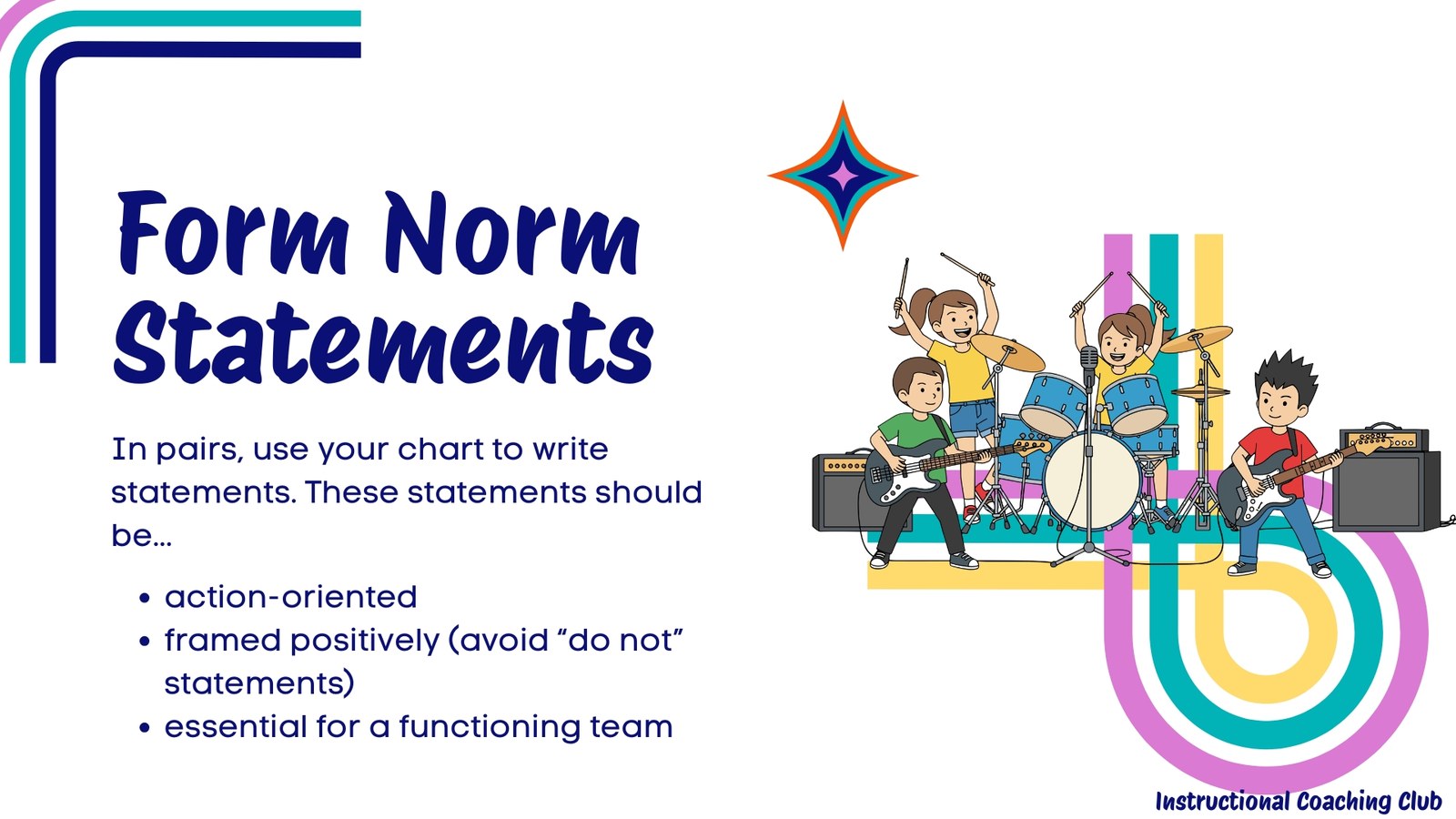
- Teams picture what a great team looks like.
- They brainstorm what they DO and DON’T want to see in their meetings.
- They turn those ideas into positive, action-oriented norm statements.
- The group agrees on the 4-5 that matter most.
- They decide how they’ll hold each other accountable (kindly!).
Sounds simple, right? It is… on paper.
In real life, it’s an hour-long meeting you have to plan, prep, and facilitate. You need slides, handouts, a way to get teachers talking before you ask them to be vulnerable, and a plan for what to do when someone (you know who) says, “We already did norms. Why are we doing this again?”
That’s a lot to pull together on top of everything else on your plate.
Don’t Forget PLC Roles!
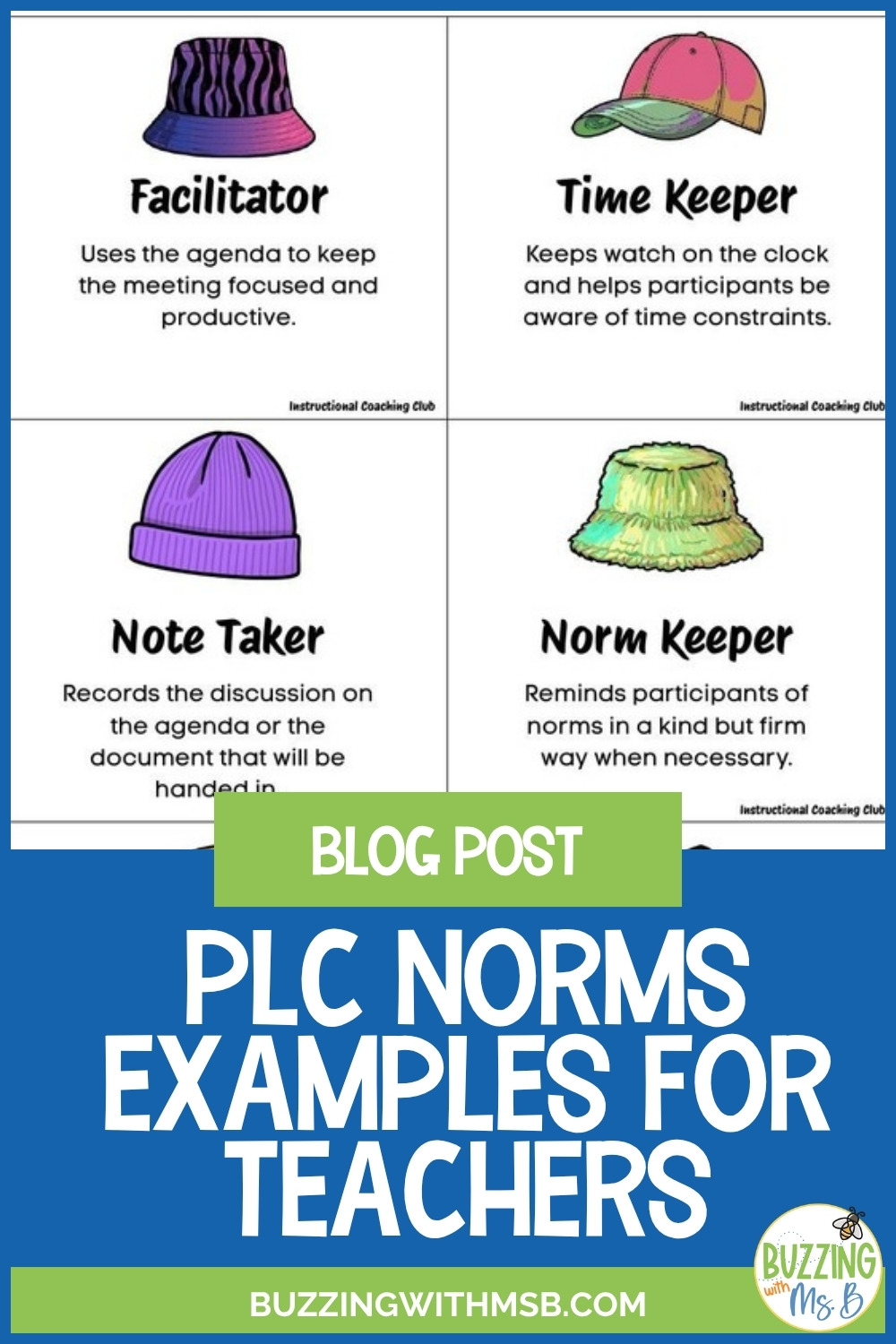
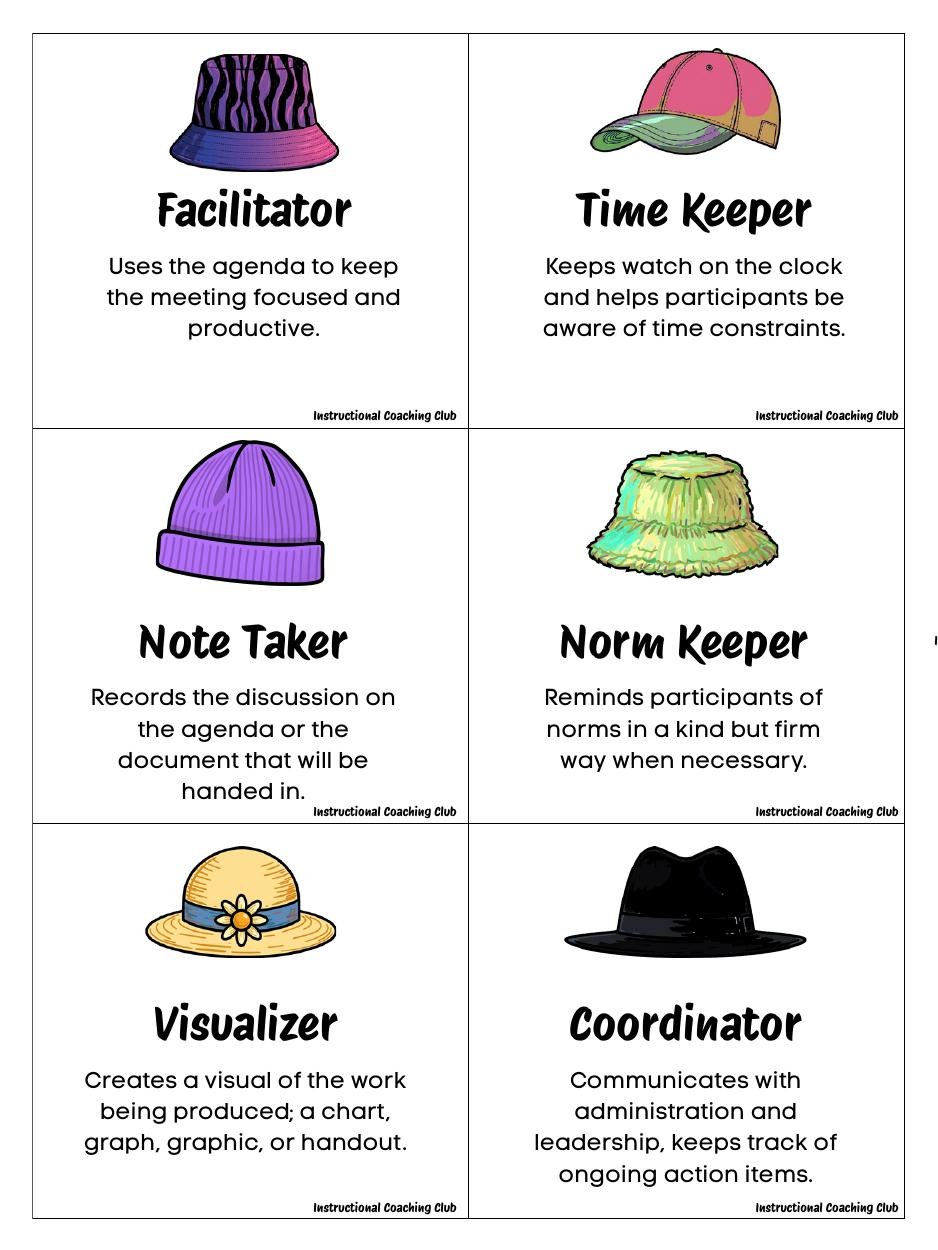
Norms tell teams HOW to work together. Roles tell them WHO is doing what. When everyone has a job (facilitator, time keeper, norm keeper, and more), it’s a lot harder to sit in the back and grade papers. 😉
Get Your Teams IN SYNC (Without Building It From Scratch)
So I made the whole meeting for you. With a 90s boy band theme, because why not? 😂
The Get Your Teams In Sync PLC Toolkit is inside Instructional Coaching Club. Picture this:
- You walk into your norms meeting with everything ready. No late nights building slides.
- Teachers are laughing in the first five minutes (instead of checking their email).
- Your teams leave with norms and roles THEY wrote, so they actually use them.
- And you get to stop being the referee. For real.
Here’s what’s inside the toolkit:
- ✔ Slides in Keynote, PowerPoint, and Google Slides, plus editable Canva templates
- ✔ Two ice breakers to get teams laughing (and talking)
- ✔ A step-by-step facilitator’s guide so you know exactly what to say
- ✔ Norm brainstorming sheets, sample norms, and a norms document
- ✔ A roles handout and printable PLC role cards
- ✔ “4 Things to Know About PLCs” to build shared understanding
And it’s not just this one. Every month, club members get a brand-new PD Toolkit, ready for your next PD or PLC meeting. Plus you get access to every toolkit that came before it!
Instructional Coaching Club is my way of giving you your evenings back, so you can spend less time building meetings and more time actually coaching.
Join Instructional Coaching Club here!
Learn more about:

More PLC Strategies for Instructional Coaches
Want more support for your teams? Check these out:
- What to Do When Collaborative Teams Aren’t Working
- Why Intentional Habits Matter for Purposeful Collaboration
- Collaborative Team Response with Kurtis Hewson
- A Ready-to-Use PLC Strategy: Mix-Pair-Share (free toolkit!)
Now go get your teams in sync. Bye, bye, bye! 👋