| | | | | | |

Expand Your Coaching Toolbox Success Stories with Gina Armstrong (Throwback), ep. 299

Instructional coach standing and smiling. These title of the epsiode appear at the bottom: “Expand Your Coaching Toolbox Success Stories with Gina Armstrong”

We can’t support every teacher the same way!

Instead, instructional coaches have to meet teachers where they are, offering support in different ways, times, and places.

Over the last few years, I’ve been working with coaches to apply the 20 strategies from my book, Expand Your Coaching Toolbox!, to their work. In this throwback episode, I revisit one of our Expand Your Coaching Toolbox Success Stories. I sit down with middle school instructional coach Gina Armstrong as she tells us how she’s used the tools in her coaching practice! 

Gina shares her successes and reflects on how these strategies strengthened teacher efficacy, deepened her relationships, and shaped her approach to coaching. She also explains how differentiating her support helped her meet teachers where they were and respond to their individual needs.

Want to know which strategy was Gina’s favorite? Listen to the episode to hear all her insights. Then, preorder my new book, Expand Your Coaching Toolbox!: 20 Practical Strategies That Improve Teaching and Learning, to explore all the strategies in detail! 

Expand Your Coaching Toolbox! Strategies for Success

The premise of my book is that you need more than one strategy to reach all teachers in your school! Having a range of approaches makes coaching more purposeful and effective!

During the episode, Gina shares strategies she’s been adding to her coaching toolbox. Below are a few with a brief explanation. My goal is to give you new ideas and tools you can try with your team.
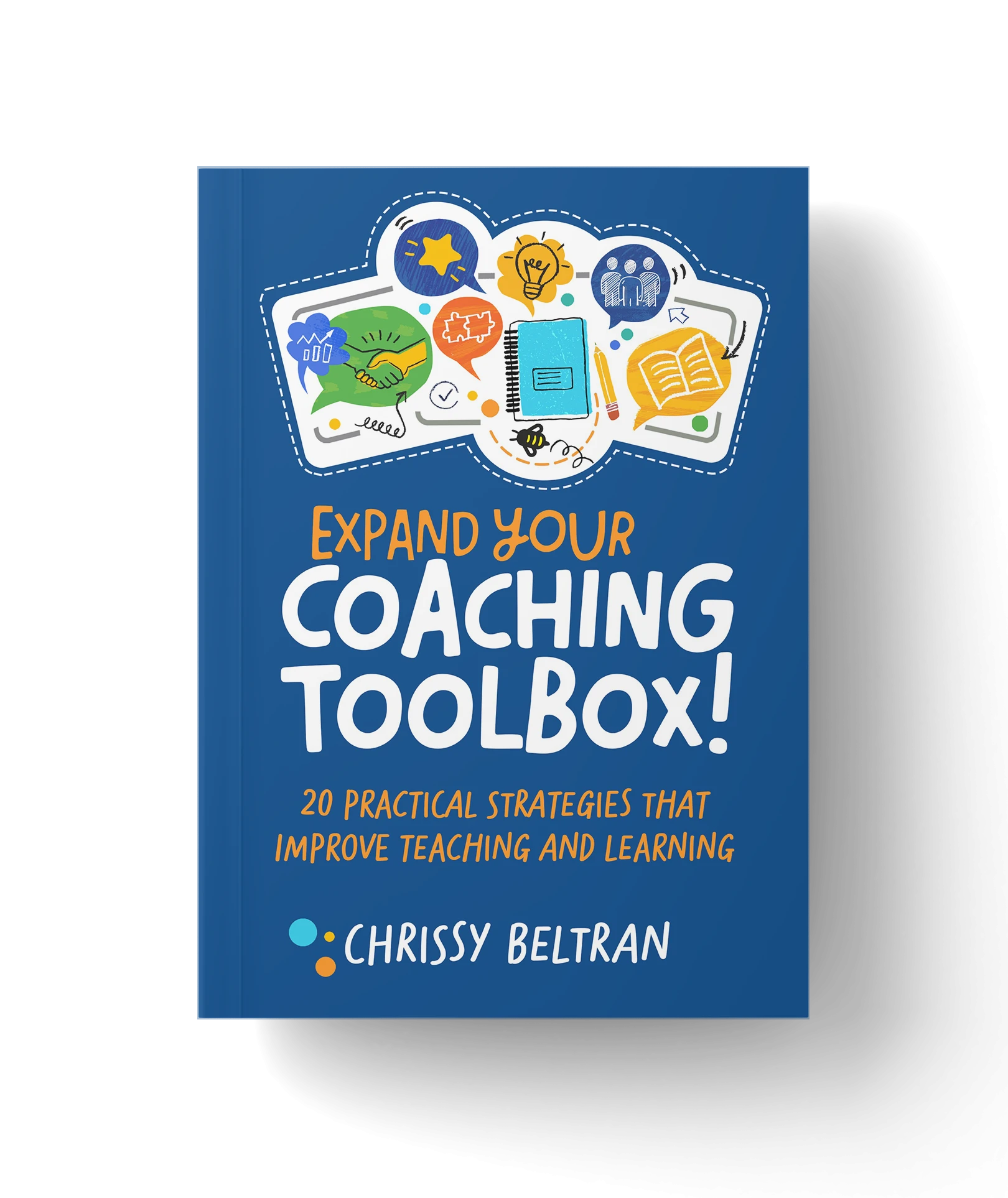
If you’re looking for more ways to support your teachers, you’ll find all of these strategies in my new book, Expand Your Coaching Toolbox!, available for preorder now! 

Data Review and Looking at Student Work

One thing Gina found really eye-opening was creating a checklist or “look-fors” to analyze data, specifically writing samples. Looking at student work together gave teachers a clearer picture of their students’ current levels and helped the coach provide more targeted, meaningful instructional support.

I write about data review and analyzing student work together in my new book, Expand Your Coaching Toolbox!: 20 Practical Strategies That Improve Teaching and Learning! Pre-order your copy today!

Video Coaching

At the time, Gina’s school was focusing on classroom behavior reset, and she found video coaching was immensely powerful, especially for new teachers. When teachers watch themselves on video, they notice things they might otherwise miss and get a clearer picture of what’s really happening in their classrooms. It’s also encouraging because teachers see the things they’re already doing well. Gina says that video coaching opens up a treasure box of things to discuss.

Chapter 20 in my upcoming book, Expand Your Coaching Toolbox!: 20 Practical Strategies That Improve Teaching and Learning, explains video coaching in depth!

Watch episode 299: Expand Your Coaching Toolbox Success Stories with Gina Armstrong (Throwback)

Book Study

During the episode, Gina shares how she used a book study to help a teacher build resilience and grow as a teammate and leader. Together, they read Onward to learn about resilience and how to navigate change.

Want to learn how to start a book study with an individual teacher or your teacher team? Check out chapter 13 of Expand Your Coaching Toolbox!: 20 Practical Strategies That Improve Teaching and Learning!

Observation and Feedback

Gina explains that there are many strategies in her toolbox that improve instruction, from analyzing student work to video coaching. But the one strategy she finds most impactful is observation and feedback!

She says that using my Classroom Observation and Walkthrough Forms allowed her to see things from a new perspective and gave her a focus. It also helped her not to feel overwhelmed!

Chapter 18 in my new book, Expand Your Coaching Toolbox!: 20 Practical Strategies That Improve Teaching and Learning, is all about classroom observations.  Pre-order your copy today!
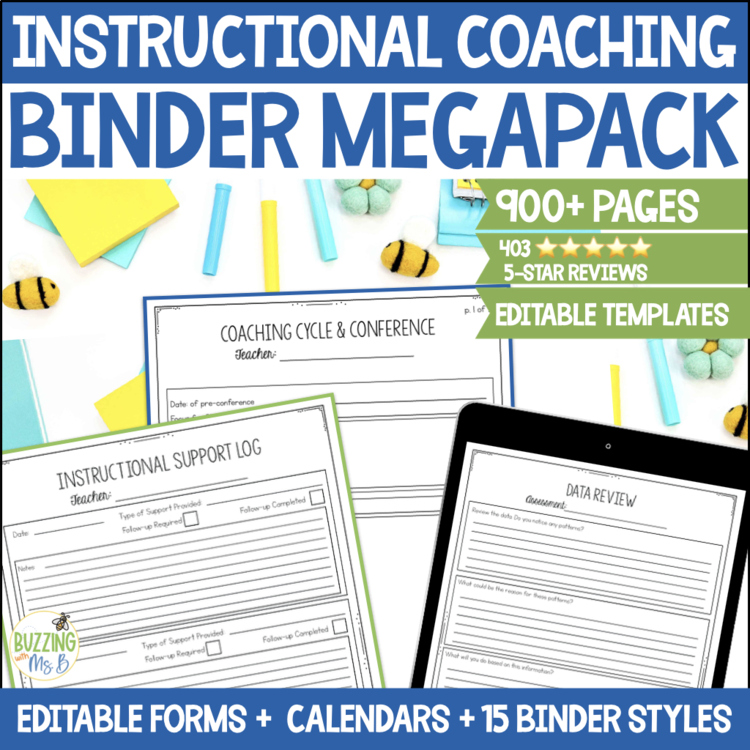
Instructional Coach Binder Megapack of editable forms, calendars, and planning tools

Be ready for anything with the Instructional Coaching Editable Binder Megapack!

It includes forms, templates, and everything you need to get organized for instructional coaching! Coach teachers and document your coaching work with these printable and editable tools. Grab the Instructional Coach Binder Megapack in my Store!

Being a Sounding Board

Too often, we find ourselves hearing the same concerns from teachers over and over. Before long, these conversations can leave you feeling overwhelmed and wondering if your work actually makes a difference!

When Gina heard a teacher complain or express a concern, she acknowledged it and then worked with the teacher to identify actionable next steps. By reframing these discussions, Gina moved beyond simply being a sounding board and helped teachers think through challenges and develop solutions. 

This is how Gina turned a low-impact strategy into high-impact coaching, helping teachers turn their frustration into action!

You can learn all about being a sounding board and mini coaching cycles in my new book, Expand Your Coaching Toolbox!: 20 Practical Strategies That Improve Teaching and Learning! Get your copy now!

Using a Variety of Coaching Strategies

Instructional coaches need to be responsive to what teachers need!

Instead of trying to provide support that looks the same for all teachers, we need to differentiate for their current needs and place. This makes coaching work more meaningful for both the teacher and the coach. 

Gina says expanding her coaching toolbox allowed her to try different things with teachers, customizing her approach depending on the individual needs. Gina explains that using a variety of strategies to respond to different teachers’ needs was helpful for her because it made her expand on what she could and couldn’t cover.

My new book, Expand Your Coaching Toolbox!: 20 Practical Strategies That Improve Teaching and Learning, is now available for pre-order. If you’re looking for practical ways to work with teachers, respond to their individual needs, and move beyond coaching approaches that haven’t worked in the past, this is the book for you! I really think you’re going to love it!

Expand Your Coaching Toolbox! book by Chrissy Beltran - 20 practical strategies for instructional coaches

Expand Your Coaching Toolbox Success Stories: Gina’s Final Thoughts

Here are Gina’s favorite tips to help expand your coaching toolbox!

  • Take time to reflect daily.
  • Find support: Lean on your family, friends, co-workers, and the Instructional Coaching with Ms. B Facebook Group.
  • You can’t fix everything, but you can do a lot to help your teachers grow.
  • Your job is to support teachers by providing resources, collaborating with them, and checking in on their progress.

Be sure to listen to the episode to hear the full story of how she used the strategies in Expand Your Coaching Toolbox! to help her teachers grow and thrive! You’re going to love this conversation!

Topics and Questions Discussed in Episode 299 – Expand Your Coaching Toolbox Success Stories with Gina Armstrong (Throwback) 

This episode is a replay with a new introduction. You can find the original show notes for episode 213 here. This post is focused on the strategies Gina discussed and how they connect to my upcoming book, Expand Your Coaching Toolbox!: 20 Practical Strategies That Improve Teaching and Learning.

Turning Insight Into Action: Practical Steps You Can Take After Listening

Here are simple actions you can take today:

1️⃣ Pre-Order Expand Your Coaching Toolbox!: 20 Practical Strategies That Improve Teaching and Learning

If today’s episode resonated with you, you’re going to love what’s coming in my new book, Expand Your Coaching Toolbox!: 20 Practical Strategies That Improve Teaching and Learning. The entire book is built around one idea: coaches need more than one strategy to meet teachers’ needs.

Inside, I share 20 practical coaching approaches—from quick relationship-building conversations and deepening knowledge to high-impact classroom-skill building—so you can meet teachers where they are and make every coaching interaction count. It’s a really great guide that you can go back to over and over again. Check it out!

2️⃣ Join the Instructional Coaching Club!

The Instructional Coaching Club is an online membership designed to help instructional coaches improve instruction at their schools. It gives coaches the tools to go out and do it.

Ready to listen?

  • Ready to listen? You can listen below with the media player, or search for Buzzing with MS. B: The Coaching Podcast anywhere you listen to podcasts!

This post contains links to products from one or more of our advertisers. This means I may receive commissions for purchases made through links in this post when you click on links to those products. Thank you for your support!

Learn more

Helpful Resources


Listen on: Apple Podcasts, Spotify, or your favorite listening app

Expand Your Coaching Toolbox! book by Chrissy Beltran - 20 practical strategies for instructional coaches

My new book, Expand Your Coaching Toolbox!: 20 Practical Strategies That Improve Teaching and Learning, is now available for pre-order. If you’re looking for practical ways to work with teachers, respond to their individual needs, and move beyond coaching approaches that haven’t worked in the past, this is the book for you! I really think you’re going to love it!


Thank you for listening to Buzzing with Ms. B: the Coaching Podcast. Want more coaching ideas

Check me out at buzzingwithmsb.com and on Instagram @buzzingwithmsb.

If you love the show, share it with a coach who would love it too, or leave me a review on iTunes! It’s free and it helps others find this show, too. Happy coaching!

Podcast produced by Fernie Ceniceros
Expand Your Coaching Toolbox Success Stories with Gina Armstrong (Throwback), ep. 299, Instructional Coaching with Ms. B Podcast 

Chrissy Beltran 00:01
Do you have multiple calendars all over your home? One for work, one for the kids activities, and then one for meal planning? This can be so messy and it’s easy to double book yourself. Wouldn’t it be better to get everything scheduled in one handy spot? I recently found calendars by hustle sanely, and I love them. The Hustle sanely planning tools were created to equip you to build healthy habits and routines that support your life so you can prioritize your mental health and relationships as you pursue your goals. Their new 2025 collection has five planning products that will help you have your most peacefully productive year. Yet they’ve created two planners, a dated weekly planner for 2025 and a quarterly undated planner, a signature, peacefully productive Journal, the daily planning notepad and a brand new resource this year, the hustle sanely five sticky notes. I’m definitely a paper planning person, but if you prefer digital calendars, everything is available on their website too. Shop them all at hustle sanely.com

Chrissy Beltran 01:03
What’s your instructional coaching personality type? Have you ever wondered what superpowers make you a really strong coach, and what areas you could strengthen a little with a little direction? Well, now you can find out. I created the What’s your instructional coaching personality type quiz to help you answer this very question. Just head to buzzing with Miss b.com/quiz with a capital Q to take the two minute quiz and get your coaching personality type sent right to your inbox. Even better, you’ll get a playlist of podcast episodes that are hand picked just for you to help you hone your superpowers and strengthen your areas of growth. I’m so excited to share this quiz with you, so don’t wait. Go to buzzing with Miss b.com/quiz, with a capital Q, and learn so much about your coaching self.

Chrissy Beltran 01:49
Welcome to instructional coaching with Miss B, where we believe that every teacher deserves a coach, and every coach does too. I’m Chrissy Beltran, an elementary teacher who became a coach, and I had to create my own coaching program that worked. Now I teach coaches how to design their coaching programs, build a school wide action plan and use differentiated strategies to support teachers. Plus, I’ve got a special spot in my heart for literacy coaches. Now let’s dig into the Episode

Chrissy Beltran 02:15
Hey coach and welcome to episode 213 This is instructional coaching strategy toolbox success stories. This is with Gina Armstrong as my guest, and I’m so excited to share this episode with you. It’s a really good one, because Gina is just has been such a great coach to work with. This is the last episode in our theme, your coaching strategy toolbox. And so if you have not listened to the other episodes, they start back in episode 209, where I introduce low impact strategies to 10, we talk about moderate impact strategies, and then to 11, we talk about high impact strategies. And last week, we looked at differentiating and meeting teachers needs, plus leveraging, because we ABC always be coaching, and this is going to help you build your toolbox and use it with your teachers. I’m so excited to share this with you. So here’s the reason that the toolbox came about coaching teachers. It’s overwhelming, right? When every when we try to reach each teacher in the same way, we are over committing ourselves. We are stressing people out who are not ready for things we’re probably not investing enough in relationship building. So instead of trying to squeeze teachers into a mold and provide them with support that looks the same. We need to differentiate to their current needs and place, and this will make your work so much more meaningful for teachers and for you. Whenever I say that, we are not going to be able to support every teacher in the same way, this is what I’m talking about. I have known coaches who will? They have a schedule, a rotation, and they will put every teacher on the rotation, and every teacher gets worked with for a certain amount of time, and they all get a certain coaching cycle, and it’s like there’s no there’s no response to what the teachers need. We’re not being responsive in our coaching. I believe in responsive coaching. I believe that putting teachers on a rotation is not going to get you where you want to go, and I think that we need to meet teachers needs at different levels, in different ways, at different times. So this past semester, actually, this past year, I work with several different coaches to apply the strategies from my coaching strategy toolbox to their coaching work, and I invited one of these coaches here today to talk about their experience using these strategies and how it impacted their coaching, their coaching relationships and teacher efficacy, how effective their teachers are. So we’re going to welcome Gina. I cannot wait to welcome Gina with you today. So let’s welcome Gina Armstrong to the podcast. I’m so glad that you’re here today, Gina,

Gina Armstrong 04:37
I’m glad to be here today. Thank you so much for the invite. Oh,

Chrissy Beltran 04:41
definitely, yeah. So to kind of introduce yourself, I’d love to hear about a couple of things. Who do you help and how do you spend most of your time and energy as well at work? Okay,

Gina Armstrong 04:53
well, my name is Gina. I am a middle school instructional coach. I coach everyone. In the building sixth through eighth grade. So I work with all content areas, even paraprofession professionals. And this is my third year doing that at

Chrissy Beltran 05:10
this campus. Love it. Okay? And so then what? Another bonus question, actually, what is a TV or movie? A TV show or movie that you could watch every single day, like your go to

Gina Armstrong 05:20
Okay? So I couldn’t decide, because it literally is the ID channel, anything that’s on investigation, discovery. I could just leave it there all day long. Some people find that weird, but I really enjoy it. That

Chrissy Beltran 05:37
makes more sense to me than the answer that I usually get, which is reality TV? Yeah, I guess it’s kind of real. It’s like, it’s based on reality, but it’s, it’s like a very specific purpose. So that makes more sense to me, because that I can understand being curious about. Okay, so we did some work over the last couple months trying out different strategies with your teachers. And so today, I was hoping to get some, you know, some of your input about that? Hear any of your success stories, anything you had to share that went really well. And so some of the strategies that we worked with specifically, I can you know that we talked about doing you already, maybe had been using them, but maybe in a different way, or you made some adjustments. So in the process of working with teachers, you know, using these different strategies, did your thinking change about any of them?

Gina Armstrong 06:24
So working through there’s a couple that that I could talk about. One of the first ones that we talked about was some data review. And one of the things that kind of was an eye opener for me was, you know, creating a checklist to analyze certain things, because we had talked about writing specifically, having writing samples available, maybe focusing on a kid who is already able to grow, and then looking at your own students needs was, was one. The other one that I remember being very, very powerful was video. And we we talked a lot about, at that time, we were talking a lot about classroom reset behavior, you know, what to do, especially for new teachers. And the video was something that we did have the equipment for, but we weren’t, maybe using it as effectively as we could have been. So we really went after you and I talked, we really, I really dug into using some video with a few few of my teachers. Yeah. You

Chrissy Beltran 07:42
want to share a little bit about how that went, or any any good?

Gina Armstrong 07:45
Yeah. So through, after a specific teacher was videoed, we sat down with kind of a list, not really a list, but some Look Fors, and we, I asked for permission. First, you know, do you want to watch the video? Can we watch it together? Which would you rather? And he wanted to watch it together. So I watched the video ahead of time, and came up with some places where I thought we could stop, pause, and ask some questions. And it was really eye opening for that teacher to see some things. And there were even things that he pointed out that I did not kind of notate, where I was going to maybe pause. He was able to get excited about some things too, which was nice because I was working with him as a brand new teacher. Sometimes the discussions weren’t always, you know, able to look at some positive things. So he really got to get a good view of reality, of what was going on in his classroom. Really great with

Chrissy Beltran 08:50
that included the things that he already had been doing well, that maybe could recognize, and also some areas to grow. That’s really nice. I love, yes, that’s awesome, and that’s such a great way to use videos to paint that picture. Both have common touch points. It’s hard when we’re seeing things differently, and they’re like, What are you talking about? Because after the meeting or after the lesson, you’re saying, oh, when this happened, this happened. And they’re like, I don’t even remember that.

Gina Armstrong 09:14
And he said that a couple times. He said, I had no idea that was going on. And even habits of this his self he goes, he even noticed he didn’t go to certain sides of the room, or, you know, moving in certain areas. So it opened up a whole treasure box of, you know, things to talk about, and things for him to think about and reflect on that he would have never seen if we hadn’t have videoed his classroom.

Chrissy Beltran 09:44
Yeah, that’s awesome, and it gives him so much ownership. Because, like you said, he was like, Oh, wow, I didn’t know that. So yes,

Gina Armstrong 09:50
and I would, I was prepared with some stuff to talk about with him, but it really was him taking ownership and him noticing. Things which was which was nice. I love it.

Chrissy Beltran 10:02
So then, how did using different strategies you’ve already mentioned a couple that you’ve used, but I know many, many different things with different teachers. So how did using a variety of different coaching strategies help you respond to different teachers in meaningful ways?

Gina Armstrong 10:18
I think it helped me expand. It helped me expand on what I could and maybe couldn’t cover, because one another specific thing we talked about was some social emotional when teachers were getting to the point where it was like, this is a counseling session, not a coaching session. And we had talked about, maybe we could, maybe we could call it like being a better team, maybe 10 team members, that’s what I have in my notes. And then you gave me some, some some resources to kind of look at about cultivating resiliency, you know, and then getting to know what they were really feeling. That was, that was one specific thing that I can think of, that that we addressed.

Chrissy Beltran 11:15
There’s so much again. I remember that conversation. We were talking, yeah, teacher who was trying to grow in these areas, and even had expressed frustration. With herself. Yes, you know, certain things about like working as a colleague and as a team leader, I think, and yes,

Gina Armstrong 11:29
new team leader and and being basically, maybe, you know, changing the frame of what we’re talking about to, you know, developing herself as a leader. And how do you become a better team member? And then that starts with some work with you, right? And supporting yourself. Yeah, I

Chrissy Beltran 11:50
remember we talked about maybe looking at a book study or sharing with her that she could yes more about that area.

Gina Armstrong 11:57
So we we specifically picked that cultivating resiliency, because it’s like she had it, like she has it, but, but would get knocked down, you know? And we we looked at onward, and that book study where we talked about emotions and riding the waves of change, yeah, and that was kind of like, our little theme together was, like, we’re going to ride this wave of change, because that’s education, right? Like things come and we’re going to have to, like, stay on maybe not a surfboard, but it, maybe it’s a raft from a ship. It may be any of those things, what you’ve got, yeah, yes, it’s,

Gina Armstrong 12:47
it could be just some, you know, teachers make things out of everything. So it could be something people are crafty. It could be, are going to ride those waves and we’re going to overcome them and make it back to the shore. So, yeah, so together we, we read the book and, and she’s having a much more, I think she’s become more comfortable with herself as a leader, looking at, you know, letting go of some things that she didn’t need to hold on to. Awesome.

Chrissy Beltran 13:17
Yeah, I like that. And that’s that was, that was the issue. Was we were, I remember talking about it and saying, Well, how do we support somebody in this area without being counselor? That’s not certain things move into a direction that you’re like, Wow, this is not, I’m not, like, certified or able to help in this area. However, somebody might have some information that we could both learn about, right? And I think it’s that way with any area that we don’t know as much about, there’s often there’s somebody who’s an expert in the area. So Right? Even if it’s like running across the curriculum or hands on engaging science or whatever, if that’s not your forte, you can say, hey, let’s try a book study, and we can learn this together.

Gina Armstrong 13:53
Yes, and I think it was valuable that we did it together, that she saw that I was reading it along with her, you know, to show that investment in it.

Chrissy Beltran 14:06
Yeah, that’s what’s really it’s a really great way to build a relationship as well, to show that partnership that you’re willing to go the extra mile for that person,

Gina Armstrong 14:12
right

Chrissy Beltran 14:13
Yeah. So then, which strategies did you find the most impactful that you used with your teachers?

Gina Armstrong 14:20
The the I would, I would have to say, of course, we already talked about the video, the most impactful reviewing student work together, and I kind of loop that into the data review section of of you know of what we’re talking about, looking at my notes, sorry, and then the observation and feedback forms that that you had sent shared with me to use those when I’m going in the classroom as ways, you know, some some ways to look. Or in each classroom from each from a different lens, sometimes, because I am dealing with teachers that have been teaching for 25 years, and I’m dealing with some who have been this is it? This is their first year. So anything that had an impact on instruction, I think was, was really just it. It really helped me get a focus, too. So I wasn’t just scrambling, like, what am I looking for when I am in here? You know, having that toolbox of things, trying some out, some worked good. You know, some work better than others, but then just having a consistent toolbox of either forms to use or Look Fors was was really, really helpful. Yeah, that

Chrissy Beltran 15:50
makes sense. Whenever we go visit a classroom and we’re trying to give feedback from an observation, we can be really overwhelmed a lot going on, especially in those rooms with new teachers, where you’re like, where do I start? What do I focus on? You know? And so looking at something like management and really focusing on, okay, what is, you know, how many interruptions are there? How long are they taking? Looking at something like lesson alignment. Is the lesson actually aligned to what the kids are being asked to do, you know, beyond posting and learning target on the wall, like, what actually,

Gina Armstrong 16:20
right

Chrissy Beltran 16:21
Yeah, so having that lens to look through is helpful. And because I have had the same experience just being like, oh my gosh, this is where do I start?

Gina Armstrong 16:28
Right, right? Because it yes, some classrooms just called for different types of things and and what I was finding is that, you know, I couldn’t get to learning and even looking at learning in some classrooms until we we went through some classroom management type things first, and then we could start working on, okay, you know what’s happening in this class? Yeah, yeah, you’re very

Chrissy Beltran 16:53
limited on what you can do with kids. If the management is not in place, they’re not going to learn a lot. So, you know? So then in the toolbox, the strategies were kind of set up in terms of, like, low impact, moderate, like medium impact and high impact. Yeah. Were you able to leverage some of the lower impact strategies into working with that teacher in a higher impact strategy?

Gina Armstrong 17:14
Yeah, I what I was trying to do, because my, my personal goal this year was to have more coaching cycles, and we specifically talked about sounding board, you know, becoming a sounding board that that’s the one that really hit home for me was being able to when I read that excerpt that you shared with me after we had talked, and this is when we talked about wanting to crawl out of the building, you know, like dig a hole so that, so that no one could see me, leave the building or find me. But how I could, instead of feeling like always being the sounding board, how could I turn that into coaching cycles and check ins with teachers, and, you know, move teachers into things like co teaching with them, or modeling strategies. The sounding board was a life changer for me, because at that time, I was having a hard time getting past those initial conversations of, okay, you’ve, you’ve, you’ve shared with me this concern 1015, 20 times. Now let’s do now. Now, what can we do? Like, are, are you ready to take action on on it, and that that part was meaningful to me, because it allowed me to say, I don’t have to. I don’t not that my job isn’t listening because it is. But at some point it’s okay for me to say, I’ve heard you express concern about this numerous times, so it sounds like it’s really bothering you. Can we get together and work together on a solution, and that has changed my daily life as a coach. Oh, wow,

Chrissy Beltran 19:09
that’s awesome. Yeah, it is easy to feel because we’re told you have to listen, listen, listen, but then I feel like we listen, but like you’re saying, if it’s repeated, if it’s you know, if it’s a really big issue, and even if it’s a small thing, we can, we can still offer help, you know, we can still say, Well, I would love to work with you on that,

Gina Armstrong 19:25
you know, yes, and just kind of finding that line of, you know, okay, you’ve established that this is something that’s really, really, you know, bothering you. Let’s switch this conversation and turn this into something where we can, then, you know, have an impact in the classroom.

Chrissy Beltran 19:43
Yes, I love it. That makes so much sense. I remember talking to you that day about the sounding board, and you’re like, I just, I’m, I’m, it’s the same thing every day. Yeah, garage of complaints and frustrations, and we do we could feel like a dumping ground for that stuff. And so I mean, I can totally relate to that, especially in times of change, especially right now, teachers are struggling with so many bigger than their classroom issues, you know. And so sometimes we can listen to that and say, Okay, I can be a liaison. I can express concerns to the administration, because I know this is a real concern to teachers, but sometimes we can help them right in their own rooms. Yes, yeah. So what is something that you would like to leave listeners with that will help them on their way to coaching teachers, anything that you know, that you’ve learned, or something you think is really important?

Gina Armstrong 20:32
Yeah, I would say first of all, take time to reflect every single day, if you can. And I know our days are busy, but maybe have a journal and reflect on some things that happen throughout your day. I don’t know about other coaches, but I’m here by myself, and sometimes I feel like I’m on an island, and that can become a pretty heavy burden. At times. You’re you’re doing great things, but reflecting on what you’re doing, I would recommend building some time to do that, finding support, your team, your family. I’m lucky enough to have instructional coaches on other campuses that we reach out to each other, and we, you know, we we bounce things off of each other so that I have that support system as well, getting following and belonging to all the groups like how I found you. You know, because we are, we do things that not everybody else does like our, our, our job is so different than any other job in the building that you’ve gotta find with that reflection time, I would say the research time, or joining a Facebook group, or a, you know, a Twitter, if you like Twitter, you know, any of the social media groups. And then the last thing I would say is you can’t fix everything. You can help, but your biggest job is to grow people. And we’re educators. We’re educating educators, and our number one goal should be to grow people, and that’s by giving them these tools and and help partnering them, partnership with them, supporting them, coming back and checking on them. But ultimately, you know you just you can’t fix everything, but you can support and provide tools for teachers and just be a resource to them. Yeah,

Chrissy Beltran 22:45
absolutely, yeah. You might not be able. You’re not going to change every single classroom 180 but you certainly can be there for the teachers who need you when they need you, right, right? Yeah, I love it, alright. Well, thank you so much, Gina, for being here today. I really appreciate you sharing about your experience, and it was, it is so nice to talk to you. I love the way I would speak with you when you were like, This is what I’m doing. This is what I’ve tried. This is how it’s going.

Gina Armstrong 23:11
Yes, and I enjoyed our time too. I truly appreciate it, and I found it so valuable. And have put, you know, like I’ve said, I’ve put it into practice in my daily coaching. So I thank you.

Chrissy Beltran 23:25
I loved chatting with Gina. Well, I love talking with coaches. First of all, it’s one of my favorite things. Talking Shop, my favorite she had so much great experience to share about how she implemented the tools from her coaching strategy toolbox to really, truly make positive inroads with teachers. You can learn more at buzzing with Miss b.com/menu and I will send you the details about the coaching strategy toolbox right to your inbox. I hope you check it out. And next week, we’re starting our new series. We’re going to start a series all about closing the year strong to be prepared for the spring semester. We’re going to look at reflection your spring action plan and a really great strategy that you can use to grow your teachers in the spring, whenever things are getting a little bit hectic. And until then, happy coaching!

Chrissy Beltran 24:15
Now that you’ve got so much to think about, head over to buzzing with Miss b.com to grab some free downloads, become a VIB and check out the podcast. Show Notes. Happy coaching!

Share:

Similar Posts

Leave a Reply

Your email address will not be published. Required fields are marked *