
Igniting a Passion for Reading Book Study: Chapters 1 and 2
As a Literacy Coach on my campus, one of my main roles is to develop teachers’ (and my own) professional knowledge in the areas of reading and writing. I’m so excited this year about a new way I’m trying to do this: a professional book study!

Igniting a Passion for Reading Book Study for Teachers
Last year at a Book Fair, I saw this book and had to buy it.

It addresses exactly the issue we’d like to learn more about! How do we get our kids to become engaged readers who choose reading?
I read the first chapter and realized I had to share this great book with my teachers, too, so I set up an optional book study. I invited teachers to participate and my principal approved purchasing the books. After teachers told me that they were interested, we ordered the books and set our reading for the first session: Chapters One and Two. Last week, we met to discuss the first two chapters.
What Teachers Thought of the Book Study
As we settled down to discuss, one of the teachers told me, “I’m going to be honest.” (Don’t we like to say this when we think our listener won’t like it?!) “Please do!” I said.
“Over winter break, when I thought about reading this book, I looked at it and thought to myself, ‘Why did I sign up for this? I don’t have time for a book study!’ And then I made myself read the first chapter and I thought, ‘I love this book!'”
She’s not the only one I heard this from – several teachers stopped me in the hallway to tell me how much they enjoyed the book!
Yay! It’s a challenge to find a book accessible to so many teachers who are so very busy. This book was a great choice.

Here’s what we talked about during our book study!
Chapter One: The Missing Objective in the Teachers’ Reading Lesson Plans
This chapter is basically an argument for us to realize the importance of aliteracy, or people who are able to read but don’t. Layne explains that this is more of a danger and issue in America than illiteracy, as a higher percentage of people are aliterate than illiterate.
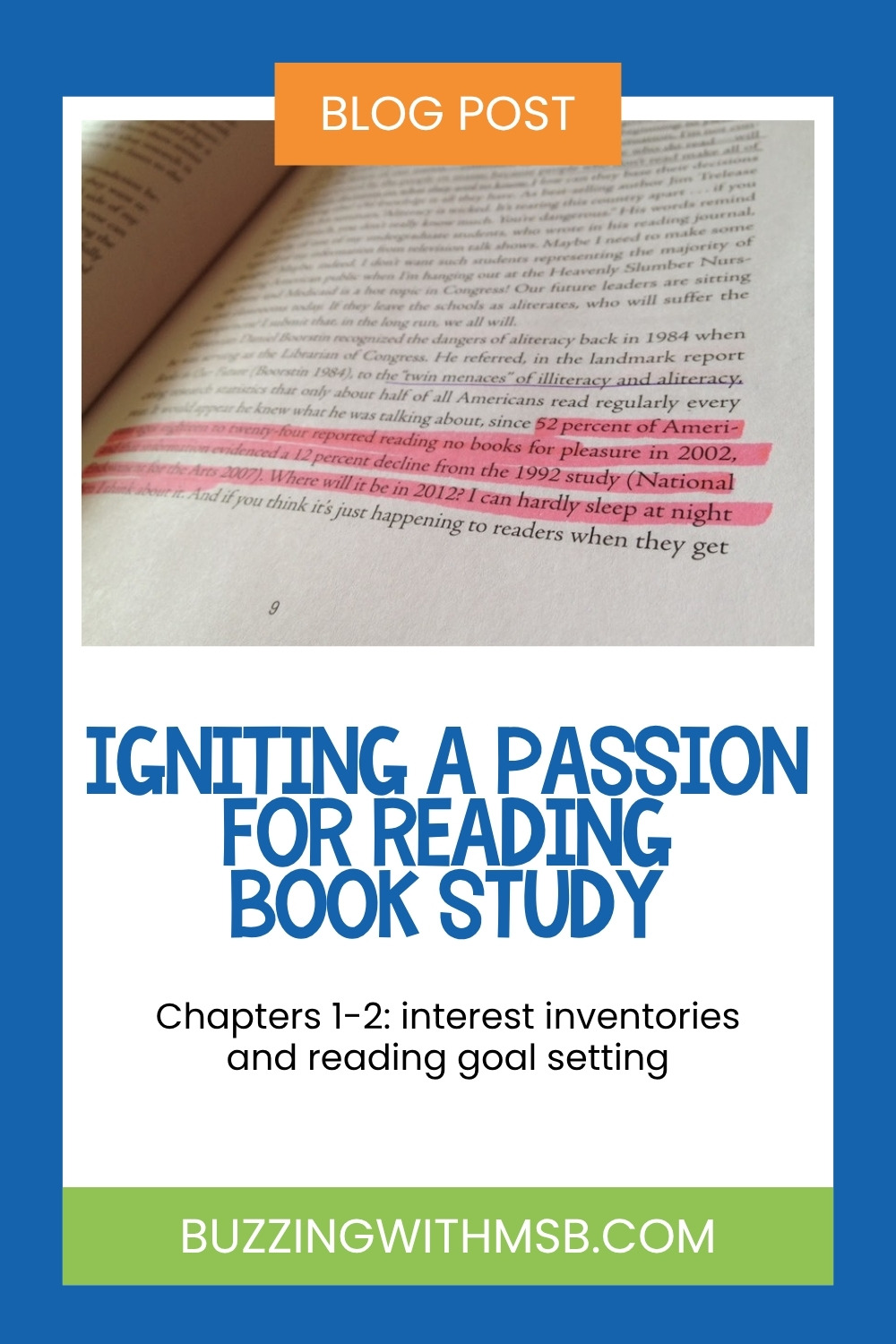
This is the quote I highlighted from that section:
52% of Americans ages 18 to 24 reported reading no books for pleasure in 2002, and that information evidence a 12% decline from the 1992 study.
What?! Over half of Americans read not one single book for pleasure in a year?! That’s surprising to me. I guess a percentage of those people are unable to read, but a large percentage must be able but choose not to. And that it’s declining is horrifying – what will that percentage look like this year? Does anyone read anymore?
Sigh.

So clearly, it’s important to not only teach kids how to read, but to engage them in reading for enjoyment.
There’s one more great quote from this chapter I wanted to share:
If you believe, as I do, that reading is a choice and that it is not humanly possible to make anyone of any age reading anything, then perhaps some time spent looking at how we can impact students in such a way that they will be more likely to make the choice to read deserves our attention.
Yes. It does. Because we are constantly engaged in the mechanics and comprehension of reading, our students do not develop the love of reading. And because at home, they are constantly engaged in the mechanics and comprehension of video gaming, soccer practice, and all other hobbies/enterprises/activities, they aren’t choosing to read. And what’s more, we can’t make them choose to read.
So what now?
That’s what Chapter Two is about.
Chapter Two: Coaches Who Know Their Players Win More Games
He’s a smarty pants, isn’t he?
It’s true. If you know your readers, you can better engage them in a book that will resonate with them. In this chapter, Layne shares a few strategies for doing this.
Reading Interest Inventories
Ok, so every year in August, I’d hand out a reading interest inventory to my kids and teach them how to fill it out. I’d collect the inventories and stick them in a folder with my other “documentation”. And then I’d forget about them. I may have pulled out one or two with my more struggling readers, but I can’t think of a time I successfully used one with my aliterate, or able but unwilling readers.
Layne explains that if we try to tackle everyone, it’s impossible. And unnecessary! Why hunt for special books for Tony when Tony reads all the time? So he suggests that we target a few students and review their surveys. And then go book shopping.

Do we have to be told twice to go shop for more books?
He goes book shopping for his disinterested readers and then hands them the book saying what he calls four magic words: “I thought of you.”
Who doesn’t want to be thought of? Often, this encourages kids to read the book you’ve shared with them, and that might be the book that helps them realize the beauty and joy of reading.
Reading Goal Setting with Students
Another strategy he writes about is setting goals. Not only does the student set goals for their reading; the teacher does as well. These goals could include how many minutes you’d like to spend reading per day or week, the genre of books you read, the number of books, or reading books by a specific author.

Then he writes his goals on a large chart and records the students’ goals on a handy sheet. This sheet is posted in the front of the room, at the back of the room, on a clipboard, on his desk, anywhere he may need it to confer with students about their progress toward goals.
As the year progresses, he follows up with individual readers about their progress toward goals in a simple, conversational way. He’ll ask about how they’re doing with reading more historical fiction and share a little about his progress toward reading more scientific texts. It’s a pleasant way at moving readers toward more mature reading decisions.
Next in Our Igniting a Passion for Reading Book Study
So that’s our first book study session. I’m so excited to meet with my teachers again this week to discuss the strategies that he shares in chapters two and three! Check back again to read more about our conversations and learning!
Keep reading the Igniting a Passion for Reading book study with our notes on chapters three and four and chapters five and six. To try a reading interest inventory with your own class, get to know your readers with a free student reading survey.
Get the Reader’s Workshop Bundle for 3rd-5th Grade
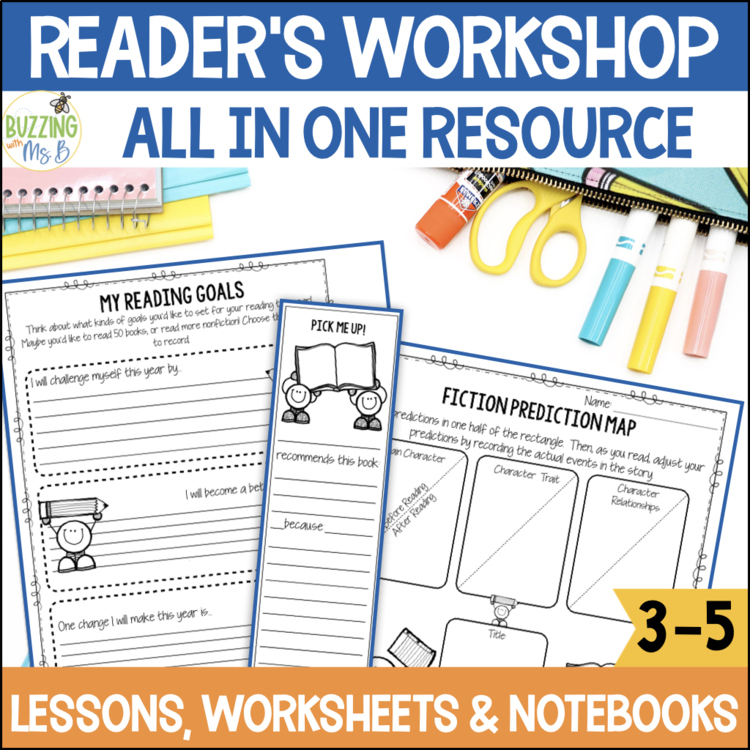
Want this ready to go? Grab the Reader’s Workshop Bundle for 3rd, 4th & 5th Grade in my shop.




Okay. This is awesome. I need to check this book out!
So excited to see this! I bought the book at our school book fair & have read a couple chapters. Seeing your blog will motivate me to keep up with it :0)
Yes! It's such an easy read, full of great tools!
Yay! Reading in a group always helps me stay dedicated too 🙂