
Nonfiction Comprehension Strategies – Making Predictions
Nonfiction Comprehension Strategies – Making Predictions
When it comes to building nonfiction comprehension skills, making predictions is a powerful strategy! It helps kids stay engaged, activates prior knowledge, and encourages critical thinking. By prompting our kids to anticipate what they’ll learn before diving into a text, we can help them make connections and better understand the material. Plus, it’s a great way to foster curiosity and keep them interested in topics that might seem less exciting at first glance! Let’s explore how we can implement this strategy effectively in our classrooms.
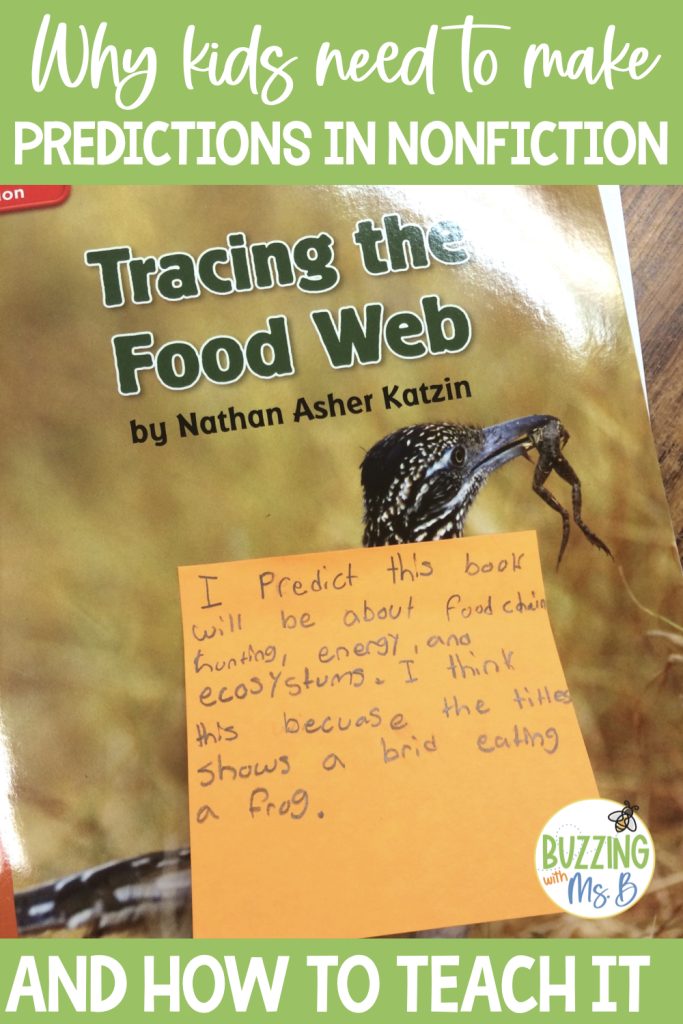
Model, model, model!
Showing kids how to make predictions before asking them to do it on their own is super important. When we model the process and think out loud, we’re giving them a clear example of how to tackle it. It helps them see what kind of clues to look for, like headings, pictures, and captions, before they start reading. Plus, it boosts their confidence because they know what’s expected. By walking them through it first, we make it easier for them to use the strategy on their own later.
First look at a text
One sentence frame I use when introducing a nonfiction text is: “I predict I will learn about ____ because ____. I think I will learn….”
When modelled, this sounds like:
- I think I will learn about their life cycle because there’s a diagram showing babies and adult bats.
- I predict I will learn about bats because all of the photos are of bats and caves.
- I think I will learn where they live because I saw a map with some countries colored in.
- I think I will learn what they eat because there is a photo of fruit and insects.
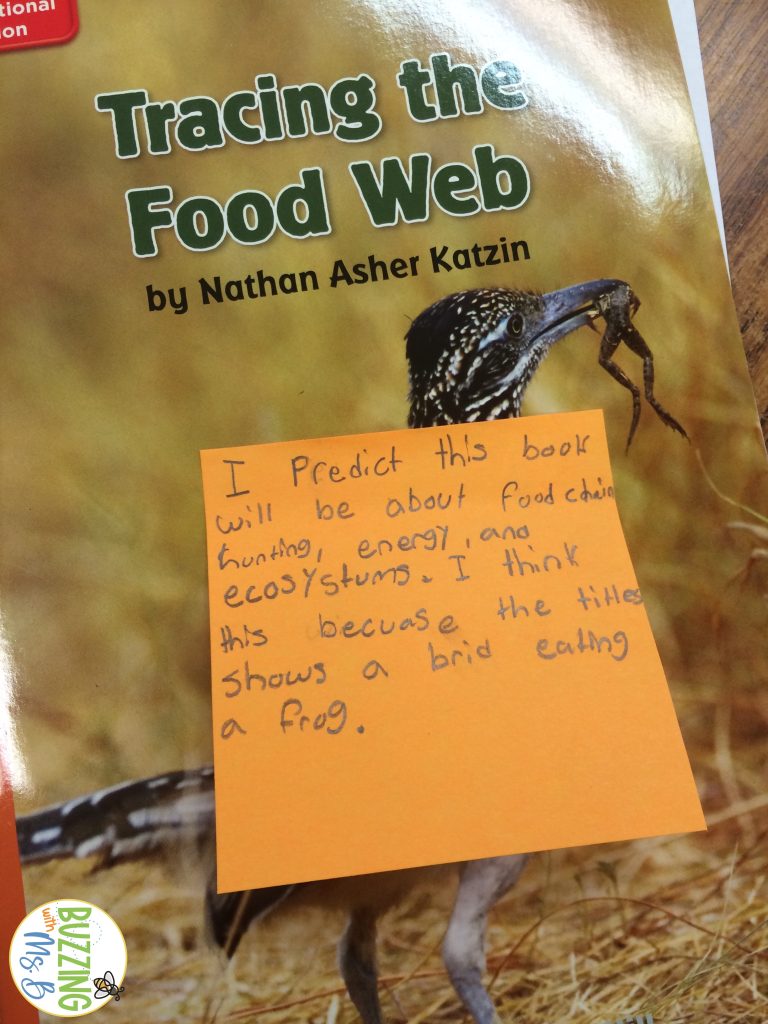
Text features
Identifying text features in nonfiction is key when helping kids make predictions. Things like headings, subheadings, bolded words, and captions offer great clues about what the text is going to be about. By teaching kids to pay attention to these features, we’re giving them tools to better understand the content before they even start reading. It’s like giving them a roadmap—they can use these hints to make more accurate predictions and get a clearer sense of what’s coming next.
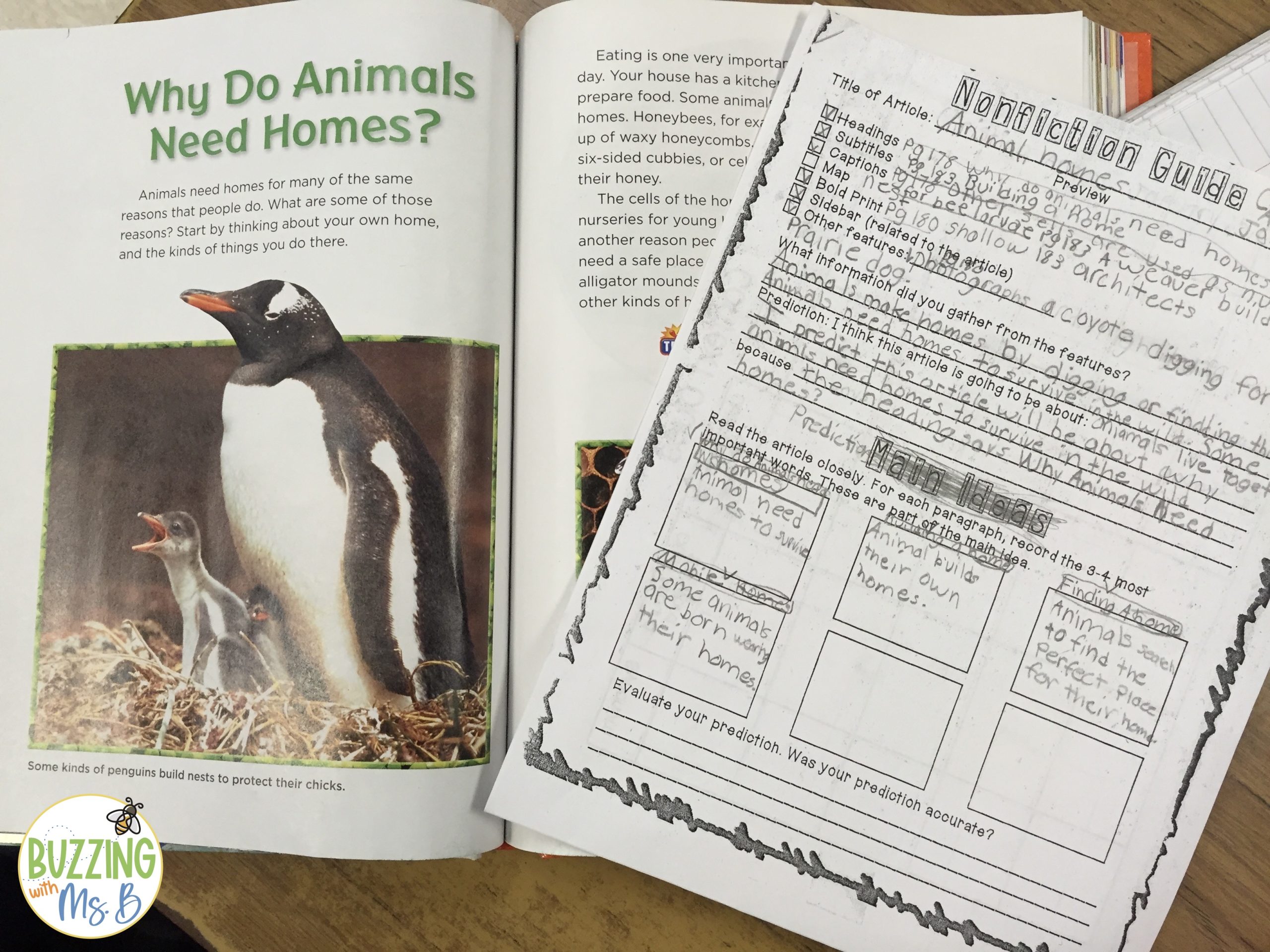
It can be helpful to identify and record the text features together in an anchor chart, like the one below. It’s not pretty, but this is from a real lesson with fifth graders where we examined the text, identified the features, and recorded the information we gathered from each one. Then we made a prediction based on that evidence!
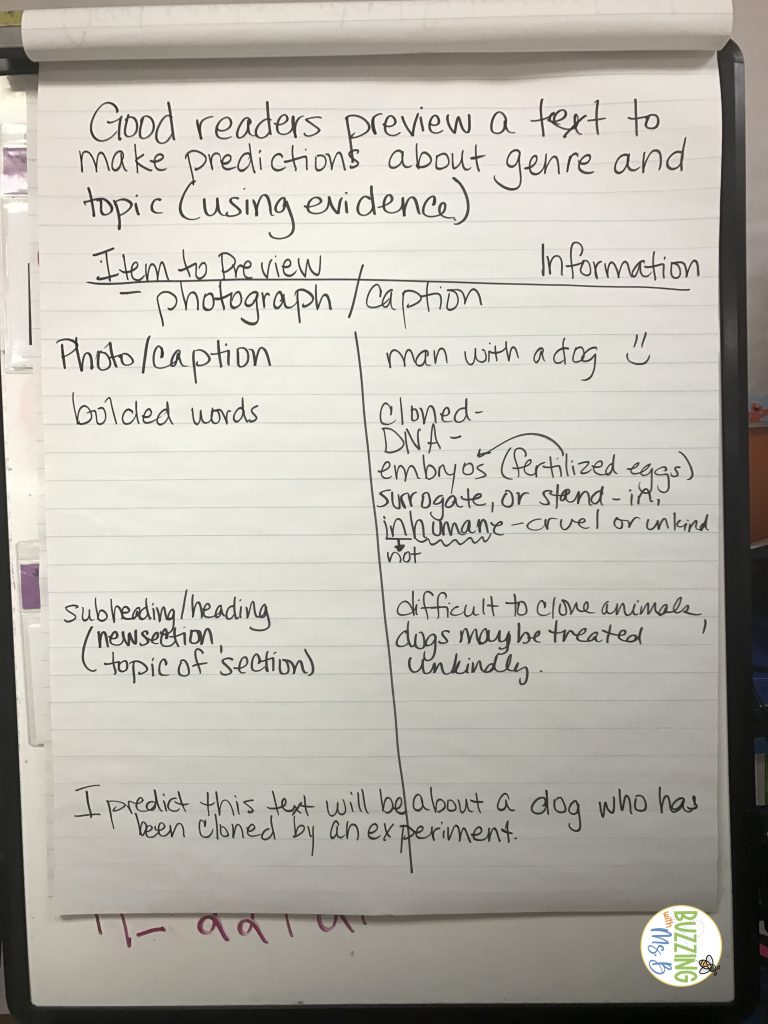
You can get the Nonfiction Guide above, a text features scavenger hunt activity, and much more in my Nonfiction Activities Pack.
Picture predictions
Pictures in nonfiction texts can be a gold mine for making predictions! They often give kids a visual hint about what the text will cover and can help them start thinking about the topic before reading a single word. By encouraging kids to look closely at photos, diagrams, and illustrations, we’re helping them make connections and get curious about what they’re going to learn.
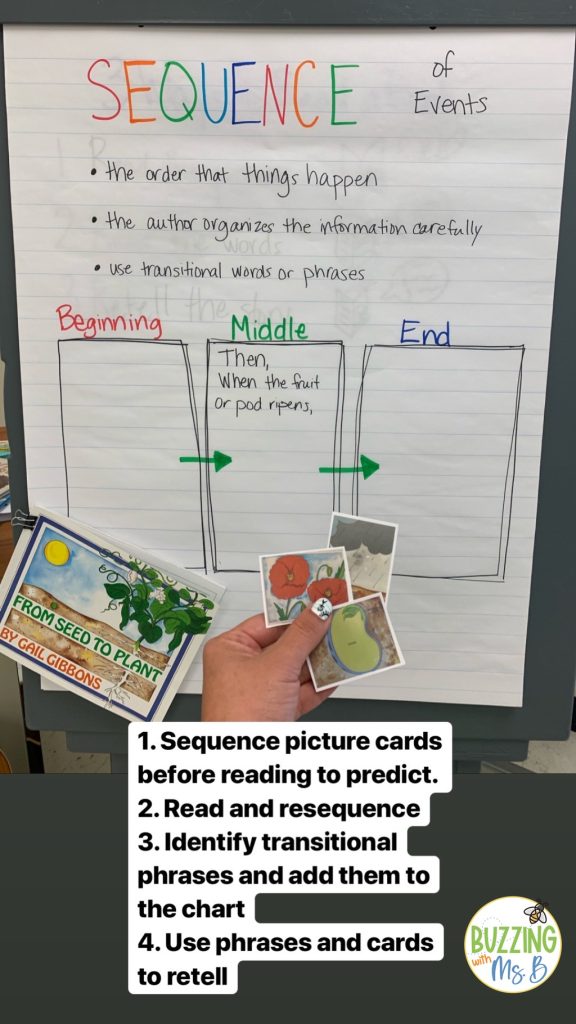
With certain nonfiction texts, especially those about plants or animals, using picture cards and sequencing can be a great way to make predictions and connections before reading a text. You can start with pictures of a life cycle based on the text you’re studying and ask the kids to sequence the pictures before reading (this way they’re making predictions without realizing!).
Then read the text aloud and re-sequence the cards as you go! You can use a chart like the one above to sort into beginning, middle, and end and then add transition words to retell the sequence.
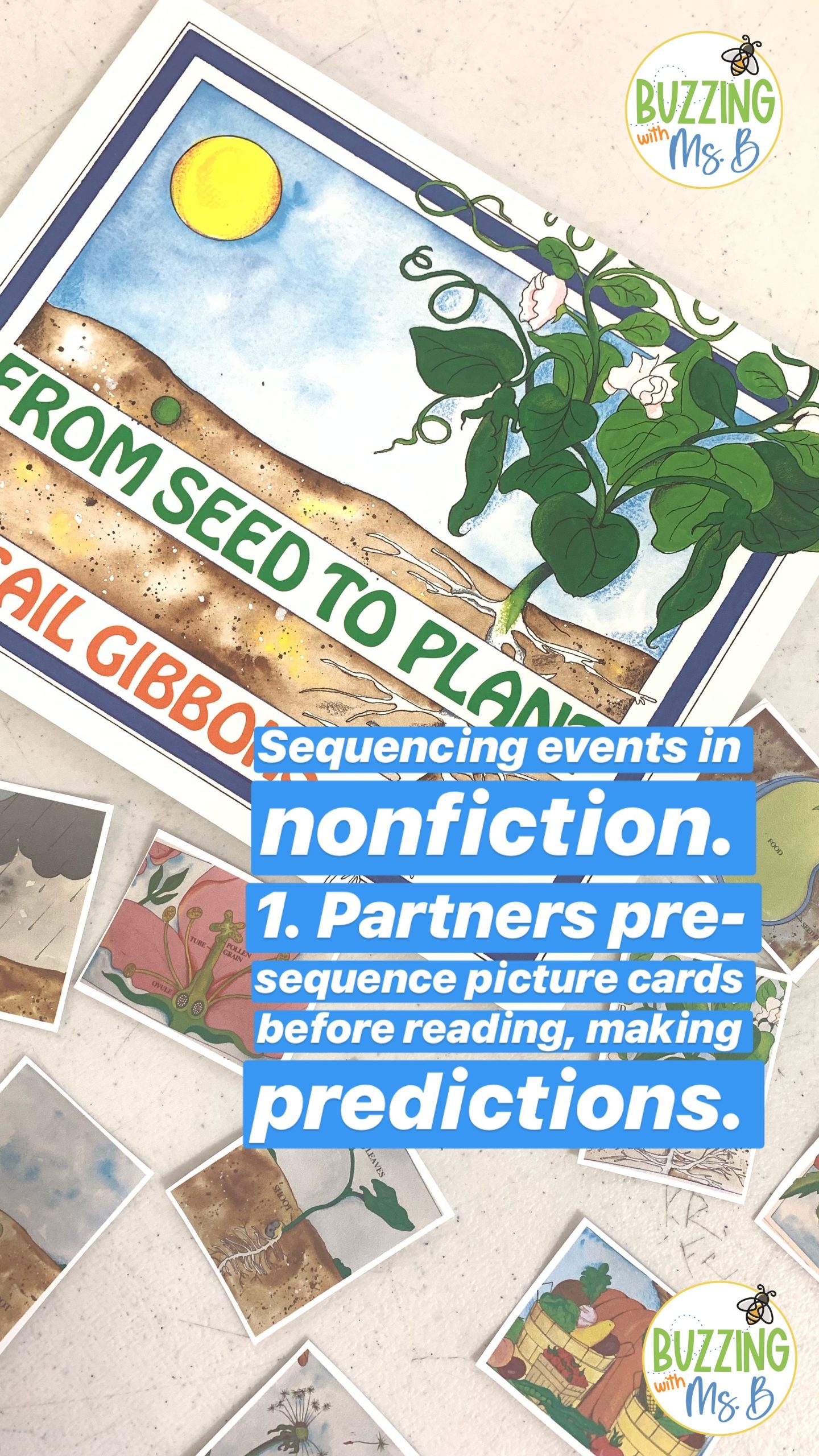
You can get sequencing activities for nonfiction texts and much more in my Nonfiction Activities Pack.
Vocabulary predictions
Making predictions based on vocabulary is another great way to help kids engage with texts and develop nonfiction comprehension. One way to do this is, before diving in, have them scan for bold or unfamiliar words. This can spark discussions about what those terms might mean and how they relate to the topic. Predicting the meaning of new words not only builds their vocabulary but also gives them a better sense of what the text will be about. Plus, it encourages curiosity and critical thinking as they piece together clues from the words around them.
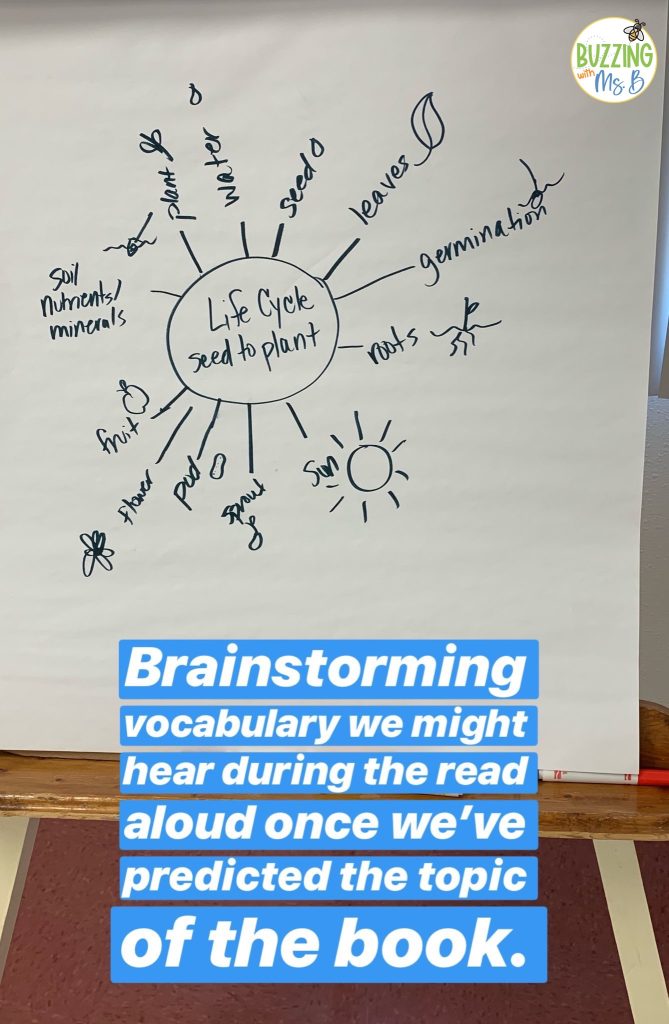
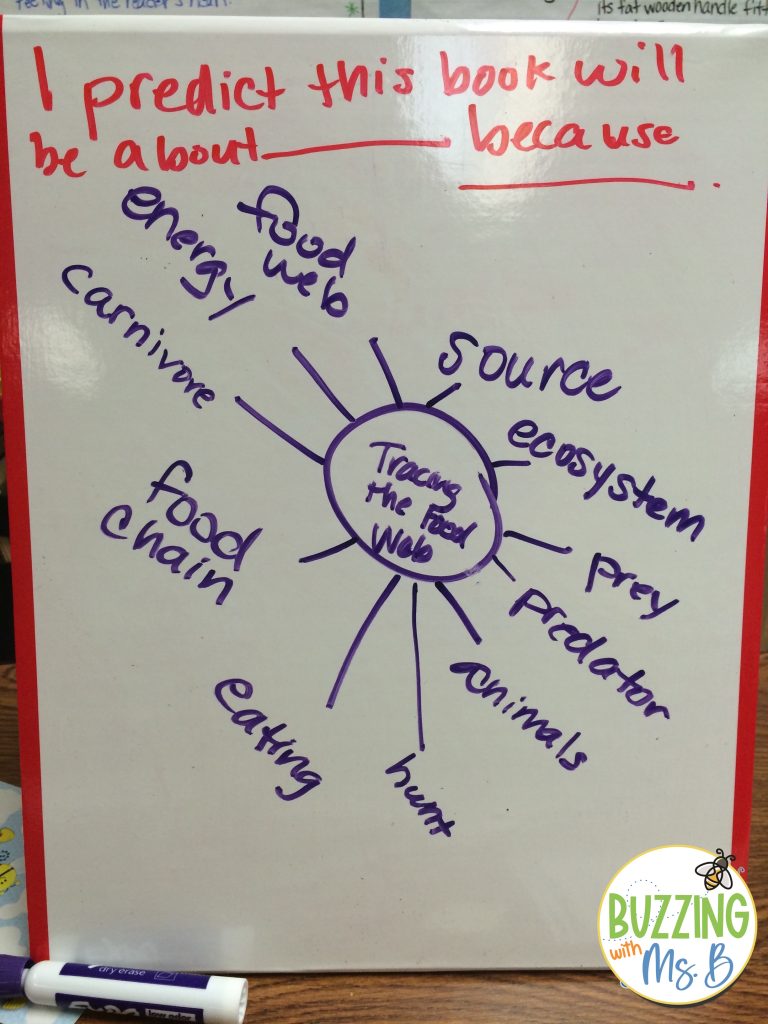
Another way to do this is to identify the topic of the text and put it in the middle of a vocabulary web (like the ones pictured). Your kids then add possible vocabulary words we might encounter based on the text features they’ve seen from flicking through the text. To take this one step further, use this to write a detailed prediction on a sticky note incorporating some of the vocabulary predictions.
Using prediction strategies in nonfiction—whether through text features, pictures, or vocabulary—helps kids become more active and confident readers. By modeling these strategies and guiding them to look for clues, we give them the tools they need to make sense of the text before they even begin reading. It’s all about building curiosity, comprehension, and critical thinking in a fun and engaging way that makes nonfiction feel more accessible and exciting for kids.
Mentor Texts
Below you’ll find a collection of books that are perfect for making predictions and developing nonfiction comprehension skills.

What do you do with a tail like this? by Steve Jenkins

The Ocean is Kind of a Big Deal by Nick Seluk

I’m Trying to Love Spiders by Bethany Barton

From Seed to Plant by Gail Gibbons
Grab the ready-to-go Nonfiction Text Tools!
You’ll find all the activities and lessons mentioned above in my Nonfiction Activities bundle! Plus, the chance to explore fact vs opinion, cause and effect, main idea, sequence of events, and more. This pack also includes nonfiction guides, posters, graphic organizers, activities, and so much more!

**Some links on this page are affiliate links**


