| | | | | | | | |

AMA about Expand Your Coaching Toolbox! with Laura Harrison, ep. 300
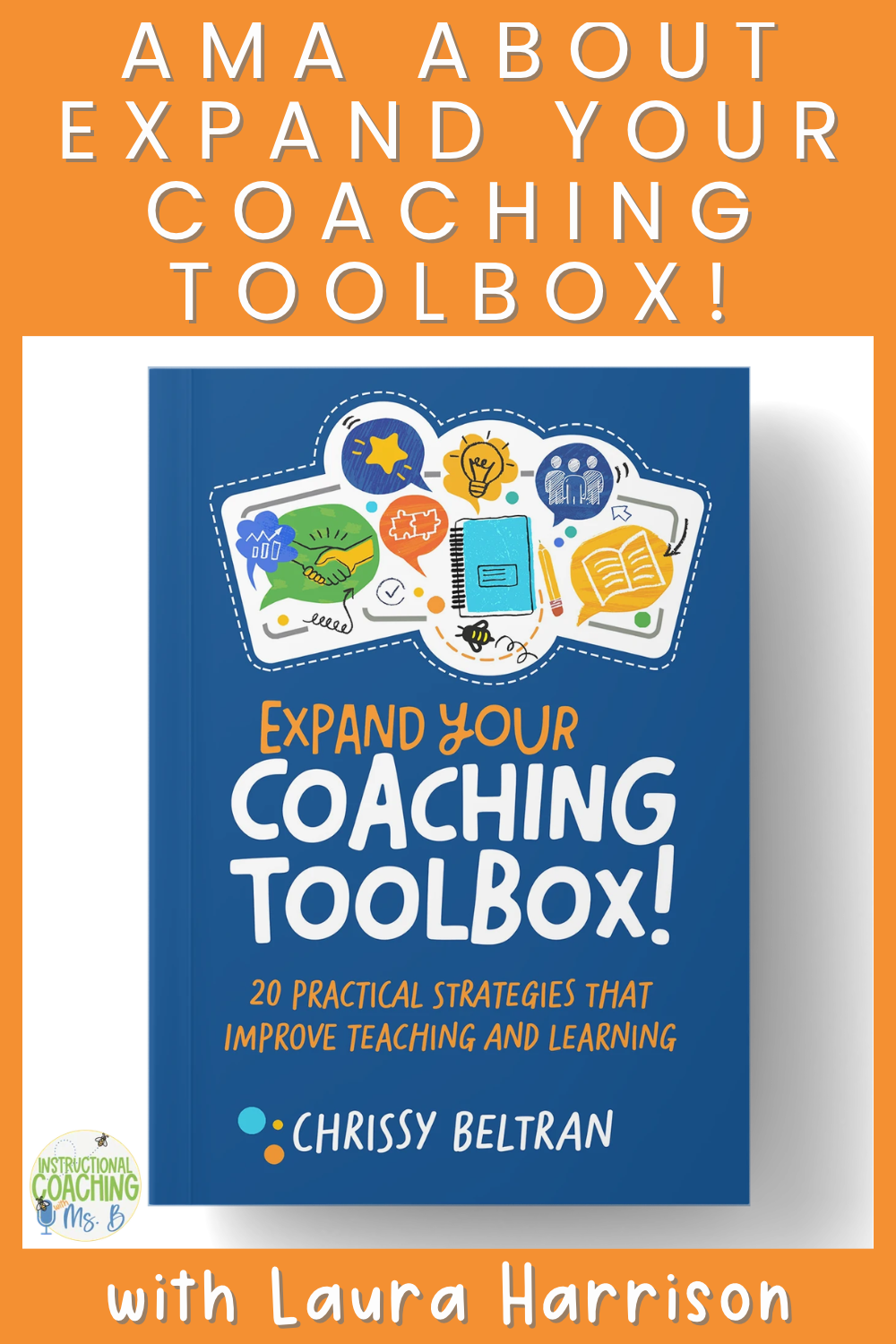
Book: Expand Your Coaching Toolbox!: 20 Practical Strategies That Improve Teaching and Learning. These words are on the mage: AMA about Expand Your Coaching Toolbox! with Laura Harrison

Coaching is a lot!

You’re juggling admin requests, listening to teachers vent, answering questions, while trying to squeeze in a few hours to do the work you were actually hired to do.

I see you, coach!

I recognize the important work you do every day!

That’s why I wrote my new book, Expand Your Coaching Toolbox!: 20 Practical Strategies That Improve Teaching and Learning. It’s available today, and it’s built around one big idea: coaches need more than one strategy to meet teachers’ needs. Grab the book here! 

For this very special 300th episode of Instructional Coaching with Ms. B, I invited my friend and fellow educator Laura Harrison back to the show. She interviewed me for episode 100, so it only made sense to have her back for number 300!

Laura came prepared with lots of questions about my new book, Expand Your Coaching Toolbox!. We talk about how to handle resistant teachers, how to develop relationships that build trust, ways to protect your time when you’re being pulled in a dozen different directions, and how to know if your coaching is actually working.

Want to learn how to be more responsive to what your teachers really need? Grab your coffee and listen to Episode 300 – AMA about Expand Your Coaching Toolbox! with Laura Harrison.

Here are the questions Laura asked, with my answers!

​Q1: What made you want to write Expand Your Coaching Toolbox!: 20 Practical Strategies That Improve Teaching and Learning?

After years of working with coaches, I kept hearing the same thing. They read all the books and went to all the PDs, but coaching didn’t fit into the messy reality of their school. And they didn’t feel like they had the freedom to change it.

I wrote Expand Your Coaching Toolbox! to help coaches respond better to what teachers need. There are 20 different strategies and three different levels, so you can customize your coaching depending on the teacher and situation.
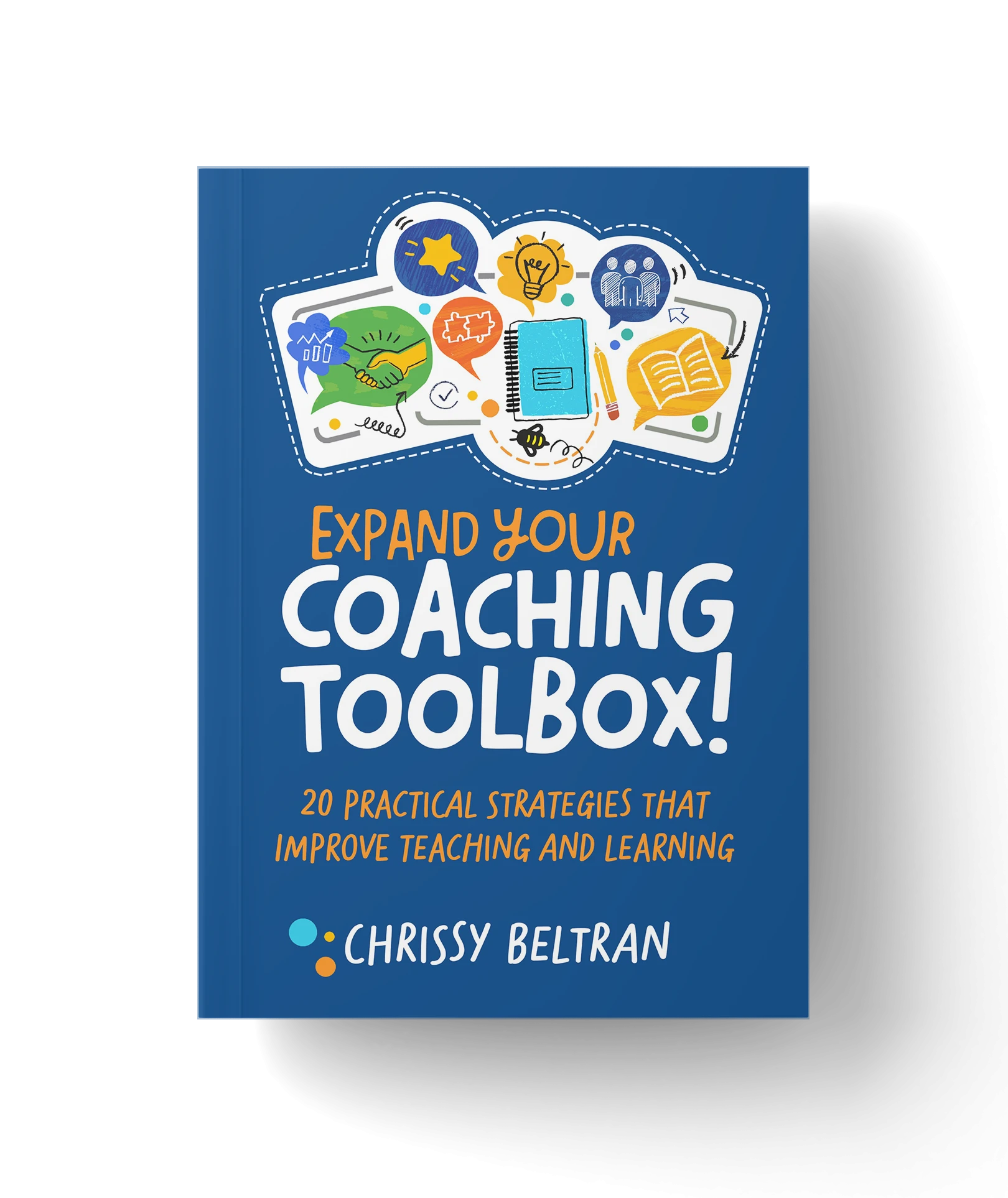
My new book, Expand Your Coaching Toolbox!: 20 Practical Strategies That Improve Teaching and Learning, is now available! If you’re looking for practical ways to work with teachers, respond to their individual needs, and move beyond coaching approaches that haven’t worked in the past, this is the book for you! I really think you’re going to love it!

Q2: How do you build relationships with teachers before coaching even starts?

Relationship-building isn’t always the same “step one, step two, step three” process. Some teachers will be ready to jump into coaching work right away, while others need more time before they feel comfortable.

For teachers who seem hesitant or unsure about coaching, you’ll need to be thoughtful and purposeful about getting into those rooms. Try meeting an immediate need, giving them a quick win, and listening with empathy.

Coaching relationships are unique because they’re not “peer-to-peer” or “admin”. Take time to understand each teacher’s needs before beginning any coaching plans or observations. Building this foundation makes coaching more productive and positive.

Being a sounding board is a great place to start. Read Chapter 2 of Expand Your Coaching Toolbox! to learn more.

Q3: How can literacy coaches protect time for meaningful, sustained coaching?

This is an ongoing challenge for coaches in most schools. Often administrators don’t understand what you could be doing, so you end up fighting for time to do your job.

To fix this, start with a conversation with your administrator about your coaching role. Ask for protected time blocks, even if it’s just three hours a day. If there is an emergency during that time, it’s somebody else’s emergency!

If you’re constantly fighting for time and always getting pulled to do other things, you can’t show up consistently, and teachers notice!

​Q4: How can a coach and teacher decide together which coaching activities are worth the time?

In Expand Your Coaching Toolbox! I have a basic scale that rates each strategy by how much time and teacher willingness it takes. Generally, higher-effort strategies have a bigger impact, but they aren’t always what the teacher needs in the moment.

Start with what the teacher truly needs and go from there. When a strategy solves a real problem, teachers make time for it. You can also leverage level two strategies from the book during your PLC meetings to build alignment with a whole team at once.

Watch episode 299: Expand Your Coaching Toolbox Success Stories with Gina Armstrong (Throwback)

Q5: How can coaches respond when a teacher is hesitant or resistant to coaching?

Hesitant and resistant teachers are part of the job! With some teachers, you’re going to need to be very deliberate to build the coaching relationship.

Start with Level I Strategies to build the coaching relationship: check in, be a sounding board, recommend resources, and offer tech support. The first four chapters of Expand Your Coaching Toolbox! cover all these topics!

Even then, some teachers are going to be mistrustful of you because they don’t know what you do at the school. Define your role, use a written coaching agreement, and constantly educate people about your job.

Sometimes, teachers’ resistance is about bad experiences with previous coaches or feeling like you’re part of administration. It helps to acknowledge that and have honest conversations with teachers, even if they’re uncomfortable. Like any relationship, time and patience are essential.​

Q6: Once you have buy-in, but a teacher is reluctant to try new practices, do you build on what they’re already doing?

Yes! Begin where they are and move them one small step forward. Quick wins are a great way to show teachers that something can work if they just give it a try!

I also like to start with a question that I learned from Steve Barkley: “What would you like your students to do that they aren’t currently doing in the classroom?” You can also ask teachers to make small changes because they don’t seem as scary.

Modeling, co-teaching, and visiting a colleague help people see strategies in action with real students. As a new teacher, I rarely got to see anyone else teach. When I finally observed my friend Denise, it made a huge difference, and I still wonder why schools don’t use this strategy more often.

Section III of Expand Your Coaching Toolbox! includes chapters about Colleague Visits, Lesson Modeling, and Co-Teaching a Lesson. Be sure to grab your copy today!

Q7: How do you balance being supportive with being honest when a practice needs to change?

I believe the most important thing is being responsive to teachers, but there are times when we have to make quick changes for our students’ sake. There are a lot of different schools of thought on this, and there is no right answer.

Some people will tell you to start with something the teacher wants to improve to get in the door and then add things as you build rapport. I’ve found co-teaching can shift practice by showing teachers different ways of doing things. They change because they have the chance to see something taught in action differently. Often, they just need that opportunity to change their perspective.

Q8: Which coaching strategies are most effective for helping teachers move from understanding a practice to doing it confidently in the classroom (and help with classroom management and get students engaged)?

Teachers who struggle with management often cannot envision it another way. They need to see it work with their students before they’ll give it a try.

Sometimes that means modeling a management system they can see work with their students. Start with small changes, then reflect together, and expand on what works.

One teacher I supported sat facing her projector with her back to the class! When I went in to model, I asked her if I could flip it around. Then when she saw it work, she left it that way. For some reason, she was stuck and couldn’t think differently until she saw it from another perspective.

Check out Chapter 6 “Co-Creating a Classroom Management Plan” to learn more!

My new book, Expand Your Coaching Toolbox!: 20 Practical Strategies That Improve Teaching and Learning, is now available! If you’re looking for practical ways to work with teachers, respond to their individual needs, and move beyond coaching approaches that haven’t worked in the past, this is the book for you! I really think you’re going to love it!

Expand Your Coaching Toolbox! book by Chrissy Beltran - 20 practical strategies for instructional coaches

Q9: What are the most important test-taking strategies coaches can give teachers?

Instructional coaches need to work with teachers to build strategies for the test students are taking right now, because tests evolve so quickly. We have to be realistic about the format and what students need to do. Then mirror practice assessments to the actual test, chunking and scaffolding learning as needed.

I don’t love state tests, but they’re part of our reality in schools. We don’t do our students any favors by not preparing them.

Q10: How can coaches help teachers adapt a literacy strategy for students with different needs?

One of the processes I explain in Section II of Expand Your Coaching Toolbox! is Co-Creating an Assignment! It’s a really good place to start when you’re thinking about differentiating and making sure every student gets what they need.

Start by co-creating a single assignment and think together about what each student will need. Plan for small accommodations for that one lesson. Afterwards, have a reflective conversation with the teacher and plan how to adapt it moving forward.

Q11: How can coaches tell whether coaching is working, beyond test scores?

I don’t think holding coaches accountable for test scores is the best way to see if coaching is working or not! Test scores only show what kids did in one format on one day.

Instead, do a classroom sweep across the school and look for patterns. Keep track of what you worked on with teachers; when you visit classrooms, record your observations.

Gathering teacher feedback can also help you identify the positive changes that your coaching has made in classrooms. Send out a survey (or even just one question) asking teachers for feedback. This could be an exit ticket at the end of a PLC meeting or faculty conference.
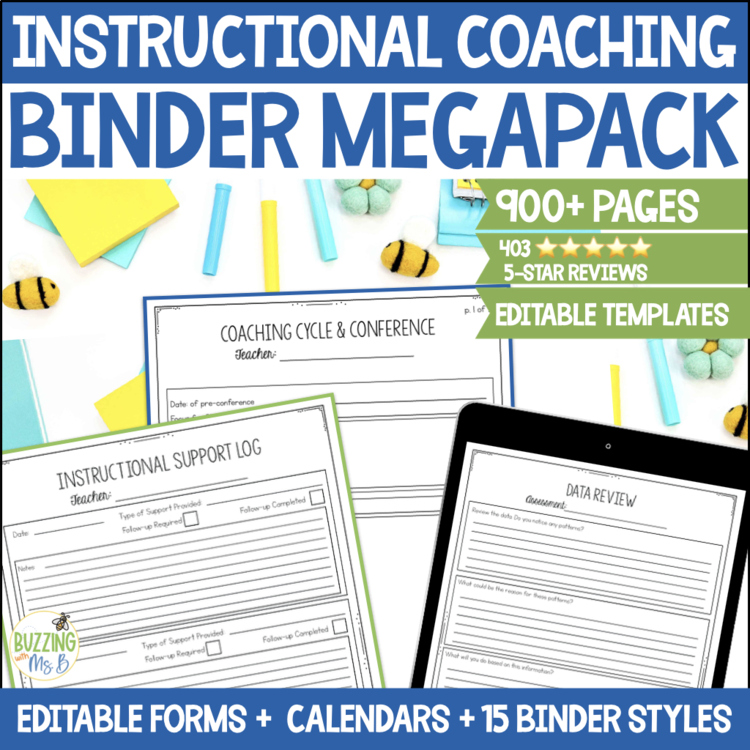
Instructional Coach Binder Megapack of editable forms, calendars, and planning tools

Be ready for anything with the Instructional Coaching Editable Binder Megapack!

It includes forms, templates, and everything you need to get organized for instructional coaching! Coach teachers and document your coaching work with these printable and editable tools. Grab the Instructional Coach Binder Megapack in my Store!

Q12: Can you share an example of coaching that led to an unexpected change in instruction or student learning, and what made it possible?

The first time a teacher told me to jump in and coach them in the moment, it really surprised me! You can read the full story in Expand Your Coaching Toolbox!

Another thing I find interesting is when teachers notice something I didn’t even realize I was doing while modeling and decide they want to try it in their classrooms. It’s not something I meant to show them, but it’s part of my teaching practices.

Laura added that in-the-moment coaching is great for students too. They see that their teacher is still learning, and that it’s okay to make mistakes.

Q13: If a coach could change one part of their practice tomorrow to make coaching more useful for teachers and students, what would you recommend?

Be responsive! Instead of following a rigid structure, look at what the teacher you’re working with needs and coach from there. Then choose one of the high-impact strategies in Section III of Expand Your Coaching Toolbox!, like modeling, co-teaching, or in-the-moment coaching.

​AMA about Expand Your Coaching Toolbox!

That was so much fun! Laura really got into the strategies and my experiences with them.

If you want all 20 strategies and the stories behind them, grab your copy of Expand Your Coaching Toolbox! And listen to the full episode to hear our whole conversation!
Topics and Questions Discussed in Episode 300 – AMA about Expand Your Coaching Toolbox! with Laura Harrison

  • Ask me anything about Expand Your Coaching Toolbox!
  • Why I wrote Expand Your Coaching Toolbox!: 20 Practical Strategies That Improve Teaching and Learning
  • Building relationships with teachers before getting into the coaching work
  • Developing trust with your teams
  • Being a sounding board
  • Protecting your coaching time and establishing your role
  • Picking coaching activities that are worth the time for both coach and teacher
  • Responding to resistant or hesitant teachers
  • How quick wins and taking small steps can reduce teacher reluctance to try new things
  • Balancing being supportive with being honest when a practice needs to change
  • Using modeling and co-teaching to shift practice
  • Supporting classroom management
  • The most important test-taking strategies a coach can give teachers
  • Co-creating an assignment for students with different needs
  • Measuring your coaching impact (beyond test scores)
  • Conducting a classroom sweep and gathering feedback from teachers
  • The impact of in-the-moment coaching
  • One change instructional coaches can make to be more useful to teachers
  • The power of being responsive and not getting stuck in a rigid model

Turning Insight Into Action: Practical Steps You Can Take After Listening

Here are simple actions you can take today:

1️⃣ Grab Your Copy of Expand Your Coaching Toolbox!: 20 Practical Strategies That Improve Teaching and Learning

If today’s episode resonated with you, you’re going to love my new book, Expand Your Coaching Toolbox!: 20 Practical Strategies That Improve Teaching and Learning. The entire book is built around one idea: coaches need more than one strategy to meet teachers’ needs.

Inside, I share 20 practical coaching approaches—from quick relationship-building conversations and deepening knowledge to high-impact classroom-skill building—so you can meet teachers where they are and make every coaching interaction count. It’s a really great guide that you can go back to over and over again. Check it out!

2️⃣ Join the Instructional Coaching Club!

The Instructional Coaching Club is an online membership designed to help instructional coaches improve instruction at their schools. It gives coaches the tools to go out and do it.

Ready to listen?

  • Ready to listen? You can listen below with the media player, or search for Buzzing with MS. B: The Coaching Podcast anywhere you listen to podcasts!

This post contains links to products from one or more of our advertisers. This means I may receive commissions for purchases made through links in this post when you click on links to those products. Thank you for your support!

Learn more

Helpful Resources


Listen on: Apple Podcasts, Spotify, or your favorite listening app

Expand Your Coaching Toolbox! book by Chrissy Beltran - 20 practical strategies for instructional coaches

My new book, Expand Your Coaching Toolbox!: 20 Practical Strategies That Improve Teaching and Learning, is now available for pre-order. If you’re looking for practical ways to work with teachers, respond to their individual needs, and move beyond coaching approaches that haven’t worked in the past, this is the book for you! I really think you’re going to love it!


Thank you for listening to Buzzing with Ms. B: the Coaching Podcast. Want more coaching ideas

Check me out at buzzingwithmsb.com and on Instagram @buzzingwithmsb.

If you love the show, share it with a coach who would love it too, or leave me a review on iTunes! It’s free and it helps others find this show, too. Happy coaching!

Podcast produced by Fernie Ceniceros

AMA about Expand Your Coaching Toolbox! with Laura Harrison, ep. 300, Instructional Coaching with Ms. B Podcast

Chrissy Beltran [00:00:00 – 00:01:59]

Hey, coach, and welcome to episode 300 of instructional coaching with Ms. B. Seriously. And for this episode, I have a super duper special guest. I’ll get there in just just a second. This is one of the episodes in my Coachtober coaching cycles and strategies season series, and I love to do Coachtober because this is, like, my favorite time of year. And my episode 300 just happens to fall inside of it, which is awesome if you’ve been around for the long haul, thank you. I appreciate you so much. If you’ve been listening for a while, like, to the last 200 episodes or somewhere around there, you already know my guest today, and that is my friend, Laura Harrison. She interviewed me in my one hundredth episode, and we had such a fun time. She’s always a fun time. But if you’re new, you might not know Laura. So let me tell you a little about Laura. I taught Laura’s son in fourth grade when I was a fourth grade teacher. And then a couple years later whenever Laura was working on her, education degree and certification, she needed a classroom to be a student teacher in, and she was my student teacher, which was amazing. She… I’ve been her friend since then, which has been at least eighteen years. I’m not sure. I’d have to do math to be certain. I have no idea what she’s gonna ask me today, and believe me, it could be literally anything. Okay? One time, Laura and I were out in a number, and someone asked how we knew each other. And I just… I said Vietnam. Okay? It just came out of my mouth. And Laura raised her hand up high for high five and shouted, let’s chop her out, baby. And I will never forget that moment. So anyway, here is my wonderful friend Laura to ask me questions about Expand Your Coaching Toolbox coming in November. It’s available for preorder already at buzzingwithmissb.com/toolbox. And, let’s get into the episode and see what questions Laura had about the book. Thank you so much for being here today, Laura.

Laura Harrison [00:01:59 – 00:02:01]

Thanks for having me. I’m so excited.

Chrissy Beltran [00:02:02 – 00:02:15]

I am too. I am too, and I really appreciate that you’ve taken the time to dig into the book and think of some thoughtful questions. So let’s just jump in and, start talking about whatever it is you wanna talk about.

Laura Harrison [00:02:15 – 00:02:37]

Okay. Well, first of all, I have to say a huge giant congratulations. This is such an awesome book. I am so happy for you. I know this was a labor of love and just something that you’ve wanted to do for such a long time. So really, truly con… Congratulations.

Chrissy Beltran [00:02:38 – 00:02:40]

Thank you so much. It is exciting.

Laura Harrison [00:02:41 – 00:02:49]

So I guess my first question is going to be, what made you want to write this specific book?

Chrissy Beltran [00:02:51 – 00:04:22]

You know, I have had the benefit of, you know, doing this work. Like, when I was a coach at a school, I didn’t know what everybody else’s problems were. You know what I mean? You know what your problems are in your school bubble. And so then after working with coaches and communicating with them and talking about the challenges that they have over the years, I keep… I kept hearing the same thing over and over again about how, they they would read something, they read all the books, they do all the PD, and then they go to their school, and it just says they couldn’t make it work because it didn’t fit into the reality of a school, which you know is just… It can be chaos at times. You know? Yeah. And so we have this really rigid approach that we… We’re like, this is the right way to do it. If I don’t do it that way, it’s the wrong way. And so so many conversations where they were like, well, I tried doing this, and they don’t… It’s just not working. And then they didn’t feel like they had the freedom to change it, or they didn’t feel like they had any wiggle room in saying, well, this teacher is struggling with this, and she’s just gonna have to get on board. Right? That’s the expectation. Well, maybe there’s a different need that that teacher has, and and we’re not meeting the needs with the approach that we have. So it was really just, responding to so many challenges. Every time I got an email with a question or I worked with a coach or I did coaching work with them, you know, at schools, I would get… Would kind of catalog these things in my brain, and I started noticing all these patterns about how we are not being responsive enough to our teachers, and we’re missing huge sections of need. And so then whenever we try to, like, I’m gonna come in and observe you. They’re like, oh my god. What? And it’s just, like, this horrible stressful experience for everybody. It doesn’t work.

Laura Harrison [00:04:22 – 00:04:29]

Yeah. Yeah. As a teacher, I can relate, like, getting observed and… Yeah. I get it. Yeah.

Chrissy Beltran [00:04:29 – 00:04:34]

Whenever that’s what we jump into, you know, it’s not… It doesn’t do the thing we want it to do.

Laura Harrison [00:04:34 – 00:04:43]

Yes. But I think that is… You… Because you talk about in the book about being a sounding board for teachers because

Chrissy Beltran [00:04:44 – 00:04:44]

Mhmm.

Laura Harrison [00:04:44 – 00:05:17]

I… From the book, the first thing you need to do is establish a relationship with a teacher before you can even start to work with them. And you did talk about how a lot of teachers want to vent to you, which is understandable with everything on our plates and all the expectations and the responsibilities. And so talk about how you establish those relationships before you move into the coaching aspect of it.

Chrissy Beltran [00:05:18 – 00:07:10]

Okay. Yeah. The the relationship is something that… I mean, you can develop it through the coaching work as well. Not everybody needs as, sort of like step one, step two, step three of an approach. Some people are ready to jump right in. Some people not so much. Some people have less trust of the coaching role and less experience with it, and everybody just has a different personality. So there are people that you’re like, okay. We immediately were ready to go, and we’re just fine. And there are people that you’re like, okay. Maybe I needed to do a couple of intentional things to to build a bridge to this person, but we’re good. Like, we… With the interactions we have during meetings is enough, and they’re still comfortable with me coming into their rooms. And then you have people who are like, I don’t know who you are. I don’t know what you’re here to do, and I have no interest in working with you. And those are the… They… Those are the people that you really have to be very thoughtful and purposeful about getting into those rooms, meeting a need that they have, giving them a quick win, and listening, you know, really developing empathy and, you know, understanding what their issues are so that you can serve them better. Because whenever we try to do, like I said before, the same thing for every person, that demonstrates a lack of of understanding of what’s going on in the classroom. So if we don’t have an understanding of the teacher, their needs, and if we have not kind of established that relationship that is specific to a coaching relationship where I am here to support you in working towards some goals and to improve your practice alongside you as a partner. If we don’t have that established, many classrooms are gonna be resistant to trying something new or inviting us in or having us visit and observe. They don’t want us around, so we have to really develop that coaching relationship as a very unique kind of relationship. It’s not the same as, like, a teacher to teacher, because a teacher to teacher, there’s no threat there that that teacher’s gonna, like, you know, come into your classroom and see what’s going on in the middle of the day. It’s just… It’s very different kind of relationship that has to be established.

Laura Harrison [00:07:12 – 00:07:17]

Yeah. And you and you used to be a teacher. Fun fact, I was your student teacher way back in

Chrissy Beltran [00:07:17 – 00:07:18]

the day.

Laura Harrison [00:07:20 – 00:07:44]

So as much as teachers are overloaded and overworked and have so many responsibilities, coaches are dealing with all those things as well. Mhmm. So how can literacy coaches protect time for meaningful sustained coaching when they are also expected to lead initiatives, provide resources, respond to day to day needs being pulled in every direction?

Chrissy Beltran [00:07:46 – 00:08:55]

That’s a really good question, and it is like the ongoing challenge for coaches in most schools because the biggest issue is often that administrators don’t really understand what it is that you could be doing and how to help you protect that time, so you’re kind of fighting oddly for the time to do your job, which is really weird to say, my job is, you know, to coach teachers and support them and develop their their their instruction and management. And can I please have some time to do that? Because that’s what you’re paying me to do, but you’re actually paying me to, like, sub in classrooms and make copies and do assessments and stuff like that. So, really, the first thing that has to happen is that conversation with the administrator to establish what the role is gonna look like and how we’re gonna protect that time. And even talk… Talking to your your admin and saying, look. Can I get three dedicated hours a day where nothing is gonna touch it where I? Nobody messes with that time? If there’s an emergency, it is somebody else’s emergency during that time. Because if if you’re constantly fighting for the time to do your job, you’re unlikely to really be able to make impact because you can’t consistently show up.

Laura Harrison [00:08:55 – 00:08:57]

Yeah. And teachers notice that.

Chrissy Beltran [00:08:57 – 00:09:36]

A lot of sense. Yeah. They know when they can’t count on you. Right? They know when when when you’re like, I’m gonna come by on Tuesday and then Tuesday comes and you don’t show up because you’re subbing in a math classroom or, you know, you are… You’ve been pulled because district personnel are coming to the school and everybody has to do their their, dog and pony show. Right? Right. Right. And greet them at the front of the building. And, and so they can… They see that even if you have good intentions, they’re like, well, I just really can’t count on this person because their job is not really here… It’s not really focused on helping me. It’s it’s it’s just whatever the school needs them to be right now. So the first line of defense is communicate with your administrator and really clearly define the parameters around your role and see if you can build in that protected time.

Laura Harrison [00:09:36 – 00:09:48]

Definitely. You set those boundaries. Very good. Okay. How can a coach and teacher decide together which coaching activities are worth the time they require?

Chrissy Beltran [00:09:50 – 00:11:18]

Oh, that’s a good question. In the book, I do mention… I do have a very basic scale, scale of one, two, three, which of these strategies take more time and which take less, and which ones also take more willingness from the teacher and which take less. And generally, strategies that take more time and take more willingness also have a higher impact. Right? But that doesn’t mean that’s what the teacher needs from you in the moment. So if you’re trying to go into classrooms and model a lesson or observe a lesson or co teach or something along those lines, and then really what they’re missing is they don’t have good planning skills. Like, they are struggling to plan their lesson. They don’t understand the curriculum and the standards. You’re… Even if you go in and model this lesson, they’re still gonna be missing that piece that you didn’t… That you needed them to have. So you have to take a step back and go, okay. What foundational piece are they missing? And so I think that in… If if a teacher finds that it’s valuable, that it’s actually serving a need and, like, addressing a problem that they’re having, they’re more likely to think the time is worth it even if it’s more time than, you know, you feel like you should ask for. So… And, also, you can cons… Consolidate things. You don’t have to do a huge whole process with every single strategy. Right? What’s in the book is is the process that it’s like the cover to cover. Right? And so you can pull the elements out that are useful to you as a tea… As a coach and teacher. But you… If a teacher is like, I’m really struggling with looking at data, they sometimes will make the time to sit there with you for an hour after school because they’re like, I don’t know what I’m looking at.

Laura Harrison [00:11:18 – 00:11:18]

Right.

Chrissy Beltran [00:11:18 – 00:11:24]

And so if they really are having a hard time, even if that’s a lengthier strategy to use, it’s gonna be valuable to them.

Laura Harrison [00:11:24 – 00:11:25]

Yeah.

Chrissy Beltran [00:11:25 – 00:11:57]

The other thing is how many coaches already facilitate weekly PLC meetings, but those meetings don’t really result in much? And so if you’ve got forty, you know, thirty, forty five minutes with the teachers once a week or once every other week or once a month, you can plug in one of those section… Those level two strategies to build knowledge and alignment that that can support your team across the board, and you’re you’re working with a team at the same time. So it’s like a really great way to take one strategy and use it to build alignment across your school, and that maximizes your time as well.

Laura Harrison [00:11:57 – 00:12:13]

Yeah. That makes a lot of sense as well. So how can coaches respond when a teacher is hesitant or does not see a need for coaching? Because I’ll… I’m sure you come up against that often.

Chrissy Beltran [00:12:14 – 00:12:59]

Yeah. Lots. Every coach has had that experience all the time. And then there are some that are are just… Some… So some teachers, you are going to be very deliberate. You’re gonna pull your relationship building strategies from those level one strategies. You’re gonna serve as, you know, a sounding board. You’re gonna listen and be empathetic. You’re going to find those opportunities to build connection with the teacher, through those four strategies in the first section of the book. But even then, a teacher who doesn’t know what you’re there to do is gonna be mistrustful of you. So you have to step back even further, make sure you’ve had that conversation with your administrator and defined your role, and then that… Make sure your teacher knows it too. Like, we have to constantly educate people what our job is,

Laura Harrison [00:12:59 – 00:12:59]

Mhmm.

Chrissy Beltran [00:13:00 – 00:15:22]

Which is weird. Again, it’s another… One of those weird middle ground things that coaches have to do. Other principals pretty much don’t have to tell teachers what their job is. Right? We know what they do. We know what the custodian does. We know what the teacher does. You know? But the coach, people are like, and you are? Like, you’re here for what? What are you here for? And so that in itself is threatening. So we have to educate our staff members consistently. This is what I’m here to do. And so that that put it in writing. We have to have that in writing so people can say, this is what my role is. This is the kind of support that I can provide. These are the parameters around that support. And then even creating a coaching agreement, which I think there’s a in the book, there’s a, you can make a copy of it or use it as an inspiration to make your own. So the coaching agreement really spells out exactly what each person’s responsibilities are in that coaching relationship. So, like, what the coach is gonna do, what the teacher is gonna do. And that is really helpful because sometimes the issue is clarity, and they just don’t know what you’re there to do, and that makes them not trust you as a as a as a professional in their space. Other people have just had bad experiences already with coaching and with administrators. And coaches from teacher perspective, we’re lumped in with administrators, and I get it. We’re not in a classroom. Everybody in the classroom basically is an admin. Right? Everybody sits there on the leadership team table. It feels like they’re admin. So we have to sometimes take the time to uncover those experiences and listen and directly address them and say, I I hear that you’ve had that issue. That’s not what I’m here to do. Okay? I’m here to do this. And sometimes those conversations can be uncomfortable, and things don’t get better if we don’t start having some of those uncomfortable conversations. Mhmm. They’re uncomfortable because we feel like, oh, the teacher might yell at me. But but good things can come out of it. And there have been teachers that I’ve worked with that maybe the first year, I still wasn’t their favorite person despite all the efforts. Right? Right. But over time, not all of them come around and just love you. That doesn’t happen with everybody. But more people will start to at least listen to some of the support you can provide and give you the opportunity to work with them in different ways. And it just takes it just takes time and patience. We have to constantly come back to this relationship with this really maddening persistence, like this positive persistence

Laura Harrison [00:15:23 – 00:15:23]

Mhmm.

Chrissy Beltran [00:15:24 – 00:15:48]

That it can be exhausting sometimes, but we have to bring it with us because it’s not the teacher… Even though, yes, the teacher’s responsibility is ongoing learning, our responsibility is to make that happen with them through us. Right? We are the ones who have to carry that, I feel like. So if we don’t have that forefront that it’s my job to do whatever I need to do to be supportive of this teacher and make sure that I can build that bridge to them. Then if we don’t do that, it’s not gonna happen.

Laura Harrison [00:15:49 – 00:16:12]

Right. So once you do have buy in from a teacher when they agree to participate, but they are reluctant to try new practices, Do you sometimes use what they’re already doing and kinda tweak it so they can see the effects that they’re having or could have if they just make these small little changes?

Chrissy Beltran [00:16:12 – 00:16:32]

Yeah. You can definitely… Like, quick wins are a really good way to show people that something can work if we try it. Starting with a question that they have or even saying a really good question that I’ve learned, I think it was, Steve Barclay, actually. He said, ask them what their students… What they would like their students to do that they are not currently doing.

Laura Harrison [00:16:33 – 00:16:35]

Mhmm. That… Yes. That’s excellent question.

Chrissy Beltran [00:16:35 – 00:18:04]

It’s a good one. Right? Because the teacher goes, oh, well, if they would just… I mean, all I wanted to do is write a complete sentence or whatever. You know? Whatever. That’s that’s a really common one that you hear. Right? All I wanna do is write a complete sentence. If they could do that, you know, everything would be so much better. Okay. Well, let’s see if we could try something to get them to do that. Well, I’ve tried everything. Okay. That’s okay. You tried everything. Let’s see if anybody else has figured out something, and then let’s visit your colleague and see what they’re doing. Or, let’s let’s… If if, you know, the world is your oyster and there’s no failure here, we’re just trying something together, what could we do? And let’s try to co teach a lesson. So sometimes if we reframe it about looking at data and not not even necessarily hard numbers, but, like, student student work and student output, what are they not producing that you want them to? And we can figure out how to make that happen. That’s one way to go about it. Change it… Making a small change in things that they’re already comfortable with, that’s another way to go about it because it’s not as scary. But, but, yeah, the biggest thing is we have to, like, start from where they are and and move them one small step forward if that’s where… If that’s what they’re ready for. Because if we just try to jump right into, well, let’s record a video of you, and you can see all the places that that you’re… You know, the kids are not listening to you. I mean, that’s a very stressful thing to start with for a lot of people. And, generally, people are not there towards the beginning of your relationship and your work together. Some people are, but most people, that’s gonna not be the place to start. So you wanna start where they are and just kind of move forward in small steps.

Laura Harrison [00:18:05 – 00:18:36]

And when you do co teach a lesson with the teacher Mhmm. That’s your time to model what the… What and how they can be teaching their students that’s gonna make a difference. And I’m sure being a teacher, if someone wanted to come teach my class part of a lesson, I would jump at the chance. So I… And it would be… It is helpful to see how someone else does things sometimes. So

Chrissy Beltran [00:18:37 – 00:19:06]

It really is. You know, I I didn’t get to see a lot of people teach, for a really long time as a new teacher. I saw one colleague teach. She was my mentor when I started, and I got to see see two lessons. And she told me that she was literally putting on a show, so they were not regular day to day lessons. Right? Yeah. And then I had to… For my master’s, I had to observe somebody at my school and and write about it. I had observed several times, and I got to see, Denise, our friend Denise.

Laura Harrison [00:19:06 – 00:19:06]

Yes.

Chrissy Beltran [00:19:06 – 00:19:15]

And she was so great, and it made such a difference for me. And I remember thinking, why don’t we do this more often? This is so dumb that we don’t get to see other people teach more often.

Laura Harrison [00:19:15 – 00:19:15]

Yeah.

Chrissy Beltran [00:19:15 – 00:19:27]

And so that is a huge part of, like, those those level three strategies. The visit a colleague, I find so valuable because teachers who see each other teach, I mean, it opens up so many possibilities for them.

Laura Harrison [00:19:28 – 00:19:46]

Yeah. Definitely. So when you see practices that are in place that definitely need to change, how can coaches balance being supportive with being honest about practices that need to change?

Chrissy Beltran [00:19:48 – 00:20:51]

Yeah. That is one of the biggest challenges of coaching, and there are so many different schools of thought on this. And I feel like there’s not always one right answer because because I believe in being responsive to teachers. Right? And so sometimes we go, okay. This is this is not alright for kids. Something… We have to make a change here quickly. And many schools of thoughts will tell you, schools of thought will tell you that you you start with something the teacher wants to improve, and then over time, you can kind of get in… You can add things to that because you’ve built a rapport with the teacher. So you start out with, okay. Well, what is it that you wanna work on? What goal is it that you wanna do? And then you kind of can add to things over time and say, like, as you’re as you’re conversing with them, as you’re reflecting with them afterwards, you can make adjustments and and talk about different kinds of goals to bring in. I have found one of the… One… A really great way to start making changes quickly is, as you mentioned, is that co teaching model.

Laura Harrison [00:20:51 – 00:20:51]

Yes.

Chrissy Beltran [00:20:52 – 00:21:36]

So you can focus on a goal with the teacher, teacher, but just you being there providing instruction, for many teachers, it shows them something that they hadn’t seen before. I had… I worked with one teacher who I had worked, you know, with him. It was whenever I was a younger coach, a newer coach. I had worked with him throughout the year, but it was largely in, you know, level two strategies and looking at data and looking at, you know, student work and in planning together. And he he was so struggling to make this transfer to his classroom, and we spent one session together. It was one whole forty five minute session together co teaching, and at the end of that, he was like, I I… Now I see what you’re talking about.

Laura Harrison [00:21:36 – 00:21:38]

He just couldn’t picture it.

Chrissy Beltran [00:21:38 – 00:22:11]

He couldn’t see it, and so it’s like things really needed to change in that room, and they didn’t change because I went in and said, things need to change in here, right? They changed because he saw something different. And so some teachers just we just need to give them the opportunity to see something different. That’s not everybody, but that is, you know, that’s a lot of teachers do not have the benefit of seeing other ways of doing things, So you get stuck thinking, well, this is the way I figure it out, so it must be the way, and anything else is kind of a threat because I’m barely hanging on to this thing I figured out. Right?

Laura Harrison [00:22:11 – 00:22:11]

Right.

Chrissy Beltran [00:22:12 – 00:22:20]

And when you see things in action with other kids, which teachers don’t get enough opportunity to do, then suddenly doors open and you go I had I didn’t even think about doing it like that

Laura Harrison [00:22:20 – 00:22:21]

yes

Chrissy Beltran [00:22:21 – 00:22:51]

so that’s one thing you know to do is you get together with that teacher work on the thing that they want to work on but be part of the instruction in that classroom If you’re just observing and you’re providing feedback about the thing that they wanna work on, it’s not gonna change anything else, and it might not even change that thing, you know, if if the need is so great. Because, generally, if there… Like, if there’s a… The the foundational issue is always management. Right? If there is a management issue that is significant, learning is not happening in that classroom.

Laura Harrison [00:22:52 – 00:22:52]

Right.

Chrissy Beltran [00:22:52 – 00:22:57]

And nothing you do on the top of that is going to change that foundational management issue.

Laura Harrison [00:22:58 – 00:23:29]

Right. I don’t know if you were… There… You refer to a teacher, quote Ivan, in your book, who you planned this beautiful lesson with, and then you walked in to to check how it had gone, and he didn’t even realize you were in the classroom. Yeah. The kids were not doing what they were supposed to be doing. So it’s like that that would have probably been completely different had you co taught a lesson before.

Chrissy Beltran [00:23:30 – 00:23:31]

That’s right.

Laura Harrison [00:23:32 – 00:23:53]

But it just go… It just really brings that point home how important it is to watch other teachers teach and have you co teach with them. It just… It does shine a light on things differently and makes you become open to maybe trying something different since what you’re doing is not working.

Chrissy Beltran [00:23:55 – 00:24:08]

Right. Yeah. Because sometimes you just can’t think of what else you could do differently. You’ve Right. A lot of teachers have really tried really hard to figure things out. And if they could figure it out, they would have because what… Who wouldn’t want everything to be better?

Laura Harrison [00:24:08 – 00:24:12]

Right. Of course, everybody wants a new dream. Yes. Exactly.

Chrissy Beltran [00:24:12 – 00:24:22]

All the all the dreams that we have, you know, in August, we want those to materialize. And then when they don’t and we get stuck, we need somebody else to help give us another another perspective.

Laura Harrison [00:24:23 – 00:25:05]

Yeah. So talking about classroom management, I loved the quote in your book. You wrote, it’s about maintaining the conditions necessary for learning to thrive. That is so important when it comes to classroom management. So which coaching strategies are most effective for helping teachers move from understanding a practice to using it confidently in the classroom, which will, in turn, help with classroom management and get that engagement and focus from students.

Chrissy Beltran [00:25:05 – 00:27:22]

Mhmm. Yeah. The… In my experience, teachers who are struggling with management, like I said a minute ago, they just… They cannot often envision another way. Right. And they they they feel like nothing will work with these kids. It’s it’s gotta be the kids because I’ve done everything I know to do, so it’s gotta be the kids. Right? And so they need to see those same kids behaving in a different way as a result of something different. So one of the lessons that I I talk about in the, in the book… And I think it… Is it in… I I can’t remember if it’s in modeling or co teaching where I explain my process for management and how I kind of… How it evolved over time. I was working with a classroom where the teacher had… The management was was incredibly challenging, and the kids were very disengaged and the room itself was kind of chaotic. Even the teacher, I don’t think I mentioned this in the book, but I remember the first day that I went into the room, the teacher had the projector set up, and she spent, like, almost all of her time at the projector. And it was facing… Her seat was facing the screen. So the kids were staring at her back and the screen, like, over… Like… And she wasn’t seeing them. Ah. Couldn’t show up. Realize… Yeah. That was a… I was like, well, this is at least an easy fix. Whenever I went into a model, I was like, can I flip this around? And she was like, oh, I guess. And then she left it that way because she was like, well, this makes sense. But for some reason she was stuck, right, and she just couldn’t think differently. And so, you know, little things like that were were going on all the… And kids were being… I mean, it was chaos behind her. Right? She was facing the projector. They were doing whatever they were doing, and she was getting really mad about it. She did yell at them because, you know, she didn’t have control over herself or the kids in the… It was just chaos. So, whenever I was working with this teacher, I had to do, like, a co teaching… We did some co teaching test prep, and I was so stressed about working with this classroom. And it was because I was like, how am I gonna, like, get this… What am I gonna do to, like, make this work? And, I mean, are they gonna learn… Maybe it is the kids.

Laura Harrison [00:27:22 – 00:27:23]

What if I can’t do it? You know,

Chrissy Beltran [00:27:23 – 00:28:36]

I was literally freaking out a little bit. And so I remember thinking, I’ve gotta be very proactive with management. I have… She doesn’t have a management plan. There’s nothing in place. She has rules posted on the wall. Nothing happens. So I’m gonna make this plan. And so we we… Before we work together, I was like, this is what I’m thinking of doing. And I spelled out, I’m gonna have these three behavior expectations. We’re gonna chant them. We’re gonna act them out. I’m gonna chart them up. We’re gonna draw pictures. I’m gonna, you know, we’re gonna praise every time I see somebody do it. We’re gonna cheer with the praise point for that specific expectation. And she was like, okay. Like, it’s just… She just felt like it seemed… I think she thought knock yourself out. I mean, they’re not gonna care. One time somebody told me what… I mean, you think they’re gonna… That that they’re gonna be happy with you cheering for them? They want, like, candy. You know? It’s like, well, we’ll just… Let’s just try it. Let’s just try it out. Yeah. So so we did try it out, and she was, like, really surprised because it… And I was a little bit too because it worked really well. And so over time, I just adjusted it. But what helped was, you know, communicating with that… That with a teacher and saying, okay. You’re asking me to do this work with your classroom. Is there a management system set up? Which I can see there was not, but I wanted to know what she thought there was.

Laura Harrison [00:28:37 – 00:28:37]

Right.

Chrissy Beltran [00:28:37 – 00:29:11]

And this teacher specifically was like, it’s not working. Whatever I’m doing is not working. Right? Like, they’re just being terrible. They’re… These kids are terrible. I said, okay. And they were very high needs. Like, it was lots of redirection and lots of prompting and just constant. Stay over here. Stay with me. Stay with me. Right? They needed a lot of that, and it was exhausting to the teacher’s credit. Right? It was. And so I was like, okay. Let’s figure this out before we get started so we can try it, and then we can make adjustments. And I think, like, putting yourself out there being like, we’re just gonna try something. If it doesn’t work, it’s not gonna be worse than it was yesterday.

Laura Harrison [00:29:12 – 00:29:16]

Right. Yesterday was terrible. Right. Yesterday, you wanna go off from here.

Chrissy Beltran [00:29:16 – 00:29:59]

Yeah. So, you know, we we tried things out and adjusted it. And then seeing things in action and also seeing the thought process and reflection that is so important in management where you’re like, I I don’t know. Is this is this working? It’s taking a lot of energy. What can we do? Having those conversations, it’s really helpful. Now this teacher, for a really long time, had done so much complaining about the kids. I thought she just was complaining, and I didn’t realize that every time she was complaining, she was saying, help me. I don’t know what I’m doing. Help me. I don’t know what I’m doing. And I didn’t I didn’t read it that way. I just felt like it was criticizing the kids, And so I realized… Over time, I realized, they are… Whenever you’re hearing these constant complaints, a lot of times it is saying, I’m not sure what else to do.

Laura Harrison [00:29:59 – 00:29:59]

Yeah.

Chrissy Beltran [00:29:59 – 00:30:13]

And so that teacher, even though they might feel like a teacher who’s resistant to change, was actually ready to try something and act… And actually really desperate for something. Help me. Yeah. But the words help me never came out of her mouth. It was just these kids. These kids. These kids.

Laura Harrison [00:30:13 – 00:30:13]

Yeah.

Chrissy Beltran [00:30:14 – 00:30:27]

So I think sometimes we have to we have to, like, cut them some slack, you know, come to the table to figure things out together and then try to implement them together because they cannot see another way because what they’ve been doing is is habits.

Laura Harrison [00:30:27 – 00:31:05]

Yes. Yes. Okay. So you talk in the book about test taking strategies. And I know from years ago, you used to have your kids, your fourth graders, sing the take me out to the ballgame song, but specific test taking strategies first. We read the direct and… Yeah. The whole thing. And I copied it down, and I used it many, many times. So what do you think are the most important test taking strategies that you could give your teachers?

Chrissy Beltran [00:31:05 – 00:31:13]

That’s interesting. Incidentally, I have bumped into a student who’s a teacher a couple years ago, and she told me she was using that song with her.

Laura Harrison [00:31:13 – 00:31:17]

Ah, nice. Wow. Funny? Yeah. That’s so cool.

Chrissy Beltran [00:31:17 – 00:33:55]

Yeah. So I think that when it comes to test taking strategies, it’s important to kind of build them with your teachers at the time because tests change so much. Right? So, like, there was a time… Like, that was… I… Was what I was using for tax. Right? And then STAR came along and changed a lot of things. And and so we really focused on identifying the genre and choosing an appropriate summary strategy for that genre. And then, you know, now it looks a little… Now they have a little more time. For a long time in Star, it was very… It was very short. They had the four out… I mean, four hours seems like a long time, but it was a long test for these kids. So Yeah. It was… They had to, like, hustle through. They didn’t have time to do all of these complicated things, and now things look a little different. So, like, we have to be responsive to what the kids are being asked to do at that time. Also, so many tests now are on the computer, and that has made using strategies a very special kind of thing. Right? We have to teach kids how to put their thinking on paper and… Or what that’s gonna look like. Right? So I think the biggest thing is we have to be realistic in terms of what the assessment looks like and what we’re having, kids do. We wanna mimic our practice assessments to what we’re expecting them to do, you know, by the end of the year. Obviously, you’re you’re breaking it up into chunks, and you’re you’re scaffolding that over time. Like, you’re increasing it over time. Right. But you are mimicking that. You’re not gonna, like, give them open ended questions all year, and then their final exam is, you know, multiple choice, and you’re like, well, they didn’t do well. No. They they have to have exposure to those kinds of things. Also just, you know, I am not a fan of state tests as the way that they are, but it’s just the reality, right, that we have to prepare kids for. It doesn’t do them favors not to prepare them is the way that I see it. So I think the biggest thing is kids have to understand that testing is a specific kind of learning. It’s not the learning you do… Or, like, a specific kind of work. It’s not the work you do every day. It’s a very specific genre, really, of of reading and writing and… It’s very, like, specific kind of category. And so the kinds of thinking that we do every day can help prepare us for that, but then we’re gonna attack those questions in a very specific way given the parameters of the test. And so teachers have to really, like, disaggregate that test and understand what kids are being asked to do and what kind of thinking they’re asked to do so that they can identify the essential things that kids have to do every time they tackle a problem or every time they tackle a passage or every time they tackle a new composition they have to work on or a short answer. Basically, our teachers have to get really familiar with what is expected of kids so that they can support them in doing those things.

Laura Harrison [00:33:55 – 00:34:18]

Right. So thinking about, Pebble Hills where we both used to work at one point, and then my last school that I was in, a couple years ago, how can coaches support teachers in adapting a literacy strategy for students with different learning language or communication needs?

Chrissy Beltran [00:34:19 – 00:35:53]

Oh, yeah. It’s a really good question. One of the things… One of the, processes that I explain in section two about how to build knowledge and alignment is about, cocreating an assignment. And I think that… So co planning, collaborative planning is a different strategy. Cocreating an assignment is specifically just one assignment. It’s one thing that you’re asking a student to do that day. It’s not your whole unit. It’s not your whole week. And I think that that’s a really good place to start when you’re talking about differentiating and making sure that every student gets what they need. Mhmm. Because it’s not… You’re not like, okay. How are we gonna do this every day for the whole year? Right. You know? That can be very overwhelming. But if you say, okay. This specific assignment, what… Let’s let’s build our assignment and say, what are our different kids gonna need? Well, this student has macular degeneration, so they’re going… They use their… You know, they have their magnifying lens, or they need the reverse… They need, white on black copies, or they need a film to put over. You know, what tools do they have? Or this student, meant… These… This group of students we know struggles with attention. How can we help them by chunking this assignment or adding movement? Or, you know, how can I frequently engage their brains and ask them to make a response? And so, like, we need to be… Whenever we plan an assignment, I feel like we can really target that specific group of kids and that specific day. And then the things that we take out of that day, we wanna make sure teachers know because sometimes it happens. You plan an assignment, and they’re like, okay. Great. Yeah. Yeah. I’ll do that. And then they don’t do it again because they felt

Laura Harrison [00:35:53 – 00:35:53]

like you just

Chrissy Beltran [00:35:53 – 00:35:55]

did that assignment. Yeah.

Laura Harrison [00:35:55 – 00:35:58]

Because you reacted to other assignments.

Chrissy Beltran [00:35:58 – 00:36:18]

What works? Yes. That’s the idea. Right? Yes. So we wanna bring in that reflection piece afterwards and say, how did that go? Did those support support the kids, and which ones are we gonna continue moving forward with that you can do regularly? Right? And then you can make adjustments. And if you have that conversation and really debrief, how did it go? So, yeah, I think that piece is an important piece too.

Laura Harrison [00:36:19 – 00:36:39]

Okay. I think this next question might be self explanatory, but I’m gonna ask it anyway because I wanna hear your answer. How can coaches tell whether coaching is changing classroom practice and improving students’ literacy learning besides the obvious and looking at test scores and

Chrissy Beltran [00:36:39 – 00:37:12]

things? That’s what I was gonna say is that a lot of school districts will tell you test scores, and I know that when I was a coach at a school, I was held accountable for test scores, and school coaches whose scores were not growing or who were dropping significantly, they were put back in the classroom. So that is one way that schools use. I don’t think that’s the best way because I think that shows you… Well, well, like I said a minute ago, it’s a very specific kind of learning that they’re asking to demonstrate on that test. It tells you what kids did in that format on that day, you know, with those options. It’s very limited.

Laura Harrison [00:37:12 – 00:37:16]

And it’s not taking into account test anxiety and what it…

Chrissy Beltran [00:37:16 – 00:37:17]

Is it if he was

Laura Harrison [00:37:17 – 00:37:19]

having a bad day that particular day? Like, it’s…

Chrissy Beltran [00:37:19 – 00:38:55]

Yeah. If the test is appropriate, which it often is not, like, you know, as far as development goes. So I personally love to do sort of a classroom sweep and sweep across the school and notice patterns. And so whatever you’ve worked on with teachers, you can put those into, like, a little grid on on a piece of paper and just start taking notes as you move across your school and say, what am I noticing in in academic vocabulary? You know, what observations can I make? What am I noticing in student engagement? Or whatever characteristics you’ve worked on. If you’ve provided PD in something and ongoing support in that, include that on there. And so that way, you can kind of notice the patterns, and that’s also important for you as a coach to, like, get to to know that you’re doing something because it’s so disheartening, you know, whenever we just hear, oh, this scores this and this scores that. But when you go in the classrooms, you can see that there’s a difference, and maybe that teacher just needs assistance in bridging to the test. Right? Or those kids just… Developmentally, this is not the right appropriate test for them, and that’s just where they are. So I think that you as a coach, because you know what instruction looks like and you know you… What you’ve worked on with teachers, you can go visit those rooms and record your observations. I also think getting some feedback from teachers is a great way to do this because you can say what is a positive change that you have made in your classroom as a result of the work that we did together? You can send out a survey or even just a one question and ask them to respond to it. They could be an exit ticket at the end of a PLC meeting or a faculty meeting or something, just to kinda see what they say because that is going to be very enlightening, and it’s also, like, a really good way to soothe your soul.

Laura Harrison [00:38:55 – 00:39:07]

Yeah. Absolutely. Can you share an example of coaching that led to an unexpected change in instruction or student learning, and what made that change possible?

Chrissy Beltran [00:39:08 – 00:39:21]

Oh, man. Let me think about this for a second. That’s a neat one. It’s a really good question, an unexpected change. Because I feel like with postcode, you

Laura Harrison [00:39:21 – 00:39:37]

go in with a set of things that you’re focused on and you know the outcome… The… You know the the the outcome you want, the goal. Yes. But is anything unexpected ever happened?

Chrissy Beltran [00:39:39 – 00:39:55]

I mean, the most unexpected… I’m I’m sure there are lots of things. And in this moment, I’m just… I’m I’m not thinking of all of them. But, one thing that was unexpected for me specifically was the the first time a teacher told me, just jump in and tell me what to do in the moment, and that wasn’t because the effect of your

Laura Harrison [00:39:55 – 00:39:57]

that part in the book. Yeah.

Chrissy Beltran [00:39:57 – 00:40:38]

It was… I real… It was a memorable story for me. It was, it wasn’t because it affected their instruction in a and so that was an unexpected outcome for me, specifically. I think that, you know, what’s interesting is sometimes people walk away with the thing that you’re like, oh, I didn’t even realize that was a thing I was doing or a thing that we were… You know, we… That’s not even… Like, if you model a lesson, for example, and they’ll say, you know what I noticed is… And because you’ll say, well, tell me some things that you noticed or you have, you know, your follow-up questions. And sometimes the things that they notice, you’re like, oh, I didn’t even think about that. That was not even… That is just something that I was naturally doing.

Laura Harrison [00:40:38 – 00:40:39]

Yeah.

Chrissy Beltran [00:40:39 – 00:40:48]

Right? It’s become part of my teaching, and then you noticed it, and and now you have questions about that and wanna go in that direction. So that does happen, and that is… It’s kinda neat.

Laura Harrison [00:40:48 – 00:41:15]

It is. Of course. It’s also kinda cool for the students in the classroom, especially that in the moment coaching that you were talking about. That’s such a teachable moment for students to witness. Like, oh, my teachers are are still learning, and it’s okay to change things, and it’s okay to make mistakes. And that’s that’s such an important lesson for kids to witness as well.

Chrissy Beltran [00:41:15 – 00:41:27]

That’s true. Because we tell them all the time, but we have to model that as well. Oh, I made a mistake, but I’m gonna figure this out. Or this is challenging for me, but I’m gonna figure it out. Those are things that they have to see us really work through or else it doesn’t mean anything when we say it.

Laura Harrison [00:41:27 – 00:41:34]

Right. Exactly. Okay. So this is my last question for you.

Chrissy Beltran [00:41:34 – 00:41:35]

Okay.

Laura Harrison [00:41:35 – 00:41:44]

If a coach could change one part of their practice tomorrow to make coaching more useful for teachers and students, what would you recommend?

Chrissy Beltran [00:41:45 – 00:42:46]

I think… I don’t wanna say throw away your your structure because that’s excessive. But if you just change one thing, it’s… Instead of following a rigid checklist, it’s looking at the teacher you’re working with and saying, what needs do they have? And starting there and being responsive. And so instead of, like, thinking about, well, I’m supposed to do an observation first, and then we figure out what to work on together. Instead, be like, well, what might… Where are they in their learning? Where are they getting stuck? Well, they’re stuck with, you know, knowledge about this specific strategy that we’ve asked them to use. They don’t really… Really don’t understand it. So take a step back and learn something together or take a step back and plan a lesson using that strategy together and then implement that lesson. And then you can choose one of those high impact strategies to work on it together, like modeling or co teaching or in the moment coaching. But I think that the biggest thing is, like, be responsive to your teacher instead of just following a prescriptive sort of structure even if it doesn’t… It’s not working.

Laura Harrison [00:42:47 – 00:43:25]

Well, I think that’s what makes you such an amazing coach is because you let the teachers lead and you kind of see where you need to go rather than going into a classroom saying this, this, and this is gonna happen. Like, you let the teachers let… Even by observing them, talking with them, getting to know them, you let them lead you, which I think is just a fantastic way to get into the classroom in the first place. Like, you’re amazing at what you do. I hope you know.

Chrissy Beltran [00:43:26 – 00:44:05]

Thank you so much. You know, having been a teacher. Right? You you you know how hard it is for people to be in your room. And even though we have this responsibility to learn, I mean, I was a lifelong learner, but that didn’t mean that I was comfortable with everybody just popping in and and, like, observing me and providing me feedback and… You know? So I feel like having had that experience, if we can retain that as coaches, it’s helpful because we can have that perspective on the work that we do and and approach it with more clarity, and honesty and being upfront because too many times we don’t, and we just kind of are thrown in. And we’re like, well, this is what I’m supposed to do, and we just get started. And we neglect the whole, you know, foundational piece of coaching.

Laura Harrison [00:44:05 – 00:44:21]

Yeah. Well, I appreciate you so much. Thank you for all of the work that you do. This book is gonna help so many people, so many teachers, coaches, students. It’s just gonna have a trickle down effect. So thank you.

Chrissy Beltran [00:44:21 – 00:44:32]

Thank you. Thank you so much for doing this, Laura. I know this took a lot of your time, and I really appreciate you putting in so much, behind the scenes work and and joining me today.

Laura Harrison [00:44:33 – 00:44:35]

Thank you so much for having me.

Chrissy Beltran [00:44:35 – 00:44:39]

Thanks. Yeah. I’m glad we could. This is, you know, this is my three hundredth episode, actually.

Laura Harrison [00:44:40 – 00:44:44]

Ah, that’s awesome. Yeah. Oh, how fun.

Chrissy Beltran [00:44:44 – 00:44:53]

Yeah. Because you’re on the hundredth one, so I was like, oh, we should schedule this for three hundred. Crazy. Nice. Alright. Thanks so much.

Laura Harrison [00:44:53 – 00:44:54]

Thanks. Bye.

Chrissy Beltran [00:44:57 – 00:45:38]

Well, we really dug into this book. Okay? Laura did her homework and I tell you what she did. She dug into those questions and was really thinking about the strategies and asking about, like, my experiences with it, and that was so fun, to chat with her. Next week, I am inviting one of my good friends back, Becca Silver, and she’s going to chat with me about how we need to really be more flexible about moving between coaching models. One size fits all doesn’t always work, and, I mean, that’s the whole premise of my book. Right? So stay tuned until next week, and, Becca Silver will chat with us about that. In the meantime, you wanna grab my book at buzzingwithmissb.com/toolbox. And until then, happy coaching!

Share:

Similar Posts

Leave a Reply

Your email address will not be published. Required fields are marked *