AMA about Expand Your Coaching Toolbox! with Laura Harrison, ep. 300
Coaching is a lot!
You’re juggling admin requests, listening to teachers vent, answering questions, while trying to squeeze in a few hours to do the work you were actually hired to do.
I see you, coach!
I recognize the important work you do every day!
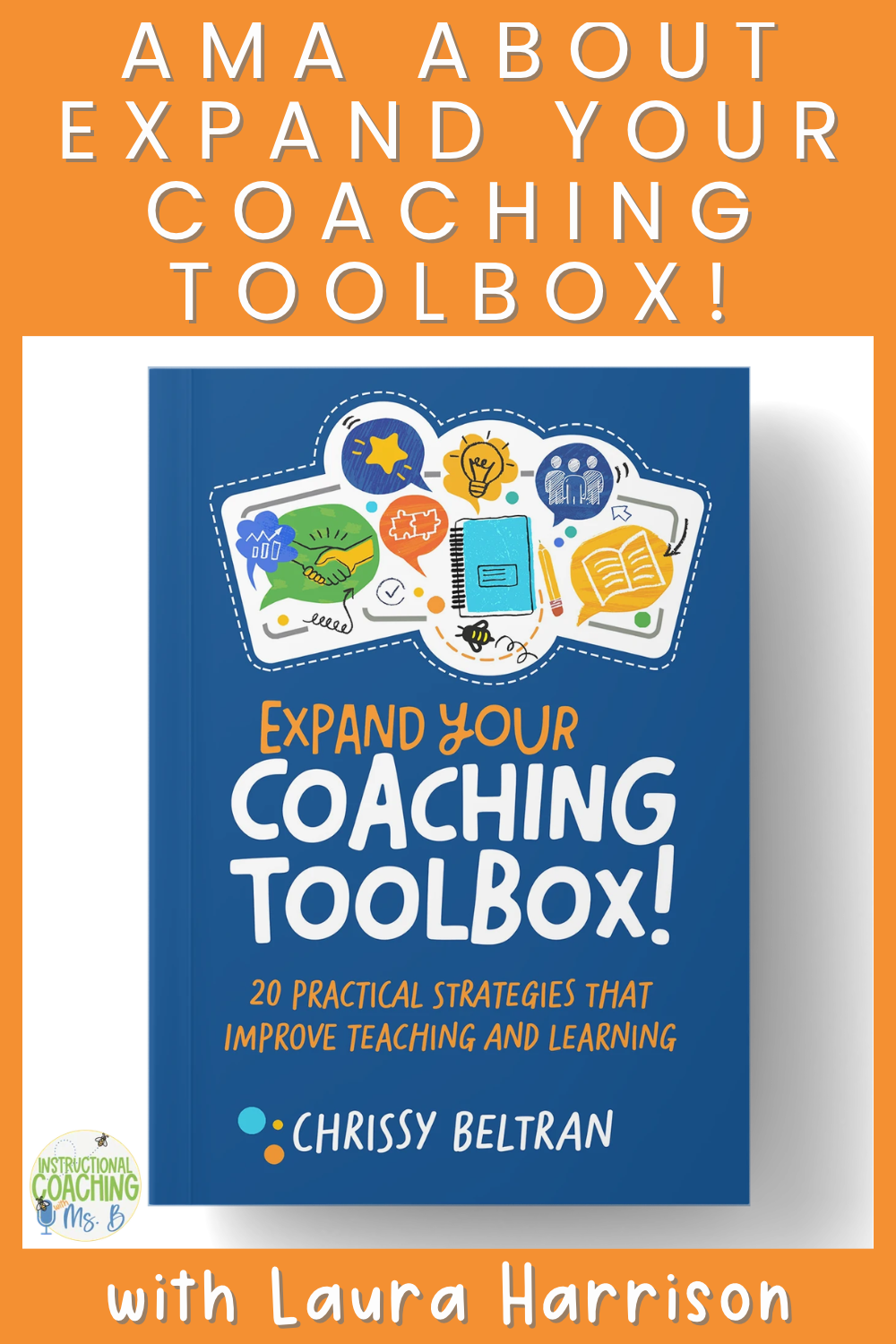
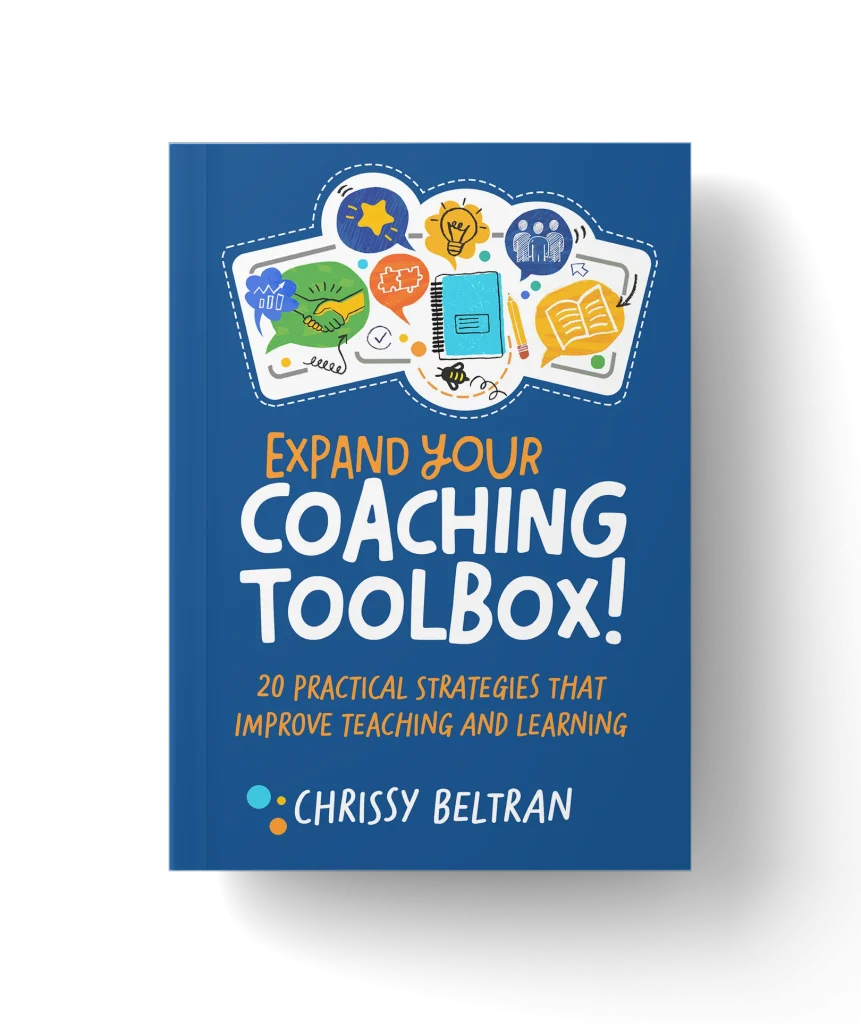
That’s why I wrote my new book, Expand Your Coaching Toolbox!: 20 Practical Strategies That Improve Teaching and Learning. It’s available today, and it’s built around one big idea: coaches need more than one strategy to meet teachers’ needs. Grab the book here!
For this very special 300th episode of Instructional Coaching with Ms. B, I invited my friend and fellow educator Laura Harrison back to the show. She interviewed me for episode 100, so it only made sense to have her back for number 300!
Laura came prepared with lots of questions about my new book, Expand Your Coaching Toolbox!. We talk about how to handle resistant teachers, how to develop relationships that build trust, ways to protect your time when you’re being pulled in a dozen different directions, and how to know if your coaching is actually working.
Want to learn how to be more responsive to what your teachers really need? Grab your coffee and listen to Episode 300 – AMA about Expand Your Coaching Toolbox! with Laura Harrison.
Here are the questions Laura asked, with my answers!
Q1: What made you want to write Expand Your Coaching Toolbox!: 20 Practical Strategies That Improve Teaching and Learning?
After years of working with coaches, I kept hearing the same thing. They read all the books and went to all the PDs, but coaching didn’t fit into the messy reality of their school. And they didn’t feel like they had the freedom to change it.
I wrote Expand Your Coaching Toolbox! to help coaches respond better to what teachers need. There are 20 different strategies and three different levels, so you can customize your coaching depending on the teacher and situation.
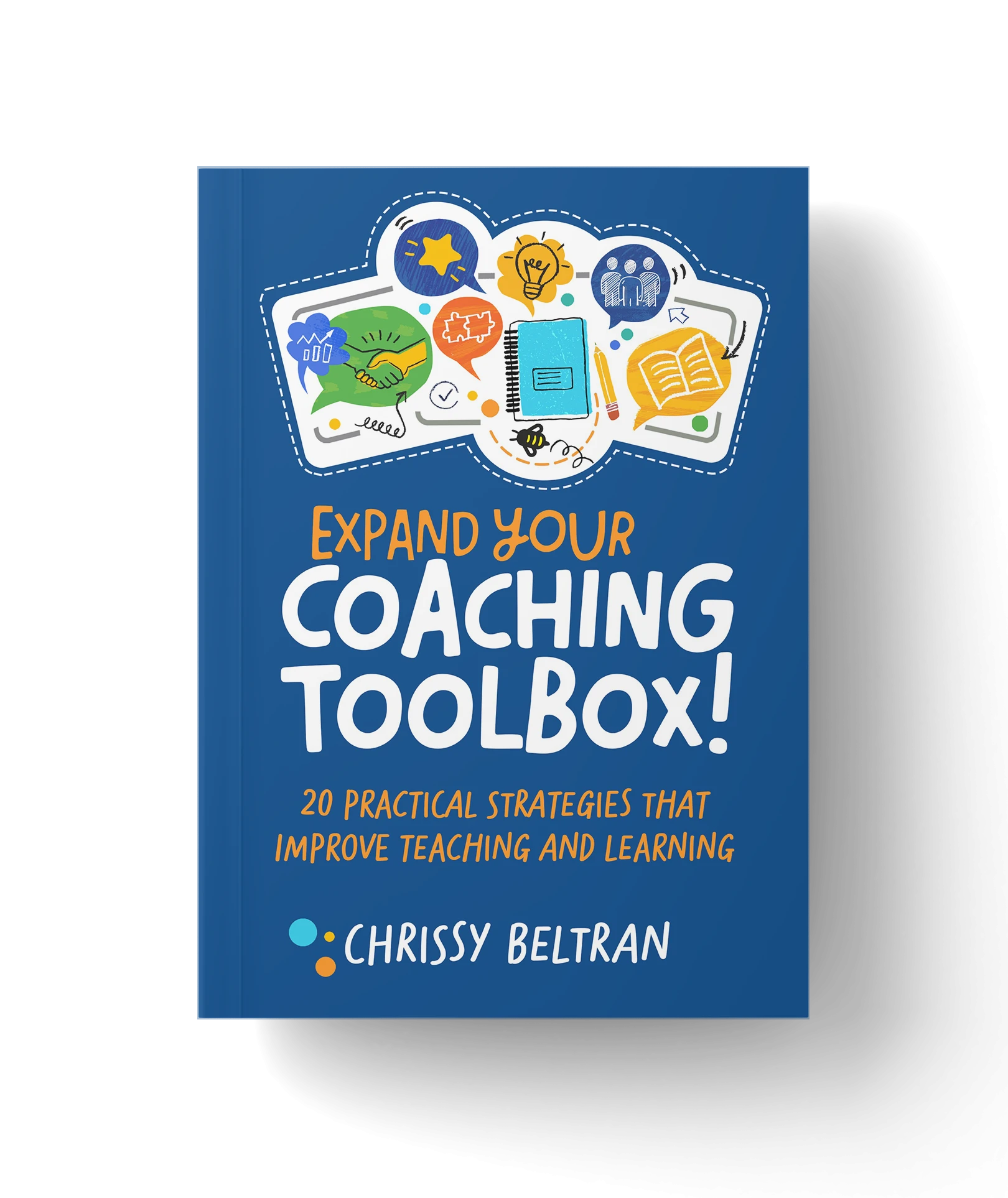
My new book, Expand Your Coaching Toolbox!: 20 Practical Strategies That Improve Teaching and Learning, is now available! If you’re looking for practical ways to work with teachers, respond to their individual needs, and move beyond coaching approaches that haven’t worked in the past, this is the book for you! I really think you’re going to love it!
Q2: How do you build relationships with teachers before coaching even starts?
Relationship-building isn’t always the same “step one, step two, step three” process. Some teachers will be ready to jump into coaching work right away, while others need more time before they feel comfortable.
For teachers who seem hesitant or unsure about coaching, you’ll need to be thoughtful and purposeful about getting into those rooms. Try meeting an immediate need, giving them a quick win, and listening with empathy.
Coaching relationships are unique because they’re not “peer-to-peer” or “admin”. Take time to understand each teacher’s needs before beginning any coaching plans or observations. Building this foundation makes coaching more productive and positive.
Being a sounding board is a great place to start. Read Chapter 2 of Expand Your Coaching Toolbox! to learn more.
Q3: How can literacy coaches protect time for meaningful, sustained coaching?
This is an ongoing challenge for coaches in most schools. Often administrators don’t understand what you could be doing, so you end up fighting for time to do your job.
To fix this, start with a conversation with your administrator about your coaching role. Ask for protected time blocks, even if it’s just three hours a day. If there is an emergency during that time, it’s somebody else’s emergency!
If you’re constantly fighting for time and always getting pulled to do other things, you can’t show up consistently, and teachers notice!
Q4: How can a coach and teacher decide together which coaching activities are worth the time?
In Expand Your Coaching Toolbox! I have a basic scale that rates each strategy by how much time and teacher willingness it takes. Generally, higher-effort strategies have a bigger impact, but they aren’t always what the teacher needs in the moment.
Start with what the teacher truly needs and go from there. When a strategy solves a real problem, teachers make time for it. You can also leverage level two strategies from the book during your PLC meetings to build alignment with a whole team at once.
Q5: How can coaches respond when a teacher is hesitant or resistant to coaching?
Hesitant and resistant teachers are part of the job! With some teachers, you’re going to need to be very deliberate to build the coaching relationship.
Start with Level I Strategies to build the coaching relationship: check in, be a sounding board, recommend resources, and offer tech support. The first four chapters of Expand Your Coaching Toolbox! cover all these topics!
Even then, some teachers are going to be mistrustful of you because they don’t know what you do at the school. Define your role, use a written coaching agreement, and constantly educate people about your job.
Sometimes, teachers’ resistance is about bad experiences with previous coaches or feeling like you’re part of administration. It helps to acknowledge that and have honest conversations with teachers, even if they’re uncomfortable. Like any relationship, time and patience are essential.
Q6: Once you have buy-in, but a teacher is reluctant to try new practices, do you build on what they’re already doing?
Yes! Begin where they are and move them one small step forward. Quick wins are a great way to show teachers that something can work if they just give it a try!
I also like to start with a question that I learned from Steve Barkley: “What would you like your students to do that they aren’t currently doing in the classroom?” You can also ask teachers to make small changes because they don’t seem as scary.
Modeling, co-teaching, and visiting a colleague help people see strategies in action with real students. As a new teacher, I rarely got to see anyone else teach. When I finally observed my friend Denise, it made a huge difference, and I still wonder why schools don’t use this strategy more often.
Section III of Expand Your Coaching Toolbox! includes chapters about Colleague Visits, Lesson Modeling, and Co-Teaching a Lesson. Be sure to grab your copy today!
Q7: How do you balance being supportive with being honest when a practice needs to change?
I believe the most important thing is being responsive to teachers, but there are times when we have to make quick changes for our students’ sake. There are a lot of different schools of thought on this, and there is no right answer.
Some people will tell you to start with something the teacher wants to improve to get in the door and then add things as you build rapport. I’ve found co-teaching can shift practice by showing teachers different ways of doing things. They change because they have the chance to see something taught in action differently. Often, they just need that opportunity to change their perspective.
Q8: Which coaching strategies are most effective for helping teachers move from understanding a practice to doing it confidently in the classroom (and help with classroom management and get students engaged)?
Teachers who struggle with management often cannot envision it another way. They need to see it work with their students before they’ll give it a try.
Sometimes that means modeling a management system they can see work with their students. Start with small changes, then reflect together, and expand on what works.
One teacher I supported sat facing her projector with her back to the class! When I went in to model, I asked her if I could flip it around. Then when she saw it work, she left it that way. For some reason, she was stuck and couldn’t think differently until she saw it from another perspective.
Check out Chapter 6 “Co-Creating a Classroom Management Plan” to learn more!
My new book, Expand Your Coaching Toolbox!: 20 Practical Strategies That Improve Teaching and Learning, is now available! If you’re looking for practical ways to work with teachers, respond to their individual needs, and move beyond coaching approaches that haven’t worked in the past, this is the book for you! I really think you’re going to love it!
Q9: What are the most important test-taking strategies coaches can give teachers?
Instructional coaches need to work with teachers to build strategies for the test students are taking right now, because tests evolve so quickly. We have to be realistic about the format and what students need to do. Then mirror practice assessments to the actual test, chunking and scaffolding learning as needed.
I don’t love state tests, but they’re part of our reality in schools. We don’t do our students any favors by not preparing them.
Q10: How can coaches help teachers adapt a literacy strategy for students with different needs?
One of the processes I explain in Section II of Expand Your Coaching Toolbox! is Co-Creating an Assignment! It’s a really good place to start when you’re thinking about differentiating and making sure every student gets what they need.
Start by co-creating a single assignment and think together about what each student will need. Plan for small accommodations for that one lesson. Afterwards, have a reflective conversation with the teacher and plan how to adapt it moving forward.
Q11: How can coaches tell whether coaching is working, beyond test scores?
I don’t think holding coaches accountable for test scores is the best way to see if coaching is working or not! Test scores only show what kids did in one format on one day.
Instead, do a classroom sweep across the school and look for patterns. Keep track of what you worked on with teachers; when you visit classrooms, record your observations.
Gathering teacher feedback can also help you identify the positive changes that your coaching has made in classrooms. Send out a survey (or even just one question) asking teachers for feedback. This could be an exit ticket at the end of a PLC meeting or faculty conference.
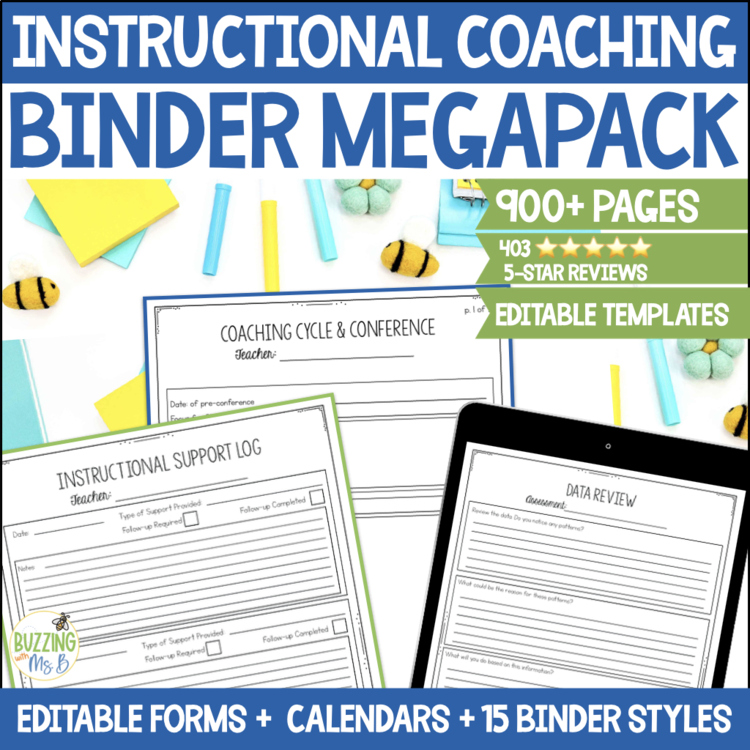
Be ready for anything with the Instructional Coaching Editable Binder Megapack!
It includes forms, templates, and everything you need to get organized for instructional coaching! Coach teachers and document your coaching work with these printable and editable tools. Grab the Instructional Coach Binder Megapack in my Store!
Q12: Can you share an example of coaching that led to an unexpected change in instruction or student learning, and what made it possible?
The first time a teacher told me to jump in and coach them in the moment, it really surprised me! You can read the full story in Expand Your Coaching Toolbox!
Another thing I find interesting is when teachers notice something I didn’t even realize I was doing while modeling and decide they want to try it in their classrooms. It’s not something I meant to show them, but it’s part of my teaching practices.
Laura added that in-the-moment coaching is great for students too. They see that their teacher is still learning, and that it’s okay to make mistakes.
Q13: If a coach could change one part of their practice tomorrow to make coaching more useful for teachers and students, what would you recommend?
Be responsive! Instead of following a rigid structure, look at what the teacher you’re working with needs and coach from there. Then choose one of the high-impact strategies in Section III of Expand Your Coaching Toolbox!, like modeling, co-teaching, or in-the-moment coaching.
AMA about Expand Your Coaching Toolbox!
That was so much fun! Laura really got into the strategies and my experiences with them.
If you want all 20 strategies and the stories behind them, grab your copy of Expand Your Coaching Toolbox! And listen to the full episode to hear our whole conversation!
Topics and Questions Discussed in Episode 300 – AMA about Expand Your Coaching Toolbox! with Laura Harrison
- Ask me anything about Expand Your Coaching Toolbox!
- Why I wrote Expand Your Coaching Toolbox!: 20 Practical Strategies That Improve Teaching and Learning
- Building relationships with teachers before getting into the coaching work
- Developing trust with your teams
- Being a sounding board
- Protecting your coaching time and establishing your role
- Picking coaching activities that are worth the time for both coach and teacher
- Responding to resistant or hesitant teachers
- How quick wins and taking small steps can reduce teacher reluctance to try new things
- Balancing being supportive with being honest when a practice needs to change
- Using modeling and co-teaching to shift practice
- Supporting classroom management
- The most important test-taking strategies a coach can give teachers
- Co-creating an assignment for students with different needs
- Measuring your coaching impact (beyond test scores)
- Conducting a classroom sweep and gathering feedback from teachers
- The impact of in-the-moment coaching
- One change instructional coaches can make to be more useful to teachers
- The power of being responsive and not getting stuck in a rigid model
Turning Insight Into Action: Practical Steps You Can Take After Listening
Here are simple actions you can take today:
1️⃣ Grab Your Copy of Expand Your Coaching Toolbox!: 20 Practical Strategies That Improve Teaching and Learning
If today’s episode resonated with you, you’re going to love my new book, Expand Your Coaching Toolbox!: 20 Practical Strategies That Improve Teaching and Learning. The entire book is built around one idea: coaches need more than one strategy to meet teachers’ needs.
Inside, I share 20 practical coaching approaches—from quick relationship-building conversations and deepening knowledge to high-impact classroom-skill building—so you can meet teachers where they are and make every coaching interaction count. It’s a really great guide that you can go back to over and over again. Check it out!
2️⃣ Join the Instructional Coaching Club!
The Instructional Coaching Club is an online membership designed to help instructional coaches improve instruction at their schools. It gives coaches the tools to go out and do it.
Ready to listen?
This post contains links to products from one or more of our advertisers. This means I may receive commissions for purchases made through links in this post when you click on links to those products. Thank you for your support!
Learn more
- Episode 100 – Turning the Tables on Chrissy with Laura Hunt Palacios
- Episode 299 – Expand Your Coaching Toolbox Success Stories with Gina Armstrong (Throwback)
- Buzzing with Ms. B on Instagram
- Join My Facebook Group: Instructional Coaching with Ms. B
- Chrissy Beltran on LinkedIn
- FREE Bite-Sized Coaching Cycles in 5 Easy Steps!
Helpful Resources
- Grab my book, Expand Your Coaching Toolbox!: 20 Practical Strategies That Improve Teaching and Learning
- Join the Instructional Coaching Club
- Instructional Coach Binder Megapack – Editable Forms, Calendars, Planning Tools
- Buzzing with Ms. B TpT Store
Listen on: Apple Podcasts, Spotify, or your favorite listening app
My new book, Expand Your Coaching Toolbox!: 20 Practical Strategies That Improve Teaching and Learning, is now available for pre-order. If you’re looking for practical ways to work with teachers, respond to their individual needs, and move beyond coaching approaches that haven’t worked in the past, this is the book for you! I really think you’re going to love it!
Thank you for listening to Buzzing with Ms. B: the Coaching Podcast. Want more coaching ideas
Check me out at buzzingwithmsb.com and on Instagram @buzzingwithmsb.
If you love the show, share it with a coach who would love it too, or leave me a review on iTunes! It’s free and it helps others find this show, too. Happy coaching!
Podcast produced by Fernie Ceniceros