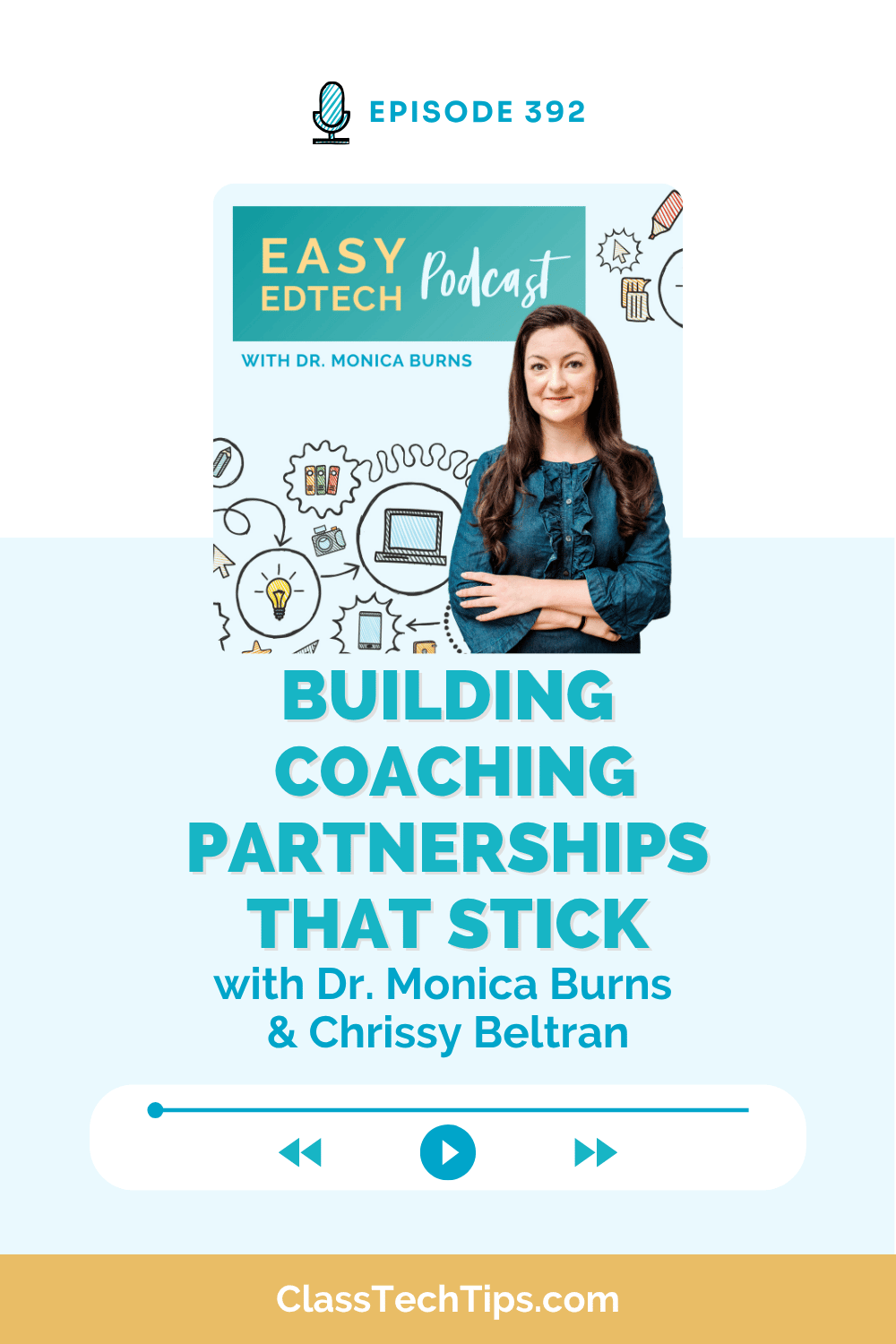
Building Coaching Partnerships That Stick (Easy EdTech Podcast)
Does everyone on your campus actually know what your coaching role is? If the answer is “kind of,” you’re not alone, and it might be the reason some of your coaching partnerships never quite take off.
I got to talk all about this with Monica Burns on the Easy EdTech Podcast, episode 392: Building Coaching Partnerships That Stick. We covered how to define the coaching role, why video coaching is my favorite low-lift, high-return strategy, and what differentiated support looks like when teachers are learning a new tech tool.
Start by Defining the Coaching Role
Coaching partnerships stick when everyone understands what coaching is (and isn’t). Sit down with your school leader before the coaching role starts, or anytime you need a reset, and get on the same page about what your role covers. Then check that your coaching goals and your day-to-day coaching actions actually line up. If your goal is to support instruction but your calendar is full of duties and tech support, that’s a conversation worth having.
Every Interaction Counts as Coaching
Coaching isn’t only the formal six-week cycle. Hallway conversations, PLC moments, and quick check-ins are coaching, too! When you start counting those interactions, you’ll notice more opportunities to nudge practice forward, and teachers will start to see you as a partner instead of an evaluator.
Why Video Coaching Is My Favorite Low-Lift, High-Return Strategy
Video lets teachers see their own classroom through a new lens, without you needing to be in the room for every minute of the lesson. It’s easy to set up, teachers stay in control of what they share, and the reflection conversations that come from it are some of the most powerful I’ve seen. In my book, I organize strategies into low, moderate, and high impact tiers so coaches can pick the right next move, and Monica and I talked through how to use those tiers when you’re deciding what to try with a teacher.
Differentiating Support for New Tech Tools
When a campus rolls out a new tool (hello, AI!), not every teacher needs the same kind of support. Some want a quick demo, some want to plan alongside you, and some want to see it in action first. Whatever the support looks like, tie it to a real assignment based on the standards and objectives teachers are already teaching. That’s what makes a new tool stick.
Listen to the Full Episode
Monica and I go deeper into all of this in the episode. Listen to episode 392 here, or find the Easy EdTech Podcast on Apple Podcasts and Spotify.
Tools to Help You Define Your Role
Ready to get clear with your teachers about what coaching looks like? The Instructional Coaching Agreement helps you and a teacher set expectations for your partnership from the start, and an Editable Coaching Menu shows your whole campus all the ways you can support them.
Keep Reading
- Video Coaching: The Nitty Gritty with Cory Camp
- The Principal’s Role in Instructional Coaching with Nicole S. Turner
Want More Coaching Strategies Like These?
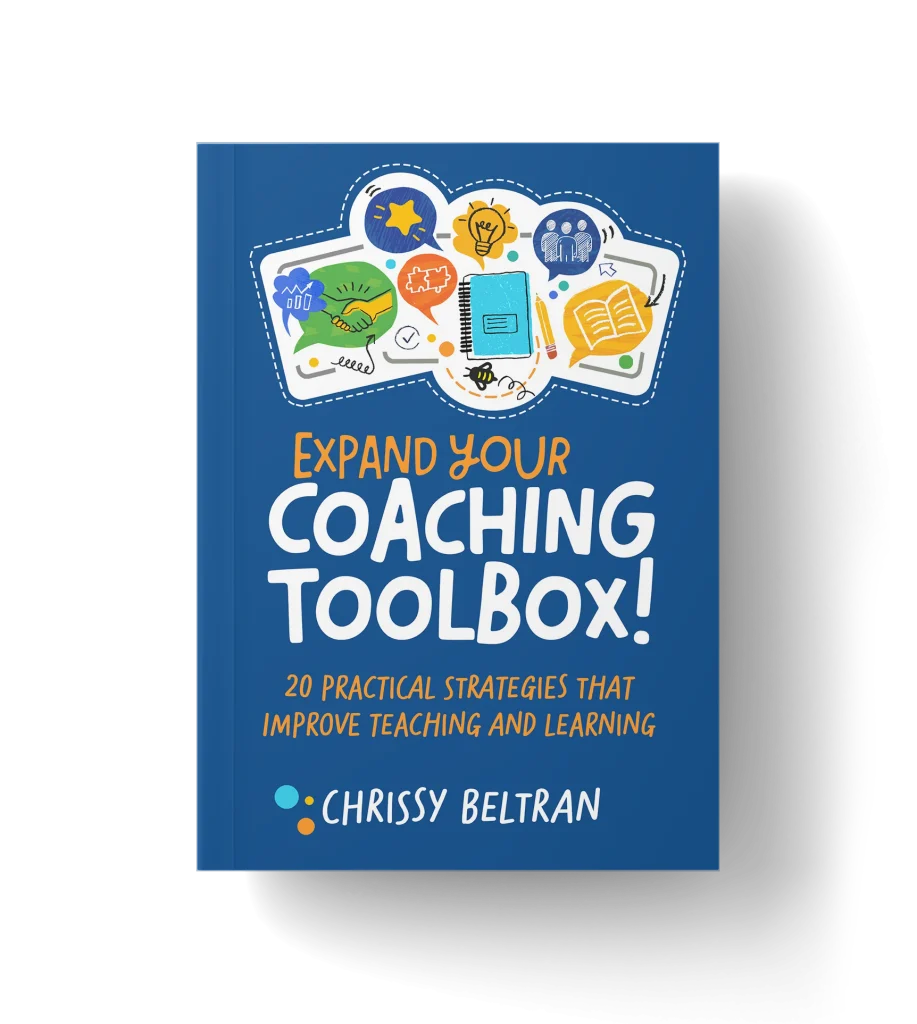
The low, moderate, and high impact tiers we talked about come straight from my new book, Expand Your Coaching Toolbox (ASCD + ISTE). It’s packed with 20 practical coaching strategies for building relationships, building knowledge and alignment, and building classroom skill, so you can meet every teacher right where they are.