| | | | |

Our Favorite Coaching Strategies with Gretchen Bridgers and Nicole S. Turner, ep. 297
Front view of sharpened pencils. These words are in the middle "Our Favorite Coaching Strategies with Gretchen Bridgers and Nicole S. Turner".

What’s your favorite coaching strategy to use with teachers?

👥 Co-teaching?

🧑‍🏫 Modeling? 

🚪 Visit a colleague? 

💡 Something else?

In this episode of Instructional Coaching with Ms. B, we’re doing something special! I invited my coaching besties, Gretchen Bridgers and Nicole S. Turner, to join me for a fun conversation about our favorite coaching strategies! 

To make our discussion a little more interesting, we’re giving it a twist! During the episode, our panel of instructional coaches share their favorite strategies through the lens of senior superlatives. 

Which strategy is Most Likely to Succeed with a Resistant Teacher or Best for PLC Meetings? Listen to the full episode to hear our top picks and the stories behind them!   

Our Favorite Coaching Strategies

Coaching teachers isn’t a one-size-fits-all job! Every teacher is unique, and we can’t coach everyone the same way! As an instructional coach, you need a toolbox full of different strategies to support teachers and help them get where they’re trying to go!

But which strategies are best?

Here are a few of our favorite coaching strategies, inspired by classic yearbook superlatives!
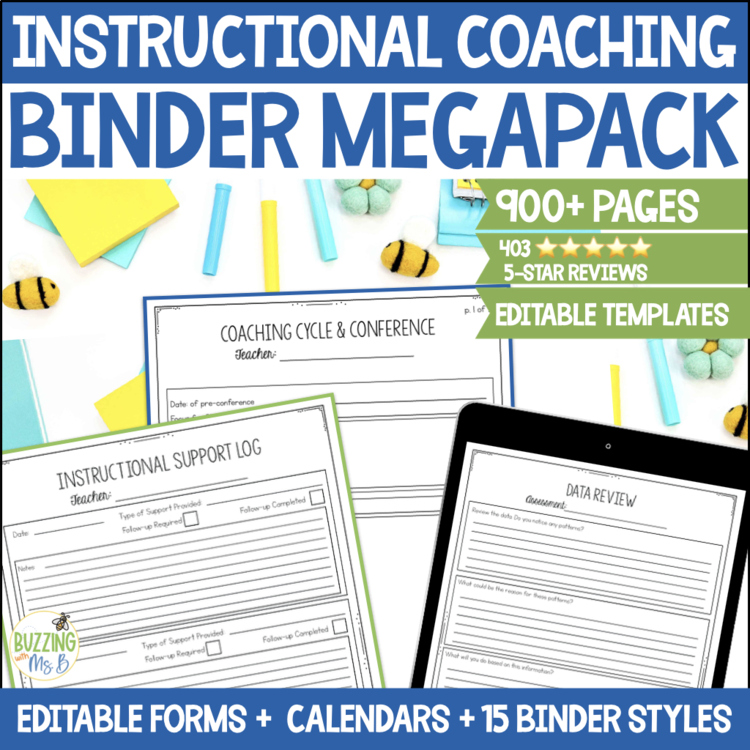
Instructional Coach Binder Megapack of editable forms, calendars, and planning tools

Be ready for anything with the Instructional Coaching Editable Binder Megapack!

It includes forms, templates, and everything you need to get organized for instructional coaching! Coach teachers and document your coaching work with these printable and editable tools. Grab the Instructional Coach Binder Megapack in my Store!

Most Improved: Strategies that Create Huge Changes in the Classroom

To kick things off, I ask the coaching panel: “What is the strategy in your toolbox that you pull out whenever you want to see big changes in instruction?”

The conversation focused on two important strategies that deliver big shifts in teaching and learning:

Student-Centered Coaching (Gretchen)

Gretchen suggests using a student-centered coaching approach, shifting the focus from watching the teacher to looking at what students are doing and how they’re responding to instruction. Rather than focusing feedback primarily on teacher actions, instructional coaches can help teachers reflect on student learning and use those insights to guide their next steps.

Student Work Analysis (Nicole)

For Nicole, the best strategy for creating meaningful change is looking at student work. By examining student work together, we can identify what’s working and where students are struggling. While data alone can reveal who didn’t get it right, looking closely at student work can help us uncover why. Analyzing student work helps teachers notice patterns, target reteaching, and choose strategies to address learning gaps.

I love this strategy so much that I dedicated an entire chapter to it in my book, Expand Your Coaching Toolbox!: 20 Practical Strategies That Improve Teaching and Learning!

Focusing on Students (Chrissy)

Both of these strategies can create those powerful “aha!” moments for teachers, and that’s when we see the most growth in classrooms. Looking at student work is one of my favorite strategies because it can really shift people’s perspectives and spark meaningful conversations about student learning.

Watch episode 297: Our Favorite Coaching Strategies with Gretchen Bridgers and Nicole S. Turner

Best Team Player: Our Favorite Coaching Strategies for PLC Meetings and Collaboration

Next, I ask: “What’s your go-to strategy for getting teachers to collaborate when they meet with their teams?”

Our discussion explored different approaches that put collaboration, learning, and progress at the center:

Bringing Student Work to PLCs (Gretchen)

Student work gives teacher teams the ability to explore what happened and why. By looking at student work, PLCs can spot patterns, identify what might be causing them, and draw on their collective expertise to figure out what to do differently for better results. A crucial point Gretchen raised was the need to build time to put these changes into practice and then cycle back to revisit what worked.

Collaborative Team Planning with Protocols (Nicole)

After we complete the student work analysis and know where the students are at, it’s time to do some team planning. Nicole says she loves team planning because of the opportunities it provides for collaborating, sharing, and utilizing the strengths of other people in the room. She tells us that this is her favorite strategy because teachers leave with a lesson done and new ideas to try in the classroom.

Collaborative team planning is such a powerful strategy that I dedicated an entire chapter to it in my book, Expand Your Coaching Toolbox!: 20 Practical Strategies That Improve Teaching and Learning!  

Co-Designing Assessments (Chrissy)

Building assessments isn’t typically a priority in our PLCs, but the conversations it sparks and the structure it provides for collaborative work are incredibly valuable! Working together to create assessments helps teams align their work to the standards and develop a shared understanding. Designing assessments might not be the most exciting part of the work, but the collaboration and clarity it creates make it important!

My new book, Expand Your Coaching Toolbox!: 20 Practical Strategies That Improve Teaching and Learning, is now available for pre-order. If you’re looking for practical ways to work with teachers, respond to their individual needs, and move beyond coaching approaches that haven’t worked in the past, this is the book for you! I really think you’re going to love it!
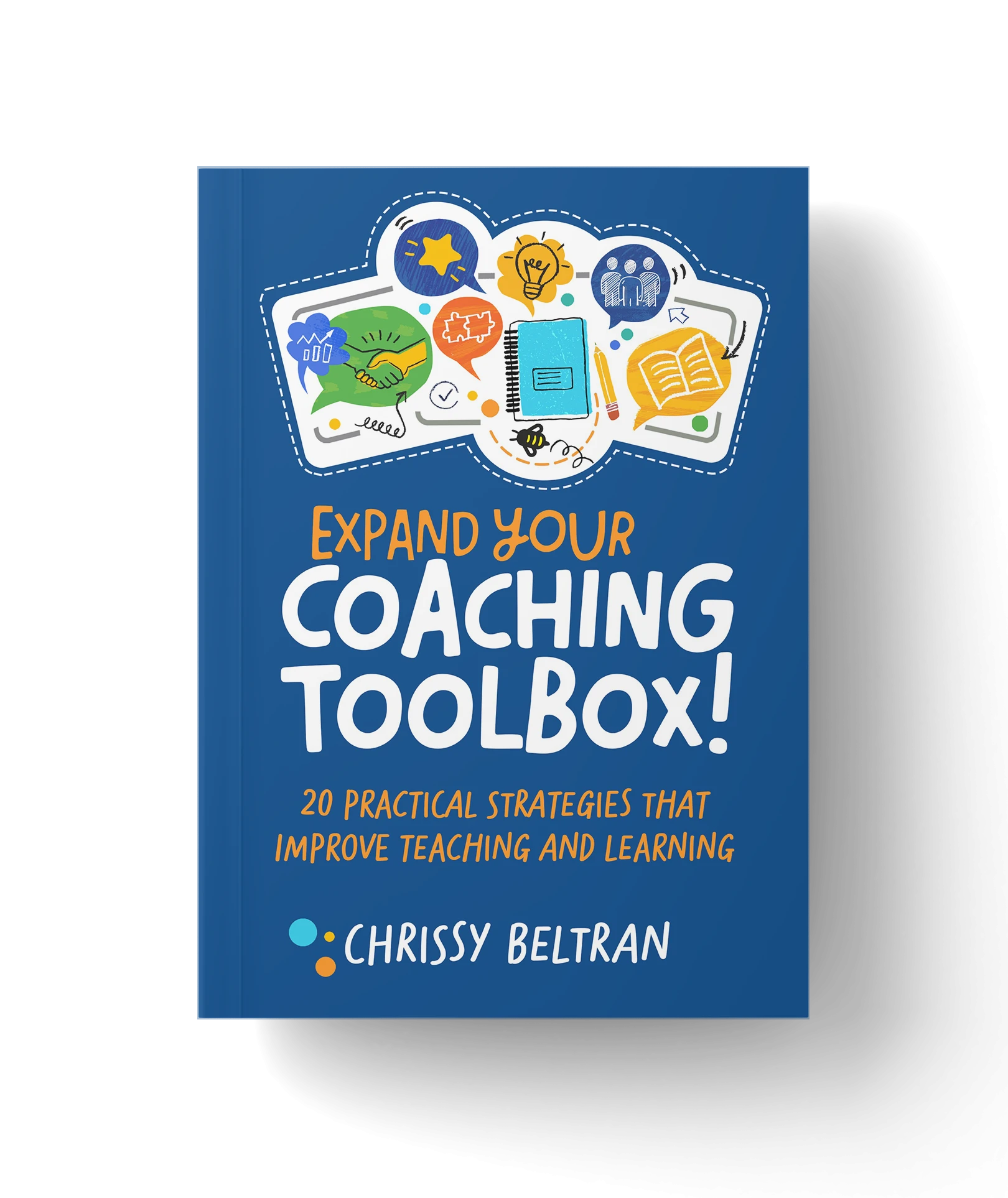
Expand Your Coaching Toolbox! book by Chrissy Beltran - 20 practical strategies for instructional coaches

Most Likely to Succeed: Coaching Resistant Teachers

Finally, I ask Gretchen and Nicole, “Which strategy is most likely to succeed with a teacher who doesn’t want to be coached?”

Every coach faces resistant teachers at some point in their career. Here are a few tried-and-true strategies to get your foot in the door and build trust:

Start by Being Helpful (Gretchen)

Gretchen recommends showing up as yourself and asking teachers, “How can I help you today?”, even if that means starting with a non-coaching task. The intention is to build rapport and show teachers you’re there to assist, not judge or try to “fix” them. It’s important not to get stuck in helper mode, but to use these interactions to build trust and get your foot in the door.

Video Coaching (Nicole)

Video coaching is a powerful tool for self-reflection. Watching themselves on video gives teachers a chance to see their classroom practice and student responses objectively. When teachers review the recording, they often spot opportunities for growth, making the coaching conversation much easier. This is my favorite strategy to use with teachers who aren’t quite ready to be observed yet.

Visit a Colleague (Chrissy)

I love video coaching, but when a teacher is hesitant, I encourage them to visit a colleague’s classroom instead. Sometimes, seeing a peer successfully implement a new strategy right down the hall is all it takes to spark a sense of possibility and build confidence. This approach is especially helpful for teachers who are resistant to coaching because they see it as someone coming in to evaluate their teaching or tell them what to do.

Want to learn more about using video coaching or visit a colleague with teachers? Read about them in my new book, Expand Your Coaching Toolbox!: 20 Practical Strategies That Improve Teaching and Learning!, for ideas to get started!

Expand Your Coaching Toolbox! book by Chrissy Beltran - 20 practical strategies for instructional coaches

My new book, Expand Your Coaching Toolbox!: 20 Practical Strategies That Improve Teaching and Learning, is now available for pre-order. If you’re looking for practical ways to work with teachers, respond to their individual needs, and move beyond coaching approaches that haven’t worked in the past, this is the book for you! I really think you’re going to love it!

Our Favorite Coaching Strategies

There you have it, our favorite coaching strategies for different situations! I really enjoyed my conversation with Gretchen and Nicole! It was so much fun hanging out with people who are as passionate about this work as I am!

As instructional coaches, we need to have a toolbox of strategies that help teachers grow and improve student outcomes. In my book, Expand Your Coaching Toolbox!, I share 20 practical strategies that coaches can use throughout coaching cycles to strengthen teaching and learning.

Having a variety of approaches allows instructional coaches to be intentional about when and how to use them. The goal is to help teachers build a strong instructional toolkit grounded in effective pedagogy and strategies, not simply to get better at implementing a specific curriculum.

The best instructional coaches know one size doesn’t fit all; instead, they draw on their toolbox to meet teachers where they are and help them discover what’s possible. Because when teachers improve, our students benefit!

And don’t forget, Always Be Coaching! Every interaction with a teacher is an opportunity to coach!

Listen now to hear about everything we discussed, and be sure to pre-order my new book, Expand Your Coaching Toolbox!: 20 Practical Strategies That Improve Teaching and Learning!

Topics and Questions Discussed in Episode 297 – Our Favorite Coaching Strategies with Gretchen Bridgers and Nicole S. Turner

  • Our favorite coaching strategies
  • Coaching strategies that create a huge change in classrooms: Student-centered coaching and analyzing student work
  • Best strategies to use in PLC meetings: Bringing student work to PLCs, collaborative team planning, co-planning assessments
  • Coaching resistant teachers: Start by helping, video coaching, and visit a colleague

About Gretchen Bridgers
Gretchen Bridgers is the founder of Always A Lesson. She is an instructional coach, professional learning consultant, author, and podcast host. Through her work, Gretchen helps educators strengthen instruction, leaders lead professional learning, and schools turn great ideas into lasting practice.

About Nicole S. Turner
Nicole S. Turner is a nationally recognized K–12 education leader, author, and creator of the Simply Coaching Framework™. She has helped thousands of educators build sustainable coaching systems that raise teacher effectiveness and student achievement. Guided by her belief that when we grow teachers, we grow students, Nicole founded the Simply Coaching Summit and authored Simply Instructional Coaching and The SIMPLE Blueprint for Instructional Coaching™ Workbook.

Turning Insight Into Action: Practical Steps You Can Take After Listening

Here are simple actions you can take today:

1️⃣ Pre-Order Expand Your Coaching Toolbox!: 20 Practical Strategies That Improve Teaching and Learning

If today’s episode resonated with you, you’re going to love what’s coming in my new book, Expand Your Coaching Toolbox!: 20 Practical Strategies That Improve Teaching and Learning. The entire book is built around one idea: coaches need more than one strategy to meet teachers’ needs.

Inside, I share 20 practical coaching approaches—from quick relationship-building conversations and deepening knowledge to high-impact classroom-skill building—so you can meet teachers where they are and make every coaching interaction count. It’s a really great guide that you can go back to over and over again. Check it out!

2️⃣ Join the Instructional Coaching Club!

The Instructional Coaching Club is an online membership designed to help instructional coaches improve instruction at their schools. It gives coaches the tools to go out and do it.

Ready to listen?

  • Ready to listen? You can listen below with the media player, or search for Buzzing with MS. B: The Coaching Podcast anywhere you listen to podcasts!

This post contains links to products from one or more of our advertisers. This means I may receive commissions for purchases made through links in this post when you click on links to those products. Thank you for your support!

Learn more

Helpful Resources


Listen on: Apple Podcasts, Spotify, or your favorite listening app

Expand Your Coaching Toolbox! book by Chrissy Beltran - 20 practical strategies for instructional coaches

My new book, Expand Your Coaching Toolbox!: 20 Practical Strategies That Improve Teaching and Learning, is now available for pre-order. If you’re looking for practical ways to work with teachers, respond to their individual needs, and move beyond coaching approaches that haven’t worked in the past, this is the book for you! I really think you’re going to love it!


Thank you for listening to Buzzing with Ms. B: the Coaching Podcast. Want more coaching ideas

Check me out at buzzingwithmsb.com and on Instagram @buzzingwithmsb.

If you love the show, share it with a coach who would love it too, or leave me a review on iTunes! It’s free and it helps others find this show, too. Happy coaching!

Podcast produced by Fernie Ceniceros
Our Favorite Coaching Strategies with Gretchen Bridgers and Nicole S. Turner , ep. 297, Instructional Coaching with Ms. B Podcast

Chrissy Beltran [00:00:00 – 00:01:16]

Hey, everybody. Welcome to episode two ninety seven in instructional coaching with miss b. Today, we are doing something special. I’ve invited a couple of my coaching besties on the podcast, and we are going to chat about our favorite coaching strategies. I’m so excited to do this because I am introducing my new book to you, Expand Your Coaching Toolbox. This toolbox is full of 20 different strategies that improve teaching and learning by giving you the tools you need to work with teachers in varied situations and for varied purposes. So I really hope that you can check it out. That book is, available for preorder right now, and it will be available in November, for actual order. And so you can get that, at buzzywithmissb.com/toolbox, and I hope that you love it. So today, we’re gonna dig in with my friends, Nicole Turner and Gretchen Bridgers, all about our favorites… Favorite favorite strategies. And we’re gonna use a senior superlatives theme to do this, to kinda talk about some of the different things that we do and the way that we see… The way that we coach teachers. So, stay tuned because it’s pretty fun. So let’s welcome my friends, Nicole Turner and Gretchen Bridgers to the podcast. Thank you so much for being here, guys.

Gretchen Bridgers [00:01:17 – 00:01:18]

Hey. What’s up?

Chrissy Beltran [00:01:21 – 00:01:32]

It took me a good… We’ve been on the phone. We are on the phone. We’ve been on this call for a good twenty minutes already at least. And and I’m I’m amazed we found a break in the conversation to start recording. So

Nicole Turner [00:01:32 – 00:01:33]

Right. Exactly.

Gretchen Bridgers [00:01:34 – 00:01:38]

Because we’re not all ever together, so it’s fun to just catch up.

Chrissy Beltran [00:01:38 – 00:01:40]

Yeah. That’s true. That is true. That is what makes it nice.

Gretchen Bridgers [00:01:40 – 00:01:40]

Yeah.

Chrissy Beltran [00:01:40 – 00:02:05]

So today, we’re gonna do something hopefully kind of fun. We’re gonna talk about coaching strategies, but we’re doing this in the context of senior superlatives. So if you remember, like, whenever you graduated high school and you got your yearbook and there’s somebody in the yearbook had the best smile and somebody was most likely to succeed and somebody was, like, the cutest couple or whatever. I don’t know. Anybody… Can anybody remember any weird ones that were… Sometimes you’re like, that’s okay.

Nicole Turner [00:02:05 – 00:02:12]

I don’t I don’t remember any of them or any of my the people do those. I like… I don’t remember me even doing those.

Gretchen Bridgers [00:02:12 – 00:02:15]

Do you have a yearbook? You’re gonna have to go look that

Chrissy Beltran [00:02:15 – 00:02:15]

up. Yeah.

Nicole Turner [00:02:15 – 00:02:18]

Yeah. It’s at my mom’s house. Oh, there you go.

Gretchen Bridgers [00:02:18 – 00:02:19]

I bet you even got one.

Nicole Turner [00:02:20 – 00:02:21]

In the basement somewhere.

Chrissy Beltran [00:02:23 – 00:02:44]

You gotta dig in the basement. I remember because one of my good friends is, he was voted most likely to succeed, and I love him dearly. And he had the hardest time getting after high school because he did not immediately succeed. And so I always remember that. You know? Because he was like, well, this is not… This is a lot harder than expected. So it was…

Nicole Turner [00:02:45 – 00:02:47]

I was probably least likely to succeed.

Gretchen Bridgers [00:02:47 – 00:02:50]

Least likely. But look at you now.

Chrissy Beltran [00:02:50 – 00:02:54]

Look at you now. Look at… You know what? That just goes to show. Nobody knows what’s gonna happen after high school.

Gretchen Bridgers [00:02:54 – 00:02:57]

Yeah. It’s all about what you do with it. Mhmm.

Nicole Turner [00:02:57 – 00:03:06]

Absolutely. I I I say that all the time because, right now, my daughter… Now this is so off topic, but this is our normal…

Gretchen Bridgers [00:03:06 – 00:03:06]

That’s very on brand….

Chrissy Beltran [00:03:06 – 00:03:08]

On top of it. Yes.

Nicole Turner [00:03:08 – 00:03:15]

It’s on brand for us to do this. But my daughter, Chrissy… Big Chrissy is little Chrissy.

Gretchen Bridgers [00:03:15 – 00:03:15]

Uh-huh.

Nicole Turner [00:03:15 – 00:04:18]

So we have little Chrissy. She is she is transitioning, you know, through her medical program. So she’s doing a post bacc, program to get into med school. And it’s so funny because it’s taking her a little bit longer to study, and then I’m like, it’s okay. Like, you know, she was like, but no. I’m supposed to be perfect, and I’m supposed to have it done. I’m supposed to match it. I’m like, no. That’s not how this goes. So when you said, like, most likely person to succeed or most that likely person to succeed, when people feel like they want… They should be succeeding so much and it doesn’t go the way that they they they think it should, they struggle. I have to tell her all the time that, she… Life is not linear. Right? There are gonna be some ups and downs, some rollercoasters, some circles, some jumping off the tracks, some getting back on the track, like, all of that. So that that… When you said that, it just reminded me of the conversations that I have with her, like, almost every week.

Chrissy Beltran [00:04:18 – 00:04:29]

Yeah. I think that’s a really good point because that’s something we keep in context whenever we work with our teachers. We have to understand that they sometimes don’t see themselves the way that we see

Gretchen Bridgers [00:04:29 – 00:04:30]

them. Mhmm.

Chrissy Beltran [00:04:30 – 00:04:57]

And, and sometimes they’re trying to be what they think they’re supposed to be. They’re trying to jump through all these hoops, and they’re struggling, and they’re frustrated because it’s not an easy job. And so that’s actually really helpful. Whenever we think about working with teachers, we’re getting the benefit of the doubt because they are just we don’t always understand where they’re coming from. And so, like, if somebody’s trying to work with Chrissy, she’s got these ideas about what she’s supposed to be doing and she’s all stressed out about it. And so they have to know that kind of thing if they wanna

Nicole Turner [00:04:58 – 00:05:16]

help her out. Definitely. But but think about it when… I I say this all the time, like, we’re not trying to create Stepford Wives. Right? So even Yes. Change it to the coaching perspective, right, of, like, we’re not trying to replicate ourselves immediately. Yeah. We’re literally trying to bring out the best in the teacher.

Chrissy Beltran [00:05:16 – 00:05:17]

So Yeah.

Nicole Turner [00:05:17 – 00:05:21]

Think about working… Yeah. Think of helping them bring their vision to life for the classroom.

Chrissy Beltran [00:05:22 – 00:06:08]

Yes. I am glad that you said that because that’s gonna kinda segue into what we’re talking about today. With… We’re… Whenever you are coaching, you’re… You’ve got a toolbox full of strategies, and they’re all different because you’re gonna pull out the strategy that’s gonna support that teacher in that moment to get where they’re trying to get. Right? Yeah. And so I love that you’re talking about differentiating and being aware that people are different and teachers are different. We don’t coach everybody the same because they’re all different people. Yeah. So the first superlitter that I wanna ask you about is which strategy would be, like, most improved that… Because it helps create a huge change in the classroom. What is the strategy that you have, like, in your toolbox that you pull out whenever… And and every time you do, you see, like, a big improvement, a big change in instruction. Want me to go? Go for it.

Nicole Turner [00:06:09 – 00:06:10]

Yes. Go ahead, Gretchen.

Gretchen Bridgers [00:06:11 – 00:06:17]

I like that quick self correct. How come? On the GBs,

Nicole Turner [00:06:18 – 00:06:19]

but Yeah. You know, or Bridgers.

Chrissy Beltran [00:06:20 – 00:06:22]

Right? So I was like Gretchen.

Gretchen Bridgers [00:06:23 – 00:07:18]

You’re like, what’s your real name? So one shift that I thought was really helpful, first coaching, and I would go in and look at the teachers and all their actions. And I might be like, wow. You topped straight for twelve minutes without getting some engagement going. And that was helpful and and led to some changes. But the longer I coached, the more I paid attention to the kids. Like, how are they responding to what they’re doing? And, yes, the technique that the teacher’s doing, they need feedback on that, but the impact comes with how kids respond. Is everybody thinking? You know? Instead of saying, you know, you talk for twelve minutes, I might say, during the twelve minutes I was in there, only four kids were able to process and produce something based on what you said. How can we increase that number next time? And so I think, yes, you kinda have to do the dual thing of what’s the teacher doing, how can we get them better, but also how are kids even responding to this person. Mhmm.

Chrissy Beltran [00:07:18 – 00:07:24]

Yeah. I love that. You’re, like, student focused questioning and Yeah. And coaching around student outcomes.

Gretchen Bridgers [00:07:25 – 00:07:26]

Yes. Yeah.

Chrissy Beltran [00:07:26 – 00:07:29]

I love it. That’s great. What do you do? What do you

Nicole Turner [00:07:29 – 00:09:45]

pull out, Nicole? My my… I think the best strategy student work analysis. Mhmm. And going back to what Gretchen was saying, like, you know, looking at the students. So looking at the student work. So we were doing, like, data dives. Right? And what was happening is is that we were doing them… The data dives and we were looking at the data, but we were looking at the holistic data. Right? So, like, mastery, non mastery, partial mastery. Right? And that’s what we normally do on a data dive. We look at the… Though… That piece and then we say, okay. These tools need to be retaught, you know, for this one and, you know, these probably you just put them on Ag Sail or something like that, you know, and then this is… You could, you know, push them or whatever. But what happened is is then I start working with teachers and say, okay. Now you need to reteach this. Well, when I was asking them to reteach it, they want to reteach it in the exact same way in which you were teaching it in the first way. And I was like, no. And then second, I was saying, let me ask you this this question. How do you know what to reteach? How do you know what they don’t know? So we were working, just a a couple of weeks ago, was working with, some coaches and so we were looking at student data. And so, we’re looking at student work. And so it was a multi… Was it division? Multiplication. It was a multiplication. They were doing the grouping, then they were doing the adding and all that stuff. And so what was happening is is that the kids understood the the the process. They understood the process of how to do this problem, but the computation was wrong. And so if you just would have looked at at mastery, partial mastery, and, why. You… Right. Exactly. You didn’t know why. And though that teacher would have re taught that same concept with… Based on the steps thinking, okay. They don’t know this part. But until you look at student work analysis, then that’s where it’s gonna see. Okay. Well, here is the theme. Here is the pattern that we’re seeing in the students. And so now we can strategically reteach what I call the holes in whatever it is that they have. And so we’re filling up…

Gretchen Bridgers [00:09:45 – 00:09:45]

Swiss cheese.

Nicole Turner [00:09:46 – 00:09:49]

Yes. Absolutely. Well, now I’m a steal that with Gretchen.

Chrissy Beltran [00:09:49 – 00:09:50]

I’m a be so prepared with Swiss cheese.

Gretchen Bridgers [00:09:50 – 00:09:51]

I’ll allow you to share

Chrissy Beltran [00:09:52 – 00:09:53]

it with me.

Nicole Turner [00:09:53 – 00:10:12]

But… Yeah. So that’s that’s one of the biggest the biggest pieces I think that really shift because, I mean, like, you know, giving feedback and modeling modeling is on the the bottom of my list. It is now. But all of the other stuff is is really good. I know you only asked me for one strategy, so I’m a be quiet.

Chrissy Beltran [00:10:12 – 00:10:16]

That’s okay. You’re good. No. I’m glad you shared that with you because that’s actually one of my favorite. How do you mute?

Gretchen Bridgers [00:10:16 – 00:10:18]

Where’s the mute button for…

Nicole Turner [00:10:18 – 00:10:19]

You can put… In front of Nicole.

Chrissy Beltran [00:10:20 – 00:11:13]

That’s one of my favorites, and I actually have a whole chapter in my book about it because I love looking at student work together because the conversations that you have, they are… They do really change the way people think. And then if you can get people truly collaborating around student work and looking at what are students producing, you know, well, what did you do? What did you do that that created that outcome, you know, that I could now try? It’s like, it’s so eye opening to teachers. And so I love… That’s one of my favorite favorite, like, strategies to use with, like, a team. I love… I do use it individually as well. But to use with a team, I love that one because it just creates these these cross grade or department Absolutely. So that brings me to teams. Which strategy is the best team player to use in PLC meetings? What strategy do you love to get teachers collaborating, whenever they’re working with their teams?

Gretchen Bridgers [00:11:13 – 00:13:06]

I’m gonna add on to what y’all are talking about with data. Like, bringing the work samples in, even if it’s not your student, there’s a shared responsibility that these are our kids. We have to not just label, like, what had happened, but there’s the why. Get to the root of what happened after you’ve seen the patterns, like Nicole was saying. Figure out why it happened. Then you’ve got your cause, and it’s talking through using everyone’s expertise of, okay, what could I have done differently? How can I reteach it in a different way? What different types of questions do I need to ask? How do I break it up into smaller chunks? And we’re just better together, and we have to use each other’s minds in that way. But I would push it further to say, we actually have to have time to implement the change. And as you all know from teaching, it’s like, oh, we’re in the next unit already. Like, maybe next year, I’ll I’ll learn from what we decided and implement it. And it’s like, we gotta figure… There’s no time. You have to find nooks and crannies to redo it. So if you’ve come up with a game plan of of what to do differently, how to reteach, whether it’s in a small group, whether you’re pulling one on one, whether it’s morning work, spiraling skills, or homework, I mean, you have to find another way to grab those kids, reteach it, collect the evidence again, and then you come back in your PLC and you’re like, okay. We bombed on this. We chatted together about a few things. We found the root of the issue, a solution forward, and look what happened. And now you can say, we can move on. Even though if your curriculum has moved on in your whole group lesson, your small group lesson could still be going through the things that have already been taught that are still not solidified. And so I think we miss the PLC kinda just keeps things moving instead of, like, hold on. Let’s come back to this. Let’s not let this go until we know for sure we’re good to go. And even if it’s not your own kids, it’s like, man, this one group of kids is not getting it. What are we doing together to help them be successful?

Chrissy Beltran [00:13:07 – 00:13:28]

Yeah. I like that. Oh, you’re… It’s it’s like you’re analyzing the work. You’re looking at the data. And I think that together, those two things are really powerful because it’s, like, the what happened and the why why it happened, right, context. But then you’re also saying, okay. What are the next steps? How are we going to implement something that’s going to change what we’re seeing? Because it’s not… We’re not gonna… That’s lovely that we walked away from this conversation knowing that a

Gretchen Bridgers [00:13:28 – 00:13:28]

lot of our kids

Chrissy Beltran [00:13:28 – 00:13:31]

are writing news, but they did. Now what are we gonna do to get them to

Gretchen Bridgers [00:13:31 – 00:13:33]

the four or whatever it is that they need

Chrissy Beltran [00:13:33 – 00:13:37]

to be? So I think that’s so valuable. Yeah. Yeah. What do you got, Nicole?

Nicole Turner [00:13:38 – 00:13:41]

So I’m taking Gretchen’s to the next level.

Chrissy Beltran [00:13:41 – 00:13:42]

Oh. And

Nicole Turner [00:13:42 – 00:14:24]

mine is more around team planning. So after we have did the the student work analysis and really kinda see where those those kittles are, mine is more around the team planning, which I think is really important. And what I really love about the team planning is the opportunities for collaboration and sharing, and and utilizing other people’s strengths in the room. So I know there’s a lot of times where we have, like, we may have a a new third grade team. Right? And it may be, two veteran teachers and a and a a novice teacher, right, on that team. And so the two veteran teachers are like, teachers are like, I already

Chrissy Beltran [00:14:24 – 00:14:26]

come on a lesson or whatever.

Nicole Turner [00:14:26 – 00:15:02]

Right? And then the the novice teacher is just like hanging on on to the side. But what I love to do is bring them together, and I use a protocol, called build inside of my, inside of my co planning with the team. So you could do this with individuals, you do it with teams. And basically, the the build protocol, it’s just where you just like begin with the learning, you know, where you kinda start with your unit planning. Right? So we’ll take people to look at the bigger picture. Here’s one thing that I want us to to think about is that… And and and this is something

Gretchen Bridgers [00:15:05 – 00:15:07]

Let’s get a drum roll. Alright. Controversial.

Nicole Turner [00:15:09 – 00:16:11]

This is what I feel like. I feel like I I have a love and hate relationship with curriculum maps and with pacing guides. Because in one instance, it’s like… Is this like, okay. Yeah. That’s great. Like, thank you for that. But if you give me the curriculum map and you’ve unpacked the standards and you’ve unpacked out that and given me the skills and I don’t know exactly why I’m doing what I’m doing, then it becomes pointless. And I feel like we are we are definitely stopping the growth of our teachers because we don’t have them to understand. So in that team planning, when I’m with them, the very first thing is that we unpack the standards and we look at the curriculum map. It doesn’t matter that they gave it to me. Me. What it is is that we’re gonna have that conversation. Right? Because a lot of times we’re building teachers, who… Or we’re having teachers to turn to page 56 e and they just read it.

Chrissy Beltran [00:16:11 – 00:16:12]

We were just… Right.

Nicole Turner [00:16:12 – 00:16:19]

They don’t know why… Yeah. They don’t even know why. They don’t even know why you you doing the lesson. Like, they don’t know what the outcome of the skill is.

Chrissy Beltran [00:16:19 – 00:16:24]

Like, what is the purpose? How is it building on a previous thing towards another thing? Yeah. Exactly.

Nicole Turner [00:16:24 – 00:17:35]

And so that’s why it starts with that conversation, then we unpack the standards, and we create, the success criteria. Right? Learning targets the success criteria. But I like to take it to that next level and having them to identify those pre requisite skills that they… That that students need for that particular standard of that skill. And I feel like that’s super important because just like what Gretchen said, like, put it in a spiral. Right? Like, do all those things early. What I really like is is is having my teachers or that team to do the prerequisite assessment early on. So, like, if you know you’re gonna get to this unit in three weeks, go ahead and do… And it could be a very simple do now. You know, a spiral in the morning. Right? And then you just have them to do the problems that align to the skills, the the the prerequisite skills. Not the skills that you’re gonna teach, but the prerequisite skills to make sure they understand the foundation. Because if they don’t, then you can start to build that spiral or that homework or that, you know, small group activities to build… To close the the Swiss cheese holes.

Gretchen Bridgers [00:17:36 – 00:17:39]

There it is. Right.

Nicole Turner [00:17:39 – 00:19:11]

So then so then in that planning meeting, that’s… This is just how I I think, like, you know, we start there understanding. We do the prerequisites. We identify that data. And then after we start to do that, then we map out those lessons. And this is where the collaboration part is super, you know, big because a teacher who’s been a veteran and they’ve been teaching that particular skill, they may teach it a certain way and they share that. But then you have a new teacher who’s been exposed to some different curriculums and some different stuff. They come in and they bring in theirs. And so you guys kinda try to map out the lesson kinda the same, but teach it a little bit different. Like, you add your own flavor to it, of course. But kinda putting that together so we kinda map it out what skills, what strategies are we gonna use, like, what instructional strategies, whether they fit, all that kind of stuff. And then we bring it bring it home with mapping out the time. You know, time mapping out some of Yeah. What’s happening in the classroom and identify what the teacher’s doing, the student is doing. If there’s a special education teacher, what the special education teacher is doing. If there’s a TA, TA, if you’re lucky, you got a TA. Then, you know, you, map out what that person is doing as well. So that is, like, the best strategy that I’ve seen in teams that really make a difference because it’s like they leave with the lesson done with new ideas and then new ways. And then it allows me to then see which teacher do I now need to go do some additional work with.

Chrissy Beltran [00:19:11 – 00:19:11]

Right.

Nicole Turner [00:19:11 – 00:19:17]

Right? Because the planning is there, but are they scared to implement it? Do they not know how to do that? Yeah.

Chrissy Beltran [00:19:17 – 00:19:18]

That’s right.

Nicole Turner [00:19:18 – 00:19:22]

So that… That’s the strategy implementation gap. Y’all like that? Yeah.

Gretchen Bridgers [00:19:22 – 00:19:22]

I came

Nicole Turner [00:19:22 – 00:19:23]

up with that.

Gretchen Bridgers [00:19:23 – 00:19:24]

Get it. Do it. Gap.

Chrissy Beltran [00:19:24 – 00:19:48]

Yes. Yes. Yes. You know, I… And I’m so glad that you brought that up because that is… Collaborative planning can be so impactful, but we… If if we are not thoughtful about how it impacts the classroom and really build those bridges and provide the support to transition into the classroom, people come around the table, they they make the plans, and then they… Those are, like, their imaginary plans, and then they go back and do their own thing. And they are not purposeful with the…

Nicole Turner [00:19:48 – 00:19:51]

And if you’re not going… Yeah. If you’re not going in there to observe too.

Chrissy Beltran [00:19:51 – 00:20:11]

Yes. To visit, to check-in, make sure things are working, and to be realistic. Like, we have to be realistic when we’re doing… Making the plans as well. That’s… And I have a chapter about this in my book too. Collaborative planning is one of the, is one of the chapters, and it’s about building that alignment across routines and building knowledge in order to impact instruction in the classroom. So I love that. Yeah. And in

Gretchen Bridgers [00:20:11 – 00:21:00]

the beginning with coaches, you’re leading a lot of the PLC PLC, trying to get them to transition from, wait a minute, I thought we were just gonna fill in on our lesson plan, or I give you this subject, you take this section, or whatever, and, I mean, that’s what it was when I was teaching too, is like, how can we quickly get this done? But that discussion is the most important part. Like, even if you don’t leave with it written down, you… You’ve mapped it all out and you kind of know the game plan. And so a coach that’s listening, I just encourage you to keep getting them to chat and to talk and to contribute no matter matter how many years of experience they have. Because different ideas give you different things to consider and really push a lesson idea to be more rigorous or more interesting or more engaging. And PLCs can really make or break an entire school’s effectiveness. So I love all these different ideas.

Chrissy Beltran [00:21:00 – 00:23:07]

Yeah. Yeah. The one that I’m gonna add because you took some of my favorites already Alright. From both of you is I’m gonna talk a little bit about, collaboratively make… Building an assessment. And so so many times we’re… You know, teachers will just use an assessment that they have in a workbook or that they have in their textbook or, you know, the the central office or district level may provide assessments, but that’s not… They’re not always the best. Yeah. You know? Know? I mean, they’re not always really aligned. If you have an end of your assessment and you know you want your kids to be successful on that, why are we not building in opportunities for kids to to demonstrate their knowledge and skills in those formats moving towards that assessment. You know? You don’t give them the whole thing the first, you know, month of school, but you’re gonna you’re gonna say, okay. I’m gonna pull out the question types and the same sorts of, stimulus that are present in this assessment, and that’s how I’m going to make sure my kids are prepared for that in in increments throughout the year. And so building those assessments… I mean, some of the conversations I’ve had and I write about in the book actually, with, like, primary teachers about assessment were so interesting and important because everybody was administering tests in a completely different way. Like, second grade… Some second grade teachers were reading it to the kids. Some were having the kids read it. Some were reading it to the kids in the spring, but having the kids read… Or reading the kids in the fall and have the kids read it in spring. Some were asked… If the kids asked for a word, the teacher would read the whole sentence. It was, like, completely different. Some of them were, you know, essentially doing the test together. Some of them were completely having kids do it on their own. And so those test practices that you could really talk about when you’re building something that is appropriate for that age level that covers those standards and essential skills that in all of those success criteria that you talked about during your planning, whenever you’re talking about how to create an assessment that reflects those things, it all comes out. Right? Yes. Because it’s like what teachers believe about what kids can do comes out in those conversations. Yeah. And it’s so telling. And it takes time to get, like… It’s not something you… That you can… That you don’t do it once. I’m like, okay. Now we figured this all out. I mean, it’s a process. Right?

Gretchen Bridgers [00:23:07 – 00:23:08]

It’s a habit. Yeah.

Chrissy Beltran [00:23:08 – 00:23:33]

Yeah. Yeah. It’s something you come back to over and over. Yes. And so, I think that building an assessment is something we don’t always spend the time on in teams, but but the conversations you can have and the way it can structure the work that you do together is just really valuable. And, also, it’s not the most… People don’t love it, but it’s so important. Right? It’s not as fun as as a lot of other things that you could do in Teams. But it’s important.

Nicole Turner [00:23:34 – 00:24:31]

Let me let me just add to that because when the teacher… When the coaches are working with the teachers and they are identifying all of the the questions Mhmm. I want coaches to feel comfortable with pushing teachers in rigor and validity of the questions. So like you were just saying about the, about, you know, all of them coming together and, you know, creating the questions and, you know, doing all that. Like, just making sure that a coach feels comfortable with saying, you know, how how are you teaching it? What are you, you know, teaching? How are you assessing? You know what I’m saying? And and it’s a relation of how they are teaching it. Because a lot of… I’ve seen this. I’ve seen teachers create test that are so easy because they want their data to be on point.

Chrissy Beltran [00:24:31 – 00:24:32]

Yeah. And I’m like Exactly.

Nicole Turner [00:24:33 – 00:24:37]

How are they passing all of your tests and flunking the state

Gretchen Bridgers [00:24:37 – 00:24:39]

of standards? They’re gonna come out. Test.

Chrissy Beltran [00:24:39 – 00:24:40]

Yeah. Yeah. There’s a methodology

Nicole Turner [00:24:41 – 00:24:45]

for sure. Yeah. That the validity of those questions are there and the rigor is there.

Chrissy Beltran [00:24:45 – 00:25:54]

Yes. One of the things that I used to do for teachers that I would I would take the state test, and I would sort them by standard, the questions. Because we would get a… An… A standard guide that would say, this test this test question was aligned to this standard, and this is how it was coded. Right? Mhmm. So I would sort them, and then I would add the percentages. Whatever we got for, like… If we got, you know, how many kids got the right answer choice, well, this is the right answer. This is the percentage of kids who got it. Sometimes we would get an item analysis. It was like, oh, this many percent of kids chose this or that, you know, different answer choice. And by looking at the answer choices and working backwards from those, we also talked a lot about, like, level of rigor. What kind of thinking is the child having to do to get from this question You know? Are they just locating? Are they having to make an inference? Are they are they applying some learning? And, that was that was so helpful because I think teachers did not dig into the assessments that way, and they… It just was like, well, it’s just really hard. And it is. Sometimes it is really hard. But, you know, there are… There’s kind… There’s thinking that we can teach and processes we can teach if we understand what we’re asking kids to do, and then we can recreate those kinds of processes in our lessons and in our assessments. Yeah.

Gretchen Bridgers [00:25:54 – 00:25:56]

So it’s familiar. Yeah. Mhmm.

Chrissy Beltran [00:25:56 – 00:26:09]

Yes. Okay. Last big question. Which strategy… Yeah. It’s it’s one that that people always ask. Which strategy is is most likely to succeed with a teacher who doesn’t wanna be coached?

Gretchen Bridgers [00:26:10 – 00:26:11]

Oh, that comes up all the time.

Chrissy Beltran [00:26:11 – 00:26:14]

All the time. Like, every single day.

Gretchen Bridgers [00:26:16 – 00:26:29]

I mean, I can do myself as a case study. In in the very early days I would like jump into action and y’all know my personality of like let’s just get to it. Like we don’t need to say hi and how’s the weather. Like let’s just…

Nicole Turner [00:26:30 – 00:26:32]

No, none of that. None of that.

Gretchen Bridgers [00:26:33 – 00:26:33]

I’m I’m

Chrissy Beltran [00:26:33 – 00:26:34]

like that too.

Gretchen Bridgers [00:26:34 – 00:27:58]

I can’t be that way. And it backfires. Right? Because they’re looking for connection or just what is coaching? Why do I have to do this? Right? So when you get the resistance, it’s… Okay. Before we go into correction mode of, like, I’m here to help, it’s, how can I just be useful? And I think that breaks down the barriers of, like, I’m forced to work with you or something must be wrong with me because you show up and you’re just like, what can I do to be of service today? Can I help you with bulletin board? Can I make copies? And you’re thinking, well, I don’t wanna do that. But it’s… Instead of sitting there asking them their favorite season or color, that’s your way of building rapport. And it just could take ten minutes or, you know, you pick whatever your boundary would be. But the point is that you ask yourself, how can I just start partnering with this person in a way that’s not threatening? We don’t have to sit and talk, but how can I, you know, leverage this moment to be useful to them? And then they start trusting you like, oh, that was that was actually helpful, different. And then the conversation slowly goes, and so I wish I could go back and just show up as myself and, you know, what… What’s your biggest need today, or what’s the most frustrating thing? And over time, you kind of figure out why that resistance there, and then you can hit the instruction. But I think, you know, the best thing to do is just to be useful and brainstorm a few ways to do that to help them kinda come around.

Chrissy Beltran [00:27:59 – 00:28:22]

I like the way you pointed out that it’s… The the intention is to leverage this. So I think people can get stuck in helpful mode because I get… And so the point is, like, if you’re gonna do these things, it’s because you are building… You are adding into that relationship goodwill box. Right? Like, you’re like, let’s build some goodwill here. It’s not just for the purpose of helping out because, like, you’re… It’s scary to do other things. Yeah.

Gretchen Bridgers [00:28:23 – 00:28:25]

Yeah. Or they won’t let you in the room to observe.

Chrissy Beltran [00:28:26 – 00:28:45]

Right. Yeah. So it’s… Instead, you’re saying, okay. How can I, like, how can I use this as an opportunity? It’s like you’re in there doing a bulletin board and you’re listening or you’re putting or whatever you’re doing. You’re listening. You’re observing the classroom. You’re you’re you’re noticing something so you can say, hey. I see you’re working on this. Can you tell me about that? I’m like, you’re getting your foot in the door.

Gretchen Bridgers [00:28:45 – 00:28:46]

Yes. It opens. Yes.

Chrissy Beltran [00:28:46 – 00:28:55]

To have those conversations. Yeah. Not just not just for the purpose of, like, like, I did my first week of coaching, which is like, oh, okay. Well, I guess…

Nicole Turner [00:28:55 – 00:28:55]

Oh, you need copies? Okay.

Chrissy Beltran [00:28:56 – 00:29:05]

Okay. You need me to hand out these books? Sure. I just… Like you said, you have to set boundaries around what that’s gonna be because if not, you very quickly get sucked into Yes. Danger zone.

Gretchen Bridgers [00:29:05 – 00:29:08]

Yeah. They’re like, hey. Can I go to the bathroom and you teach a lesson for me? And you’re

Chrissy Beltran [00:29:08 – 00:29:16]

like, wait a minute. Yeah. Right. That can definitely happen. Yes. But if you’re intentional, you can use it to leverage into coaching work. So, yeah, I love that.

Nicole Turner [00:29:16 – 00:29:17]

Right.

Gretchen Bridgers [00:29:18 – 00:29:18]

What do

Nicole Turner [00:29:18 – 00:29:26]

you have, Nicole? Alright. For me? Mhmm. Well, I I am the complete opposite of Gretchen’s personality.

Gretchen Bridgers [00:29:28 – 00:29:29]

We know.

Nicole Turner [00:29:29 – 00:29:39]

I’m gonna I’m gonna go in and be like, what you got going on? And then just start, you know, into the work, you know, that kind of stuff. But I am gonna ask about their dog, their cat, their grandma.

Chrissy Beltran [00:29:39 – 00:29:40]

Yeah. You do.

Nicole Turner [00:29:40 – 00:29:47]

You know? For sure. You learn so much more about… As a coach, I’ve learned more about people’s in laws, husbands, wives,

Chrissy Beltran [00:29:48 – 00:29:52]

kids. Like you said dog. There’s a reason you started with dog.

Gretchen Bridgers [00:29:52 – 00:29:53]

Yeah. The only thing

Chrissy Beltran [00:29:53 – 00:29:57]

that person cares about in the whole world is their dog….

Nicole Turner [00:29:57 – 00:30:15]

Their dog. Yes. And they’re gonna share it with you and tell you about it and all that kind of stuff. So true. Alright. So resistant teacher for me… Because I worked in schools where, like, I didn’t always have time to build the relationship. I had to build the relationship through the work.

Chrissy Beltran [00:30:15 – 00:30:16]

Right? Yes.

Nicole Turner [00:30:16 – 00:31:19]

So one of the biggest strategies that I I like to use is video coaching. Mhmm. Because what I say is if they’re having a challenge in, like, instructional readiness, like classroom, you know, organization management, like something like that, behavior systems, then I want them to video the kids. That’s my into it. Mhmm. Like, you know what? I would love to set up a video on the back and let’s video the kids. But ultimately, I’m videoing the class. Right. And the teacher is in there. And then the teacher actually gets to watch the video and see themselves. And what I have learned is that they can be resistant to the coaching, but until they see themselves and their reflection of themselves, then they’re like, oh, okay. Wait a minute. Maybe I do need to do something or maybe there could be some assistance or help in that instance Mhmm. In that piece. And I mean, I’m just… I don’t know. I just had that personality where I’m like, I don’t really care if you wanna be coached.

Chrissy Beltran [00:31:19 – 00:31:20]

Like, you have to

Nicole Turner [00:31:20 – 00:31:22]

be coached. Like, let’s go.

Chrissy Beltran [00:31:23 – 00:31:24]

You know, but again……

Nicole Turner [00:31:24 – 00:31:38]

Is so bad. Like, it is. I know that it is, but I… I’m always, like, the students, the students, the students. And, like, I care about you as a person and an adult, but girl, yo yo data is, like

Gretchen Bridgers [00:31:38 – 00:31:39]

Not good.

Nicole Turner [00:31:39 – 00:31:44]

Not there. Right. And it keeps on learning. Right. And it’s, like, we gotta do something about that.

Gretchen Bridgers [00:31:45 – 00:32:11]

Yeah. Especially if you build in choice. If you’re, like, okay. You’re gonna reflect. You’re gonna watch this. I don’t need to watch it with you. Make some observations of things you notice about the kids or yourself. And then I want you to propose, like, one area that you wanna focus on and we’re gonna attack it together. Now they feel like, okay, she’s not telling me what to do. I get to have autonomy in this situation. Now I’m open and interested in what this coaching thing could be. So that that would be a good solution.

Nicole Turner [00:32:12 – 00:32:12]

Mhmm. Yeah.

Chrissy Beltran [00:32:12 – 00:32:13]

And and and

Nicole Turner [00:32:13 – 00:32:13]

and back to what you

Chrissy Beltran [00:32:13 – 00:32:37]

mentioned at the beginning. That’s that’s… And what you mentioned at the beginning, Gretchen, about focusing on students because, like, the way that you you describe it, you’re and I have section about video coaching in the book too because it’s so powerful. You do… If you focus on… Okay. What did… What are you doing that is, like, that is going to change what the kids are doing? Is there anything that you did that had a positive a positive impact? When you said this, what did

Nicole Turner [00:32:37 – 00:32:38]

they do? Mhmm.

Chrissy Beltran [00:32:38 – 00:32:45]

So if you’re focusing on the students during that video, the teachers got no choice but really to say, well, what am I doing to create those outcomes?

Gretchen Bridgers [00:32:45 – 00:32:47]

Yeah. The domino starts with me. Yeah.

Nicole Turner [00:32:48 – 00:32:52]

Mhmm. Yes. Beautiful. And it’s really hard to see see yourself on the video.

Gretchen Bridgers [00:32:52 – 00:32:54]

Oh, gosh. Yeah. No. Thanks.

Chrissy Beltran [00:32:54 – 00:33:26]

And that’s why… Yes. I love video coaching, but the one that I tend to start with where the teacher doesn’t wanna be coach is to visit a colleague because some people get so stressed about video. One time, somebody was like, we’re not gonna put this on YouTube, are you? Why would I put you on YouTube? Like, what does that have to do with anything? So, like, I don’t I I don’t know what you think we’re doing here, but it’s not that. So, so I do start with video coaching whenever I have those situations where people are like, I just can’t… Like, video is, like, so stressful to certain people.

Gretchen Bridgers [00:33:26 – 00:33:27]

Mhmm.

Chrissy Beltran [00:33:27 – 00:33:31]

And so if they visit down the hallway a colleague who’s doing the thing that they say is impossible.

Gretchen Bridgers [00:33:31 – 00:33:35]

Type of leadership. Yeah.

Chrissy Beltran [00:33:35 – 00:33:59]

Yes. Yeah. Same school setting, two doors down or whatever. You know? Same content, same resources. I have found that to be so impactful to those teachers who are like, look. I just don’t like you. I don’t want you in my space. I don’t want you to come here and tell me anything. So I’m resistant because I don’t trust you yet. Like, I don’t know you. You just got here. Those kind of situations. You’re… You know, you went to the dark side.

Gretchen Bridgers [00:33:59 – 00:34:01]

You were a teacher behind. Yes.

Chrissy Beltran [00:34:01 – 00:34:09]

Right? So those people who are just… You know, they’re resistant to the nature of coaching, which is somebody coming to tell them something.

Gretchen Bridgers [00:34:09 – 00:34:09]

Yeah.

Chrissy Beltran [00:34:09 – 00:34:39]

I understand that. I can I can understand that, right, as a person? And so in that case, I’m like, okay. Well, who who can… Who is the best I have to offer? In this case, maybe it’s not me. Maybe it’s somebody else. I can offer you another person. And so then we can go see somebody, and that’s where the choice comes in also, Gretchen, because we’re like, well, what is it that you wanna see? And I can help you find a teacher who’s really great at that. Yeah. And then you can get them into another room so they could see, like, a possibility. Because sometimes they just can’t envision what something looks like. They just can’t picture it working at all. Yeah.

Nicole Turner [00:34:39 – 00:34:39]

So I

Chrissy Beltran [00:34:39 – 00:34:41]

do love that one. One of my favorites.

Nicole Turner [00:34:44 – 00:34:45]

This book is dope.

Chrissy Beltran [00:34:46 – 00:34:49]

Oh, you’re you’re you’re very sweet. I’m super excited about it.

Nicole Turner [00:34:49 – 00:34:52]

Well, I mean, that’s just because I got I got a a pre copy.

Chrissy Beltran [00:34:52 – 00:34:55]

You did. Right. And recall…… Calling.

Nicole Turner [00:34:56 – 00:35:52]

I got to read it. No. This… I mean, it’s really good. I know you keep talking about the different book, the the strategies that that are in the book, but I think that what coaches need to realize are that these strategies are really good foundational strategies for coaches to use as they are going through their different coaching cycles. Right? So, like, just thinking about looking at when do I use these strategies, how do I use these strategies. Mhmm. And then they could also relate to always the lesson in the four bricks. And, you know, utilizing that as a focal point, you know, a foundational piece of conversation. I think that that’s one of the really big things that we miss in coaching. I know Yes. That there is… That that there are a lot of coaching models that are out there. They’re like, you go to the coaching, you say… The teacher, and you say, hey. What would you like to work on?

Chrissy Beltran [00:35:52 – 00:35:53]

Oh, I’m gonna work.

Nicole Turner [00:35:53 – 00:36:37]

And I struggle with that. I struggle with that because I’ve been coached. Right? And so you come and ask me, what do I want to work on? I don’t know what to tell you. Right? I could be like, oh, my class is out of control and then we could try to figure it out. But what I’ve learned is that when you have a focal point, right, when you have something that you could actually utilize to go through to then help you choose and pick, it it releases some of that resistance and it also releases some of the responsibility. Because as much as we want teachers to have autonomy, we need to give them structured autonomy because they… Some of them feel stressed about what even to tell you that they wanna work on.

Chrissy Beltran [00:36:37 – 00:36:37]

Yes. Yeah. That’s

Nicole Turner [00:36:37 – 00:37:11]

very interesting. Having, like, the four bricks or the the growth path, that gives you a focal point of, like, what… How do we build good instruction and then taking the strategies that you have and utilizing those strategies as we start to focus on, you know, helping to implement the work. Because right now, coaching is all about helping teachers implement the work. Yeah. Right? It’s not about, like, hey, how do you feel? You feel good? Like, it’s not… You know, it’s like, yeah. We start with that. But I I just don’t want people to get stuck in that.

Gretchen Bridgers [00:37:11 – 00:37:12]

Yeah. You know

Nicole Turner [00:37:12 – 00:38:34]

what I’m saying? I want them to understand that we are now in a situation where we are trying to build stronger tier one instruction Yeah. Because we have abused tier two and tier three. Right? And so it… If we come back to that tier one instruction, coaches need to be focused on building teachers’ toolkits to make sure that their toolkits are very strong. Right? And utilizing strategy, utilizing pedagogy, not just curriculum. Right? Because I I I think I fuss about this all the time. Like, I I I say this, like, think about it. When we decided to to learn how to drive, we learned that we stop at red, go at green, right, and pause at yellow. Cautious at yellow. Right? We learned the skill of driving. And that that means that we can get in any car like a Ford Focus, which is like my… I don’t know. The very first car I ever paid off. Or a Maserati that I cannot ever afford. Right? But when we get into either of those vehicles, we use the exact same skill. Right. And so we, as coaches, have to start to think about how can we use coaches’ strategy to build teachers’ pedagogy and their instructional strategy knowledge to implement and and make stronger tier one instruction.

Gretchen Bridgers [00:38:34 – 00:38:39]

That’s right. Because curriculum changes. Like, stop getting good at the curriculum. Yeah.

Nicole Turner [00:38:39 – 00:38:39]

Every three to five

Chrissy Beltran [00:38:39 – 00:38:41]

years…. Complete. It’s always incomplete.

Gretchen Bridgers [00:38:41 – 00:38:42]

Yeah. It

Chrissy Beltran [00:38:42 – 00:38:44]

doesn’t matter. Yeah. But you know what it claims to be. It’s never always

Nicole Turner [00:38:44 – 00:38:52]

been raining. But… And and what else we have to realize is that curriculum is a boxed curriculum and so it’s teaching to the middle. And what you have

Chrissy Beltran [00:38:52 – 00:38:53]

to do is take that

Nicole Turner [00:38:53 – 00:38:57]

curriculum and you have to adjust it for the kids that you have in your class.

Chrissy Beltran [00:38:57 – 00:38:58]

That’s right.

Nicole Turner [00:38:58 – 00:39:36]

Right? It’s not it’s not about that. And and second, the curriculum… Right. If you learn pedagogy and you learn instructional strategy, right, as a teacher, you can be able to pick up any curriculum because the curriculum is just a story. Yeah. Right? And it’s just a process. It’s just the… It’s the vehicle The vehicle. But the teacher the teacher is the driver. Exactly. And so we are stuck on that and not stuck on getting teachers to understand the pedagogy and the strategy. And so it it is very important for them to have a focal point and for us to use coaching strategies for that implementation of teaching.

Gretchen Bridgers [00:39:36 – 00:40:04]

Right. Because as you know, we’ve all taught different grades too. So I don’t need you to be, you know, a master teacher of only one grade level, one content piece. Like, great teaching is great teaching and transferable to multiple grade levels, and that’s what we’re going towards, that mastery. It’s cause and effect, right? But you’re just trying to find which lever has the greatest impact, and it’s it’s problem solving. It’s it’s all… Critical thinking and problem solving as an adult, and that’s what we’re trying to raise kids up to do.

Chrissy Beltran [00:40:04 – 00:41:05]

And I think that’s what’s what’s, like, full circle about everything is that, you know, these strategies that we talked about, those, you know, the looking at student work, looking at data, the things that we talked about that are not directly, like, classroom skill but are, like, the foundational pieces, the building of knowledge, teacher knowledge. Those are the places that we find the areas that we can focus on in the classroom as we do the classroom skill building. So we’re pulling all of these different strategies together to create, like, a cohesive experience for teachers Yeah. Because you can’t just set foot in a classroom and expect that you’re gonna know everything that’s gone on there. Like, we have conversations with teachers all day long in… During meetings and one on one and in the hallway and in different settings. And all of these opportunities, we can use to leverage into that coaching work if we if we really focus on always coaching. Like, not just not just saying, oh, I’m coaching when I’m in the classroom working one on one with the team. That’s not all the coaching. Coaching happens all day long All the time. In all these settings. Yes. Always be coaching. That’s my thing.

Gretchen Bridgers [00:41:05 – 00:41:09]

Nicole, you say that a lot when we’re just chatting. Like, oh, you’re coaching me again.

Chrissy Beltran [00:41:10 – 00:41:16]

Okay. She she does say that. She sees it everywhere. She’s she’s very good at saying… At pointing it out. Yes. Oh, but I love

Nicole Turner [00:41:16 – 00:41:19]

I love how we pulled always coaching.

Chrissy Beltran [00:41:20 – 00:41:21]

That’s right. Because it’s always

Nicole Turner [00:41:22 – 00:41:24]

a lesson. Yeah. That’s right.

Gretchen Bridgers [00:41:24 – 00:41:25]

That was good.

Chrissy Beltran [00:41:25 – 00:41:36]

That’s cute. Well, thank you so much for being here, you guys. How can people keep learning from you if they wanna follow you anywhere or, like, you know, read your books, you both have stuff out? So many so many places to learn from you.

Gretchen Bridgers [00:41:37 – 00:41:55]

Me? You can come to alwaysalesson.com. That’s my home. It’s my online hub. You got the podcast and the blog, and you can join the membership or download materials, all the things. Yeah. I’m just happy to continue to be part of anyone’s story as they’re ready to push to the next level.

Chrissy Beltran [00:41:55 – 00:41:58]

Awesome. Thank you so much, Gretchen. Nicole?

Nicole Turner [00:41:59 – 00:42:18]

Alright. So everyone can find me at simplycoaching.co. So with simplycoaching.co. And I guess… Well, don’t find me on social media because I… I’ll be struggling. I’m struggling on social media, y’all. Yeah. So just come to simplycoaching.co, and you’ll figure out, like, what is all going on.

Chrissy Beltran [00:42:18 – 00:42:19]

But Yeah.

Nicole Turner [00:42:19 – 00:42:25]

Yeah. You can join the email list and do all those things, and, you can find me there.

Chrissy Beltran [00:42:25 – 00:42:30]

Awesome. Thank you so much for being here, guys. I appreciate it. Yeah.

Nicole Turner [00:42:30 – 00:42:31]

Yes. It is.

Chrissy Beltran [00:42:36 – 00:43:51]

Coach, I hope you enjoyed that as much as I did. I actually had a blast. It’s so much fun to hang out and talk with people who are as passionate about your work and their work as you are. Next week, we are going to continue Coachtober, which we did, you know, we did admittedly start this early because it’s only September, so it’s kinda like Coachtember. We’re gonna continue… Oh, but next week will be Coachtober because it’s October, guys. It’s the month I’ve been waiting for since last October. We are gonna continue our our series all about coaching strategies and getting into classrooms with an episode about principals and administrators who coach, how to build the structures for coaching. So even if you’re an instructional coach, this episode is gonna be helpful to you because it’s gonna help you think about the assistance that you can get from your your principal as the instructional leader and the structures that you wanna set up to make sure that you have time to do so many of the things that we talked about in the episode today, like analyzing student work, doing a data review, collaborative planning, and building assessments, all of those great strategies that are in section two of my book. We’re gonna dig into those next week because principals and administrators set the framework for coaching success by creating certain structures. So until then, happy coaching!

Share:

Similar Posts

Leave a Reply

Your email address will not be published. Required fields are marked *