The Principal’s Role in Instructional Coaching with Nicole S. Turner, ep. 193
Ever feel like your administration doesn’t understand what your role is or how they can support you? You’re not alone!
One of the first things you need to do when establishing your role as an instructional coach is to figure out how to work with your principal. The administration sets the course for the school and creates priorities, whether they’re intentional or not! Without their support, your job is going to be a lot harder! So, what’s the principal’s role in instructional coaching and how can coaches help create a culture of coaching?
To help me dig into this topic I brought back one of our most requested guests, Nicole S. Turner, Founder of Simply Instructional Coaching. Nicole is an expert who specializes in helping instructional coaches and administration implement effective coaching programs in their schools.
The Principal’s Role in Instructional Coaching
In this episode Nicole and I chat about why administrators need to understand their role in instructional coaching and help create a culture of coaching in the building. We discuss the opportunities coaches have to build relationships and trust with administration. We also explore the crucial role principals play in instructional coaching and how administration impacts the job of an instructional coach.
Nicole shares some of the consequences we may see when a principal doesn’t understand our coaching role and she provides ways coaches can advocate for themselves. You’ll get ideas for tiering support and learn how to help teachers grow even when your administration doesn’t follow up. Some of the other things we talk about are creating a shared vision, being solution-focused, aligning your work with the school improvement plan, and coaching one small thing at a time.
Principals create the culture in the building and play a vital role in instructional coaching! Without a clearly defined role, coaches get pulled in a million different directions and can’t do their job effectively. In this episode, we talk about the principal’s role in instructional coaching and share ideas to grow the culture of coaching on your campus by working with your admin. Listen now to this episode using the player below or wherever you get your podcasts!
Topics and Questions Discussed in Episode 193 – The Principal’s Role in Instructional Coaching with Nicole S. Turner
- The principal’s role in instructional coaching
- How administration affects the role of an instructional coach
- The importance of building relationships with your administration and communicating with them
- Some consequences that we may see when an administrator doesn’t fully understand the role of an instructional coach
- Ideas for creating a culture of coaching
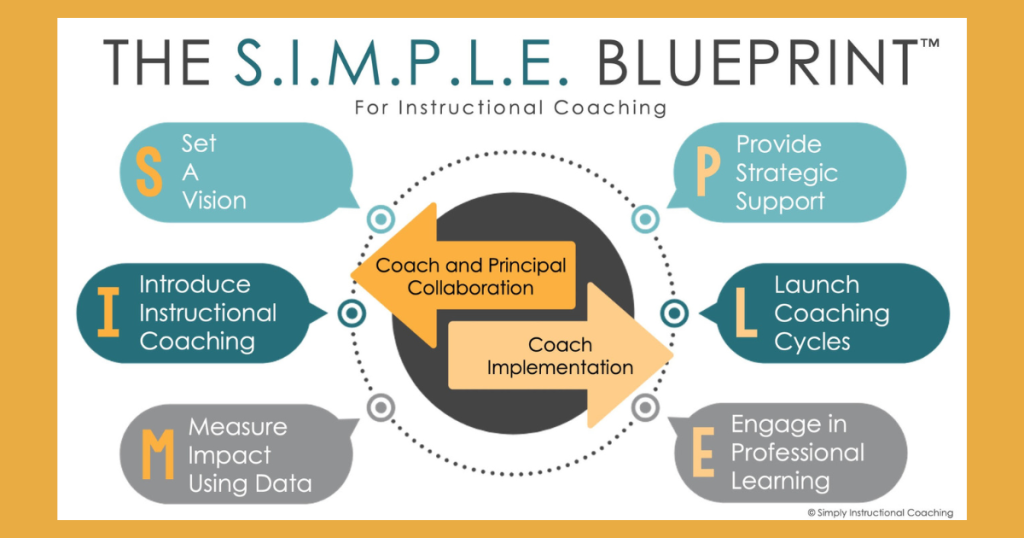
- Nicole’s S.I.M.P.L.E blueprint
- Building a foundation and starting with a shared vision for the school
- Ways coaches can advocate for themselves and redesign their role when things aren’t working
- Being solution-focused: Why coaches need to offer strategies and provide resources to administration to help them better understand our role
- How coaches can support teacher growth when your administration doesn’t follow up with teachers or hold them accountable
- Coaching one small thing at a time and using shorter coaching cycles
- Aligning your coaching work with your goals and the school improvement plan
- Tiering instructional support with school-wide professional development, PLC level support, and individual coaching
Ready to listen?
- Ready to listen? You can listen below with the media player, or search for Buzzing with MS. B: The Coaching Podcast anywhere you listen to podcasts!

Join the Waitlist for the Instructional Coaching Start-Up Course
The Instructional Coaching Start-Up Course is opening soon! The course walks you through the first 20 days of coaching and helps you prepare for the year with a really strong foundation. It includes 20 videos that tell you exactly what to do each day. You can also join the live Facebook group where we walk through the course one day at a time. Check out the Instructional Coaching Start-Up Course here and join the waitlist for a coupon.
This post contains links to products from one or more of our advertisers. This means I may receive commissions for purchases made through links in this post when you click on links to those products. Thank you for your support!
Learn more
- Episode 191 – Qualities Strong School Leaders Possess with Dwight Carter
- Episode 192 – How Leaders Can Create a Culture of Growth and Learning with Jon Saphier
- Instructional Coaching Jump Start Course
- Join My Facebook Group: Instructional Coaching with Ms. B
- Simply Instructional Coaching
Helpful Resources
- Instructional Coaching 20-Day Start-Up Waitlist
- Instructional Coach Binder Megapack – Editable Forms, Calendars, Planning Tools
- Buzzing with Ms. B TpT Store
- Simply Instructional Coaching by Nicole S Turner
Thank you for listening to Buzzing with Ms. B: the Coaching Podcast. Want more coaching ideas
Check me out at buzzingwithmsb.com and on Instagram @buzzingwithmsb.
If you love the show, share it with a coach who would love it too, or leave me a review on iTunes! It’s free and it helps others find this show, too. Happy coaching!
Podcast produced by Fernie Ceniceros
The Principal’s Role in Instructional Coaching with Nicole S. Turner, ep. 193, Instructional Coaching with Ms. B Podcast
Chrissy Beltran 00:00
Coach, I know you’re trying to figure this all out on your own. You’re investing in your own learning on your own time because you want to show up for your teachers in the best way possible. Building your coaching program is a huge challenge. And it’s even more difficult when you’re asked to know about literacy practices and how to support them. That’s why I created the confident literacy coach. This self paced course gives you the knowledge strategies, processes, and downloadable tools that you need to be competent in your coaching work every single day. The new update to the reading and writing modules includes information about literacy that will help you grow your skills practices, and grow your students into skilled readers and writers. Check it out at confident literacy coach.com And stop reinventing the wheel.
Chrissy Beltran 00:40
Have you felt like you’ve provided all the PD, you facilitated all the PLCs and you’ve had all the conversations, but your teachers are still stuck. If your teachers are resistant to instructional change or having trouble implementing new things, it might look something like this. They’re still using outdated practices that we know don’t work. They fight every PLC to claim to their favorite lessons or strategies. You see evidence of for instructional methods everywhere despite having provided tons of PD and better practices. And kids aren’t learning and the same kids are at the bottom of the data chart every single time. Does this sound familiar? To literacy coaches who are committed to helping students grow as readers and writers This is especially frustrating. That’s why I created a free webinar for literacy coaches. But really any coach can value from it. It’s all about helping teachers embrace new practices and try out something new even when they’re not excited about it. We’ll learn why teachers resist change, how to help teachers feel secure and ready to try something new. And my favorite strategies and methods to encourage choice while expecting and holding them accountable for trying new things. I’m so excited to share this information with you that I created a free download that you’ll get when you grab the free pre recorded webinar at buzzing with Miss b.com slash shift. Grab it today. It’s totally free and it will make such a difference in your coaching.
Chrissy Beltran 02:03
Welcome to instructional coaching with Miss B where we believe that every teacher deserves a coach and every coach does too. I’m Chrissy Beltran, an elementary teacher who became a coach, and I had to create my own coaching program that worked. Now I teach coaches how to design their coaching programs, build a school wide action plan and use differentiated strategies to support teachers. Plus, I’ve got a special spot in my heart for literacy coaches. Now let’s dig into the episode.
Chrissy Beltran 02:29
Hey, coach, and welcome to episode 193. Working with administrators who don’t know the role of a coach, one of the first things you’ll have to figure out when you’re establishing your role as an instructional coach is how to work with your administration. And admin sets the course for the school and creates priorities, whether they’re intentional and well thought out or not. So I want you to really listen to this episode to think about the opportunities that you have to work with your administrator in different ways and really define that role. Clearly. This is an episode in our School Leadership and Culture series, because I think that whenever we’re working with admin, and we’re trying to figure out what our school should be, and what our role should be within that school, we really have to be thoughtful about that process. And so I have a guest that I’m going to have on with me today to talk about this. It’s going to be Nicole Turner, and I’m really excited to welcome her today. But before we do, I want you to remind me, no, you don’t have to me Did anybody used to watch that? That chef, the Cajun Cook was on PBS. And he used to say, I’m glad for you to see me. That’s what that just sounded like. Okay, anyway, I wanted to remind you that I have my instructional coaching startup, the waitlist for that course is open and you can get 15% off when the course opens by joining the waitlist. So if you go to buzzing with Miss b.com slash startup today, you can get your 15% coupon that you can use when the course opens very soon. And that’s a pretty good deal because the course is already priced. Pretty nice. Okay, so before I get ramble any further about PBS shows that I used to watch with my mom in the 90s. Let’s welcome to Cole to the podcast. Welcome back, Nicole.
Nicole S Turner 04:14
Hey, thank you so much for having me back. This is one of my favorite podcasts out there in the podcast coaching world. Well, thank
Chrissy Beltran 04:24
you so much for being here. You have been I think our most repeated guest and we request to have you back so that you’re able to join today. But just in case anybody does not know. I would love to introduce your let you introduce yourself really quickly with just a couple of questions. Who do you help and how do you spend most of your time and energy at work?
Nicole S Turner 04:43
Okay, so I’m Nicole Turner. I have the company simply instructional coaching. It’s a blog or whatever. I am an author with solution tree. My book is called simply instructional coaching as well. So Who do I help? I help instructional coaches and principals, implement instructional coaching, like create that culture, actually get some work of coaching done. And we kind of do it in a simple fashion, I guess through the simple blueprint. And so that’s kind of who I help it. What was the second question Chrissy?
Chrissy Beltran 05:21
How do you spend your time and energy at work? Oh, how
Nicole S Turner 05:24
do I spend most of my time texting you say does this sound right? Is she doing? I be coaching. So I spend a lot of time working now. Now it’s crazy. But I spend a lot of time on the road in schools now in districts, training them on the blueprint, and doing embedded coaching with coaches. So I’ve been traveling from, let’s see, Connecticut, New York, I did some Florida, Texas, Ohio. I’ve been to Cali next month, I get to go to Washington. I went to Seattle, and worked for some schools there. So I’m just traveling the world. I’m spending a lot of time collecting frequent flyer miles and writing the new book, The new version of the simple blueprint. And so in speaking at conferences, some of the big things we have,
Chrissy Beltran 06:30
I know you collected lots of miles when you came to my city, El Paso Oh, no straightway to get to El Paso you have got to go through.
Nicole S Turner 06:40
Yes, ma’am. Yes, ma’am. But I absolutely loved and enjoy spending time with you and Evie, and Annie and your husband, it was fine. So now I have to come back just on us kicking it, and not so much business.
Chrissy Beltran 06:59
All right. I love it. So my other question getting to know you question is What is your favorite TV show of all time?
Nicole S Turner 07:07
I don’t know if I could say all the time, you know, I go through all time. Okay, so let’s, let’s break this down. All time is hands down the Golden Girls. I am an absolute Golden Girls fan. And I told you like so my daughter is in Florida. For all of you who don’t know, my daughter is in school in Miami. And so in. We went there when she became my sophomore. When she crossed a K. She they had the pop up cafe, the pop up cafe and I got to go there and eat. And the food was not great. But the experience itself was amazing. And so it was so fun. And I got to like, sit on the couches. And yeah, I love that. all time favorite. That would be but the last few years and makes in the entire 90 Day fiance franchise of like,
Chrissy Beltran 08:09
my mom.
Nicole S Turner 08:11
I know you talked about us all the time. Like the I’m definitely doing the you know, come here to America the other way that single die. I just have one that was the 90 day. Last Resort. So like a couple broke up. It got divorced. They’re like two couples these shocking, crazy. So both of them are often. Yes, those are my two things. As far as like TV shows that I just kind of put on it a lot of times they’re like in the background. Yes. Like when a game or something
Chrissy Beltran 08:48
like that. Yep. All right. Thank you for sharing those gems. And I want to talk to you today about some work that you’ve been doing. I think you’ve been doing a lot of thinking and, and working around this topic of administration and the role of a coach and whenever the administration doesn’t really know the role of coach. And we’ve talked about this before how, you know, we’ve gone to do workshops with schools, and we’ve talked to coaches, and we work with coaches. But sometimes the main problem isn’t so much the coaching as the administrator who made that that coach up for a successful role and doesn’t really have that, that culture established at their school. So how does administration impact the role of a coach? What are your thoughts on that?
Nicole S Turner 09:32
So that the administration sets the stage right. So like, I’ve always, well, what my experiences the last year and a half I’ve been on the road, just coming and going to all these different schools and what I’m learning is like, districts are like, yes, our coaches need training. So I get there and I do like, you know, a full two days of working with those instructional coaches. And then like a few weeks later, I get a call back Like, hey, we need you to come back and train our principals. And it’s like, oh, wow, like, yes, the reason is, is that our instructional coaches are going to actually implement the strategies, right? We’re teaching them, you know how to provide strategic support, we’re teaching them how to do coaching cycles and professional development, and kind of how to align some of their work. But the missing component is that the principal is not supporting that particular role, or they don’t understand instructional coaching if they’ve never been one, or they don’t know how to create a culture, where coaching is not a punitive thing. But instructional coaching becomes more of a thing where it’s the norm where everyone gets coached. And so the code, the administrators role is very crucial in making sure that they create the culture because they lead the culture, right? They built the culture. And so if the culture is, hey, everyone here gets coached, then most teachers are gonna say, Okay, we’re all you know, we’re all going to get coached. Now, are there going to be some resistant teachers? Of course, are there going to be some people that are skeptical of what’s going to happen? Where is, you know, where’s my boundaries, like, where’s the privacy, like, you know, the trust with the coach versus like, even though the coaches working with the principal, because the coaches, you know, had to find like, we always talk about like, they’re like on that, that really fine line that thin a lot of times where they, it’s the instructional coach or the administration, and then as the instructional coaches, the teachers and they kind of go back and forth, but really building that trust in those relationships. But one thing that that we lacked, we talked about building the relationship, and trust with teachers, but we never talked about building a relationship and trust with our administrators. And so that’s important as well, because now I’ve seen some administrators that micromanage their coaches, or they are requiring their coaches to come in and, you know, give me all the information of what’s happening, you know, like that. So, really building that boundaries, and that trust with your administration where you know, you guys are collaborative, and then allow the coach to then go and do the work and support that instructional piece. And then letting principals understand that instructional coaches are a part of their instructional leadership. Right? And so when we look at principals saying, okay, they are, you know, I’m an instructional leader, and they think that their only instructional leader, is them going to do walkthroughs. And it’s like, no, yeah. Especially the leader is also working your leadership is you being able to lead and work with your coach to implement an instructional coaching program, that creates a culture where everyone feels as though they can grow and build teacher efficacy. And so that’s the overall picture of where the principal kind of fits into the instructional coaching world.
Chrissy Beltran 13:02
Yes, I love that. And I think that we have so many administrators who, you know, maybe they were not coaching themselves as teachers, maybe they didn’t spend that long in the classroom. Maybe there are lots of reasons for it, but they don’t always understand the role of the coach, right? And then, so this coach is trying to do the job trying to do the job trying to do the job. But then there are all these, these factors that keep getting in the way, usually of them actually doing their job. So what are some of the consequences that we might see when an administrator doesn’t know what the role of the coach is?
Nicole S Turner 13:31
Oh, the consequences. Coaching doesn’t work. Right? You have such a disjointed culture. inside of your building, principals become frustrated. Coaches become Olivia Pope, right? Because that’s the big thing where they just become the person who puts out the fire for everything, they become the I’m just gonna do the data reports, or I’m just gonna cover the classroom, they become the sub all the time. I know, sometimes they’re, you know, we haven’t where we may have to go into a classroom every now and then. And that’s understandable. But I shouldn’t be teaching every day. Otherwise, I should just be in the classroom. But yeah, so the conflict, the biggest consequence is the lack of the coach being able to do his or her role. And that’s the biggest consequence that you can have where you don’t see the growth in your teacher efficacy, because I really believe that that’s the biggest part of our role as instructional coaches is that we build that teacher efficacy with our teachers. I mean, we’re supposed to build their toolkits, where their external eyes and ears to help to build that efficacy part of that, and then that leads to the stronger student success. Yep, yes.
Chrissy Beltran 14:57
Yeah, I totally agree. I know that a lot of the coaches that I’ve worked with, they are told to you know, there’s everybody has lots of responsibilities, like you mentioned. But sometimes that takes over all of your time. And so you never get to that one on one coaching, you do the whole, you know, whole school stuff PD, you do the PLC meetings, you do the data, do all this stuff. But then you don’t get to the one on one coaching, because coach, the principal probably possibly doesn’t value that, or doesn’t even realize it’s not possible that that can happen with the amount of other things that they’ve given you to do. They just don’t even know what should be happening. And so then there’s no culture of coaching, like you mentioned, the beginning, the idea that everybody should be coached, every teacher deserves a coach, we all need to be growing as teachers. And whenever we have things set up in such a way that maybe you only help struggling teachers, or you only help the teachers that the principal has decided to struggling and they’re directed, directing you, or you only work with new teachers, then you’re not creating this culture of learning and growth at your school. And so that’s I’ve seen that a lot. And I’ve also seen a lot of where the principal’s like, Well, you go do this, but then they don’t hold the teacher accountable for anything. Yeah, so then there’s no follow through, you know, so there’s all these, like, different ways that it can look whenever your administrator doesn’t really understand the role, but it creates huge consequences and an inability for you to be effective as a coach when they don’t know what your job is.
Nicole S Turner 16:23
Absolutely. And so that’s one of the biggest things in the blueprint. And I don’t know, maybe it was one of the questions you got asked me. But in the blueprint, we always start with a vision. Right? And so we if we’re following the simple blueprint, we’re gonna start with that setting a vision. And under that setting the vision you would think, Okay, I’m just gonna do but it all goes into that shared vision for the for the building, right? The sheer collaboration, making sure that we create that culture, making sure that we sit down, and we have those clarifying questions about what the expectation is, for me as the coach, what is the expectation of you, as your, as the administrator, you know, what does that culture? What does that climate look like? All of that, from every perspective, and making sure that we, you know, utilize that, and I think that when we have coaches, and we have schools that don’t really understand what instructional coaching is, then that’s where all those things fall apart.
Chrissy Beltran 17:31
Okay, so I really liked that you talked about having all of these things established with your admin, and that’s just part of designing the role and designing the culture, how can a coach advocate for themselves with their administrators, if they’re like, mid year, you know, or, you know, if they’re just kind of like, Oh, time has passed, and nothing is working. And they’re kind of realizing that all of these pieces are missing?
Nicole S Turner 17:53
Yeah, I mean, for me, it doesn’t matter what time of the year it is, go back to that foundation piece of setting the vision, like you have to go back and schedule that conversation, you have to look at what the vision is. And the any principle would have set the vision of collaboration, or any of that at the beginning of the year, right, they should have some type of pattern, or, or path or plan. A lot of times that plan is our school improvement plan that we all sit and do in August, and it’s due September to the state and then like we never look at it for the recipe, right? I say that is one of the biggest things that we that we need to start to pull off the shelf, right. So even if it’s like the middle of the year, like right now go, you know, set a meeting with your principal and say, Hey, these are the things that I have concerns about, these are the things that you know, I want to go at some point, a coach would have had to set some type of professional goal for the year, right? Something that they’re going to be evaluated from or that point like pull that back out and have a conversation of like, this is where I want to get to, we have about like 10 weeks of school left. And so because of that, how can I you know, what are some of the things that we can do, this is what I see this is how I need your support. Now, one thing I want coaches to be aware of, don’t go into your Principal’s office looking for them to create a solution. Think about already have some strategies and solutions or some ways that they can support you or some resources that you want them to then read to be able to understand your role if you’re dealing with an administrator who has not been a coach or didn’t have a coach or is new to coaching you know, grab the simply structured coaching book and photocopy a couple of pages out that you want to have and share that with the principal or go on you know buzzer women’s bee blog and find a few you know, Coach or blogs that explain what your role is highlight some of those Have areas share those resources with your principal. If we’re being real, they don’t really have time to go look up, what coaching is, right. And most of the time, especially if you’re dealing with a school that’s within a district, the district has decided to do instructional coaching and told the principles that this is what they’re doing. Yes. And, and so it’s not like the principles sought out like this is a school improvement model that we’re going to implement. Now, whether we want to believe that or not, but instructional coaching is the school improvement model, right, and whether or not it’s a model that they need to implement, but it’s only as good as its implementation. And so a lot of times, that’s the part that we kind of, you know, go back, I’ve been doing a lot of research. And you mentioned earlier, I’ve been doing a lot of thinking and processing, but the simple blueprint has now become aligned to the implementation science research, and really talking about that action based instructional coaching, because we have to implement and take action is no longer a part of us being, you know, just sitting on the sidelines and just having conversations about what should be happening. But I’m coming to learn, like, I know somebody who didn’t come and read my blog and read your blog and talk about it. But then I’d be like, so when did you implement that, or, you know, once you take action on it, and they haven’t, so right now, if you are at a point where you’re with your principal, and you haven’t had that, that meeting, it’s time to take action. And it’s time to go and have that conversation, and bring resources and bring, bring what you tell them what you need. It’s kind of like being in a relationship, and then you just like, not telling the person that’s true. Just whining, I have friends now. They’re calling me and be like, Well, my husband didn’t do this. And I’m like, What did you tell them? That that’s what you wanted? Right? Like, you know, we they don’t know, they don’t know what you don’t
Chrissy Beltran 22:01
know? Yeah, nobody can read your mind. Exactly. You may not have any clue how your coaching work is panning out, they might not have any idea. They don’t always know as much as you might think, you know, they I think as teachers, some teachers feel like principals are like all knowing pay or not, they do not know 95% of what’s going on, sometimes, because there’s a lot of people in that building. So a lot of things are happening at the same time.
Nicole S Turner 22:28
Absolutely. And then, you know, you have to realize that principals deal with instructional leadership, but they also deal with the operations. Right, so their operations and instructional leaders, and sometimes the operations can overtake like, when the when the kid or a child ran away, or the parent did this or, or there was a fight or there was a brawler, you know, all the way it you know, community base, like it’s a big role. And having and supporting the instructional coach is just a piece of that bigger puzzle. That’s
Chrissy Beltran 23:04
right. And I think that’s a good point, too, that some principals just feel more comfortable with operations. They’re not traditional leaders in terms of they don’t have the background. And so they’re going to do what they’re good at, which is making schedules and you know, all of those kinds of like things that just have to get done, because that’s how the school works. But they’re going to invest all their energy in that. And they’re just going to kind of avoid the instructional piece. And so we do see many situations with coaches where they’re like, Okay, well, I went in, I worked with this teacher for three weeks, and I modeled and we co taught, and then we do they know what’s expected of them. But then I go back a month later, nothing is his continued. And my principal hasn’t been in here since before I started working with them. Yeah, so there’s like, not really an accountability for follow through. Because sometimes, you know, we’re human beings, we are going to sometimes revert to what’s comfortable, and it’s the new thing isn’t comfortable for us yet. We’re gonna go back to what was comfortable before, even if we liked the new thing, even if we do kind of neat was, sometimes we just like, I’m just gonna do what I already know. And it’s not even a conscious thought, you know? So what are your thoughts on that? Whenever a coach has an administrator, and maybe they’ve even been directed to go into the classroom to work with this, this teacher, but then the coach doesn’t follow up, so then it just kind of falls apart. Well,
Nicole S Turner 24:23
that was me at the beginning of my coaching world. And what I found is that I needed to Well, first of all, my coaching was so disjointed because I didn’t have a structure, and I didn’t have anything in place. And so that’s where the simple core for why I provide a strategic support. Having those pillars allowed me to then be able to have a focus when I go into the classroom, and then taking the six week coaching cycle, a four to six week coaching cycle and making it a week clock really helped me to start to actually see some work like, drill it down to something so small, that I was able to make a bigger impact, because every small thing started to build upon each other. And then it was like kind of like building the house, right? You never see the house, you never see someone just like put all the bricks up together. Right, you always see people laying the brick by brick by brick that eventually gets the houses those small bricks that make up the bigger picture. And so when you when I was coaching, I would start to transition to coach one small thing at a time and do that within a week and get a teacher that off and going, rather than to try to keep up with the same topic for six weeks, like I never got to that point. So I think that the biggest thing is that the coach needs to be real with number one, their schedule. Number two, they also need to be the real on how they are supporting teachers. So like, for me, I made a big shift. At the end is like when I started, especially during COVID, because that’s like the end of when I was coaching, that I started to coach teams, I started to coach within my collaborative team meetings, and then break off to coach individual teachers with the needs that they needed some of that differentiation. So that’s where the tear of the coaches becomes in is that tier one is like collaboration. So like enough collaborative teams, where do I fit in there? I’m coaching on supporting, I’m working with both individual, you know, I’m working with the team of teachers, but then within that I see, Oh, Miss Johnson, Mr. Taylor, like those two teachers, they need some additional support. So now I’m going to support them either one on one or even some small group coaching around specific topics. So if I have like seven teachers, and all seven of them are struggling with one particular thing, why would I try to coach each individual one on the same thing, why not be more efficient and bring those teachers together? And we do like some type of book study together and watch a video or video or any of that kind of stuff? I think that is the biggest part like so now it’s like, you know, tier one, it’s kind of like the RTI model, right? So, tier one we are coaching in our collaborative teams to to were either doing some small group coaching around some content, or individual and then you know, tier three are my emergency room teachers where we got to hurry up and stop the bleeding, get some the classroom culture together, and then move into working with them on building that instruction. A lot of times we want to just work with that instructional execution and build that organization and management and culture.
Chrissy Beltran 28:05
Yeah, I like that. So maybe we’re missing the the foundational pieces, and that’s why things are falling apart. Because we’re putting band aids on things. Yeah. Yeah, like your tears too. I also have a three tiered system. But mine is more like whole, it’s your whole everybody gets it. It’s tier one, which is your PD for everybody across the school. And then tier two is like your PLC meetings where you’re doing maybe different topics in response to that, but in different, you know, two different PLC teams. And then individual coaching is like your tier three. So that’s that’s really good. Yeah, I think it’s it just helps people think about the big picture because it can be overwhelming. And like you said, if we’re if we’re just kind of randomly coaching things, instead of being thoughtful about, okay, well, what is our school moving towards? We’re trying to get good at science of reading, we’re trying to get good at using hands on math lessons, we’re trying to get you know better at using the scientific process, scientific method and science, whatever it is, that’s your like, your main focus, and then that can trickle down to different levels in different ways. So I really like coming back to that school improvement plan. And I used to do that as well, I would print out my piece like because I was a literacy coach. So I would print out the literacy pieces and put them in my notebook. Because if not, you forget about it. And you’ve spent time getting your survey looking at your data and talking to teachers setting all the goals. It’s like a lot of work. And then we just put it in a drawer. You know, if you pull it out, you have it in front of you, then you can come back to that and say, Are we even getting remotely close to what we said, which we’re going to try to do here, you know, and it can help you focus your PD when you don’t know what to do that should help you focus your PD in your meeting topics and things. So that’s great. So I love all of this. This was so excellent. I think it’s going to help coaches think differently about the way that they interact with their principal and what that principals role is in their instructional coaching. And I want to find out how can people learn more from you because I’m sure that some people are going to want to look you up.
Nicole S Turner 29:56
Sure, so you can go to simply instructional coaching.com And that’ll tell you a little bit of everything kind of from bringing me to your building for individual coaching, to seeing Chrissy at the simply coaching summit this summer. So any of those types of things, we have a few professional developments that are coming away. Pretty soon we’re going to be adding a page. And I don’t know when does the air but hopefully by the end, there’ll be a new page on the website that just brings everything about the blueprint. It’ll be a one pager that you can just download and learn more. But I think in the show notes we will incorporate so I mean, we’ll give you the graphic of the blueprint as well.
Chrissy Beltran 30:41
That sounds awesome. We can definitely put that into the show notes. So people can take a peek and definitely head over to simply instructional coaching so you can sign up for the summit, like you mentioned, and all the other great stuff you have coming out. Thank you so much for being here, Nicole.
Nicole S Turner 30:53
Thank you for having me back.
Chrissy Beltran 30:55
That was some good stuff, right kind of makes you think a little bit. And so I hope that you can take that information and use it to grow the culture of of coaching on your campus by working with your admin. Next week, we are continuing our talk about leadership. And we are looking at how administration can include blue school leaders and instructional coaches as part of that leadership team because you are part of setting the culture for your school. Until then, happy coaching
Chrissy Beltran 31:29
now that you’ve got so much to think about, head over to buzzing with ms b.com to grab some free downloads, become a VIBee, and check out the podcast show notes. Happy coaching!