The Real Life of an Instructional Coach: Beyond the Coaching Cycle, ep. 295
Many of the conversations I have with instructional coaches center around the coaching cycle.
⏱️ How long should they be?
🔢 How many to do at once?
🎯 What to focus on?
🔄️ What’s the right structure?
But the truth is that the real life of a coach involves SO MUCH MORE than the coaching cycle!
Coaching cycles are not the only tool in your toolbox! You’ve got so many strategies to build knowledge, create alignment across your teams, and foster relationships with teachers (even those who aren’t super excited to have you around!) We need to value these different kinds of interactions as coaching.
In this episode of Instructional Coaching with Ms. B, we’re taking a look at the real life of an instructional coach: beyond the coaching cycle. I share the messy reality of coaching and three shifts you can apply to your practice to help you reflect on what you believe about this work.
Feeling stressed just thinking about formal coaching cycles? Take a deep breath, grab your coffee, and join me for a real conversation about what a coach’s role actually looks like beyond the coaching cycle. You can also pre-order my book, Expand Your Coaching Toolbox!: 20 Practical Strategies That Improve Teaching and Learning, to get even more ideas!
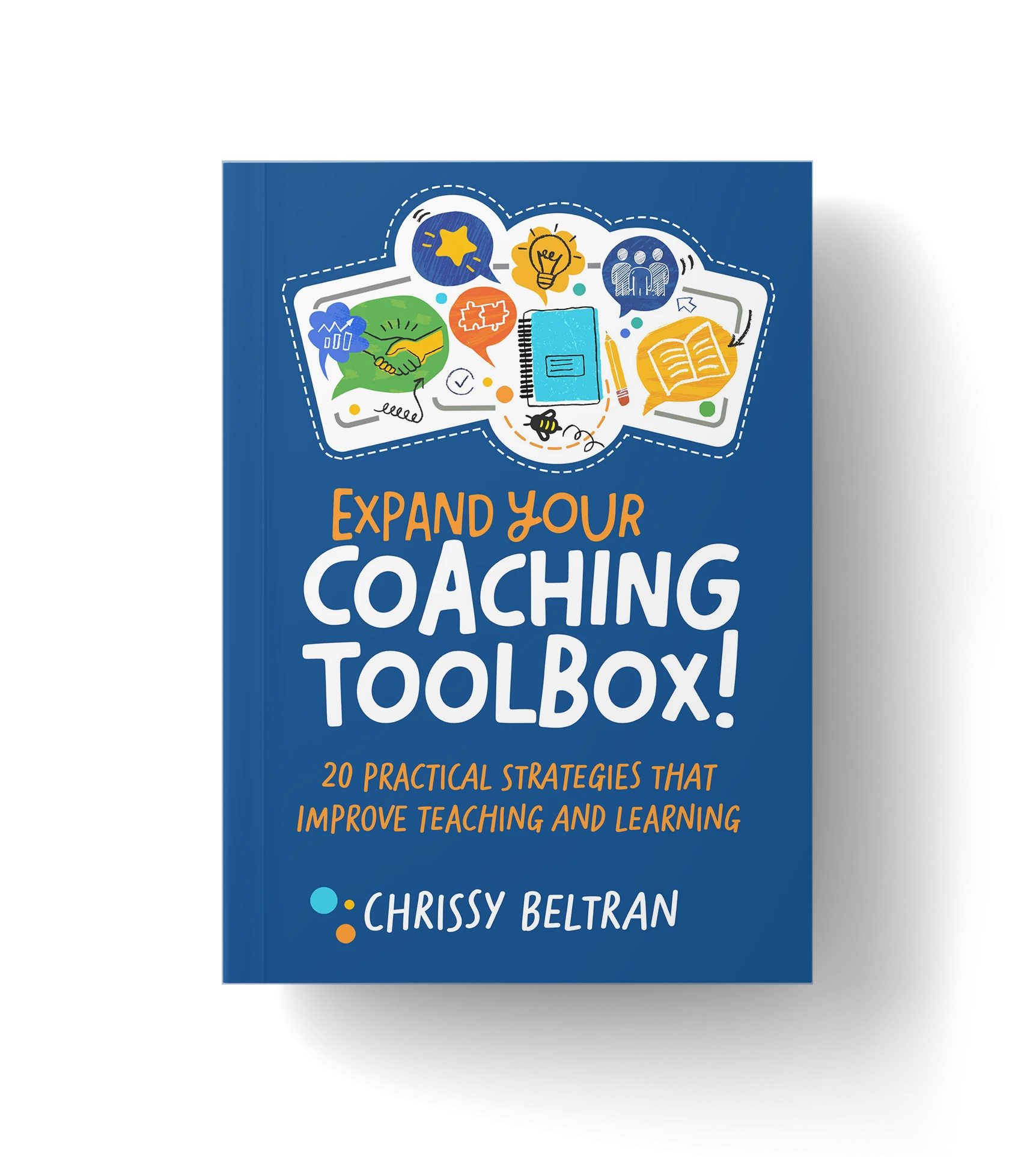
My new book, Expand Your Coaching Toolbox!: 20 Practical Strategies That Improve Teaching and Learning, is now available for pre-order. If you’re looking for practical ways to work with teachers, respond to their individual needs, and move beyond coaching approaches that haven’t worked in the past, this is the book for you! I really think you’re going to love it!
The Messy Real Life of an Instructional Coach: Beyond the Coaching Cycle
Coaches wear a lot of hats, and none fit exactly right each day! We don’t show up in our office in the morning to a beautiful calendar with three appointments for the day and an hour-long lunch break.
Coaching is chaos! It’s extremely messy!
We’re often asked to:
- Cover lunch or classes
- Help with test administration
- Assist with bus duty
- Attend meetings
It’s unlikely that there will ever be a day that our schedule goes as planned. That’s just part of being a coach.
But coaching isn’t about perfect schedules or six-week coaching cycles. Instead, it’s about seizing every moment to support teachers, no matter how brief or informal.
If we don’t have the right mindset around coaching and we’re not looking at it with a broader view, then we are probably selling ourselves short and not taking advantage of all the opportunities we have with teachers.
All of our interactions with teachers are an opportunity to coach!
Coaching is:
- a quick hallway chat where a teacher shares a struggle or complaint
- collaborating on an event
- analyzing data together during a PLC meeting
- sharing a resource
- looking at student work together
- following up on something you discussed earlier
- and so much more!
Coaches need to shift their mindset about what “counts as coaching”. Too often, coaches feel pressure to fit every interaction into a precise coaching mold: start with an observation, give feedback, set a goal, and follow a script over a set number of weeks.
When we have a narrow definition of what coaching is, we can miss dozens of powerful coaching opportunities each week. It’s important to keep in mind that every interaction, no matter how small, can be leveraged into authentic coaching work! Your quick check-ins, data dives, and hallway chats are building teacher capacity and moving practice forward.
Starting out as an instructional coach can be so overwhelming! It can feel like there are too many things to do, and you just don’t know where to start. This resource includes a guide, printables, and fillable forms (PDFS) to build relationships, have a dialogue with your administrator, review data and make a plan, visit classrooms, and more! Get the First 20 Days of Instructional Coaching Start Up Kit and Forms today!

Beyond the Coaching Cycle: 3 Mindset Shifts
Today, I’m going to share three shifts that can help you reflect on your coaching practice, get clear about what you believe coaching should look like, and consider how those beliefs shape the way you approach your role.
Shift #1: Coaching Cycles Have to Be a Certain Length to Be Meaningful
When I’m asked how long a coaching cycle should be, I really struggle to answer because I don’t know the teacher or their needs. It’s like asking someone how long their hair should be. It’s an individual choice!
Coaching cycles don’t have to be a certain length to be meaningful. They have to be purposeful, reflective, and thoughtful. You have to apply them to classroom work and use strategies that the teacher can benefit from, but they do not have to be a certain length to be a meaningful experience that will impact the teacher’s instruction.
Shift #2: I Always Have to Start with an Observation (or Whatever Strategy You Feel Pressured to Start With)
One day I was working with a coach who explained that they were having trouble getting teachers excited to work with them. They said, “You know, they just don’t want to do the observation at the beginning.”
I asked them to tell me more about it. They proceeded to give me the steps in a traditional coaching cycle, including doing an observation first to identify a goal.
So, I asked, “Do you have to do the observation first?”
They said, “I guess not. I guess I don’t.”
Coaching cycles should be responsive to the teacher because this is the most personalized coaching tool we have. You don’t always have to do them the same way.
Start where the teacher feels comfortable.
Use a range of strategies, like modeling, co-teaching, peer observation, and video reflection.
In my book, Expand Your Coaching Toolbox!: 20 Practical Strategies That Improve Teaching and Learning, I teach about mini coaching cycles because they’re such a practical way to support teachers without overcomplicating things.
Here’s how they work:
1️⃣ Start with a quick pre-conference
2️⃣ Do some kind of classroom work together
3️⃣ Have a post-conference
That’s it!
You can stack them up and create six-week coaching cycles if you have the time. Or if you only have a week, stack 3 or 4 and the teacher can walk away with something they need for their classroom.
It’s important to be flexible and not rigid! A coaching cycle doesn’t have to start with an observation, then move to modeling, and then co-teaching. None of these things need to happen the same way each time. All teachers have different readiness levels, and we need to modify our approach to suit each one.
The best coaching is the coaching that your teacher needs in the moment. We want to see where the teacher is, be responsive, and decide with the teacher what learning would be most beneficial for them and their students.
During the episode, I share some challenges coaches face and how we can think differently about our approach when they come up. To hear all of the examples and explore what these ideas can look like in practice, be sure to listen to the entire episode.

Be ready for anything with the Instructional Coaching Editable Binder Megapack!
It includes forms, templates, and everything you need to get organized for instructional coaching! Coach teachers and document your coaching work with these printable and editable tools. Grab the Instructional Coach Binder Megapack in my TpT Store!
Shift #3: I Have to Be the Expert in the Room
A common struggle for new coaches is feeling like they have to know everything. When I started, I remember feeling that way, too.
What I figured out is that great coaches lean on others’ expertise. You don’t always have to be the expert in the room, but you do have to figure out who the experts are so that you can use their expertise to support you in your areas of weakness.
Within a coaching cycle, it’s okay to bring in colleagues, interventionists, or specialists. For example, if you’re not fluent in the language used in a dual-language classroom, you might bring in a bilingual educator to support the coaching.
The Real Life of an Instructional Coach: Beyond the Coaching Cycle
Remember, coaching cycles do not have to be a certain length to be meaningful. You can be flexible to meet the needs of your teachers.
You don’t always have to start with an observation or whatever strategy you feel pressured to start with. You can adjust them so they fit the classroom and students.
Finally, you do not have to be the expert in the room. There are likely people in the building who have the exact skills you need. Find them and use them as experts.
Coaching cycles are supposed to be responsive. If we put everybody in the same little box, we’re not meeting teachers’ needs!
Instead of throwing yourself and the teacher into a massive, heavy, rigid coaching cycle, start small. Build from there. You might be surprised how much more interested teachers are in working with you and how much more doable coaching becomes when we acknowledge the logistics and constraints we’re working with in real schools.
Listen to the full episode now using the player below or wherever you get your podcasts!
Topics and Questions Discussed in Episode 295 – The Real Life of an Instructional Coach: Beyond the Coaching Cycle
- The real life of an instructional coach: beyond the coaching cycle
- The messy and chaotic reality of coaching in schools
- Moving beyond the coaching cycle: What counts as coaching?
- Three core shifts for meaningful, responsive, and impactful coaching
- Why formal coaching cycle structures rarely fit into real school life
- The flexibility to tailor cycles and strategies to teachers’ needs
- Why you don’t always have to start with an observation (or whatever strategy you feel pressured to start with)
- Letting go of being the expert and building authentic partnerships
- Building a flexible, responsive coaching toolbox
Turning Insight Into Action: Practical Steps You Can Take After Listening
Here are simple actions you can take today:
1️⃣ Pre-Order Expand Your Coaching Toolbox!: 20 Practical Strategies That Improve Teaching and Learning
If today’s episode resonated with you, you’re going to love what’s coming in my new book, Expand Your Coaching Toolbox!: 20 Practical Strategies That Improve Teaching and Learning. The entire book is built around one idea: coaches need more than one strategy to meet teachers’ needs.
Inside, I share 20 practical coaching approaches—from quick relationship-building conversations and deepening knowledge to high-impact classroom-skill building—so you can meet teachers where they are and make every coaching interaction count. It’s a really great guide that you can go back to over and over again. Check it out!
2️⃣ Join the Instructional Coaching Club!
The Instructional Coaching Club is an online membership designed to help instructional coaches improve instruction at their schools. It gives coaches the tools to go out and do it.
Ready to listen?
This post contains links to products from one or more of our advertisers. This means I may receive commissions for purchases made through links in this post when you click on links to those products. Thank you for your support!
Learn more
- Episode 294 – Why You Might Be Struggling with the Traditional Coaching Cycle
- Buzzing with Ms. B on Instagram
- Join My Facebook Group: Instructional Coaching with Ms. B
- Chrissy Beltran on LinkedIn
- FREE First 20 Days of School Checklist
Helpful Resources
- Pre-Order my book, Expand Your Coaching Toolbox!: 20 Practical Strategies That Improve Teaching and Learning
- Join the Instructional Coaching Club
- Instructional Coach Binder Megapack – Editable Forms, Calendars, Planning Tools
- Instructional Coaching Binder Megapack – Editable Forms, Documents & Tools on TpT
- Buzzing with Ms. B TpT Store
Listen on: Apple Podcasts, Spotify, or your favorite listening app
Thank you for listening to Buzzing with Ms. B: the Coaching Podcast. Want more coaching ideas
Check me out at buzzingwithmsb.com and on Instagram @buzzingwithmsb.
If you love the show, share it with a coach who would love it too, or leave me a review on iTunes! It’s free and it helps others find this show, too. Happy coaching!
Podcast produced by Fernie Ceniceros