| | |

Using Data Effectively with Jessica Lane and Jenelle McClenahen, ep. 280
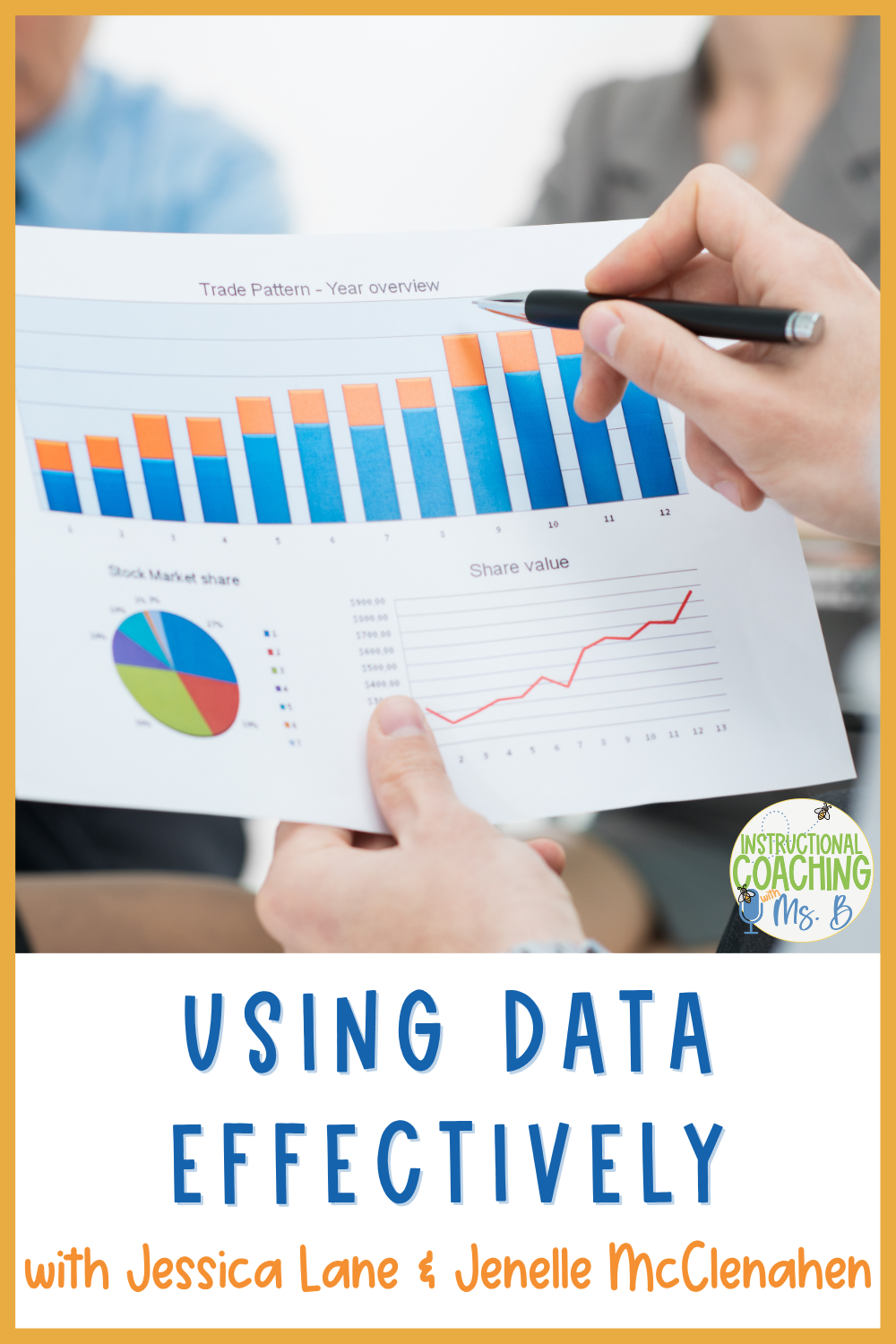
two hands holding a printout of  br graph. These words are on the bottom "Using Data Effectively with Jessica Lane & Jenelle McClenahen".

Tired of data meetings that go nowhere?

In episode 280 of Instructional Coaching with Ms. B, I sit down with Jessica Lane and Jenelle McClenahen of Symplifyed to explore what using data effectively looks like in schools. 

During our conversation, Jessica and Janelle break down the types of data teachers need to gather and what to ignore. We explore why context matters when reviewing data and how combining behavioral and academic information leads to a more complete understanding of student needs.

They discuss using data to make decisions in the classroom, turning data meetings into real cycles, and building habits with your team. You’ll also hear how instructional coaches can have more reflective data conversations with teachers. Plus, learn why new schoolwide initiatives often fail, and what to do instead.

This episode is full of great ideas for starting or enhancing a reflective data process on campus. You’ll leave with actionable steps you can take to use data effectively and build habits that last.

Listen to the full show now to hear how to use data to drive student growth and strengthen teaching practices.

Digging into data form, pencils and markers on a desk. The words "Data forms: for coaches and admin is at the bottom"

Understanding your school data is so important to school leaders and instructional coaches! These 18 different data forms will help you collect, organize, and analyze your data. Then you’ll use your data and analysis to reflect and make a plan for next steps!

What Kinds of Data Should Teachers Be Gathering and Paying Attention To?

We spend a lot of time collecting data in schools. Sometimes it gets used, and sometimes it doesn’t. Teachers can get frustrated with the process because it feels like there’s no purpose!

So, what types of data should teachers be gathering and paying attention to?

Jenelle recommends collecting the right information that speaks directly to what’s happening in the classroom. She explains that teachers should gather data that is specific to the lessons and micro skills they’re teaching.

For example, it could mean tracking time on task or the response to a specific support strategy. Janelle says we should be paying attention to these things because they are relevant to exactly what’s being done in the classroom.

Next, we talk about how our actions impact the data. Jessica explains that we want to collect data that allows us to see the impact of instructional decisions and adjustments on students. She says doing this over time tells us what supports are working.

When we link whatever we’re doing to the impact that it’s having on students, the data becomes more actionable and meaningful. We really want to make sure that we’re giving short formative assessments. We’re not trying to figure out if students can persist through 15 questions in a limited amount of time; we want to know if they can complete this one skill.

I think this is so right! One of the key ideas that emerged during these conversations was the importance of collecting data that helps teachers make day-to-day decisions in their classrooms.

We get back tons of information, but it’s not actually appropriate to what we’re looking for with that student. If we can look at specific data related to what we are teaching at the moment, the data becomes more purposeful.

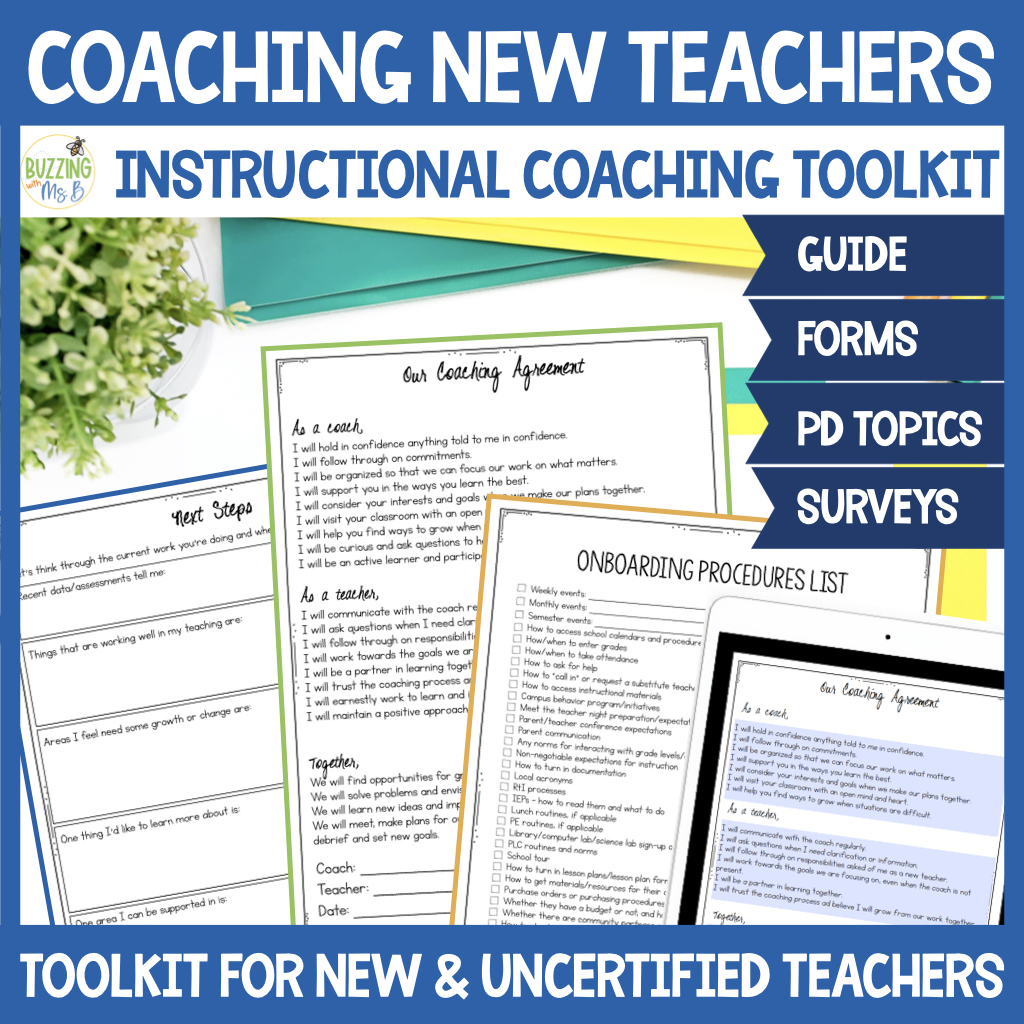
Have a plan for working with new and uncertified teachers with the Coaching New Teachers Toolkit!

It includes forms, templates, and everything you need to help your new and uncertified teachers! Figure out what support the need and provide PD and coaching with these resources. Grab the Coaching New Teachers Toolkit in my TpT Store!

⭐⭐⭐⭐⭐ “I support & coach new teachers and this resource is so valuable. I purchased it several months ago and often use tips you suggested when working with teachers. It is an essential section of my “Teacher Support Provider Binder” that I carry around with me everywhere.”
What Context Should We Keep in Mind When We Look at Data with Teachers?

During the episode, Jessica and Jenelle discuss why context matters when interpreting data and why both academic and behavioral factors should be considered together. As Jessica puts it, “behavior gives a lot of context to the academic skills”.

When we look at a student’s behavior, we need to identify the reasons behind it by understanding not only what happened, but why it happened and what was going on in the classroom at the time. Jessica calls it “slowing down the moment”, allowing teachers to reflect on what supports were in place, possible triggers, and important details to document.

The discussion highlights that teachers need to figure out what details to collect and look at that information over time, noting when patterns show up. Janelle explains that collecting data on that one aspect naturally helps impact everything else. When you combine both behavioral and academic context, it helps strengthen the skill in other areas.

In practice, this means understanding a child’s strengths, growth areas, and their feelings about a particular subject, as Janelle illustrated with a story about her son. Over time, reviewing this information alongside academic progress can paint a much clearer picture of where support is needed and whether instruction is truly effective.

I really like this because you’re focusing on one very specific thing that is an underlying requirement for all work that the student will be asked to complete. It can be applied in other areas and informs the teacher’s decision-making throughout the day without being overwhelming.

Using Data to Make Decisions

Does this sound familiar? During the data meeting, your team spends lots of time analyzing data, but little is dedicated to figuring out what to do next.

I asked Jessica and Janelle how we can help teachers use data in the classroom as they make decisions about students. They say simply looking at data isn’t enough; teachers need to act on the information to see real impact in their practice. Jessica explains that the biggest gap school leaders have when it comes to data is actually going through the entire cycle and keeping it going.

The cycle involves:

  1. Slowing down the moment by asking, “What do we not see in this data?”, “ What’s missing?” “What other data might be beneficial?”
  2. Identifying a skill for improvement, whether it’s academic or behavioral.
  3. Monitoring the progress of the targeted strategy or support put in place to address it.
  4. Scheduling a follow-up meeting to reflect and adjust instructional strategies.

Jessica says you need to keep that cycle alive to make progress. Just looking at the data does nothing; we need to complete all those steps in the cycle and make sure that we have future meetings scheduled on the calendar. I think that it’s so important to build that bridge by committing to a follow-up meeting.

Janelle recommends asking teachers to choose one strategy to test out. She likes to frame it as a science experiment. Let’s try one support to see the impact. It’s intentional, and teachers meet in a week to see if what they tried made a difference on scores.

Be ready for anything with the Instructional Coaching Editable Binder Megapack!

It includes forms, templates, and everything you need to get organized for instructional coaching! Coach teachers and document your coaching work with these printable and editable tools. Grab the Instructional Coach Binder Megapack in my TpT Store!

How Can Instructional Coaches Have More Reflective Data Conversations with Teachers?

Want more reflective data conversations with your teachers, but not sure how to make it happen?

Jessica tells us that change occurs not from one-time data meetings, but through habit building. She says instructional coaches need to get into the habit of having honest and reflective data conversations with teachers on a consistent basis.

Coaches also shouldn’t expect teachers to immediately fall in love with the process of using data. She stresses to coaches and principals that they’ll have to hold teachers’ hands through the first few cycles until they’re in a spot where they feel like they’re having an impact. This puts the control back into teachers’ hands and helps them keep going.

Jessica explains that a big part of where schools go wrong is when they start data-driven initiatives as something new and big. It’s often presented with large data sets like attendance or state test information. There’s a huge disconnect between what teachers see in that data and what they’re seeing in the classroom.

She says it’s always easier to start super tiny. They like to roll out their tool and data-cycle coaching with only a few teachers who have already bought into the idea. Then they let it spread through word of mouth. As coworkers hear how it saved other teachers time and how positive they feel, they’re more likely to try it themselves.

Jessica ends by saying we want to introduce teachers to new things slowly. That way, teachers are building those habits and reflecting on students and their practice.

Using Data Effectively

One big mistake coaches and administrators make is wasting teachers’ time. I love the way Janelle and Jessica approach this work because it values teachers’ time. Doing this type of work with your teacher teams will directly affect instruction in the classroom and impact student learning.

Listen now to learn all about using data effectively. Plus, hear lots of real-life stories too! You don’t want to miss it!

Topics and Questions Discussed in Episode 280 – Using Data Effectively with Jessica Lane and Jenelle McClenahen

  • Using data effectively in schools
  • The types of data teachers need to gather and what to ignore
  • What context should we keep in mind when we look at data with teachers
  • Blending behavior and academic data to get the full picture
  • Using data to make decisions
  • Turning data meetings into real cycles
  • How coaches can have more reflective data conversations with teachers
  • Building habits and following up with teachers
  • Why new schoolwide initiatives often fail, and how to do it better

About Jessica Lane & Jenelle McClenahen
Jessica Lane and Jenelle McClenahen are former educators and the cofounders of Symplifyed. They’re known for their focus on bringing the human side back to data, helping educators slow down, make sense of what’s really going on with students, and take meaningful action without adding more to their plates.

Turning Insight Into Action: Practical Steps You Can Take After Listening

Here are simple actions you can take today:

1️⃣ Pick ONE Micro-Skill or Support to Track

Challenge your PLC or grade-level team to select a specific skill or behavior to measure this week. Let me know how it goes in the Instructional Coaching with Ms. B Facebook group or on Instagram @buzzingwithmsb!

2️⃣ Join the Instructional Coaching Club

The Instructional Coaching Club is an online membership designed to help instructional coaches improve instruction at their schools. It gives coaches the tools to go out and do it.

Ready to listen?

  • Ready to listen? You can listen below with the media player, or search for Buzzing with MS. B: The Coaching Podcast anywhere you listen to podcasts!

This post contains links to products from one or more of our advertisers. This means I may receive commissions for purchases made through links in this post when you click on links to those products. Thank you for your support!

Learn more

Helpful Resources


Listen on: Apple Podcasts, Spotify, or your favorite listening app


Thank you for listening to Buzzing with Ms. B: the Coaching Podcast. Want more coaching ideas

Check me out at buzzingwithmsb.com and on Instagram @buzzingwithmsb.

If you love the show, share it with a coach who would love it too, or leave me a review on iTunes! It’s free and it helps others find this show, too. Happy coaching!

Podcast produced by Fernie Ceniceros
Using Data Effectively with Jessica Lane & Jenelle McClenahen, ep. 280, Instructional Coaching with Ms. B Podcast

Chrissy Beltran [00:00:00]:

Hey, coach, and welcome to the last episode in our series all about supporting better assessments. This is using data effectively with Jessica Lane and Janelle McLennan. So I’m excited about this episode because I think it’s so functional and practical, and you know that’s, like, my favorite thing. Those are, like, my two favorite adjectives except for possibly fun. I also enjoy fun. And so if you have ever struggled to deal with data and get teachers to talk about data, this is a great episode for you. And on top of that, I actually have a download you might really like. PLC discussion dice are really easy to use with teachers, and they help you focus on the topic at hand and encourage participation from each teacher. And you can grab them for free in the show notes for this episode at buzzingwithmissb.com/episode28zero. So my guests today are Jessica Lane and Janelle McLennan. They are former educators and the cofounders of Simplified. They’re known for their focus on bringing the human side back to data, helping educators slow down, making sense of what’s really going on with students, and take meaningful action without adding more to their plates. So let’s welcome our guests. Thank you so much for being here today. Jessica and Janelle. Both of you are joining us, and that’s amazing. I really appreciate it.

Chrissy (00:01.165)

Thank you so much for being here today, Jessica and Janelle, both of you are joining us and that’s amazing, I really appreciate it.

Jessica Lane (00:07.713)

Yeah, thanks for having us.

Jenelle McClenahen (00:09.186)

Thank you. Excited to be here.

Chrissy (00:11.563)

Awesome. So we want to talk about data and how teachers are actually using this data meaningfully because we spend a whole lot of time on collecting things and then sometimes they get used, sometimes it doesn’t, and teachers can feel really frustrated with the process whenever it feels like there’s no purpose. So what kinds of data should teachers actually spend time gathering and paying attention to?

Jenelle McClenahen (00:33.166)

Yeah, this is a great, great question. And I am a former third grade inclusion teacher. And I think that even before getting into like what they should be, you know, gathering and paying attention to, I I kind of want to even say what we shouldn’t be paying attention to. you know, I think as a teacher, you know, we would have these data meetings. And what I didn’t like is, know,

Chrissy (00:51.683)

Sure. Yeah.

Jenelle McClenahen (01:01.378)

we’d come into these data meetings and I feel like sometimes the data that we would see didn’t really reflect exactly what I was teaching, right? And so I think that the things that we should be gathering are things that really directly reflect exactly my teaching, right? So something that really pertains to exactly my lessons, the lessons that they’re teaching.

Chrissy (01:05.411)

I’m teaching, right?

Jenelle McClenahen (01:25.326)

And so for us, like, you know, we handle and we help coach teachers on behavior and academics. And so, and we, we really focus on micro skills. So I think the, what they should be gathering are very specific to their lessons and the behavior skills that they’re teaching. So not just the over broad level diagnostic kind of thing. Yes, there’s a, you know, time and a place to look at those things, but also the very specific like.

If you’re looking at main idea and key details, how did your students do on specifically identifying the main idea, identifying the key details, and how many key details did they find, right? That kind of thing. Or when it comes to behavior, if it’s attending to a task, right? How long did they attend to the task for? Was it five minutes? Was it 10 minutes? So very specific data points, I think, is.

is the kind of data points that we should be gathering and paying attention to because it’s so relevant to exactly what they’re doing, right? Jessica likes to use the terms like impact, right? How are it actions impact the data? So I’m stealing that from you, but you can add to anything else.

Jessica Lane (02:30.701)

I was just gonna… I was just gonna say that.

Jessica Lane (02:37.133)

Yeah, exactly what I was going to say is you want to collect the kind of data that, um, that.

allows you to make that connection between what you are doing and the impact that it is having on the students. So with microskills, it’s really super easy in academics. You teach main idea or I’m not an elementary teacher by background. was a high school teacher, so this is really pushing me. But what do we say? whether or not they can name two events in the story. You know whether or not those students can identify two events in the story if you are measuring

Chrissy (02:46.819)

Yes.

Jessica Lane (03:12.673)

that specific microscale as opposed to some diagnostic assessment or

Chrissy (03:15.971)

Okay.

Jessica Lane (03:18.957)

and stage assessments, like that data for one is often too late and for two is not as specific. So it’s much harder to make that connection. And even when we talk about behavior, we do a lot of like helping teachers measure not just the students behavior, but also exactly what supports are using at that time. So I used the first then support and the student behaved this way.

time over a few weeks, we can tell is that support working? Yes or no? No? Okay, let’s move on to the other one. A lot of times what we find is that when it comes to behavior, we start like throwing all the spaghetti at the walls, right? Like we’re like, let’s try all of these supports. And then we get the data back and we’re like, okay, what worked? We don’t really know. We don’t know what to stay consistent with. We don’t know what we did stay consistent with in the past. Like it’s just kind of messy. So again, it’s whatever we can use to link whatever we are doing to the impact that it’s having.

on the student.

Chrissy (04:20.087)

Yeah, I love that. think that you’re so right in that sometimes we get back tons of information and it’s not really appropriate to what we’re looking for with that student. Like for example, in elementary school, you’ll do a mock test in like February or March or because you have your end of your assessment coming up at the end of April or in May. And that’s like your state test. That is a ton of information. And it’s also not it’s not exactly tied to what you’re teaching at that time. And some of it you haven’t even taught yet.

And so you’re assessing these kids and you’re like, well, they’re terrible at this. Yeah, you didn’t even teach that yet. You got time still, you know? And I think it can be really disheartening to a teacher to see their kids struggle in these things when even if they know they haven’t gotten to it, because you just kind of hoped they would be good at that thing. And they’re just not because you haven’t even gotten there. And so it is disheartening. And I think that that is one of the big problems that we have whenever we look at data of the teachers is their first thought is, oh, I’m failing.

Jessica Lane (04:52.843)

Bye.

Jessica Lane (05:17.229)

Yes. And that’s also with the students as well. think back, like I was not a good test taste, test taster. I was good at test tasting. I was at test taking of when I was a kid. And it’s because, you know, I would read a couple of questions and I’d be like, I don’t know any of this. And then as soon as I got that in my head, I was like, I can’t do it. I didn’t learn until college to find the problem on the test that I was actually capable of doing and then go from there because that

Chrissy (05:21.187)

Hmm?

Chrissy (05:26.499)

Don’t taste your test, Yeah.

Jessica Lane (05:47.135)

up my confidence. And so that’s another thing that we really work on is making sure that we’re giving those very short formative assessments. So we can really, we’re not trying to figure out whether or not that student can persist through 15 questions in a limited amount of time. We really just want to know, do they know how to complete this one skill?

Chrissy (05:55.096)

Yes.

Chrissy (06:04.929)

Right, yeah, you’re assessing a completely different thing if you’re looking for 15 questions in a limited amount of time. Then you’re looking for how quickly and fluently can they do this. But if that’s not the purpose of your assessment, then that’s not gonna give you the information that you want. Yeah, I agree. So then you talk a lot about context in your work with data. So what context should we keep in mind when we look at data with teachers?

Jessica Lane (06:25.761)

Yeah, I think this is really,

really important when it comes to behavior. But actually, even when we’re looking at academics, the reason why we merge the behavior in academics so much and the way that we coach teachers on this is because that behavior gives a lot of context to the academic skills and whether or not those students are capable of achieving those skills. But even when we look at behavior, it’s important to dive into what’s the reason for the behavior. What kind of support did that student need in that moment?

We call that like slowing down the moment and really just like like trying to figure out Not just that student hit another student, but what might have been triggering that student at the time? What happened in the class that day? What happened? What kind of setting is it happening in is happening more in this with this teacher than this other teacher or more at lunch or more at recess? So it’s really all about Figuring out what details to collect because you don’t need to collect all these details forever

Chrissy (07:09.059)

Mm-hmm.

Jessica Lane (07:29.431)

single behavior, right? But figuring out what details to collect and then looking at that over time to see whether or not you have all of the context there when you go to make decisions about the support. Janelle, do I miss anything there?

Jenelle McClenahen (07:41.017)

No, I wanted to highlight even more what you said about behavior and academics together because I love to talk about my son because he’s really what started me on this journey. He was diagnosed with autism and we’ve been tracking his…

his behavior and academics together. So for him, it’s his executive functioning and the data that we’ve been tracking is specifically with math. So, you know, of course it’s across the board, like his executive functioning skills when it comes to attending a non-preferred task, but specifically he loves reading, but with math in particular. So the data that we wanted to do, especially with a general ed teacher, you know, it’s difficult to want to, you know, to track all throughout the day. So we focus specifically on math, right? And for him, it was just

Chrissy (08:22.53)

Right.

Jenelle McClenahen (08:25.328)

circling one question to do for that worksheet that they’re going to do that day, right? And then so we collected it over time. And what we found is that having him just do one question, whatever they’re doing, get that done, and then you can have your break, right? And then just by doing that, he naturally increased his, you know, executive functioning skills and attending to tasks because it was kind of like, okay, I did that one. That wasn’t so hard. I could do the rest of it. And actually, literally just last night, he’s in first grade, was doing two digit by two digit.

in addition with regrouping. And he was like, I’m actually really good at math now, you know? And Jessica was the one who actually came up with the idea because, you know, the whole task paralysis, it was an issue with him, right? But it has to do with both. It’s not just behavior of executive functioning. It’s math too, because it doesn’t come as easily for him as reading, which is ironic. like, I…

Chrissy (09:04.225)

Yes.

Jenelle McClenahen (09:18.286)

that are not that I haven’t been reading, right? And so was like, it’s kind of just weird for me how well he picks up reading. But again, it’s the blend of both the context, right? Of, you what are our natural strengths and what are our growth areas? And so when we combined what our skills are in certain subjects, and I think when we look at that overall context of like this student and where we want to focus, and I think the more that we focus, it helps the teacher be able to kind of, you know,

eliminate the other, you know, stuff that’s going on and really focus, okay, if we could just focus on math, we could just focus on this one skill. I know there’s a lot that’s going on, especially for our neurodivergent children who probably have a lot of issues that we can see right off the bat. But if we can really hyper focus on that one time, just collect that on this and then actually, know what ends up happening, he’s doing well in all the other subjects too, right? Like of course it’s going to impact everything else.

But to collect that on that one aspect naturally helps impact everything else. it’s really cool to see how when you combine both the behavioral and academic context, it really does help strengthen this skill across the board.

Chrissy (10:29.845)

Yeah, I like that because you’re focusing on one very specific thing that isn’t just like a math skill, it’s an underlying requirement for all work that he’s going to do. And then from there, you can kind of extrapolate, okay, well, if this is successful here, we can apply it in other places. And it informs the teacher’s decision making throughout the day without being overwhelming and say, every time you give them an assignment, I want you to do this data collection.

Jenelle McClenahen (10:53.154)

Right, exactly.

Chrissy (10:55.587)

So then can we talk a little bit more about that on using the data to make decisions moving forward? Because this is sometimes the gap that we see in instructional coaches supporting teachers. People will spend a whole lot of time analyzing the data. And when it comes time to like figure out what you’re gonna do with all that information you’ve gathered, you’re like, time’s up. Okay, do your best with all that. So how can we use this? How can we help teachers think about using data as they go back to their classrooms and actually make decisions about kids?

Jessica Lane (11:23.373)

you

Yeah, you know what’s funny is I used to I used to consult mostly with like school leaders. We’re both from education. I was a high school math teacher and then instructional coach, data coach, district data collaborator. I did do a lot of collaborating coordinator and then Janelle is fresh out of the classroom as well. So I think, you know, as I was talking to all those school leaders, what we kept coming back to is this whole like they would come to me, said,

we had a data meeting. What do I do next? And I’m like, well, what did that data meeting look like? Well, we looked at data. Okay. Okay. Yeah, I remember that data meeting. I remember that data meeting.

Chrissy (12:00.163)

Yeah, and then that’s done. So, no, we did that part. So we all looked at it. Yeah, I even put it on the wall. Like it was on the wall. We all could see it.

Jessica Lane (12:11.763)

I had that same data meeting when I was a teacher and we had it all printed out because we weren’t like super digital yet, you know.

Chrissy (12:14.54)

Yeah.

Chrissy (12:18.358)

Okay, yeah.

Jessica Lane (12:19.309)

So we were all like with highlighters and pens, you know, talking about all of this data and stuff and then going back to our classroom. And the next time I looked at that packet, it had collected so much dust on the corner of my desk. Like I did nothing. So as I was starting to kind of determine that our biggest gap as school leaders when it came to data was actually going through an entire cycle and keeping that cycle alive.

Chrissy (12:31.949)

Yeah. Yeah.

Jessica Lane (12:49.263)

And when Janelle came to me, we had met each other and been talking for a while and she’s like, can you help me with simplified? And I was like, my goodness, this solves all the problems that I’ve discovered because we are really slowing it down and making sure that we are completing full cycles. So like I said before, we look at slowing down the moment, making sure that you actually understand the context behind the data, making sure that something I like to do with, with groups of teachers that I did as an instructional coach in the night.

help other school leaders do this as well. I say when you go and if you if you’re looking at data that might feel a little bit uncomfortable, start by saying what do we not see in this data?

Like what is missing from this data? Because then you have, you give your teachers a chance to say, we had a really tough day that day. It was flu season. We had just come back from an assembly. Like all those things that you already know are like boiling under the surface as they’re doing all that data work, you just get them out and you say, okay, you’re right.

Chrissy (13:52.611)

That’s good, because they’re going to come out, because that’s the context that you’re talking about.

Jessica Lane (13:58.197)

Yes, yeah, this is now we have a complete picture. This is the data that we have. If anybody has suggestions on what other kind of data might be beneficial, we can bring that also. But for now, let’s work off of this data. We slowed down the moment. We are going to figure out what skills are missing, whether or not they’re academic or behavioral skills.

And then we’re going to come up with a plan to monitor the progress of whatever kind of support we put in place or whatever strategy we use in the classroom. And then you come back together to review it, analyze the data and determine whether or not it’s working. And you have to keep that cycle alive in order to make progress because like we said, you just look at the data, it does nothing. good to know, cool. But I’ve got five million other things on my list.

Chrissy (14:40.375)

Right. Check. Yeah.

Jessica Lane (14:43.722)

And I do not have time to come back to it on my own time. If you’re going to have a data meeting, want to get all those steps in and make sure that you have another one scheduled to come back to it.

Jenelle McClenahen (14:51.788)

Yeah. I think we have, we have found through sitting on a lot of these data meetings with, teachers, especially in our, PLCs, by actually coming up with just one question, which is just saying what’s one strategy we want to try. And then we also want to test it. So we, kind of say it’s like a science experiment and we’re going to test the hypothesis. So.

if we look at the data and we just want to test one thing similar to with our behavior, it’s like, what’s one support and one impact? And let’s just see if it works. And we’re not going to guarantee it works, but we’re just going to see, right? Just so we know what we’re going to come back to. And then we schedule that meeting and we try it. Like, so if it’s an instructional strategy, because I think if we throw so many things at the wall and when I’ve had, you know, my PLCs from admin telling me what to do with our PLC groups and then

We kind of just would list them just to kind of get them off our back. We’re going be like, we’re just stalkers, we do what? But we didn’t really know what made a difference, you know what mean? By the time like three months later. Whereas this is very intentional. We’re like literally, we’re going to meet again in a week and we’re going to actually see if our students really made a difference based on the scores, you know? So really testing it out and actually seeing if students made an improvement directly.

Chrissy (16:00.045)

Yes.

Chrissy (16:05.943)

I love that because a lot of those things that you list out with your admin is stuff you’re already doing. So if it was gonna work, it would have already worked, right? You’re like, I can commit to this because I do this regularly.

Jenelle McClenahen (16:10.316)

I know exactly. Exactly. And I’m doing morning meeting and checking attendance. Yeah.

Jessica Lane (16:17.367)

Great. Great.

Chrissy (16:20.491)

Yes, check, Yeah. Yeah, this it was I almost burst out laughing when you were talking about the data sitting collecting dust on the corner of your desk because yesterday I was talking to my daughter. She’s an eight year old and she I said, did you put your homework in your folder? And she said, yes, I put open my folder. I put my homework in my folder. I put my folder in my backpack. Tomorrow I’ll go to school. I’ll take my folder out of my backpack and I’ll put it in the homework basket. And then my teacher will open the homework folder and she’ll take the homework out and she’ll put in the trash can.

Chrissy (16:51.427)

I was like, she’s onto them.

Jessica Lane (16:56.705)

Been there. Yeah, it’s happened. I think you know what? I talked about that recently about how we both done that before.

Chrissy (16:58.038)

Right?

Jenelle McClenahen (17:02.429)

my God.

Chrissy (17:03.071)

I mean it happens it happens sometimes right and you’re just kind of like you scan okay They did it you know doesn’t look too bad, so we’re just gonna move on

Jessica Lane (17:11.233)

Yeah, well that’s funny.

Jenelle McClenahen (17:12.494)

I am

Chrissy (17:14.819)

It’s like, no!

Jessica Lane (17:15.605)

I have an eight year old daughter too, so I could just imagine her telling that same exact story.

Jenelle McClenahen (17:17.846)

my god.

Chrissy (17:19.655)

Yes, they notice and it’s just like whenever you go to a meeting, I did my data, I put my data in my binder, I put my data in my desk and I’m never going look at it again. That’s what happens.

Jessica Lane (17:28.129)

Yup! Yup!

Jenelle McClenahen (17:31.502)

That is too funny.

Chrissy (17:33.707)

Yeah, and it just struck me, whatever you were saying that I thought, how many times have we as teachers done that same exact thing with stuff we walked out of a meeting with that we’re like, well, that was 45 minutes of my life that’s gone. And then you just move on because you don’t have time to deal with it.

Jenelle McClenahen (17:41.486)

Right?

Jessica Lane (17:50.541)

And the next time they go to one of those data meetings, you better believe that they are going to be 100 % tuned out, disengaged, because they know. I don’t need to do this. There’s not going to be, it doesn’t connect to anything I’m doing in my classroom. Like I don’t see the importance of it. And again, the goal is to see it.

Jenelle McClenahen (17:50.796)

Exactly.

Chrissy (17:57.133)

Yep. Mm-hmm. Mm-hmm.

Jenelle McClenahen (17:59.426)

Hmm.

Chrissy (18:04.557)

That’s right. That’s right. If we don’t bridge, if we don’t build that bridge with a commitment, with a follow up, you know, then it’s not there. Yeah. I think that’s such a good point. So then how can coaches really have more reflective data conversations with teachers? Because sometimes it’s like, okay, yes, like you’re saying, those are the numbers. then we have, well, that was a, you know, if you remember, we had a fire drill that day and, the kids were really excited because they were going to go to the school dance that afternoon or whatever, you know, reasons come up.

And it’s not that those are not valid, it’s like sometimes that’s like, well, because of that, this data is invalid. And that happens every week because that is the nature of school. can be very chaotic for months at a time. So how can we really support the reflection piece of these conversations?

Jessica Lane (18:44.47)

Right.

Jessica Lane (18:52.279)

Yeah, I think part of that is just habit building, really getting into having those conversations and on a consistent basis. I think about when I was most successful as an instructional coach, it…

the success only came if I was actually like meeting with the teacher on a consistent basis and having those conversations and, maybe the first couple of times it’s, yeah, you’re right. You know, that, that’s a, that’s a valid reason why that data might be off. What can we do to figure out where those students are that might be more helpful than this data? Maybe what we, what we decided to collect the first time wasn’t actually the answer. So what kind of information can we find that helps us determine whether or not we need

to reteach this or we can move on. Because the goal is always to make sure, you know, like do the students get it, right? So I feel like it’s a little bit of give and take like, yeah, okay, that’s fine. A different data source then that’s totally fine. And then eventually it’s like, okay, well now we’re starting to get, we have two data points, not.

neither of them are perfect, which no data is going to be perfect with kids. Sorry, but that’s just the way it is. Neither of them are perfect, but at least we can start to see a little bit of a trend in that data and try to figure out where to go from there. So I think it’s, again, about building that habit of having those conversations, asking those reflective questions. What do you see in this data? What do you think?

that might have been contributing to this data, know, having those conversations on a regular basis and not expecting the teacher to immediately fall in love with the process of using data. I always tell my coaches and principals like, you’re gonna have to hold their hands through the first couple cycles because what you want to do is get them in a spot where they actually can feel that they are having an impact. Right now, our teachers feel very out of control. We feel like it’s all chaos around us all the time.

Chrissy (20:38.691)

Yeah.

Chrissy (20:45.943)

Yes.

Jessica Lane (20:57.167)

So we need to make them feel like they have the control that they do. It’s just hard to see it right now because of all the chaos. So we’re putting that control back into their hands, making them feel it and making them, you know, have like the self-efficacy to keep going.

Chrissy (21:12.621)

Yeah. Any thoughts, Janelle, that you wanted to add to that? OK, great. Yeah, I think that something I learned as a coach at a school is that it takes about a year for practice to become normal. And then it’s like people can disconnect a little bit over the summer. And when they come back, that practice is embedded now. So you kind of have to hold the line for the year. Because if you don’t, and this is where people make mistakes, is they do it for maybe they do it for two months.

Jenelle McClenahen (21:15.96)

think she said it perfectly.

Jessica Lane (21:18.669)

Thank

Chrissy (21:41.089)

And then they get so much pushback from teachers and they go, it’s not even working. They drop it. And then it doesn’t ever happen. never change. Never happens. You have to hold the line for the year as what I’ve what I have seen. And that might seem like an unreasonably long amount of time, but it’s because as a school, we are on a very seasonal calendar. And so teachers get their brains ready in August. And those brains are like, this is what my year is going to be. And then whenever something comes in and it changes that.

Jessica Lane (21:54.017)

Yeah.

Chrissy (22:11.073)

That is now the new thing. This year, this is the new thing. Now we have to look at data. Now we have to whatever. And it is like a begrudging. They’re like taking space from something else. I get it because they are maxed out. So they’re taking space from something. That time and thinking comes from somewhere. And they’re replacing it with this quote, new thing. And the thing is new until you go back to school the next year. And then it’s like, this is how we do it. This is normal now.

Jessica Lane (22:32.694)

Yeah.

Yeah, I think a big part of where schools tend to go wrong is when they start that data driven initiative. It is presented as an initiative. It’s presented as something new and big, and it’s often presented with really large school data sets because they’re like, we have this attendance data. We have this state test data. Let’s just look at it. And the problem is that, again, there’s like a huge disconnect between like what they’re seeing in their classrooms and what they’re seeing on that data.

Chrissy (22:53.155)

Mm-hmm.

Jessica Lane (23:05.838)

So it’s always easier to start it super tiny. Start it with just a few teachers that are already bought into the idea and then start letting it kind of spread that way. That’s where we’ve seen the most success. That’s where I saw the most success. I was previously at a district, we brought their elementary school out of improvement status using NTSS and using looking at that tiny data and looking at it on a cycle.

we started with a few teachers and eventually the other people started going to PLC meetings and seeing that it was actually saving those teachers time because it’s really hard to see that, right? If it’s not an instant like time saved, it’s really, really challenging to see that you’re going to have time saved later on down the road because it’s a little bit harder at first. So if they can see their coworkers having that time saved and see how positive they are feeling about everything,

gives them like a, okay, maybe I’ll try it, you know, and you kind of get it to spread that way. And we started using that also with our tool, we roll out to only just like a couple of teachers at a time because we’re really, really specific about like, we want to help train teachers, we want to work with them one-on-one and we want to do it in a slow way. That way we are really working on building those habits and reflecting on not only the students

but also on our daily practices as well.

Chrissy (24:38.275)

Thank you guys so much for being here today. How can people keep learning from you if they’re interested in learning more?

Jenelle McClenahen (24:44.878)

Oh, yeah. So, you know, they can keep learning from us through looking at our website, simplify.com. But also like on a larger scale, feel like, you know, we’re always learning from our users and our clients too. And I feel like we’re learning from the data, right? Just as much as like they’re, you know, I feel like we learn every day about our neurodivergent partners and just like the different ways that they…

are learning, And it’s kind of, again, this reflective practice is really reflects how Jeff and I are, right? We’re constantly learning. It’s cool to be a user in itself, right? This entire data, exactly this whole conversation has been so cool because the reflective data process is what we do as developers, essentially. And so, yeah, I don’t know that fully answered the question, but yeah.

Jessica Lane (25:32.429)

Yep.

Jessica Lane (25:39.457)

Yeah, I will say to like

We’re previous educators. just the two of us right now that are working this business and we are very much so open to having conversations about this stuff. We both love to talk about all day every day. We’re on zoom sitting there brainstorm like Janelle said, reflecting on you know what’s working, what’s not working with teachers with students and so we’re both just yeah very very passionate about this stuff. So feel free to to hit us up at schedule meeting.

Chrissy (26:09.667)

We’ll put a link there in the show notes so people can access your resources. And thank you so much for being here today.

Jessica Lane (26:15.521)

Yeah, thank you.

Jenelle McClenahen (26:15.577)

Thank you for having me.

Chrissy Beltran [00:27:22]:

You know, if there’s one thing that I think is a cardinal sin of coaching and, really, of administration school leadership, it’s wasting teachers’ time. And so I love the way that Janelle and Jessica approach this work because it is really valuing teachers’ time because it’s meaningful, purposeful, and it will directly affect instruction in the classroom moving forward. So great tips, and I hope you look them up. Next week, we are starting a new little series, and I’m super excited, because it is, all about universal approaches or models for instructional coaching. And guess what? Guess who my first guest is? This person has never been on the podcast before, and I’m super excited about it. It is Diane Sweeney. Woo hoo. I love Diane’s work. So I’m super excited to share that with you. Definitely tune in next week. And until then, happy coaching!

Share:

Similar Posts

Leave a Reply

Your email address will not be published. Required fields are marked *