Student-Centered Coaching with Diane Sweeney, ep. 281
We’re kicking off a new mini-series exploring universal coaching models. Along the way, we’ll take a closer look at different instructional coaching approaches and explore what makes each one unique.
To start the series off, author and consultant Diane Sweeney is here to talk about Student-Centered Coaching (SCC)! I’m excited to have her on the show because I’ve been learning from her since I first became a coach.
During the episode, Diane provides an introduction to Student-Centered Coaching and explains how it differs from other coaching models. She shares strategies for coaching in the classroom and offers practical advice for building partnerships with teachers. You’ll hear why student evidence matters more than spreadsheets. Plus, learn the steps for getting started with Student-Centered Coaching and the six Co-Teaching Moves.
Listen now to hear all about Student-Centered Coaching! Here are the highlights!
How Does Student-Centered Coaching Differ from Other Coaching Models?
When Diane started coaching in Denver Public Schools, she was very teacher-centered in her coaching work. She was successfully working with some teachers, but had a hard time connecting with many others at her school. Sounds familiar, doesn’t it?
At the time, her school was doing work in backward design when planning instruction. Diane tried coaching using backward design, thinking about what we want students to learn and building her coaching work from there.
Rather than being driven by questions like, “What do we want teachers to do?”, Student-Centered Coaching asks, “What are our goals for student learning and how can we make sure we partner to get there?” This shift in focus builds stronger partnerships with teachers by centering the work around student outcomes instead of teacher actions.
Diane says there are a couple of things that really set Student-Centered Coaching apart from others:
- Student evidence: Look at actual student work, not just data spreadsheets, to understand student learning deeply. Examine samples of what students actually produced, how they responded, and what thinking they demonstrated. Ask, “What did students do today?”
- Embed clarity practices: Integrate clarity practices from Hattie’s research that have a high effect size. These include embedding success criteria, learning targets, and learning intentions. Ask: “What do we want the student to learn?”
She explains that when you combine these two things, the evidence becomes really relevant because you’re looking at evidence with learning targets as your guide. Diane concludes by saying it’s not really helpful to only talk about teachers and what they’re doing in the classroom. Instead, she has found that coaches build partnerships more quickly if they frame the work around what we want the students to learn.
I love this because we spend so much time looking at numbers and spreadsheets that don’t really tell us what a kid can do. It just shows you what they did in that moment. I think this is a better approach because you can see the evidence and their thinking unfolding.

Starting out as an instructional coach can be so overwhelming! It can feel like there are too many things to do, and you just don’t know where to start. This resource includes a guide, printables, and fillable forms (PDFS) to build relationships, have a dialogue with your administrator, review data and make a plan, visit classrooms, and more! Get the First 20 Days of Instructional Coaching Start Up Kit and Forms today!
Basic Components of Student-Centered Coaching
I ask Diane to explain the basic components of Student-Centered Coaching. She outlines the three underlying elements at the core of Student-Centered Coaching:
- Student learning is the priority: The key element is that it’s always about student learning!
- Impact instruction in the service of learning: Instruction still matters and is examined through the lens of student growth, not just teacher performance.
- True partnerships: The model strives to be asset-based coaching that feels like a genuine partnership.
In Diane’s book, Student-Centered Coaching: The Moves, she explores the seven core practices for this model. During the episode, she explains each one briefly:
- Organize coaching work through 4–6-week cycles instead of random visits.
- Set standard-based goals for coaching that are student-centered, not adult-centered
- Unpack that learning goal into learning targets.
- Co-plan using student evidence.
- Co-teach using effective instructional practices. (Diane says this is a big part of our work. More on that below!)
- Measure the impact of our coaching cycle by tracking both student and teacher growth.
- Maintain a strong principal and coach partnership.
These seven pieces create the context for Student-Centered Coaching to happen. They are grounded in the idea that the students are always the focal point.
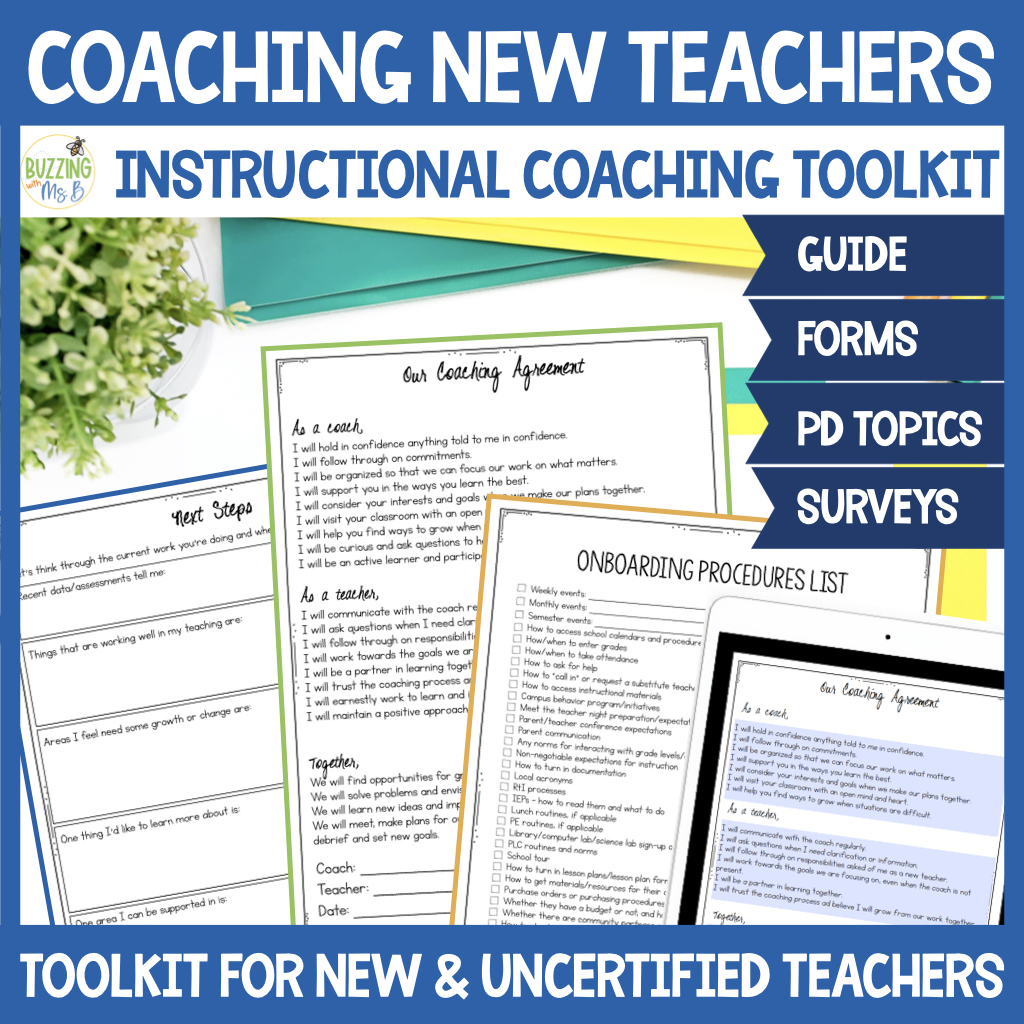
Have a plan for working with new and uncertified teachers with the Coaching New Teachers Toolkit!
It includes forms, templates, and everything you need to help your new and uncertified teachers! Figure out what support the need and provide PD and coaching with these resources. Grab the Coaching New Teachers Toolkit in my TpT Store!
⭐⭐⭐⭐⭐ “I support & coach new teachers and this resource is so valuable. I purchased it several months ago and often use tips you suggested when working with teachers. It is an essential section of my “Teacher Support Provider Binder” that I carry around with me everywhere.”
Using Co-Teaching Strategies During Coaching Cycles
One thing I was really excited to talk to Diane about was co-teaching! She began the discussion by explaining that she uses co-teaching interchangeably with the idea of coaching in the classroom.
We’re not “taking over” someone’s classroom to show them how it’s done. Instead of observing or evaluating from the sidelines, we work alongside teachers in the classroom as partners in the coaching process.
Diane highlights two common things she tries to steer people away from when they co-teach:
- Modeling a ton of lessons: It implies a deficit and feels uneven in terms of teachers being respected as experts in their classroom.
- Sitting in the back of the room observing and taking notes: This practice is too close to what principals do when they evaluate teachers. It doesn’t feel like a collaboration.
Diane outlines six co-teaching moves that coaches can use to maximize impact and build lasting partnerships:
- Noticing and naming: Actively collect student evidence during instruction. This is really helpful for future co-planning conversations.
- Thinking aloud: The coach and teacher pause and check in while the lesson is happening. You’re solving problems and coaching in real time, not days (or weeks) later!
- You pick 4: The teacher chooses a few students for the coach to collect evidence on. It’s helpful for the teacher and a nice differentiation strategy.
- Micro modeling: Model a small part of instruction, if the teacher requests it, to show a strategy or clarify a concept.
- Teaching in tandem: Old school “team teaching”. Diane says to use this one sparingly.
- Side-by-side coaching: Sit next to the teachers and co-support small groups or individual students, thinking aloud and responding in the moment. This used to be called co-conferring.
These Moves are designed to respect the teacher’s expertise, prioritize student evidence, and facilitate coaching in real time. Rather than coaching after the fact, the conversation is happening alongside the instruction, making it more efficient and effective.

Be ready for anything with the Instructional Coaching Editable Binder Megapack!
It includes forms, templates, and everything you need to get organized for instructional coaching! Coach teachers and document your coaching work with these printable and editable tools. Grab the Instructional Coach Binder Megapack in my TpT Store!
Getting Started with Student-Centered Coaching
Want to try Student-Centered Coaching but not sure where to start?
Diane suggests a few strategies to begin:
- Start using student work when coaching teachers. Finding ways to bring student evidence into your coaching work changes everything!
- Think about how you’re focusing on student learning. Are you talking mostly about adult actions, or are you zeroing in on what students are learning?
- Always be asset-based. We’re building on what students and teachers are doing right, not looking for what we can fix or what they did wrong.
Student-Centered Coaching
I’m so happy Diane was able to join me today on the podcast! I love that she was so specific and offered lots of practical suggestions to try out!
Listen now to this thought-provoking episode about Student-Centered Coaching! You don’t want to miss this episode!
Topics and Questions Discussed in Episode 281 – Student-Centered Coaching with Diane Sweeney
- An Introduction to Student-Centered Coaching
- How Student-Centered Coaching is different from other models
- Why Diane started focusing her coaching work on student learning objectives
- The three key components of Student-Centered Coaching
- The seven core practices from Diane’s book, Student-Centered Coaching: The Moves
- Why student work matters more than spreadsheets
- The six Co-Teaching Moves and how to use them
- Strategies for real-time coaching in classrooms
- Practical advice for building partnerships with teachers
- Steps for getting started with Student-Centered Coaching
About Diane Sweeney
Diane Sweeney is the founder of Student-Centered Coaching, a framework for instructional coaching that focuses on increasing student and teacher learning. As the author of several books, including the new edition of Student-Centered Coaching: The Moves (2026), Diane holds a longstanding interest in how adult learning translates to learning in the classroom. After teaching and coaching in the Denver Public Schools, she served in the nonprofit sector to support instructional coaching in high-needs schools. Since then, she has become a respected voice in the field of coaching and professional development.
Turning Insight Into Action: Practical Steps You Can Take After Listening
Here are simple actions you can take today:
1️⃣ Grab the FREE First 20 Days of School Checklist
If you are feeling nervous about back to school and unsure how to set yourself up for a successful year, grab the FREE First 20 Days of School Checklist. It’s perfect for coaches who are new or trying to have a do-over at the beginning of the school year.
2️⃣ Try Noticing and Naming
The next time you’re in a classroom, focus on collecting real student evidence (notes, Post-its, anecdotal records), rather than just observing teaching moves. Share what you notice with the teacher in real time. Let me know how it goes in the Instructional Coaching with Ms. B Facebook group or on Instagram @buzzingwithmsb!
Ready to listen?
This post contains links to products from one or more of our advertisers. This means I may receive commissions for purchases made through links in this post when you click on links to those products. Thank you for your support!
Learn more
- Episode 261 – My Favorite Books About Instructional Coaching
- Buzzing with Ms. B on Instagram
- Join My Facebook Group: Instructional Coaching with Ms. B
- FREE First 20 Days of School Checklist
- Diane Sweeney Consulting
- The Hub for Student-Centered Coaching
- A Community for Student-Centered Coaching Facebook Group
Helpful Resources
- Join the Instructional Coaching Club
- First 20 Days of Instructional Coaching Start Up Kit and Forms
- First 20 Days of Instructional Coaching Start Up Kit and Forms on TpT
- Instructional Coach Binder Megapack – Editable Forms, Calendars, Planning Tools
- Instructional Coaching Binder Megapack – Editable Forms, Documents & Tools on TpT
- Buzzing with Ms. B TpT Store
- The Confident Literacy Coach
- Simply Coaching Summit
- Book: Student-Centered Coaching: The Moves
- Book: The Essential Guide for Student-Centered Coaching: What Every K-12 Coach and School Leader Needs to Know
- Book: Moves for Launching a New Year of Student-Centered Coaching
Listen on: Apple Podcasts, Spotify, or your favorite listening app

Thank you for listening to Buzzing with Ms. B: the Coaching Podcast. Want more coaching ideas
Check me out at buzzingwithmsb.com and on Instagram @buzzingwithmsb.
If you love the show, share it with a coach who would love it too, or leave me a review on iTunes! It’s free and it helps others find this show, too. Happy coaching!
Podcast produced by Fernie Ceniceros