How to Teach Students to Find Main Idea in Nonfiction (Free Guide)
Reading nonfiction is different from reading fiction — but students don’t always realize that.
They often try to read informational texts the same way they read stories… and that’s when they get stuck.
They miss the main idea, get lost in the details, or walk away unsure of what the text was even about.
That’s why explicitly teaching students how to process nonfiction text is so important.
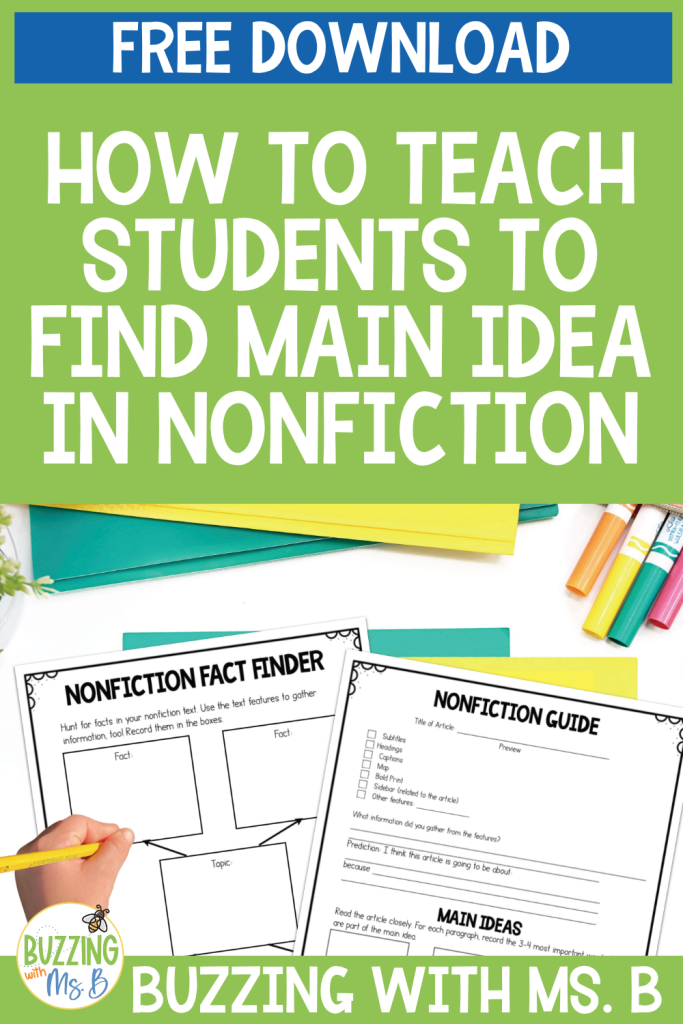
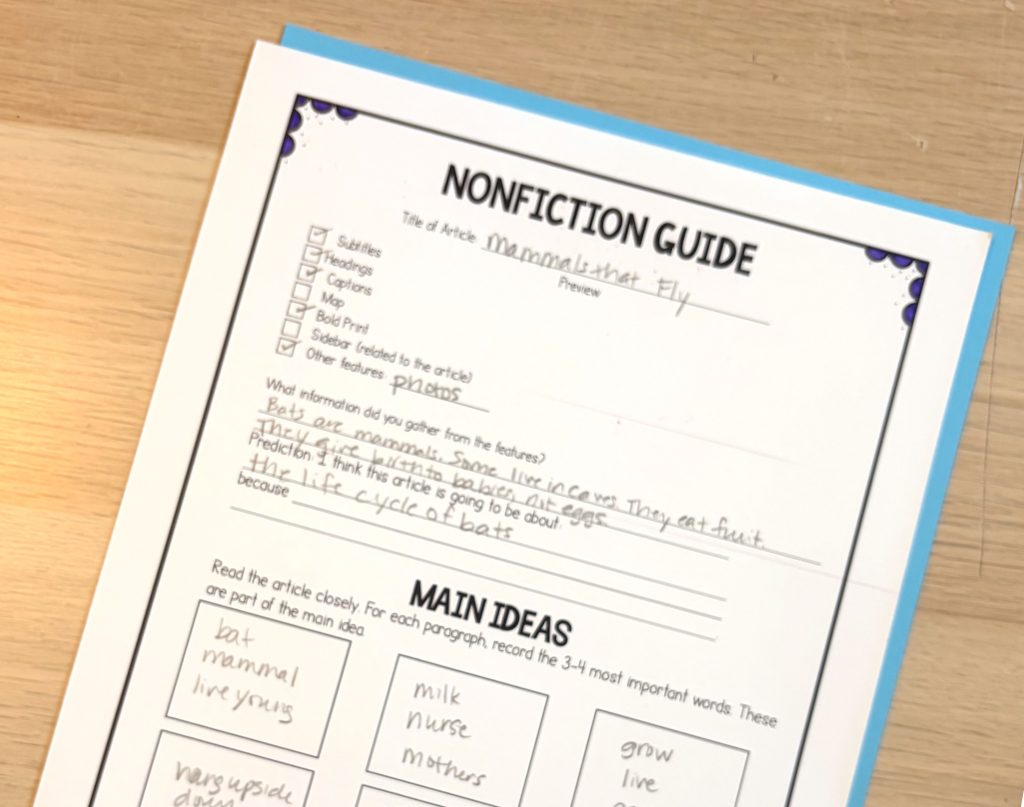
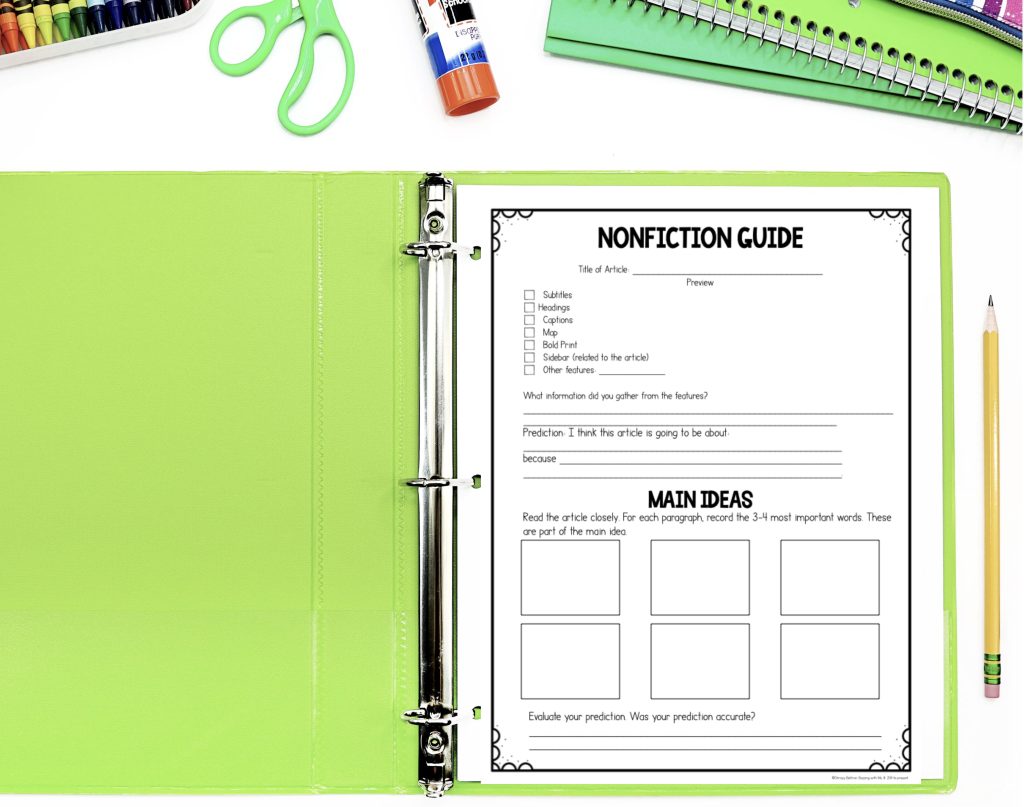
This free Nonfiction Guide gives students a simple, step-by-step way to break down informational text and actually understand what they’re reading.
Why Students Struggle with Nonfiction Text
When students read nonfiction, they’re expected to:
- gather information from text features
- identify important ideas
- connect details across paragraphs
That’s a lot.
Without a clear strategy, students tend to:
- focus on random facts instead of the main ideas
- skip over text features
- read passively without thinking
They need a process that helps them slow down and think while they read.
A Simple Process to Find the Main Idea in Nonfiction
Let’s explore three clear steps to help students understand nonfiction texts and identify main ideas.
Step 1: Preview the Text Features
Before reading, students take a moment to explore the text.
They look at:
- headings and subtitles
- captions
- bold words
- maps, diagrams, or sidebars
Then, they gather information and write a prediction sentence about what the article will be about.
This is key — not just a topic word, but a full idea.
👉 This step helps students start reading with purpose.
Step 2: Read and Find Main Ideas Paragraph by Paragraph
Instead of reading the whole text at once, students slow down and focus on one paragraph at a time.
As they read, they:
- identify important words or repeated ideas
- pull out the most important information
- turn those ideas into a main idea statement for each paragraph
This keeps students from getting overwhelmed and helps them build understanding piece by piece.
Step 3: Evaluate Their Thinking
After reading, students go back to their original prediction and ask:
- Was I right about what this text was about?
- Did my thinking change?
This step helps students reflect and strengthens comprehension.
It also reinforces that reading is an active thinking process, not just decoding words.
How This Nonfiction Guide Supports Students
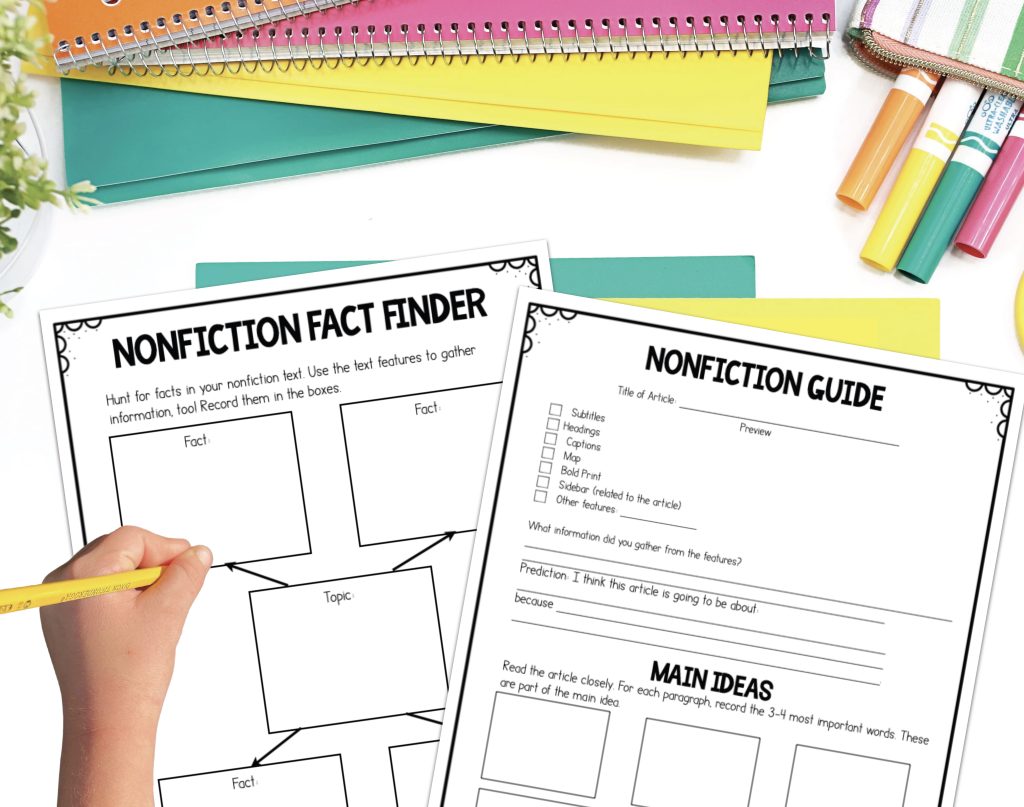
The free download gives students a structured way to:
- preview and interact with nonfiction text features
- track their thinking while reading
- identify main ideas using evidence
- reflect on their understanding
It also encourages students to:
- record keywords from each paragraph
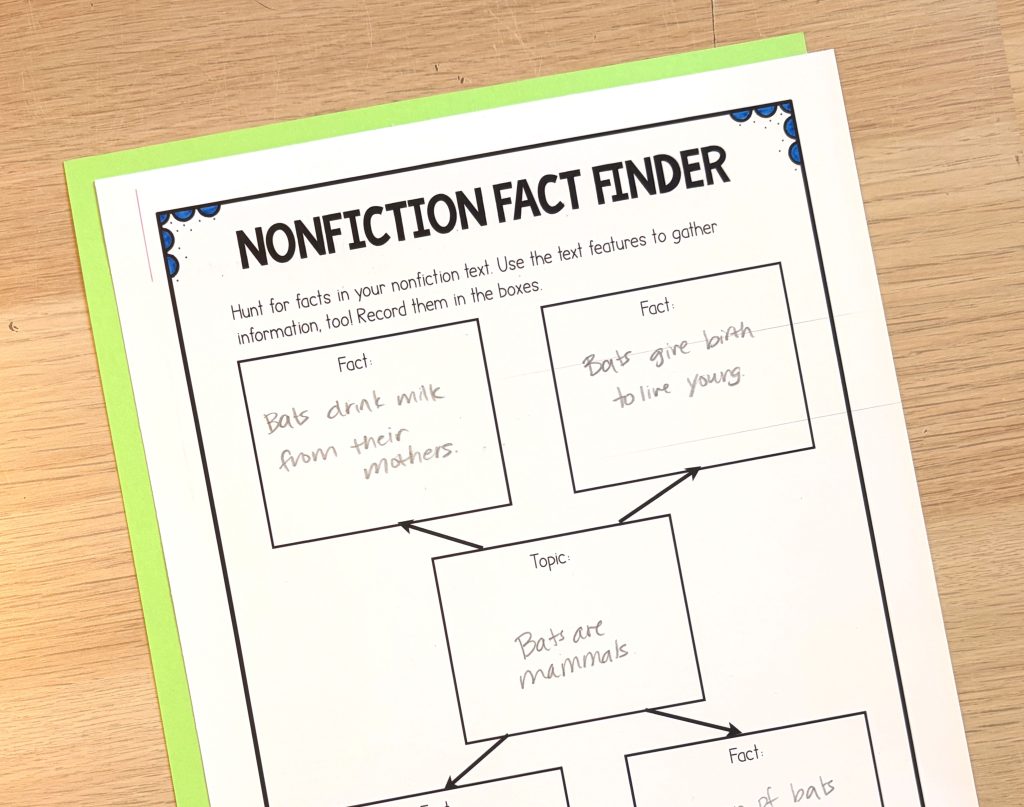
- gather facts from the text
- organize their ideas clearly
All of this helps students move beyond surface-level reading and into real comprehension.
How to Use This in Your Classroom
This resource works well for:
- guided reading groups
- whole-class nonfiction lessons
- independent practice
- test prep
- science and social studies integration
Because the routine stays consistent, students quickly learn the process and can apply it to new texts independently.
Free Download: Nonfiction Guide
If your students struggle to find the main idea in nonfiction, this resource gives them a clear path forward.
The free download includes:
- a nonfiction response page for previewing and predicting
- space to record main ideas by paragraph
- a reflection section to evaluate understanding
- a fact-finding page to gather important details
Want More Support for Teaching Nonfiction?
If your students benefit from this guide, you may also find my Nonfiction Unit to be an additional great support.
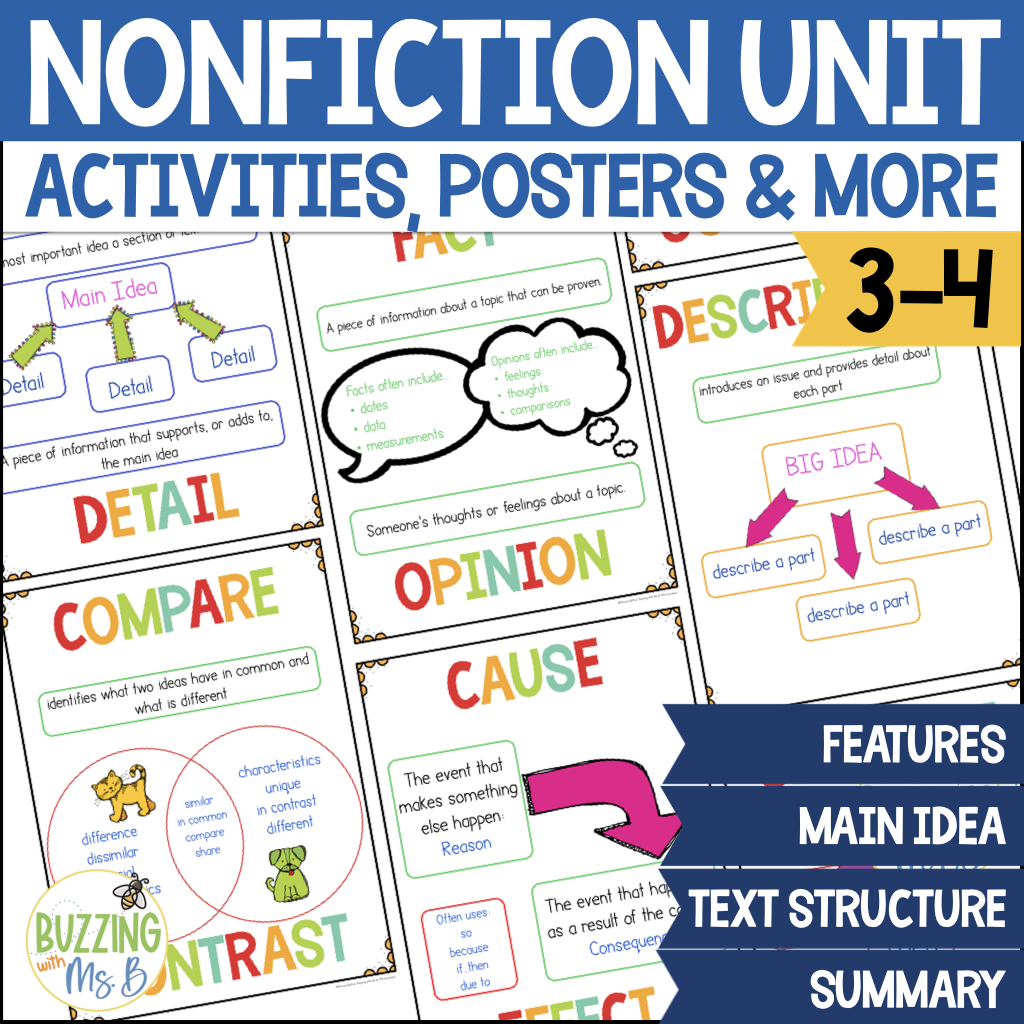
This resource expands on the same strategies with:
- graphic organizers for finding the main idea and summarizing
- posters to reinforce nonfiction reading strategies
- activities that help students interact with text features and informational text
It’s a great way to give students continued practice as they learn to identify main ideas, use text features, and build a deeper understanding of nonfiction texts.
👉 Download the free Nonfiction Guide here
Teaching nonfiction doesn’t have to feel overwhelming.
With the right structure in place, students can learn to read with purpose, think critically, and identify what really matters in a text.