Strengths-Based Coaching with Steve Barkley, ep. 283

What if the secret to great coaching is focusing less on weaknesses and more on strengths?
In this episode, education consultant Steve Barkley joins me to explore what it really means to coach from a place of strength. Drawing on decades of experience in education, he explains why teachers are more responsive to coaching when we shift from what’s missing to what’s already working. Instead of focusing on deficits, strengths-based coaching builds on the skills teachers already have, helping them feel seen, valued, and more confident in their practice.
Steve shares real-life examples of strengths-based coaching conversations, along with practical pre- and post-observation strategies to keep feedback focused on what teachers are doing well. We also discuss why it’s important to use the teachers’ language during feedback and how instructional coaches can address areas for growth without shifting into a deficit-based or evaluative approach. Along the way, Steve reveals how strengths-based coaching can strengthen teams, improve instruction, and create a more positive school culture.
Listen now for practical ideas, inspiring stories, and insights for making strengths-based coaching a meaningful part of your practice.

Starting out as an instructional coach can be so overwhelming! It can feel like there are too many things to do, and you just don’t know where to start. This resource includes a guide, printables, and fillable forms (PDFS) to build relationships, have a dialogue with your administrator, review data and make a plan, visit classrooms, and more! Get the First 20 Days of Instructional Coaching Start Up Kit and Forms today!
Strengths-Based Coaching
Strengths-based coaching starts by building on what’s already working rather than focusing on what’s missing. Steve explains that if it’s not strengths-based, it probably falls outside the definition of coaching.
He says that part of the reason many teacher evaluations have not led to meaningful growth is that they rely on checklists of “look-fors” and emphasize deficits. As a result, teachers often feel criticized instead of supported because they receive feedback that highlights what they lack rather than what they do well.
Why Are People More Responsive to Coaching When We Use a Strengths-Based Coaching Approach?
Drawing from positive psychology research, Steve tells us that people build and grow from their strengths, not their weaknesses. Strengths-based coaching is about seeing what’s working and how we can do more of it, rather than what’s lacking or broken. Positive feedback is motivating and creates the conditions for trying new ideas.
Steve brought up the example of the movie Moneyball, where Billy Beane built a winning team by betting on overlooked players’ strengths. By intentionally identifying what teachers do best, school leaders can build better teams. Recognizing and leveraging individual strengths will give the team superpowers.
He says instructional coaches and school leaders need to intentionally look for strengths during classroom visits. Instead of walking in with a checklist or looking for mistakes, coaches should train themselves to watch for what’s going right.
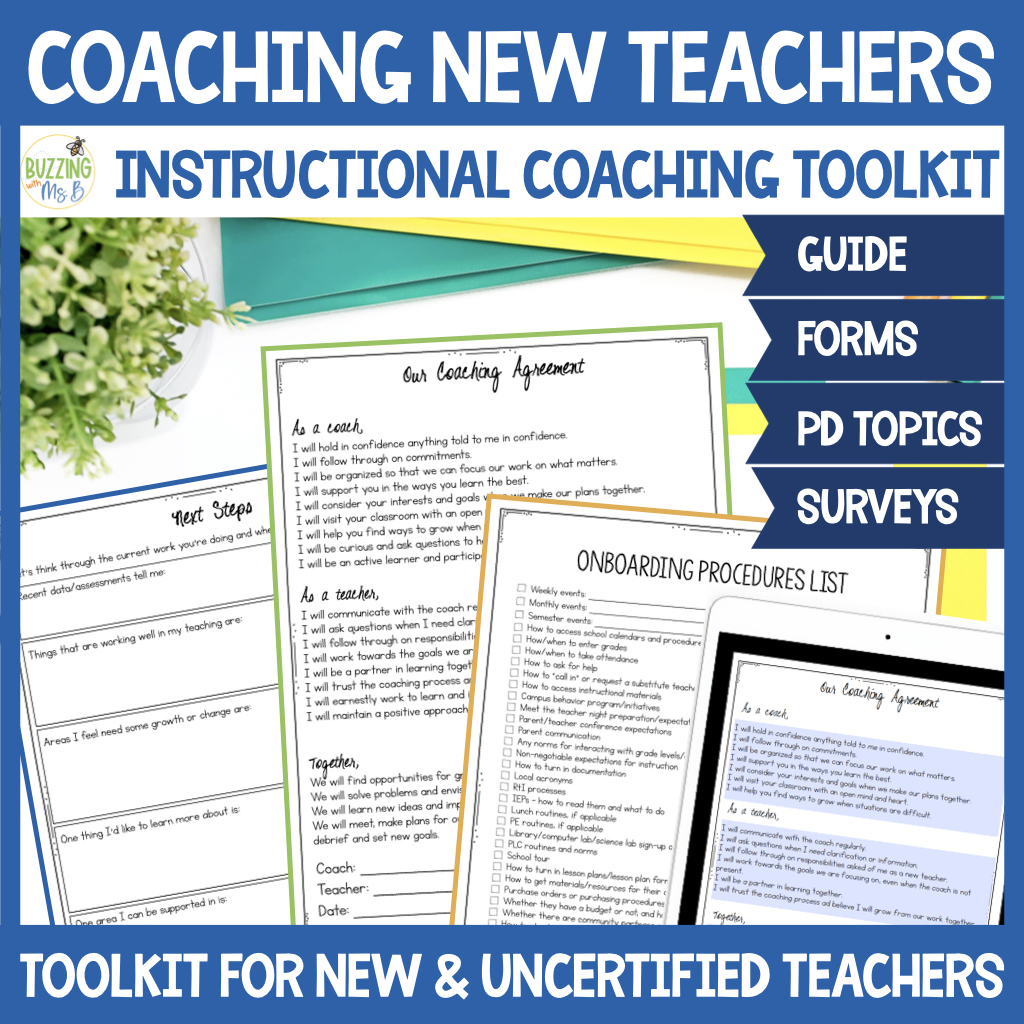
Have a plan for working with new and uncertified teachers with the Coaching New Teachers Toolkit!
It includes forms, templates, and everything you need to help your new and uncertified teachers! Figure out what support the need and provide PD and coaching with these resources. Grab the Coaching New Teachers Toolkit in my TpT Store!
⭐⭐⭐⭐⭐ “I support & coach new teachers and this resource is so valuable. I purchased it several months ago and often use tips you suggested when working with teachers. It is an essential section of my “Teacher Support Provider Binder” that I carry around with me everywhere.”
How to Have a Positive Post-Observation Conference
Steve tells a story about modeling a post-conference meeting during a mentor training and how participants were surprised by the number of strengths he identified in the teacher’s practice. During classroom visits, he quickly identifies ONE area the teacher needs to improve and then looks for strengths. In post-conferences, he highlights what’s working first because any area a teacher wants to tackle can be approached by building on their existing strengths.
He goes on to explain that to have the right post-conference, you need to have the right pre-conference. Here’s what he suggests:
Pre-Conference
Coaches should ask teachers about their strengths and what’s important to them.
When working with a new teacher, ask:
- How would you describe your natural approach to teaching? Tell me why that fits naturally for you?
- What do you want students to learn from your classroom management?
- When you think back to teachers you had as a student, what stands out as their strengths?
During the Classroom Visit
When you go into the classroom, look specifically for the things that the teacher told you were important to them during the pre-conference.
Post-Conference
Steve says that evaluators tend to use the words of the system (i.e., words that come with the curriculum or the evaluation tool). Coaches use the words of the teachers.
During the post-conference, talk about strengths using the teacher’s own language. For example, if the teacher calls it “group work”, the coach should call it that also.

Be ready for anything with the Instructional Coaching Editable Binder Megapack!
It includes forms, templates, and everything you need to get organized for instructional coaching! Coach teachers and document your coaching work with these printable and editable tools. Grab the Instructional Coach Binder Megapack in my TpT Store!
Addressing Areas for Growth Using a Strengths-Based Approach
Addressing areas for growth doesn’t have to mean shining a spotlight on what the teacher is doing “wrong.” Instead, Steve recommends that coaches frame the conversation around student learning goals and outcomes rather than what the teacher is doing.
During the post-conference, Steve invites the teacher to describe what they noticed and what they wanted to happen during the lesson. He explains that his usual approach is to take something the teacher is doing well and look for ways to use that to meet their objective. To hear an example, listen to the full podcast!
Steve highlights that a strength-based approach is not really about being positive; it’s about being strategic. As a coach, you’re studying what’s already moving learning forward, and then helping the teacher do more of that with students on a deeper level. He concludes by saying that even working in an area of weakness, you’re focusing on the strengths that exist in that area and building up from there.
Strengths-Based Coaching
That was an amazing conversation about strengths-based coaching! I love the way Steve says things in such a simple, accessible way.
I think it’s so important to take a strengths-based approach to coaching. We should look at what teachers are doing well and how we can help them build on those areas. When we anchor coaching in strengths, we create the trust and momentum needed for meaningful growth.
Ready to learn more about strengths-based coaching? Listen now using the player below or wherever you get your podcasts.
Topics and Questions Discussed in Episode 283 – Strengths-Based Coaching with Steve Barkley
- What strengths-based coaching is and isn’t
- How a strengths-based approach differs from other coaching approaches
- Why traditional evaluation models fall short
- The research on positive psychology and its connection to instructional coaching
- Real-life examples of strengths-based coaching in schools
- Why teachers are more responsive to coaching using a strengths-based approach
- Pre- and post-conference strategies for focusing on strengths
- Why it’s important to use teacher language when giving feedback
- Addressing areas of growth without shifting into a deficit-based or evaluative approach
About Steve Barkley
Steve Barkley entered his career in teaching decades ago in an environment of coaching and teaming before the terms instructional coaching and professional learning communities were in our educator vocabulary. He has dedicated his career to building teachers’ engagement in shared reflective practices with building a coaching culture as a continuous focus.
Turning Insight Into Action: Practical Steps You Can Take After Listening
Here are simple actions you can take today:
1️⃣ Grab the FREE First 20 Days of School Checklist
If you’re gearing up for a new year or need a reset, download the FREE First 20 Days of School Checklist to set yourself up for a successful, impactful year of coaching!
2️⃣ Join the Instructional Coaching Club
The Instructional Coaching Club is an online membership designed to help instructional coaches improve instruction at their schools. It gives coaches the tools to go out and do it.
3️⃣ Center Your Feedback Around What’s Working
During your next coaching conversation, name at least two teacher strengths you observe, using the teacher’s own language from your pre-conference.
Ready to listen?
This post contains links to products from one or more of our advertisers. This means I may receive commissions for purchases made through links in this post when you click on links to those products. Thank you for your support!
Learn more
- Episode 55 – Responding to Resistance to Coaching with Steve Barkley
- Episode 281 – Student-Centered Coaching with Diane Sweeney
- Episode 282 – Cognitive Coaching with Mary Bouley
- Buzzing with Ms. B on Instagram
- Join My Facebook Group: Instructional Coaching with Ms. B
- FREE First 20 Days of School Checklist
- Steve Barkley Website
- Steve Barkley Ponders Out Loud Podcast
Helpful Resources
- Join the Instructional Coaching Club
- First 20 Days of Instructional Coaching Start Up Kit and Forms
- First 20 Days of Instructional Coaching Start Up Kit and Forms on TpT
- Instructional Coach Binder Megapack – Editable Forms, Calendars, Planning Tools
- Instructional Coaching Binder Megapack – Editable Forms, Documents & Tools on TpT
- Buzzing with Ms. B TpT Store
- The Confident Literacy Coach
- Simply Coaching Summit
Listen on: Apple Podcasts, Spotify, or your favorite listening app

Thank you for listening to Buzzing with Ms. B: the Coaching Podcast. Want more coaching ideas
Check me out at buzzingwithmsb.com and on Instagram @buzzingwithmsb.
If you love the show, share it with a coach who would love it too, or leave me a review on iTunes! It’s free and it helps others find this show, too. Happy coaching!
Podcast produced by Fernie Ceniceros