| |

Cognitive Coaching with Mary Bouley, ep. 282
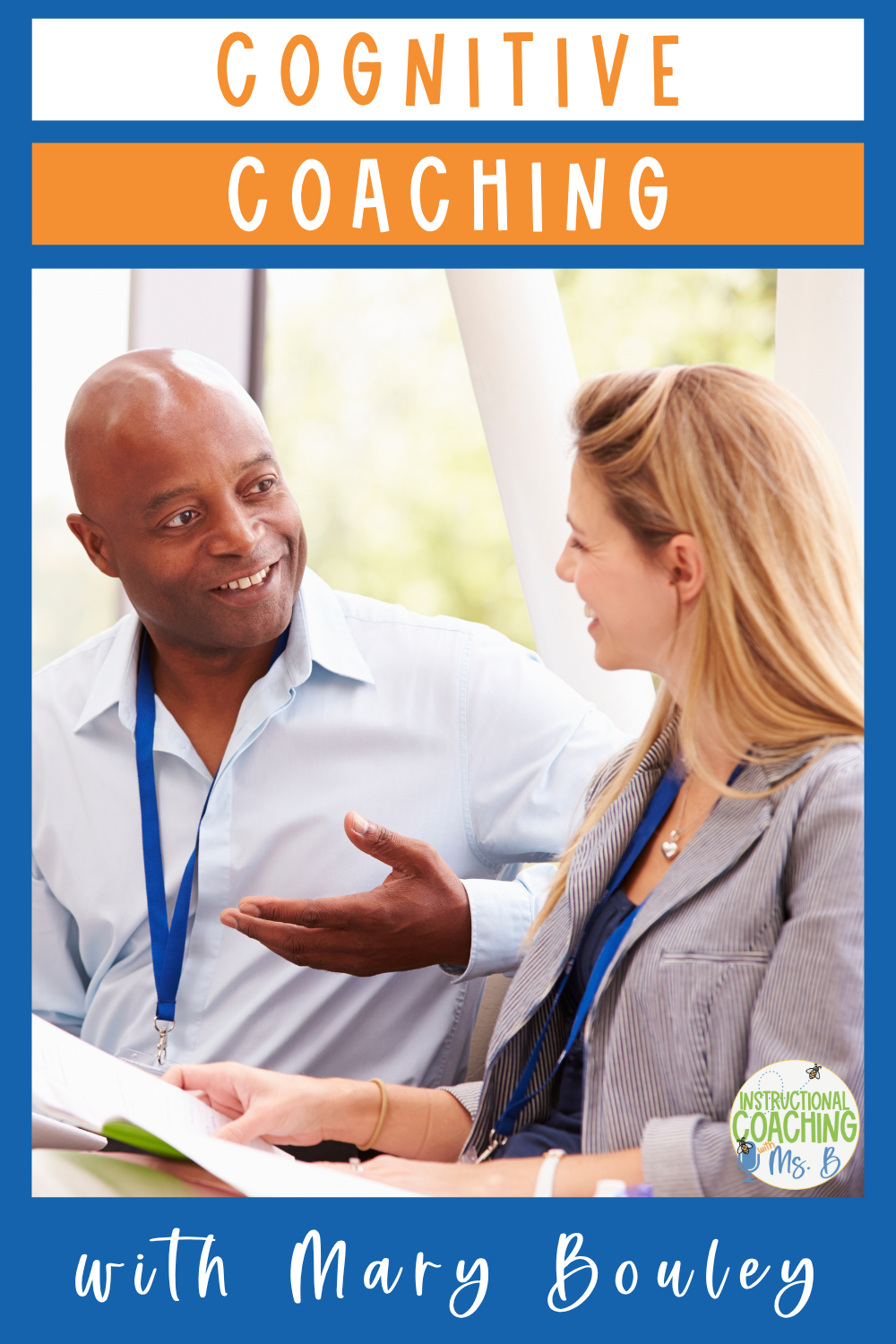
Teacher and instructional coach looking at eac other smiling while sitting down. These wrds are on the image "Cognitive Coaching with Mary Bouley"

Most instructional coaches are dropped into their roles without training or any real guidance. This month, we’re exploring different universal models of instructional coaching so you can draw from them and build your own approach that supports your teachers!

Last week, we talked about Student-Centered Coaching with Diane Sweeney. This week, Mary Bouley joins me to discuss Cognitive Coaching.

During the episode, Mary provides an introduction to Cognitive Coaching, including how it differs from other approaches. She explains why Cognitive Coaching is more relevant than ever in today’s high-pressure school systems. You’ll discover how it fosters teacher independence, helping them become more self-reliant. Plus, learn the first steps for getting started with Cognitive Coaching!

Instead of focusing on “fixing” teachers, Cognitive Coaching builds trust and supports self-directed growth. Listen to the full episode now. For the highlights, keep reading below!

What Is Cognitive Coaching?

To start the conversation, Mary gives us a brief introduction to Cognitive Coaching. She explains that Cognitive Coaching is more than an approach; it’s a way of being rooted in trust, nonjudgment, and genuine care.

Developed by Arthur Costa and Robert Garmston, it centers on the idea that the biggest impact a coach can make comes from supporting a teacher’s thinking and energy. The mission of the work is to produce self-directed people with the cognitive capacity for excellence both independently and in community.

Unlike a more behaviorist approach, Cognitive Coaching asks coaches to trust the process and allows teachers to sort out their challenges in their own time. It aims for lasting transformation by cultivating reflection, problem-solving, and intrinsic motivation. Coaches create a space where teachers can process their feelings and energy, explore their beliefs, and develop their own solutions.

In today’s education landscape, with its sense of urgency, instructional coaches may struggle to embrace this type of coaching due to time constraints and competing priorities. There’s often pressure to step in and fix things. But as Mary explains, people don’t change on a dime. True transformation takes time, relationships, and community. She believes that most capable administrators know in their hearts that lasting change can’t be rushed, but they are under constant pressure from the demands of the system.

Starting out as an instructional coach can be so overwhelming! It can feel like there are too many things to do, and you just don’t know where to start. This resource includes a guide, printables, and fillable forms (PDFS) to build relationships, have a dialogue with your administrator, review data and make a plan, visit classrooms, and more! Get the First 20 Days of Instructional Coaching Start Up Kit and Forms today!

How Does Cognitive Coaching Differ from Other Coaching Approaches?

Mary and I discussed how cognitive coaching differs from other models. She says one thing that sets Cognitive Coaching apart is that it is “who you are choosing to be”.

Cognitive Coaching helps teachers become aware of their thinking and capacity, giving them space to process both their thoughts and emotional state. The coach’s role is to ask questions that build the teacher’s sense of efficacy and mastery.

Mary explains that a measure of a Cognitive Coaching conversation is the shift in energy. Coaches lean into five states of mind (which are energy sources): consciousness, flexibility, interdependence, efficacy, and craftsmanship. The coach reflects on whether the teacher is leaving the conversation feeling more empowered, rather than weighed down or dependent.

To hear Mary describe what a Cognitive Coaching conversation with a teacher sounds like, be sure to listen to the full episode using the player below!

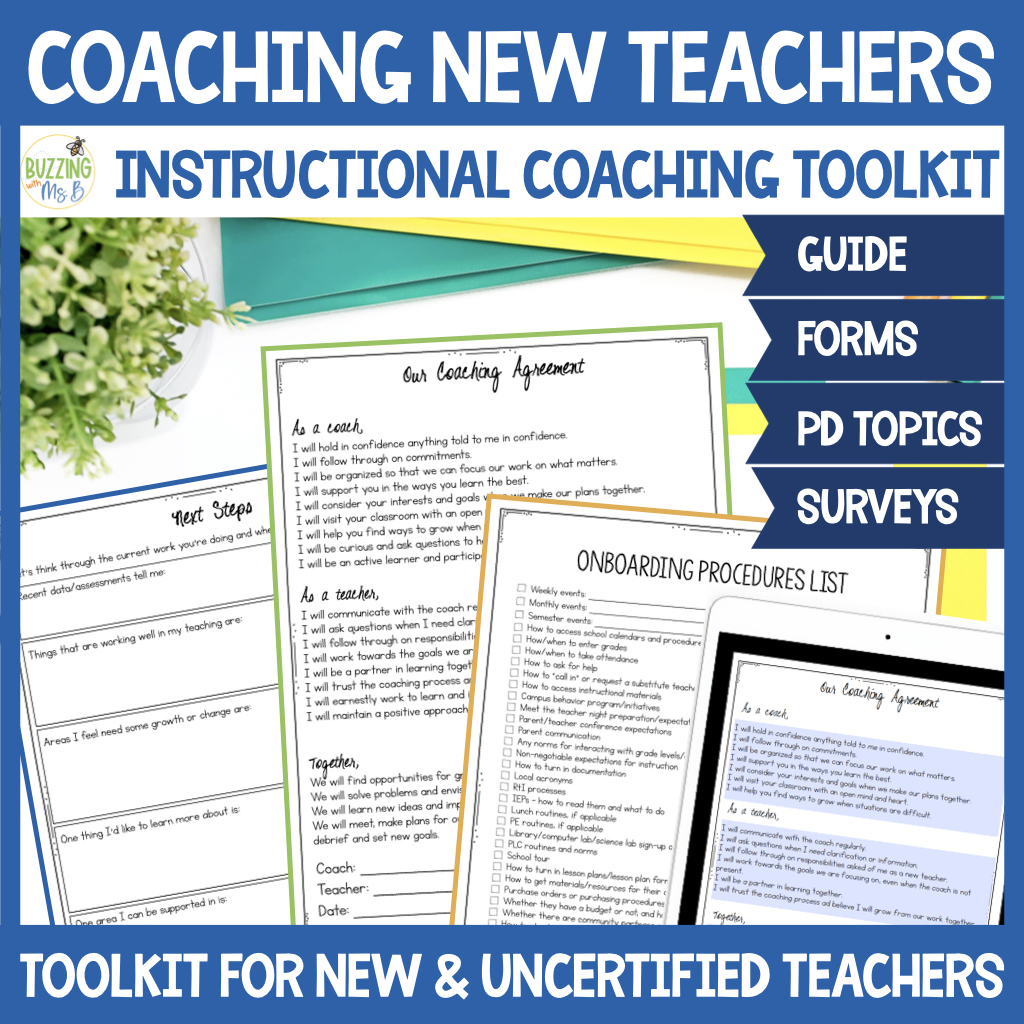
Have a plan for working with new and uncertified teachers with the Coaching New Teachers Toolkit!

It includes forms, templates, and everything you need to help your new and uncertified teachers! Figure out what support the need and provide PD and coaching with these resources. Grab the Coaching New Teachers Toolkit in my TpT Store!

⭐⭐⭐⭐⭐ “I support & coach new teachers and this resource is so valuable. I purchased it several months ago and often use tips you suggested when working with teachers. It is an essential section of my “Teacher Support Provider Binder” that I carry around with me everywhere.”
How Cognitive Coaching Supports Teacher Independence

So, how does Cognitive Coaching support teacher independence over time?

Mary tells us that the gold standard in Cognitive Coaching is self-directedness. The goal is to help teachers self-monitor, self-modify, and self-manage so they can reflect on their practice and solve problems independently long after the coach is gone. This shift is crucial in an education culture that pushes compliance and quick fixes.

As we all know, some teachers aren’t aware of their own blind spots or how their actions influence student behavior in the classroom. Over time, teachers who take part in Cognitive Coaching develop more self-awareness. Building this self-awareness takes patience, reflection, and a willingness to bring patterns to light in a caring environment.

We also talk about judgment, which is something I’ve had to work on myself. Mary explains that we’re wired to judge, so it’s natural. What she does is set aside judgment in the moment and trusts that the person is doing their best. She acknowledges this can be difficult when you walk into a classroom and see children affected by a struggling teacher. But ultimately, she returns to the belief that teachers are doing their best, and as instructional coaches, our role is to support them and help them grow.

Be ready for anything with the Instructional Coaching Editable Binder Megapack!

It includes forms, templates, and everything you need to get organized for instructional coaching! Coach teachers and document your coaching work with these printable and editable tools. Grab the Instructional Coach Binder Megapack in my TpT Store!

Getting Started with Cognitive Coaching

For anyone interested in exploring Cognitive Coaching, Mary suggests several practical first steps:

  • Visit thinkingcollaborative.com to learn more about trainings, articles, and resources.
  • Attend a Cognitive Coaching Training (often offered by districts, but sometimes open to other individuals in the community).
  • Share Cognitive Coaching with your leadership team and ask them to bring it to your school or district.
  • Read more about it, including the Cognitive Coaching textbook and related articles.

Cognitive Coaching for Teachers

I hope this episode piqued your interest in Cognitive Coaching. I really enjoyed my conversation with Mary, and I know you will too.

Ready to dig into Cognitive Coaching? Listen to the episode now!

Topics and Questions Discussed in Episode 282 – Cognitive Coaching with Mary Bouley

  • An introduction to Cognitive Coaching
  • How Cognitive Coaching differs from other coaching approaches
  • Examples of Cognitive Coaching conversations
  • The five states of mind: consciousness, flexibility, interdependence, efficacy, and craftsmanship
  • How Cognitive Coaching supports teacher independence and self-direction
  • Supporting teachers without judgment
  • Practical first steps for getting started with Cognitive Coaching

About Mary Bouley
Mary Bouley is an educator with 40 years of experience from Pre-K to higher education. She first encountered Cognitive Coaching in 2006 and has been a Cognitive CoachingSM Training Associate for Thinking Collaborative since 2015.

Turning Insight Into Action: Practical Steps You Can Take After Listening

Here are simple actions you can take today:

1️⃣ Grab the FREE First 20 Days of School Checklist

If you are feeling nervous about back to school and unsure how to set yourself up for a successful year, grab the FREE First 20 Days of School Checklist. It’s perfect for coaches who are new or trying to have a do-over at the beginning of the school year.

2️⃣ Join the Instructional Coaching Club

The Instructional Coaching Club is an online membership designed to help instructional coaches improve instruction at their schools. It gives coaches the tools to go out and do it.

3️⃣ Share this episode about Cognitive Coaching

If this episode inspired you, share it with a fellow coach or administrator. Start a conversation about how you could use Cognitive Coaching on your campus.

Ready to listen?

  • Ready to listen? You can listen below with the media player, or search for Buzzing with MS. B: The Coaching Podcast anywhere you listen to podcasts!

This post contains links to products from one or more of our advertisers. This means I may receive commissions for purchases made through links in this post when you click on links to those products. Thank you for your support!

Learn more

Helpful Resources


Listen on: Apple Podcasts, Spotify, or your favorite listening app


Thank you for listening to Buzzing with Ms. B: the Coaching Podcast. Want more coaching ideas

Check me out at buzzingwithmsb.com and on Instagram @buzzingwithmsb.

If you love the show, share it with a coach who would love it too, or leave me a review on iTunes! It’s free and it helps others find this show, too. Happy coaching!

Podcast produced by Fernie Ceniceros
Cognitive Coaching with Mary Bouley, ep. 282, Instructional Coaching with Ms. B Podcast

Chrissy Beltran [00:00:02]:

Hey, coach, and welcome to instructional coaching with miss b. Today, we are talking cognitive coaching with Mary Bouley. I cannot wait to have this conversation because this miniseries about universal models or approaches for instructional coaching, I think, is gonna be so valuable to coaches. This idea that we kind of just are thrown into coaching without really a lot of support in developing our coaching skills before the year starts, it’s so wrong. Right? So what I want I’m trying to do with this series is expose you to some different approaches so that you can start pulling from them. You can get more training in them if you’re interested, and you can really start to kind of build your own approach to coaching that is gonna be the most supportive of your teachers. Now if you’re feeling a little overwhelmed with figuring out the beginning of the school year, I actually have a handy dandy resource for you. The first twenty days of school checklist is up is perfect for helping you narrow down the millions of things you could be working on the first month of school into the specific tasks you actually need to do the first twenty days of school to set yourself up for a successful, impactful year of coaching. Grab a handy checklist at buzzingwithmissb.com/firsttwenty, that’s first two zero, and be ready to coach your teachers this year. Now let me introduce my guest, Mary Belay. She’s an educator with forty years of experience from pre k all the way through higher education. She first encountered cognitive coaching in 2006 and has been a cognitive coaching SM training associate for Thinking Collaborative since 2015. And what I love about Mary is you can tell she knows her stuff because she’s the kind of person that is very easy to chat with about her area of expertise. So let’s welcome her. Thank you so much for being here today, Mary.

Mary Bouley [00:01:41]:

Oh, I’m happy to be here. Thanks.

Chrissy Beltran [00:01:43]:

I’m really excited to get into this topic about cognitive coaching. So could you introduce us to the idea of cognitive coaching and just kind of generally what it looks like?

Mary Bouley [00:01:52]:

Sure. Cognitive coaching is a body of work and an approach and, a system or training and and implementation, I guess, you might say. That’s been around for about forty years since the late eighties and nineties, developed by Art Costa and Bob Garmston back in the day. And I think it’s, just kind of in terms of the logistics, it begins with an eight day seminar, typically delivered kind of in four two day sets over the course of a semester or even a year. And it’s, it’s an approach. The mission of the work is to produce self directed persons with the cognitive capacity for excellence in both independently and in community. Mhmm. So, that’s sort of a lot of straight out of the book answer to what it is. Absolutely. From my heart, the answer would be it’s, I think of it as it’s a very trust based, nonjudgmental, supportive, caring, intelligent way of being. It’s not we always say cognitive coaching isn’t what you do. It’s who you are. So it has everything to do with, developing capabilities and mindsets that really put the thinking and energy of the other person as your as that’s as your goal. And, so it it’s a lot of it is easier said than done, but I think cognitive coaching, what would some of my colleagues would say, it’s really the nonjudgmental mediation of thinking. Mhmm. It’s appreciating that that that all behavior that we see on the outside is a function of what’s going on on the inside. And, unlike a more behaviorist approach, which there, some are and some aren’t, it’s, it’s really deeply one of the deep prep, propositions or presuppositions is that, is that, the most potential impact we have as coaches is to intervene at the thinking and the energy level and then trusting that other people do sort their own things out. Mhmm.

Chrissy Beltran [00:04:17]:

That’s so interesting. And it’s I feel like it is so that this approach is often it’s maybe considered impossible in some settings. Just like, coaches may struggle with it because of the time demands that schools have, and they want, like, immediate change. Right? And so this obviously takes time to help people, you know, think through things and change the way that they think.

Mary Bouley [00:04:40]:

It that’s true. And I it’s such an interesting kind of dynamic and dilemma. I think as teachers and as educators, we all know in our hearts that people don’t change on a dime. Right. And that transformation takes time and relationship and community. And, it’s just an it’s a very unfortunate, fact of of the systems as they currently exist that, there’s a very unhealthy urgency. And, I think the one of the things we we certainly invite participants who who, are taking who are becoming cognitive coaches to under to recognize the opportunities they have to inform their colleagues and their supervisors that Mhmm. Because many coaches when they, are are feel a lot of pressure to go in and fix. Right? And, like, if that worked, it’s what we would all be doing. We know it doesn’t work, and even the busiest, most capable administrator knows in their heart that it doesn’t work. But when we get caught up, I think, in the fluster of the moments and the demands of the system, Yes. There’s a lot of pressure, which is why I think there’s tends to be a fair amount of defaulting to behavioristic approaches.

Chrissy Beltran [00:05:56]:

Mhmm.

Mary Bouley [00:05:57]:

When what if if what we really understand is that transformation is the level of change that has deeper meaning than we have to be we have to trust. Mhmm. We have to trust that it’s gonna take some time.

Chrissy Beltran [00:06:12]:

So you’ve mentioned behavioristic approaches. How does cognitive coaching how does this approach look different than other coaching approaches?

Mary Bouley [00:06:21]:

You know, I was thinking about that question, and, I’m I’m I’m hesitant to say too much because I’m really not that deeply, knowledgeable about other approaches. I do know that, there are, many of the approaches anymore these days do under do do address the topic of trust as being foundational. And I think that’s some real connective tissue. And my you know, just based on working with all the participants we’ve had over these many years Mhmm. There’s this interesting dynamic of of, you know, we and I’m not saying any, other models or approaches do this, but we all, I think, have a natural tendency to just want to get the script. Like, give me the script. Mhmm. Tell me what I’m gonna do. Tell me what it looks like. As long as I know what I’m gonna do, I’ll I’ll be okay. It feels safer.

Chrissy Beltran [00:07:22]:

It feels comforting Yes. For to know what’s gonna happen. Yeah.

Mary Bouley [00:07:25]:

Exactly. And when it comes to interpersonal relationships and interpersonal dynamics and, sometimes, you know, you’re a a coach is working with a teacher who there’s already a a trust deficit, not but because of that coach at all, just because of the systems or previous experiences. So I think the the the what really sets one of the things that sets cognitive coaching into a different, a difference is that it’s, it’s it’s who you are. It’s it’s who you’re choosing to be and, trusting that the behaviors and the development and the change comes because there’s deep relation there’s relationship and that you’re really people respond when they know that someone is trusting them to do their own thinking and sort out their own issues. Nobody wants to feel like they’re being fixed. And again, I don’t mean to to say that any models or approaches have that as their approach, but, but I think cognitive coaching stands apart as a way to really, develop yourself. We always tell people on day one, you we you know, you probably came here thinking I’m gonna learn how to change other people, and, basically, you spend eight days learning how to change yourself.

Chrissy Beltran [00:08:44]:

Oh, yeah. I can imagine that. Yeah. You know? So in terms of you’re talking about, you know, really digging into the thinking and that our thinking and our thoughts and our beliefs drive our actions. What can you give us an example of something that you might be discussing with a teacher that would that would fall on this umbrella?

Mary Bouley [00:09:06]:

Let’s see. So I, I think pretty much any topic you might take. Because when I use the word thinking, I it’s it’s broader than just pure plain cognition. Mhmm. It’s it’s energy. It’s the energy I have. It’s the emotions I’m feeling. It’s, like, all of the inside dynamics. And so, you know, I think of a teacher who’s having difficulty with classroom management, maybe transitions or something along those lines. And, you know, there it the the when when whenever we’re feeling desperate, we do want someone to just tell us what to do. Mhmm. And the reality is that that, that that having the space to think about it myself and to, to maybe process some of the emotional part of it, to maybe, and then, you know, have a coach who can also be invitational and say, might it be helpful if I share some ideas? But I think we default pretty quickly to, offering solutions and ideas and the spirit of wanting to help.

Chrissy Beltran [00:10:13]:

Right.

Mary Bouley [00:10:14]:

And, the this really this approach of kind of coaching is very much about building efficacy. We actually talk about five states of mind, which are our energy sources. They include consciousness, flexibility, interdependence, efficacy, and, craftsmanship. So as coaches, we kinda use those, energy is interesting because you don’t actually see it, but it’s very real. And we’re just not familiar of thinking along those lines. So in a conversation about classroom management, for example, you know, I would leave the conversation, wanting to measure myself, what I heard, did I hear a little more efficacy? Did I hear a little more craftsmanship about how they might approach it? Mhmm. So we kind of our questions and our responses, our paraphrasing is very intended to help. We we we often say, you know, you can’t read the jar. You can’t read the label from inside the jar. Mhmm. So there’s this way of coaching that that you’re really helping people see for themselves what’s going on inside of themselves. And I know that may sound, abstract, but it’s it’s not abstract. It’s unfamiliar. We’re unfamiliar often of of of thinking about how to operate that way. Mhmm.

Chrissy Beltran [00:11:35]:

Yeah. I think that’s interesting because we we get caught up in, this is the right way to do things. This is the wrong way to do things. And sometimes we need to be thinking about, well, where are we coming from, and why why is this happening? You know, I was talking to a friend of mine, this morning, actually, about an experience that just even as parenting, so many connections were made to teaching. Right? So I was remembering how whenever I was a teacher that certain times of year, when whenever energy was low and frustrations were high, I tended to start pointing out more negative in my classroom. And I noticed this about myself over the years, right, that I was pointing out negative, negative, negative, negative. And it seems like kids’ behaviors were just getting worse and worse. Right? And I was like it was and I was just like, what are you doing? We need to be doing this. What’s happening? And it just, like, like, so much, you know, chatter and talk. And then I would every year, I’d realize I’m doing this, and it doesn’t work. It doesn’t It’s I’m just I’m, like, working against myself here. I’m creating a really bad, like, classroom environment here for myself too and for the kids. And so they’re responding, and I’m responding, and it’s this horrible cycle, and I have to pull myself out of the cycle. And I have to be aware of what I’m saying, and I have to reframe everything in terms of what I want to see and what I know they can do and how I know they can be. And so by changing my language, I completely could change the tone of the classroom. And it was it was like it would happen so quickly. It was within a couple of days. It was like a different space again. But I know I fall into this habit. And even as a parent, I fall into this habit where I start pointing out what’s wrong, what’s wrong, what’s wrong instead of pointing out what could be what we could do, what’s right, what’s happening, what’s working. And so I that’s something that if I had had a cognitive coach at the time, it might not have taken me so long to realize what was going on. Right?

Mary Bouley [00:13:20]:

Mhmm. Right. Right. That increased consciousness in yourself. Mhmm. And, it’s one of the core capabilities that we talk about a lot in the work is know your intentions and choose congruent behavior. Mhmm. So and and so that idea that you’re you’re you used a keyword there, the idea of language. You know? Our our our intention and our capacity for using strength based language. And it’s it’s not just the language, it’s the mindset that goes with it and the and the consciousness that goes with it. It it’s, yeah, it’s really central to the the idea of how do we, and as you’re talking about parenting and students in classrooms, you know, we have this joke that we’ve saved more than one marriage in the works. I bet. Because it’s it’s very it’s you you can’t you can’t do cognitive coaching. You you are. You are someone who listens deeply. You are someone who has skillful, skillful paraphrasing. You are someone who is setting aside judgments. You are someone who’s aware of your own states of mind and your own energy. And if it’s a moment where you you don’t have it’s not none of us are perfect or saints. I don’t wanna send the message that, you know, somehow, you know, you have to be a saint to do this work. But you do have to be rigorous and disciplined about your own, energy and positivity. Yeah. Because it does. It it spirals in one direction or the other. There’s no neutral.

Chrissy Beltran [00:14:43]:

That’s right. Yeah. Do you since an honest question, do you ever find it kind of exhausting sometimes? Do you have to, like, bring yourself back and kind of like, kind of like I did in the classroom where I was like, I’m just losing it, where you just feel like this has taken a lot out of me, and I have to bring myself back to, like, a start point?

Mary Bouley [00:15:00]:

Yeah. I think I think so. I think the other and and at the same time as time has gone on, and I’ve had a lot of experience, one of the deep beliefs that has really developed for me is truly believing that all anyone is doing, whether they’re children or adults

Chrissy Beltran [00:15:19]:

Mhmm.

Mary Bouley [00:15:20]:

At any given moment is whatever they think is best for them.

Chrissy Beltran [00:15:24]:

Mhmm.

Mary Bouley [00:15:25]:

And so when I can recognize that that what I see or used to see or often might be tempted to see as negativity, that that’s what’s the beauty of the five states of mind. So instead of when I hear at at someone who’s downloading very negatively and probably legitimately, they got a new student in their room, it’s wreaking havoc, blah blah blah blah blah blah. Instead of seeing that as the person is negative, with the five states of mind, I can go, wow, their efficacy has taken a big hit.

Chrissy Beltran [00:15:55]:

Mhmm.

Mary Bouley [00:15:55]:

Their sense that they and or their craftsmanship, how they can have all those things firing at all times. They can be the best teacher in the building, and you get a new student. Yeah. And these things can take a hit. And so as a coach, when I can listen for that, instead of, oh, this is so positive or negative, and I can know how to pose questions and really empathize so that they feel heard in these moments that are difficult. You know, it’s easy to do it when it’s easy. Right?

Chrissy Beltran [00:16:21]:

Mhmm.

Mary Bouley [00:16:22]:

It’s the the the real true value is when is to do it when it’s not easy.

Chrissy Beltran [00:16:28]:

Yeah.

Mary Bouley [00:16:28]:

And so, anyway, going back to that idea that I think the more I’ve I’ve come to realize and which translates into just never take things personally. Again, easier said than done. But the minute you’re taking your student’s behavior personally or an adult’s behavior personally, you’re you’re already creating some blockage in terms of how potentially impactful you might be.

Chrissy Beltran [00:16:50]:

Yeah. So I thank you so much for sharing all this. I how does this approach support teacher independence over time?

Mary Bouley [00:16:59]:

Well, I think it’s the it’s kind of the gold standard of the whole work is self directedness. Mhmm. What you want is and that we we’re so fortunate. Sometimes we are working with administrators, principals, or, administrators, which is ideal because even though it’s called cognitive coaching, the work emerged from the need to have leaders and administrators Mhmm. More capable of supporting thinking. And I think, you know, the what because with with this kind of ongoing pattern of support, what you want is to know the teacher’s gonna ask these questions of themselves when you’re gone.

Chrissy Beltran [00:17:35]:

Mhmm.

Mary Bouley [00:17:36]:

That their and and that their own, their own ability to self monitor, self modify, and self manage. We talk about those three kind of components in-depth. You know, we live in a society and in a culture that has, unfortunately, comes from the very behavioristic worldview, a very Newtonian worldview. And so the idea that, that I can only get better if you tell me how to do it is baked in pretty darn deep. Mhmm. And the reality is I am in charge of my life, and and and I appreciate and need people who can help me read my own label from inside the jar from outside the jar. And that’s when when people can read their own label, their that’s self directedness that you that people will treasure for a very long time, and it will serve them. Yeah.

Chrissy Beltran [00:18:31]:

That makes sense. It’s an awareness. And that’s one of the issues that that I’ve seen in working with so many teachers is sometimes they are not themselves aware of their classroom, the space, the kids, what how they’re contributing to what’s going on in the room. And it’s it’s developing that self awareness takes so much time, and it’s always kind of and and I’ve, you know, I struggle with with judgment. It’s something I’ve struggled with, you know, I I had to work on, you know, my whole life. But it’s kind of it’s always kind of, like, surprising, you know, because you think how how are you not seeing how your actions are impacting? You just said this and the child did this. That was a clear, you know, but but you’re right. From the inside, we all have these blind spots, right, that we Mhmm. Don’t see about ourselves and the way we interact.

Mary Bouley [00:19:15]:

Absolutely. And I think another piece of that for me is the idea that, that because systems are so full of urgency, so full of telling you what to do, tell you how to do it, Of course, you know, it’s natural that people would be second guessing themselves. Am I doing it right? And

Chrissy Beltran [00:19:33]:

Right.

Mary Bouley [00:19:33]:

And, and I I think a fair amount of quality coaching is helping teachers or whoever you’re coaching recognize that the system is is I’m trying to pick my words carefully.

Chrissy Beltran [00:19:52]:

There are a lot of

Mary Bouley [00:19:53]:

words you’ve used. There but but you get the idea. It’s like it’s helping people know that they actually are not crazy. You are not crazy

Chrissy Beltran [00:20:02]:

to be feeling this much pressure. Kids or schools. Absolutely not.

Mary Bouley [00:20:06]:

No. It’s not. And and so it’s and so and I think there’s a real relief when teachers get it that you’re not trying to fake them out because you have more expertise or because they’re not you know, nobody wants to feel like anybody’s coming to fix them.

Chrissy Beltran [00:20:20]:

Yeah.

Mary Bouley [00:20:20]:

So when there can be this and the thing about nonjudgment that’s so tricky is that we do that we that we’re wired to judge. So it’s not like we don’t judge. But what the capability we can develop, we call it a set aside, like a windshield wiper. It’s you know, because people will smell it

Chrissy Beltran [00:20:38]:

a mile away Yeah. Sure.

Mary Bouley [00:20:39]:

And it will and it will impact trust. So

Chrissy Beltran [00:20:41]:

Mhmm.

Mary Bouley [00:20:42]:

So how do I set it aside in the moment truly trusting the person’s doing their best? And then if I need to download the judgment because it’s real it is really hard to go in a classroom and know that the children are paying the price for a teacher who’s struggling. It’s very hard. So, again, I don’t wanna apply that somehow there’s sainthood involved in being a cognitive coach. But at the end of the day, the teacher’s doing their best.

Chrissy Beltran [00:21:09]:

Mhmm.

Mary Bouley [00:21:10]:

So

Chrissy Beltran [00:21:10]:

Yeah.

Mary Bouley [00:21:10]:

And and they and maybe they don’t have maybe this isn’t the right fit. Maybe it’s not right I think there’s a lot of that going on too. Mhmm. It’s not the right grade level. It’s not the right context. So, yeah, being just human and connected, because that’s where that’s where teachers will tell you with cognitive coaching that they when they have a good cognitive coach, that they don’t even know they’re being coached. Mhmm. They’re just thinking because their brain is just busy thinking.

Chrissy Beltran [00:21:38]:

Mhmm. So then if a coach is listening to this and they’re like, okay. I I love this idea. I love the premise of this. I believe in it. What could I do first to start? Because it’s a big shift probably for many coaching models or approaches.

Mary Bouley [00:21:51]:

Mhmm. Mhmm. It is. Well, I would recommend, first and foremost, visiting thinkingcollaborative.com, which is kind of the home of both adaptive schools and cognitive coaching work. And sort of just wandering through all the little rabbit holes there. The training as I met there are trainers all over the country and actually all over the world. So you can look for trainings that might be nearby. Oftentimes, probably more often than not, they are, they’re contained or offered by a district or a system, but they’re sometimes they’re open to others. And, so And then, if you’re in a position where you can have influence around bringing something like this to a system, because it it really has a it’s so awesome when we we just did a a big cohort in Phoenix of 60 people, 60 coaches in a system, and we’re gonna be doing a a one or two day with all of their

Chrissy Beltran [00:22:59]:

so important. Picture. Yes. That’s the essential part.

Mary Bouley [00:23:03]:

Yeah. So I think starting there and and, I mean, there’s a big textbook about it. There’s lots of articles and and things like that. And then, yeah, I’m just looking for a foundation seminar or be looking to bring one.

Chrissy Beltran [00:23:19]:

Alright. Thank you so much. How can, listeners keep learning from you?

Mary Bouley [00:23:24]:

My email is probably the best well, I’m if you look at the trainers on Thinking Collaborative, you’ll find me Mhmm. On there to get a contact. But, the best way to touch base is just my email which is my name, maryboulay@cox.net. And, yeah. Alright. Love to hear from people. Love to hear from people.

Chrissy Beltran [00:23:48]:

Thank you so much for being here today. I really appreciate it.

Mary Bouley [00:23:50]:

Thank you, Chrissy.

Chrissy Beltran [00:23:55]:

Alright, coach. I hope that piqued your interest a little bit to help you look for more a little deeper, a little more deeply into cognitive coaching. I actually have another episode with my friend Arthur Aguirre about cognitive coaching, and you can check that out too. I’ll put that link in the show notes for you. My, friend Arthur has so many cool ideas and things to say about cognitive coaching that if you found this topic interesting, that might be a great next step for you. Next week, we are actually talking to the wonderful Steve Barclay. He was on this podcast years ago. I think it was still a baby podcast, and he was so kind to grace me with his presence. And this year, I am speaking to him again about strengths based coaching. I can’t wait to talk to him. He’s just the nicest guy, and he knows so much about what he’s talking about. And until next week, happy coaching!

Share:

Similar Posts

Leave a Reply

Your email address will not be published. Required fields are marked *