| | |

Student-Centered Coaching with Diane Sweeney, ep. 281
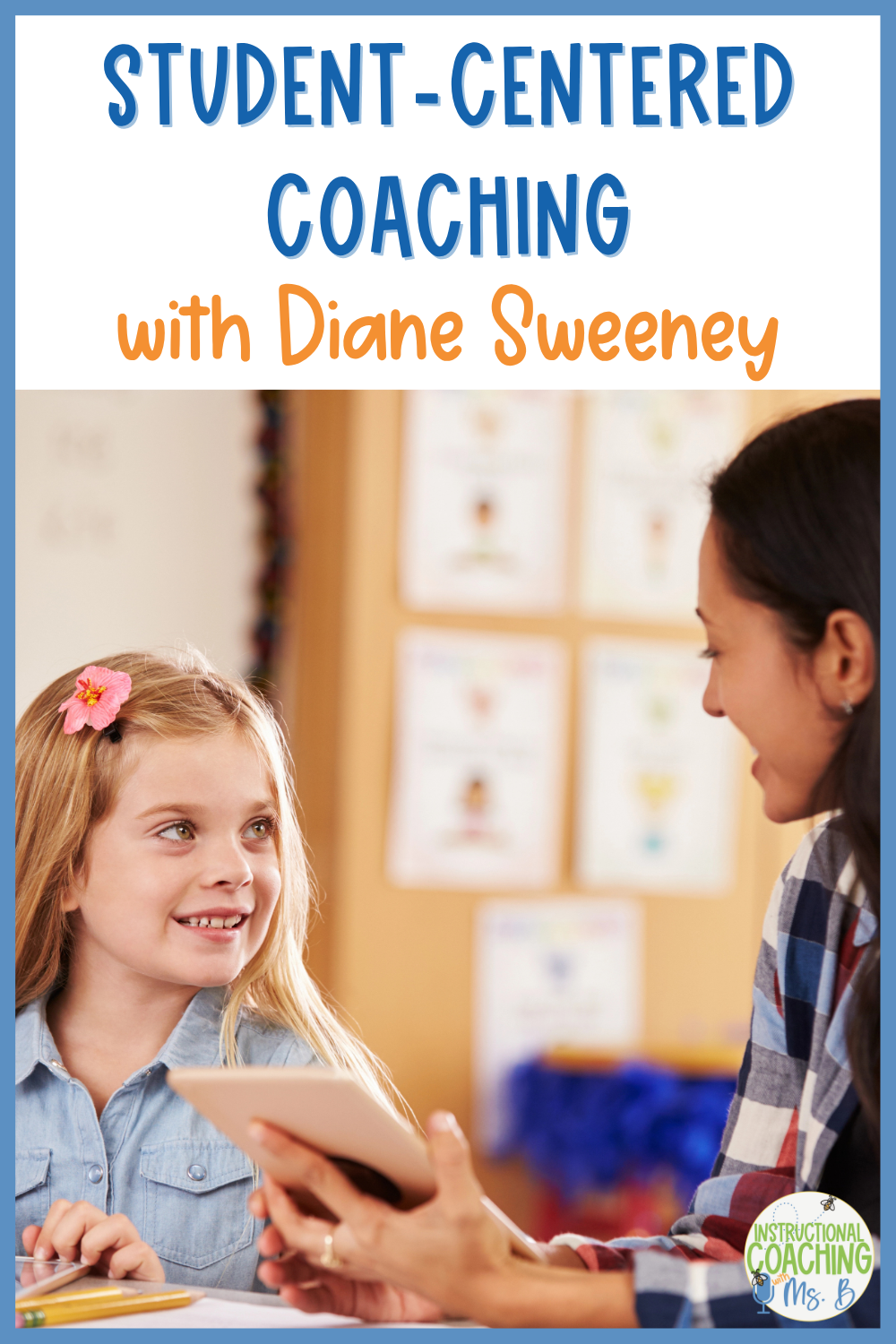
Teacher and student smiling at each other in a classroom. These words are at the top "Student-Centered Coaching with Diane Sweeney".

We’re kicking off a new mini-series exploring universal coaching models. Along the way, we’ll take a closer look at different instructional coaching approaches and explore what makes each one unique.

To start the series off, author and consultant Diane Sweeney is here to talk about Student-Centered Coaching (SCC)! I’m excited to have her on the show because I’ve been learning from her since I first became a coach.

During the episode, Diane provides an introduction to Student-Centered Coaching and explains how it differs from other coaching models. She shares strategies for coaching in the classroom and offers practical advice for building partnerships with teachers. You’ll hear why student evidence matters more than spreadsheets. Plus, learn the steps for getting started with Student-Centered Coaching and the six Co-Teaching Moves.

Listen now to hear all about Student-Centered Coaching! Here are the highlights!

How Does Student-Centered Coaching Differ from Other Coaching Models?

When Diane started coaching in Denver Public Schools, she was very teacher-centered in her coaching work. She was successfully working with some teachers, but had a hard time connecting with many others at her school. Sounds familiar, doesn’t it?

At the time, her school was doing work in backward design when planning instruction. Diane tried coaching using backward design, thinking about what we want students to learn and building her coaching work from there.

Rather than being driven by questions like, “What do we want teachers to do?”, Student-Centered Coaching asks, “What are our goals for student learning and how can we make sure we partner to get there?” This shift in focus builds stronger partnerships with teachers by centering the work around student outcomes instead of teacher actions.

Diane says there are a couple of things that really set Student-Centered Coaching apart from others:

  1. Student evidence: Look at actual student work, not just data spreadsheets, to understand student learning deeply. Examine samples of what students actually produced, how they responded, and what thinking they demonstrated. Ask, “What did students do today?”
  2. Embed clarity practices: Integrate clarity practices from Hattie’s research that have a high effect size. These include embedding success criteria, learning targets, and learning intentions. Ask: “What do we want the student to learn?”

She explains that when you combine these two things, the evidence becomes really relevant because you’re looking at evidence with learning targets as your guide. Diane concludes by saying it’s not really helpful to only talk about teachers and what they’re doing in the classroom. Instead, she has found that coaches build partnerships more quickly if they frame the work around what we want the students to learn.

I love this because we spend so much time looking at numbers and spreadsheets that don’t really tell us what a kid can do. It just shows you what they did in that moment. I think this is a better approach because you can see the evidence and their thinking unfolding.

Starting out as an instructional coach can be so overwhelming! It can feel like there are too many things to do, and you just don’t know where to start. This resource includes a guide, printables, and fillable forms (PDFS) to build relationships, have a dialogue with your administrator, review data and make a plan, visit classrooms, and more! Get the First 20 Days of Instructional Coaching Start Up Kit and Forms today!

Basic Components of Student-Centered Coaching

I ask Diane to explain the basic components of Student-Centered Coaching. She outlines the three underlying elements at the core of Student-Centered Coaching:

  1. Student learning is the priority: The key element is that it’s always about student learning!
  2. Impact instruction in the service of learning: Instruction still matters and is examined through the lens of student growth, not just teacher performance.
  3. True partnerships: The model strives to be asset-based coaching that feels like a genuine partnership.

In Diane’s book, Student-Centered Coaching: The Moves, she explores the seven core practices for this model. During the episode, she explains each one briefly:

  1. Organize coaching work through 4–6-week cycles instead of random visits.
  2. Set standard-based goals for coaching that are student-centered, not adult-centered
  3. Unpack that learning goal into learning targets.
  4. Co-plan using student evidence.
  5. Co-teach using effective instructional practices. (Diane says this is a big part of our work. More on that below!)
  6. Measure the impact of our coaching cycle by tracking both student and teacher growth.
  7. Maintain a strong principal and coach partnership.

These seven pieces create the context for Student-Centered Coaching to happen. They are grounded in the idea that the students are always the focal point.

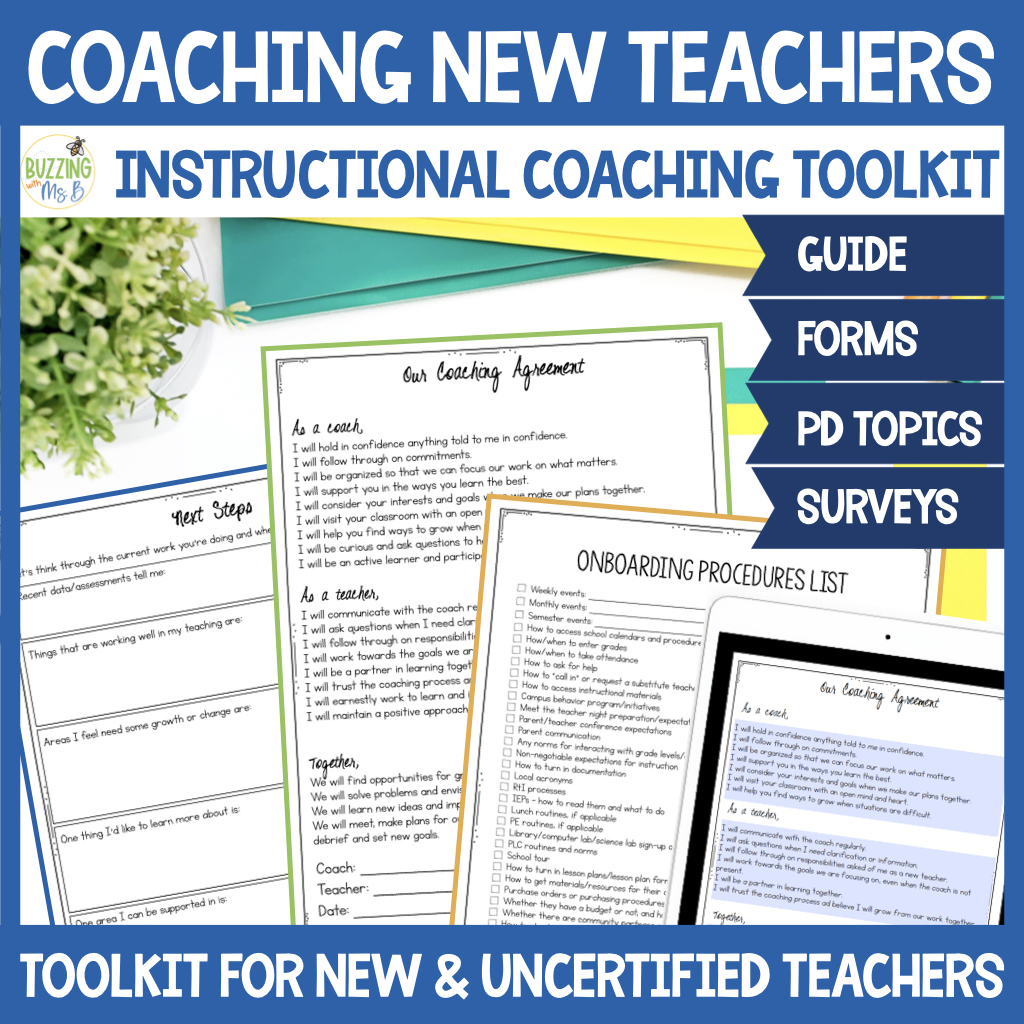
Have a plan for working with new and uncertified teachers with the Coaching New Teachers Toolkit!

It includes forms, templates, and everything you need to help your new and uncertified teachers! Figure out what support the need and provide PD and coaching with these resources. Grab the Coaching New Teachers Toolkit in my TpT Store!

⭐⭐⭐⭐⭐ “I support & coach new teachers and this resource is so valuable. I purchased it several months ago and often use tips you suggested when working with teachers. It is an essential section of my “Teacher Support Provider Binder” that I carry around with me everywhere.”
Using Co-Teaching Strategies During Coaching Cycles

One thing I was really excited to talk to Diane about was co-teaching! She began the discussion by explaining that she uses co-teaching interchangeably with the idea of coaching in the classroom.

We’re not “taking over” someone’s classroom to show them how it’s done. Instead of observing or evaluating from the sidelines, we work alongside teachers in the classroom as partners in the coaching process.

Diane highlights two common things she tries to steer people away from when they co-teach:

  1. Modeling a ton of lessons: It implies a deficit and feels uneven in terms of teachers being respected as experts in their classroom.
  2. Sitting in the back of the room observing and taking notes: This practice is too close to what principals do when they evaluate teachers. It doesn’t feel like a collaboration.

Diane outlines six co-teaching moves that coaches can use to maximize impact and build lasting partnerships:

  1. Noticing and naming: Actively collect student evidence during instruction. This is really helpful for future co-planning conversations.
  2. Thinking aloud: The coach and teacher pause and check in while the lesson is happening. You’re solving problems and coaching in real time, not days (or weeks) later!
  3. You pick 4: The teacher chooses a few students for the coach to collect evidence on. It’s helpful for the teacher and a nice differentiation strategy.
  4. Micro modeling: Model a small part of instruction, if the teacher requests it, to show a strategy or clarify a concept.
  5. Teaching in tandem: Old school “team teaching”. Diane says to use this one sparingly.
  6. Side-by-side coaching: Sit next to the teachers and co-support small groups or individual students, thinking aloud and responding in the moment. This used to be called co-conferring.

These Moves are designed to respect the teacher’s expertise, prioritize student evidence, and facilitate coaching in real time. Rather than coaching after the fact, the conversation is happening alongside the instruction, making it more efficient and effective.

Be ready for anything with the Instructional Coaching Editable Binder Megapack!

It includes forms, templates, and everything you need to get organized for instructional coaching! Coach teachers and document your coaching work with these printable and editable tools. Grab the Instructional Coach Binder Megapack in my TpT Store!

Getting Started with Student-Centered Coaching

Want to try Student-Centered Coaching but not sure where to start?

Diane suggests a few strategies to begin:

  1. Start using student work when coaching teachers. Finding ways to bring student evidence into your coaching work changes everything!
  2. Think about how you’re focusing on student learning. Are you talking mostly about adult actions, or are you zeroing in on what students are learning?
  3. Always be asset-based. We’re building on what students and teachers are doing right, not looking for what we can fix or what they did wrong.

Student-Centered Coaching

I’m so happy Diane was able to join me today on the podcast! I love that she was so specific and offered lots of practical suggestions to try out!

Listen now to this thought-provoking episode about Student-Centered Coaching! You don’t want to miss this episode!

Topics and Questions Discussed in Episode 281 – Student-Centered Coaching with Diane Sweeney

  • An Introduction to Student-Centered Coaching
  • How Student-Centered Coaching is different from other models
  • Why Diane started focusing her coaching work on student learning objectives
  • The three key components of Student-Centered Coaching
  • The seven core practices from Diane’s book, Student-Centered Coaching: The Moves
  • Why student work matters more than spreadsheets
  • The six Co-Teaching Moves and how to use them
  • Strategies for real-time coaching in classrooms
  • Practical advice for building partnerships with teachers
  • Steps for getting started with Student-Centered Coaching

About Diane Sweeney
Diane Sweeney
is the founder of Student-Centered Coaching, a framework for instructional coaching that focuses on increasing student and teacher learning. As the author of several books, including the new edition of Student-Centered Coaching: The Moves (2026), Diane holds a longstanding interest in how adult learning translates to learning in the classroom. After teaching and coaching in the Denver Public Schools, she served in the nonprofit sector to support instructional coaching in high-needs schools. Since then, she has become a respected voice in the field of coaching and professional development.

Turning Insight Into Action: Practical Steps You Can Take After Listening

Here are simple actions you can take today:

1️⃣ Grab the FREE First 20 Days of School Checklist

If you are feeling nervous about back to school and unsure how to set yourself up for a successful year, grab the FREE First 20 Days of School Checklist. It’s perfect for coaches who are new or trying to have a do-over at the beginning of the school year.

2️⃣ Try Noticing and Naming

The next time you’re in a classroom, focus on collecting real student evidence (notes, Post-its, anecdotal records), rather than just observing teaching moves. Share what you notice with the teacher in real time. Let me know how it goes in the Instructional Coaching with Ms. B Facebook group or on Instagram @buzzingwithmsb!

Ready to listen?

  • Ready to listen? You can listen below with the media player, or search for Buzzing with MS. B: The Coaching Podcast anywhere you listen to podcasts!

This post contains links to products from one or more of our advertisers. This means I may receive commissions for purchases made through links in this post when you click on links to those products. Thank you for your support!

Learn more

Helpful Resources


Listen on: Apple Podcasts, Spotify, or your favorite listening app


Thank you for listening to Buzzing with Ms. B: the Coaching Podcast. Want more coaching ideas

Check me out at buzzingwithmsb.com and on Instagram @buzzingwithmsb.

If you love the show, share it with a coach who would love it too, or leave me a review on iTunes! It’s free and it helps others find this show, too. Happy coaching!

Podcast produced by Fernie Ceniceros

Student-Centered Coaching with Diane Sweeney, ep. 281, Instructional Coaching with Ms. B Podcast

Chrissy Beltran [00:00:00]:

Hey coach and welcome to Instructional Coaching with Ms. B. Today we are talking to one of the coaching goats, Diane Sweeney. She’s the founder of Student Centered Coaching, a framework for instructional coaching that focuses on increasing student and teacher learning. As the author of several books, including the new edition of student centered coaching, the moves from 2026, Diane holds a long standing interest in how adult learning translates to learning in the classroom. After teaching and coaching in the Denver public schools, she served in the nonprofit sector to support instructional coaching in high need schools. Since then, she has become a respected voice in the field of coaching and professional development. So I’m so excited to welcome Diane because she’s somebody I have learned from for years since I started out as a coach, and I can’t wait for her to share more about her student centered coaching approach, what co teaching looks like for her in the classroom, and some of the moves that they use specifically to really support teacher change in a student centered coaching model. So this is gonna be a great episode. If you are feeling a little bit nervous about, back to school, if you’re unsure about how to set yourself up to be successful this year, I have a handy dandy resource that I think you’re gonna love. It’s the first twenty days of school checklist, and it’s perfect for coaches who are new or trying to kind of have a do over at the beginning of the school year. It’ll help you narrow down all the millions of things you could be working on into the specific tasks you need to do in the first twenty days of school to actually set yourself up for a successful, impactful year of coaching. So you can grab the handy checklist at buzzingwithmissb.com/firsttwenty. That’s first two zero, and be ready to coach your teachers this school year, and you’ll feel good about it too. Without waiting any further ado, without waiting any longer, let us welcome my wonderful guest, Diane Sweeney, to the podcast. Welcome to the podcast, Diane.

Diane Sweeney [00:01:51]:

It’s good to be here. Thanks for the invitation to join your conversation today.

Chrissy Beltran [00:01:55]:

Well, thank you so much for coming, and we are so excited to get into this conversation because when it comes to student centered coaching, you are the go to. So if you wanna start off giving us kind of an introduction, what does student sent how does student centered coaching differ from other coaching models or approaches?

Diane Sweeney [00:02:11]:

That’s a great question. We often times start there because we like to sort of set our framework, our model, and it’s sort of in the context of why we even developed it in the first place. And that, I think, gets at how it differs from other coaching models. When I was early in my coaching work, when I was, working here in Denver Public Schools, I was very teacher centered in my coaching work and really trying to help teachers implement effective instructional practices, and that makes a ton of sense. Mhmm. What happened though is I realized that I was losing sight of kinda why we’re in school in the first place, which is student learning. And it became sort of a situation where I was successful working with certain teachers that maybe aligned with my beliefs, that maybe, already were engaged in some of those effective practices. And then I was having a hard time connecting with a lot of other teachers in my school, and that felt kinda weird and not effective. And at the time, we were doing work in backward design and backward planning, And I sort of have this like, what if we made coaching more about backward design, thinking about what do we want our students to learn, and then building our work there, which is different than a lot of coaching frameworks out there that are still consist continue to be a lot more teacher centered. Meaning, what do we want teachers to do? What do we wanna get them implementing? What do we want them to do with fidelity? For us with student centered coaching, it’s a lot more about what are our goals for student learning and how can we make sure we partner to get there. And a couple things that I think really set our model apart is the fact that we really use constantly are using student evidence, embedding formative assessments into conversations so that we’re not just sitting there at a table talking about what lessons could be taught, how do we pace them, what do they look like, what resources do we use. But instead, we’re looking at that student evidence. What did students do today? And I don’t mean data spreadsheets. I mean actual work. What did students do today? How did we, what can we look what can we, you know what what do they need more of? What do they need less of? How do we continue to deepen their learning? And then that also kind of my last point here in sort of, I think, a a really important feature of student centered coaching is that we embed those clarity practices that we know from the Hattie research have a high effect size. And if you have student evidence but you don’t know exactly what, you know, what good instruction looks or what good learning looks like, I should say, then that doesn’t really make sense. So for us, we embed those clarity practices by embedding in things like success criteria, learning targets, learning intentions. And when those are kind of the the umbrella, what do we want students to learn? Let’s unpack that. Then that evidence becomes really relevant because we’re looking at that evidence with, learning targets as our guide. So really different approach, I’d say. I’d say we’re we’re kind of, I unique in the space of coaching in that we don’t necessarily think it’s helpful to just only be talking about teachers, teachers, teachers and what they’re doing in the classroom. We find that we build partnerships far more quickly if we really frame it around what do we want students to learn. So that’s kinda where we come from.

Chrissy Beltran [00:05:56]:

You know, I love that you’ve you brought it out. The idea of of data is I mean, so many people we do spend time looking at numbers and spreadsheets, and it doesn’t really tell you what a child can do. It doesn’t show you what they did in the moment. You don’t see their thinking, you know, unfolding. And so looking at student work as evidence is, I think, such a better approach. I mean, we have to look at numbers, of course.

Diane Sweeney [00:06:15]:

But Absolutely. Yeah. You have to do it at certain times. Yep.

Chrissy Beltran [00:06:19]:

Yes. But we can’t only look at the numbers and neglect to look at student work because that really tells you the story of what’s happening.

Diane Sweeney [00:06:25]:

Absolutely. It’s and it’s I have to say it’s fun and it’s easier. It’s easier because you can scoop up those post its or those responses or those, even observational notes you took can all be evidence. So

Chrissy Beltran [00:06:38]:

yeah. Yeah. I love that. So then if you’re going to introduce the the basic components of student centered coaching, where where do you start? What does this look like?

Diane Sweeney [00:06:47]:

Yeah. We love to talk to think first about really three kind of underlying key elements to student centered coaching. And that’s I’ve already named them kind of indirectly, but I’ll just kinda solidify that, which is one is that really our work, a key element is that we’re always about student learning. But then a neck the second thing is by being about student learning, we can also impact instruction.

Chrissy Beltran [00:07:15]:

Mhmm.

Diane Sweeney [00:07:16]:

That I think is a common misconception. Oh, we’re not allowed to talk about instruction. No, of course we are. But we do it in the context of student learning and that I think is a nuance that sometimes people miss. So that’s a key component. And then the third is that it builds partnership to work this way. So we always wanna be asset based. We always wanna be partnership driven. And we get there these three components really show up in or these three key elements, I should say, really show up in our core practices. And those core practices are when we kinda go into a school district or we do some professional learning on or in in our new book, we just wrote a second edition of student centered coaching the moves. The whole book is really arranged around these seven core practices for student centered coaching. Do you want me to name those kinda quickly? Okay. Yeah. I’d be happy. One is just to use coaching cycles to to organize our work because we know popping in randomly doesn’t necessarily make the an impact on student and teacher learning. So our coaching cycles are, you know, four to six weeks. The second piece of a coaching cycle is that, or excuse me, of our core practices, is that we wanna set goals for coaching that are that are really standards based compared to what is the teacher gonna do. So that’s really core practice number two is setting standards based goals for coaching. Again, that feels very different. Right? It’s like, wow. Okay. So our goals for coaching aren’t adult centered. They’re actually student centered. Yeah. Then we find that well, once you set that goal, and I’ll give an example. Let’s say the goal for for, a coaching cycle is students will, I’m just gonna use a super simple one. Will, read a text and understand the main idea and provide evidence. Okay. So that’s our coaching cycle focus. Let’s say it’s fourth grade. Okay. So then let’s unpack that goal into learning targets. That’s our third core practice. So what is what what do kids have to know and do? And we dig into the standards and the resources to say what actually do students have to do to be able to do that? And that’s an amazing conversation.

Chrissy Beltran [00:09:31]:

Mhmm.

Diane Sweeney [00:09:32]:

And then we move into our next core practice, which is to, co plan and co teach. That’s our next two core practices actually. So we love to co plan with student evidence, and then we love and I know I think you you’re intrigued with the idea of our co teaching, which we can talk more about. But the co teaching piece then is a big part of our work. And then we also are we have a core practice that really gets at this idea of we wanna measure our impact in our coaching cycles. And we wanna measure our impact based on how did the students grow and how did the teacher grow. Mhmm. And also did it feel like a partnership. And then lastly, we wanna always have strong principal and coach partnerships. So that’s that’s a core practice for us as well. So we really kinda try to tease out sort of what are these what are the pieces, that create the context for student centered coaching to happen. I tend to be pretty concrete and systems thinking in my in the way I work. And so it’s kinda like, alright. We wanna do this thing that’s really great for kids and teachers. What are those practices that really get us there? So that’s kinda how we set things up.

Chrissy Beltran [00:10:45]:

Yeah. I love that. I think those are such essential, practices that you’re talking about. And I do love co teaching. I personally enjoy

Diane Sweeney [00:10:52]:

it. Yeah.

Chrissy Beltran [00:10:53]:

It’s something that took me a while to be comfortable with, I think, because it’s so it can be so daunting to move into somebody else’s classroom. You don’t have the same rapport set up with the kids. You don’t have your systems. It’s somebody else’s systems, and so that was such a challenge at first. And, over time, it’s something that I’ve enjoyed more and gotten a lot more comfortable with, but it requires so much preparation, I feel like, beforehand. You know? So could you talk a little bit about, using the co teaching strategy with teachers?

Diane Sweeney [00:11:21]:

Yeah. One thing before we even get into the strategy that’s fascinating is just the language we’re using. We grapple a lot on my team with this. Co teaching can be confusing to people to because, you know, you have the the ELL world and, special education world.

Chrissy Beltran [00:11:39]:

Yes.

Diane Sweeney [00:11:40]:

And so while so I just encourage people to think about co teaching interchangeably with this idea of coaching in the classroom. That kind of broadens it a little bit. What does it mean to coach in the classroom? What does it mean to be in the classroom as a co teacher obviously, but as a partner with that teacher? So we kinda go back and forth on the language and we we, we use both, honestly. But the way we show up in classrooms, first of all, it’s usually in the context of a coaching cycle. So you’ve you’ve set a goal, like I talked about, that’s standards based. We’re working together on getting our students to understand main idea and provide evidence. Okay. That then starts to really feel like there’s a purpose for the coach to be in the room. Then, the co teaching for us, we like to do just a couple days a week throughout a coaching cycle so that it’s not five days a week and it’s not one day a week. And it depends, you know, it it just it always depends on the the the challenges of scheduling and time. But, we shoot for a few days a week across that coaching cycle. And the way we show up kind of, I guess, in, in dispositionally in a classroom is absolutely as a partner. So there’s a few things we try to steer people away from doing, and I’ll just name those first. They’re kind of obvious. They’re very common. One is the, the idea of modeling a ton of lessons. The idea of of I do, we do, you do in an adult learning context, I’m pretty uncomfortable with because it implies this sort of deficit idea that I have to do it before you can. So we’ve kind of moved away from that. That’s actually where I started as a coach. I did a ton of modeling. But then it would be very awkward because I would be like, okay, how do you think I did? Or what do you think what did you notice? And now what are you gonna do? And are you gonna do what I just did? And it felt very uneven, respect wise towards teachers because I feel like teachers need to be really in charge of their own classrooms and highly respected in that way and not have people coming in and taking over their rooms. So that’s one, that we kinda steer away from. We do a little of it and I’ll name how in a minute. Mhmm. But the other one we steer away from is the idea of sitting in the back of the room, observing, taking notes, and then trying to have a conversation later with a teacher because that practice is so close to what principals do when they’re evaluating teachers. So coaches that are like, well, why does nobody wanna work with me? And I’m like, well, because you’re coming in and doing a super evaluative practice, and it doesn’t really feel like a partnership to a teacher to have that. And then it’s super stressful to the coach also because they’re sitting there going, how am I gonna say this? How am I gonna bring up that? And it becomes very, just not necessarily, like I said, a partnership. So instead and if we’re not gonna we’re, like, model a ton of lessons and we’re not gonna sit and observe, then that leads to the question of then what are we doing? Right? Because that’s typically how coaches have shown up in classrooms. And so we have in our new book, the the new edition of Student Centered Coaching the Moves, we started talking about these co teaching moves. We have six of them. We started talking about them with there’s two that we do most of the time when we’re in classrooms, and then there’s four more that we do some of the time. And those two that we do most of the time are no. We call noticing and naming and thinking aloud. Noticing and naming is so simple. It’s just the collection of student evidence. So it’s this idea of I have a clipboard, I have a grid, I have a sheet of paper with students names, I know what the learning target for the lesson is. I’m collecting and sometimes I take pictures of student work or I’m just listening to a group talk about a text or I’m watching a student solve a a math problem. I’m looking over their shoulders or I’m sitting at a table with a group. Noticing and naming is actively collecting student evidence while learning is happening and that’s a behavior that we like to see coaches

Diane Sweeney [00:16:01]:

doing most of the time. And I’m gonna say if not all of the time because it’s that important. Because think about then if you’re noticing and naming and collecting that evidence, how much that supports your co planning conversation later. You have this robust collection. Wow. This kid did this. That kid did that. Mhmm. Yeah. And then thinking aloud is kind of a connection to noticing and aiming. And it’s this idea of, I have a friend who I work with in Alabama and she calls it a meta moment. It’s like sitting like saying, oh my gosh, pulling aside with a coach, Saying or with the teacher saying, what are we what are we seeing here? Oh, we need to we need to correct this misconception that’s that this group is having. Or, oh, this kiddo seems like he needs a little nudge. Or, this group seems like they’re kinda bored. What are we gonna do with them? So thinking aloud is just a coach and teacher having moments together when they get to check-in, and this is crazy, as the lesson is happening. Now this is all framed in the context of partnership, and everybody knows it’s gonna happen. And, again, it’s usually done within a coaching cycle. What do you think about those two? And then I can share the other four as well if you’d like.

Chrissy Beltran [00:17:14]:

Yes. I remember whenever I read the first edition of of the moves, and I that the the notice and naming, I thought, well, that makes so much sense because we’re we’re just like we in the classroom. Right? We are pointing something out. We are naming it because you can’t really talk about it if you don’t know what to call it and, you know, you can’t point it out when you see it. But the thinking aloud, I was like, well, that’s the missing piece from what I was doing with teachers at the time because, you know, I was a I was a campus coach, and I remember thinking, how are we they’re how how are we making these decisions? And I’m not always expressing how I’m making choices in the moment. You know? Like, I see kids are doing this. I see the majority of kids need this or you notice something fine like, very small, and you might not even always notice it yourself. You have to become aware, just like you do in the classroom, of your own thinking and, as a teacher in the classroom, I mean. And so, like, bringing that to the forefront and having those I can remember having a conversation with the teacher when she said, well, he was asking this question, and I thought he meant this, but you answered it this way. And we were able to talk about it and and see, you know, oh, well, did I interpret it? Is that what he really was asking, or was was he asking what you were asking? And so we were talking about, you know, the way that kids were asking questions and how deep the questioning was. And, and so that I was very impactful, and it really did help me support the thought process that teachers undergo in the classroom that sometimes they’re not they’re not as comfortable with.

Diane Sweeney [00:18:37]:

Yeah. It’s so and it it’s, it’s almost like a science experiment every time you go into a lesson, isn’t it? Like, you don’t know what’s gonna happen. You literally do not know.

Chrissy Beltran [00:18:49]:

No. And and it’s and you don’t know kind of what points I I think that’s the struggle also with, like, you mentioned with observations. And, you know, they I have had teachers that say, I want you to record this data. I want you to record that. And I find it helpful in that way. But if you go into the classroom and you start just kind of recording all the things, then you’re like, I don’t even know what our conversation is gonna be about at this point because every time something else happens, I wanna jump to that and I wanna jump to this, and it’s just like so much goes on. You know? So if you’re just, like, sitting there recording all of the everything that goes on, it’s just very overwhelming.

Diane Sweeney [00:19:22]:

Yeah. That’s true. I used to take notes, like, two column notes, what the lesson what the teacher’s doing in the lesson and then my kind of reflection against that. Uh-huh. And that didn’t set me up for success with my co planning conversations at all. Mhmm. Because it it led me into pretty judgmental conversations with teachers because I was like, well, this happened. At this point, you did this thing, and the kids did this, and then let’s talk. And it it didn’t feel grounded at all. Mhmm. The other thing I think about thinking aloud that’s really important these days to mention is it’s such an efficiency strategy because you’re doing coaching in real time.

Chrissy Beltran [00:19:58]:

Yes.

Diane Sweeney [00:19:59]:

You’re solving problems in the moment versus waiting until your co planning session, which could be two days later. So, you know, you’re you’re going, these kiddos are confused about this. What if we reteach that right now? Right. So

Chrissy Beltran [00:20:11]:

in the classroom, that’s what you do as the teacher. Yeah. In that moment, you make the decision. You don’t wait till two days later and go, I noticed they had trouble with that.

Diane Sweeney [00:20:18]:

Yeah. That’s weird. Yeah. And that’s how I used to coach, honestly. I’m gonna be honest.

Chrissy Beltran [00:20:22]:

All of us have done this. Yeah.

Diane Sweeney [00:20:23]:

Yeah. All of

Chrissy Beltran [00:20:24]:

us sometimes still do because whatever constraints and things like that, it happens. But Yeah. But but, yeah, I I think that’s a good point.

Diane Sweeney [00:20:31]:

Yeah.

Chrissy Beltran [00:20:32]:

So you have four other moves.

Diane Sweeney [00:20:33]:

Oh, yeah. Yes. Indeed. So we have, a version of noticing and naming we like to call you pick four. And that’s, just choosing a few students, doesn’t have to be four, but small park of four, students to really collect evidence on. This is a nice differentiation strategy and it’s really kind and in service to the coach, I would excuse me, to the teacher because you can ask the teacher, hey, do you have a handful of students you want me to really collect evidence for? Mhmm. It’s really nice to do, if a teacher feels feels it’s helpful. Yeah. And then micro modeling is our spin on modeling. It’s okay to model small things at certain moments. In my in in my experience, I think usually we would wanna have the teacher ask for that. And we’ve put the word micro in front of modeling just to remind ourselves.

Chrissy Beltran [00:21:27]:

Mhmm.

Diane Sweeney [00:21:27]:

It might be, hey. I’m trying to I want my students to deconstruct a, a learning target or to really construct something or to do something, and I don’t really know exactly how to approach it. Hey, coach. Could you show me how to do that thing? That’s more what we’re talking about with modeling, which is compared to, you know, I’m gonna sit and teach your whole entire lesson from bell to bell. So it’s just shrinking it down, making it more intentional. Mhmm. And re and requested from the teacher.

Chrissy Beltran [00:21:58]:

Yeah. Yeah. I think that’s important. And I think

Diane Sweeney [00:22:01]:

my favorite one

Chrissy Beltran [00:22:02]:

was great because they sometimes they just can’t envision something, and they just need to see a picture of what it could be like. Not that it has to be the same way, but that’s what what it could look like. Yeah.

Diane Sweeney [00:22:11]:

Yeah. Like, I’ve done a ton of number talks, and this teacher hasn’t. I can do one for you. Yes. It’s not like we’re saying modeling is bad. It’s just I think it’s been overused, overdependent on.

Chrissy Beltran [00:22:22]:

Yeah. Like, that’s the only thing you can do, and then you just kind of go, okay. Now you know how to do it, and then you move on.

Diane Sweeney [00:22:27]:

Yeah. Exactly. And you’re like, bang. Nothing happened.

Chrissy Beltran [00:22:30]:

Yeah. Right. Yeah. Nothing changed.

Diane Sweeney [00:22:33]:

Teaching in tandem is kind of your old school, teen teaching.

Chrissy Beltran [00:22:39]:

Mhmm.

Diane Sweeney [00:22:39]:

We put that on the list just because a lot of people expect it to be on the list. I think it requires a lot of planning. It’s not my favorite. It’s why it’s a sum of the time move. The reason it’s not my favorite is I’d rather be noticing and naming and thinking aloud and letting the teacher or inviting, I should say, the teacher to really be the the person who’s providing the instruction. I just we don’t wanna ever do anything in classrooms as coaches that sets a teacher up to not be able to continue doing it when we’re not there anymore. Mhmm. And so, you know, if we get too dialed in on teaching in tandem, then the teacher gets used to having a second teacher.

Chrissy Beltran [00:23:20]:

Mhmm.

Diane Sweeney [00:23:20]:

So I like to be as low key and low profile as I can, and I feel like this one kinda puts me more in the front and I’d rather not be in the front during instruction. But, again, it’s an option. And then I think the the last we used to call it co conferring, in our old book, but now we’re referring to it as side by side coaching. That just means, like, if a teacher’s working with a single student or a small group, let’s say doing a fluency lesson or maybe doing a Socratic seminar or, you know, stations in a science class, If there’s something where the teacher is or where students are in smaller groups or individually working, we like it the coach and teacher to be side by side as much as possible because then that thinking aloud can happen in that context. I’ve seen it in high school class or AP classrooms where, teach a teacher’s working with a small group on a writing strategy, and the coach and teacher are both at the table instead of dividing and conquering and fanning out. It’s much more like we’re reflecting on what’s happening here and that obviously means you have to have the rest of the class doing something productive and understand. But, yeah. So those are our other four. But you can see with all six of these co teaching moves, they’re all about true partnership and not taking over and not doing anything evaluative. They’re all student centered.

Chrissy Beltran [00:24:54]:

I love that. So then if a coach is listening to all of these things and they’re like, oh my gosh. I wanna start doing some of this or I wanna start thinking about my coaching in this way, but they’re a little overwhelmed maybe, how can they do that first step? What is what is something they can do to get started?

Diane Sweeney [00:25:09]:

Well, gosh. I always say the thing I did just get started was start using student work in my coaching. That changes literally everything. Mhmm. It and and it’s it’s you know, I have to say it’s become a bit harder with the emphasis on programs and resources that we have lately with so much of that being adopted recently. Mhmm. So I would just say find ways to bring student evidence into your conversations. I would also just suggest to get started. Start thinking about how am I really focusing on student learning in my coaching or am I teacher centered in my convers am I only thinking about the adults? That’s kind of a hard I was a little bit embarrassed when I realized, gosh, I’m not really thinking about students. I’m only thinking about the adults. The minute you have that you’re kinda your your lens shifts and you start to think, oh my gosh.

Chrissy Beltran [00:26:09]:

Mhmm.

Diane Sweeney [00:26:09]:

This I’ve lost what’s important here with with coaching. And then I guess lastly, I would just say to always be as asset based as you can as co as a coach so that we’re always building on what are students doing right, what are teachers doing right, not looking to fix people, not looking for what’s wrong, but looking what we can build on. That to me really gets at the heart of the work too. So a lot of these are dispositional, but the the practice, I would say, to start with is that student evidence.

Chrissy Beltran [00:26:44]:

Yes. I love it. That’s a great place to start. Thank you so much for everything that you shared today. How can people keep learning from you?

Diane Sweeney [00:26:51]:

Oh my gosh. We have so many so many things. We have all of our books on student centered coaching on, I would say to go to Diane Sweeney dot com for, like, book comparisons and online course comparisons. We’ve got, a hub for student centered coaching where we do it’s like a little membership site and not little. It’s big. But we do, like, live streams every month where we sit down with coaches and chat with them about their work, and it’s really cool. That hub for student centered coaching has become a big networking opportunity too for coaches from all over the country. Mhmm. We have a Facebook group that’s just a free place to stay in touch. But I would just go to dianesweeney.com, and we have a resources page and all of this is laid out there.

Chrissy Beltran [00:27:40]:

Perfect. Alright. Thank you so much.

Diane Sweeney [00:27:42]:

Yeah. Sure. Thanks for inviting me. This was a great conversation.

Chrissy Beltran [00:27:45]:

That was so good. I love it when a guest gets into it. You know, whenever they tell you the important things that you must know that you can try out tomorrow, that you can start thinking differently about in your coaching practice. And Diane is so specific, and I love the examples. That was great. And I’m so happy that she was able to join us on the podcast this year. Next week, we’re digging into another coaching approach. I’m actually gonna chat with Mary Bully about cognitive coaching. Now as you are developing your coaching program, you don’t have to do all of one thing or all of another thing, right? We build our program just like we build our classrooms And so our instruction might have a bunch of different components, but we kind of wanna focus them on the essential things we think are most important. So as you’re listening to these episodes, pull out the things that you think are really important to you as a coach and as an educator and practitioner and use them to develop the way that you work with teachers and build the program that you really believe in. That’s my advice to you. Until next week, happy coaching!

Share:

Similar Posts

Leave a Reply

Your email address will not be published. Required fields are marked *