
Help Students Plan Better Personal Narratives – Free Narrative Graphic Organizer
One of the biggest challenges students face with narrative writing isn’t coming up with an idea—it’s knowing how to organize it.
They often have plenty to say, but their stories jump from one event to another, important details are left out, or the ending feels rushed.
That’s where a simple graphic organizer can make all the difference.
This free Personal Narrative Graphic Organizer helps students plan their stories one step at a time, giving them the structure they need while still leaving room for creativity.
Why Narrative Planning Matters
Before students can write a strong narrative, they need a clear plan.
When students skip the planning stage, they often:
- forget important events
- include unnecessary details
- lose the sequence of the story
- struggle to write satisfying endings
A graphic organizer slows students down just enough to think about what they want to say before they begin writing.
A Simple Framework for Personal Narratives
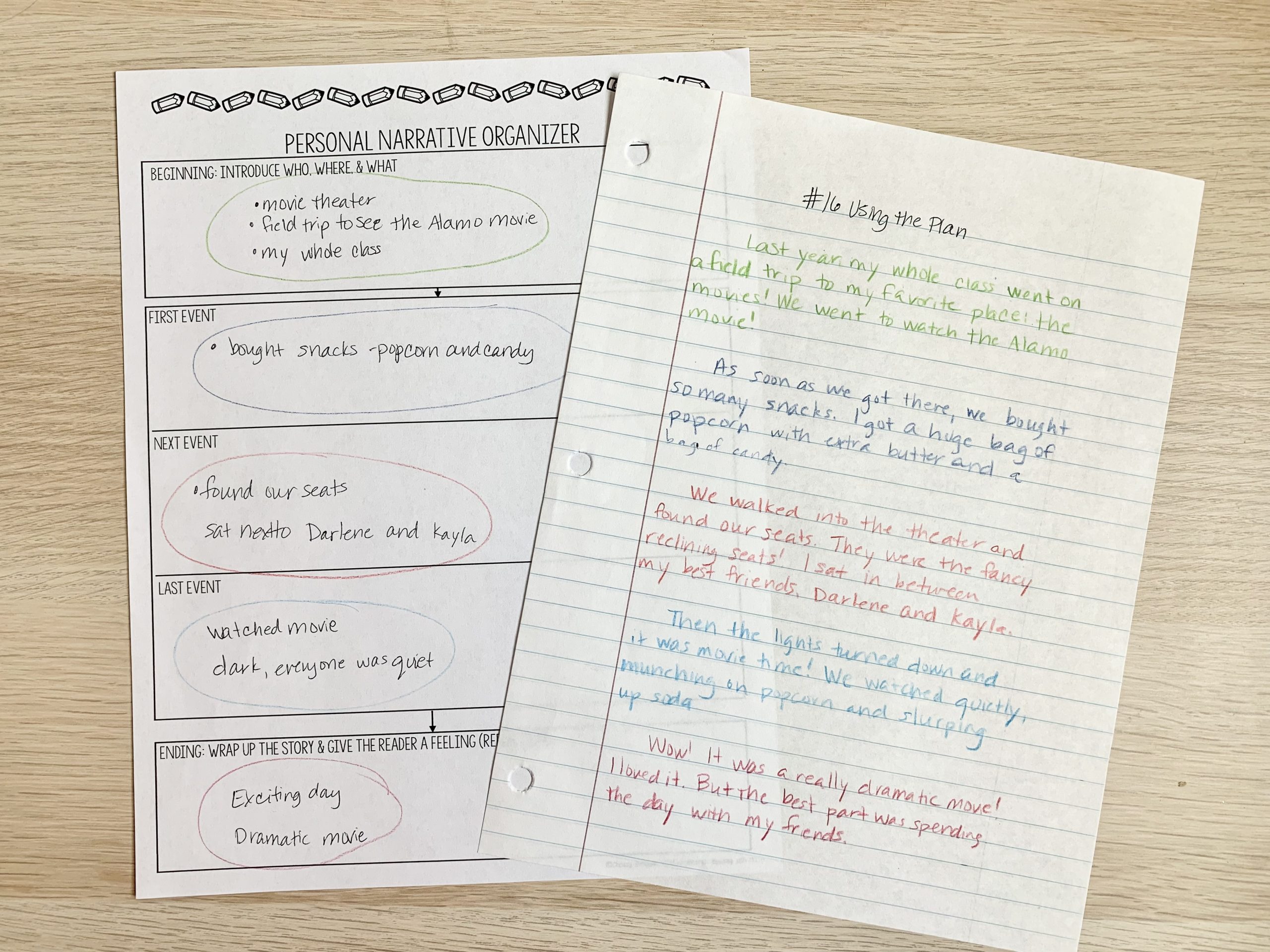
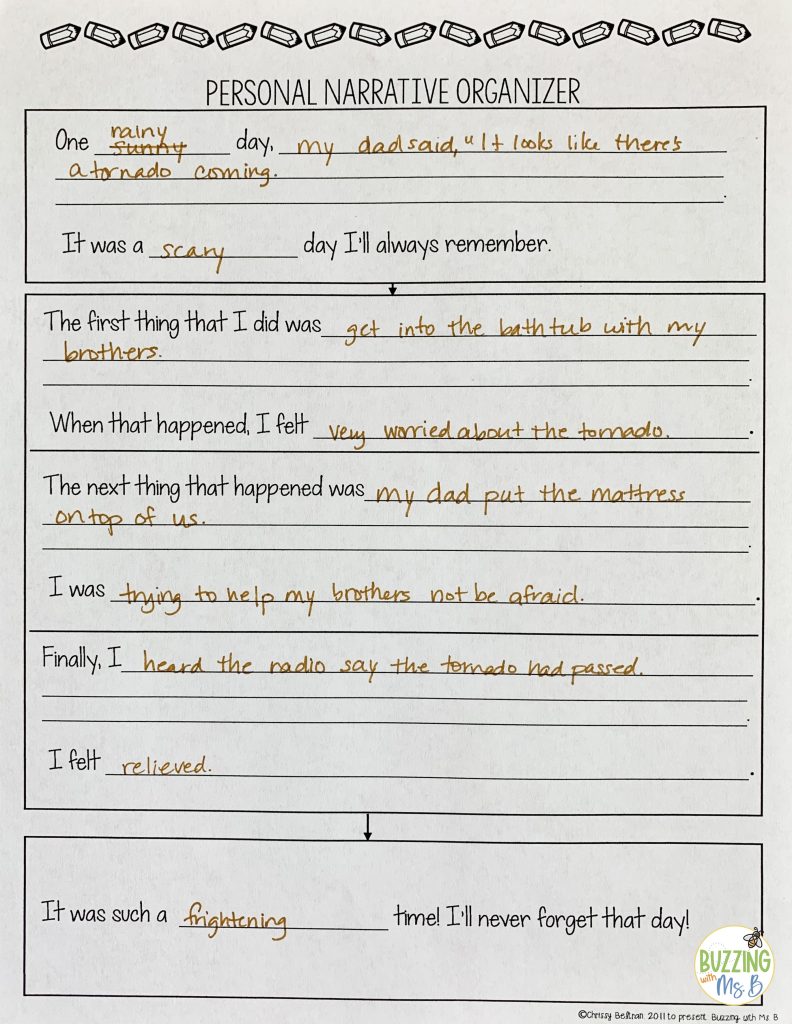
The organizer walks students through the five essential parts of a personal narrative:
- Beginning – Introduce who is in the story, where it takes place, and what is happening.
- First Event – Explain how the story begins.
- Next Event – Describe what happens next, building the sequence of events.
- Last Event – Bring the main events to a close.
- Ending – Wrap up the story with a reflection or feeling that leaves the reader satisfied.
Breaking the writing into manageable chunks helps students focus on one part of the story at a time instead of feeling overwhelmed by a blank page.
Use Mentor Texts to Model Narrative Structure
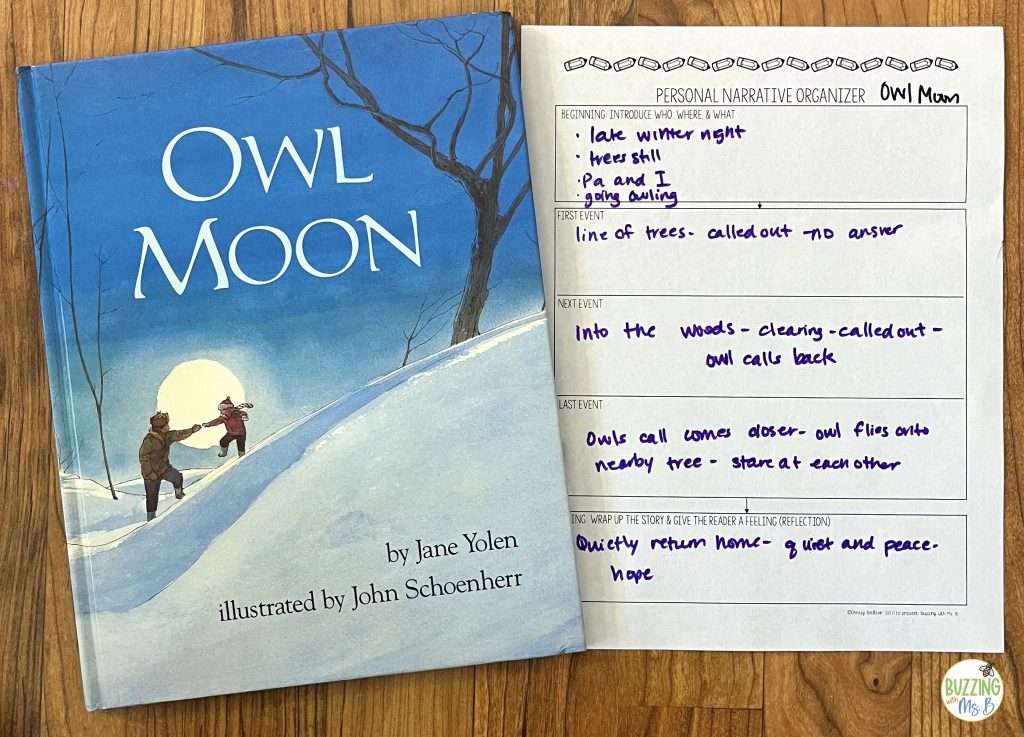
Before asking students to plan their own personal narratives, try using the graphic organizer with a favorite mentor text.
As you read a picture book together, stop to identify each part of the narrative and record it on the organizer. Students can work with a partner or complete the organizer independently while you discuss questions like:
- How did the author introduce the characters and setting?
- What was the first important event?
- How did the events build toward the ending?
- How did the author wrap up the story?
- What feeling or message did the ending leave with the reader?
Analyzing mentor texts this way helps students see that the organizer isn’t just another worksheet—it’s a planning tool that real authors use when crafting a story. Once they’ve identified the structure in several picture books, they’re much more prepared to apply the same framework to their own writing.
Scaffold Students Who Need Extra Support
Not every student is ready to independently plan a narrative from a blank graphic organizer.
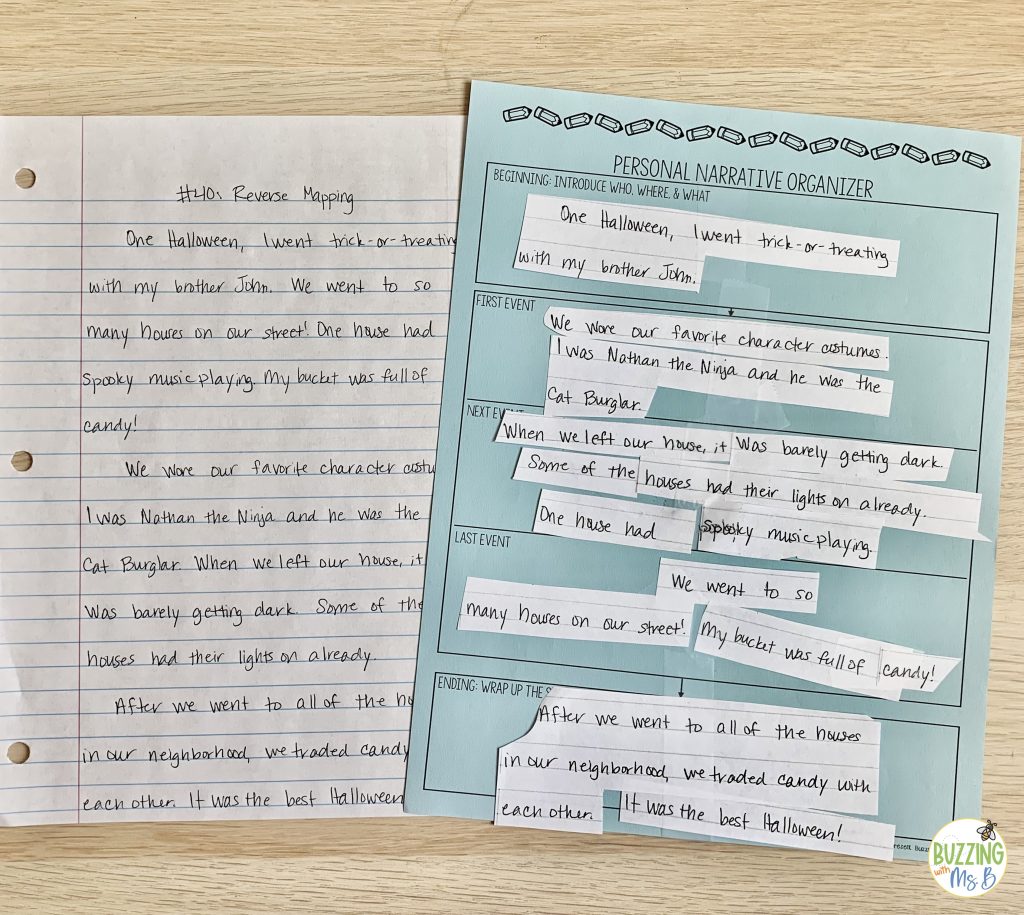
One of my favorite ways to scaffold this skill is to start with a mentor text or familiar story. Make a copy of the story, cut it into sections (beginning, events, and ending), and have students work together to place each section onto the graphic organizer. This helps them see how a complete narrative fits into the planning framework before they have to create one of their own.
Next, introduce the organizer with sentence starters already written in each box. Instead of staring at empty spaces, students have a prompt that helps them generate ideas and organize their thinking. The teacher guide included with this free lesson explains how to model this process before gradually releasing responsibility to students.
As students become more confident, remove the sentence starters and encourage them to complete the organizer independently. Over time, they’ll begin to internalize the structure and won’t need the graphic organizer for every piece of writing.
Encourage Richer Storytelling
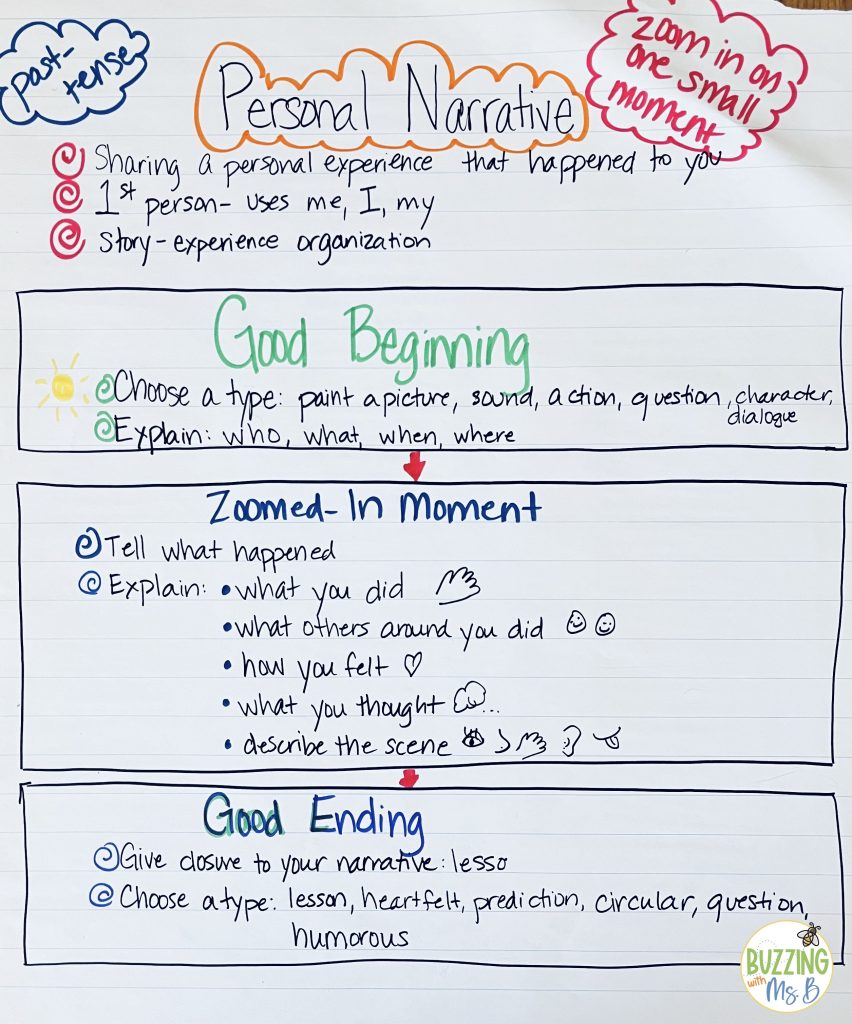
Once students have the basic structure planned, encourage them to zoom in on the most important event.
Ask questions such as:
- What did you see?
- What did you hear?
- What were you thinking?
- How did you feel?
- What did the other people do?
Adding sensory details, dialogue, actions, and thoughts helps students transform a simple retelling into a story that readers can truly picture. The organizer also includes ideas for different types of endings, helping students move beyond “The End” and finish with a reflection, lesson learned, question, or heartfelt ending.
How to Use This Free Graphic Organizer
This resource works well for:
- whole-class writing lessons
- small-group writing intervention
- independent writing practice
- writing centers
- conferencing with struggling writers
- modeling narrative structure with mentor texts
Because the organizer follows the natural sequence of a personal narrative, students can quickly transfer the planning process to future writing assignments.
Free Download: Personal Narrative Graphic Organizer
If you’re looking for an easy way to help students organize their ideas before writing, this free graphic organizer is a great place to start.
Inside you’ll find:
- a teacher guide explaining a simple scaffolding strategy
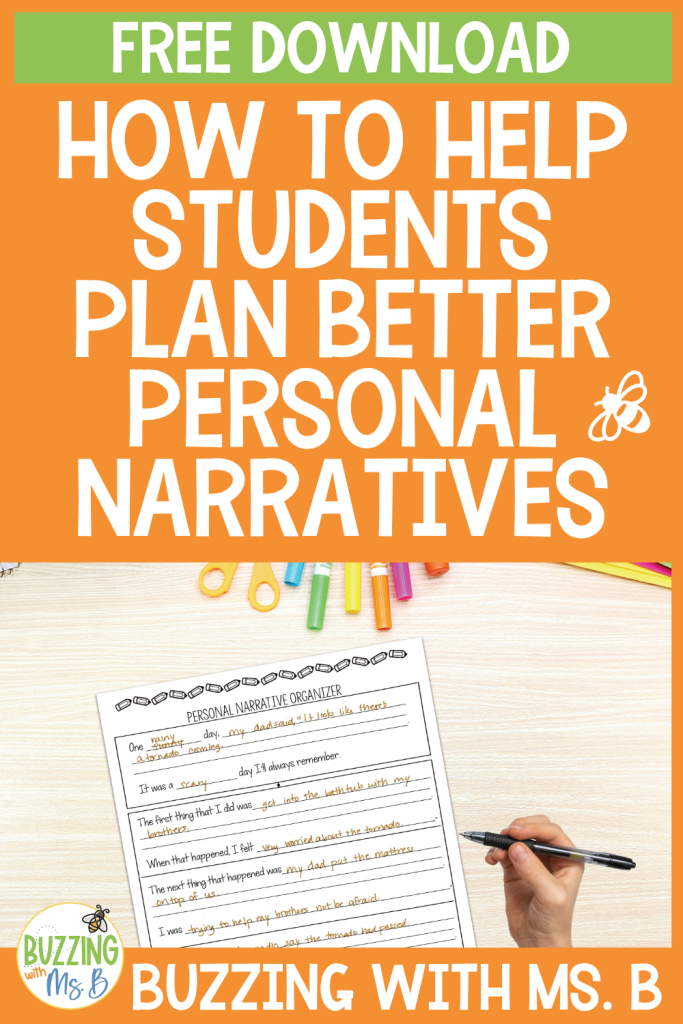
- a personal narrative graphic organizer
- a scaffolded version with sentence starters to support developing writers
Download the free Personal Narrative Graphic Organizer and help your students build stronger, better-organized narratives with confidence.


