Fall Fluency Fun: How to Build Reading Fluency and Confidence in Your Classroom
When reading is fun, kids naturally grow in confidence! 🌱🍂 And when kids feel confident reading aloud, their reading fluency grows right along with it.
Imagine being a kid in a full classroom. The teacher is reading from her book, ready to cold-call on any kid, at any moment, to read a sentence in front of everyone. You’re nervous and shrinking in your seat. Your name gets called. You think, I know how to read; why am I so nervous?😟
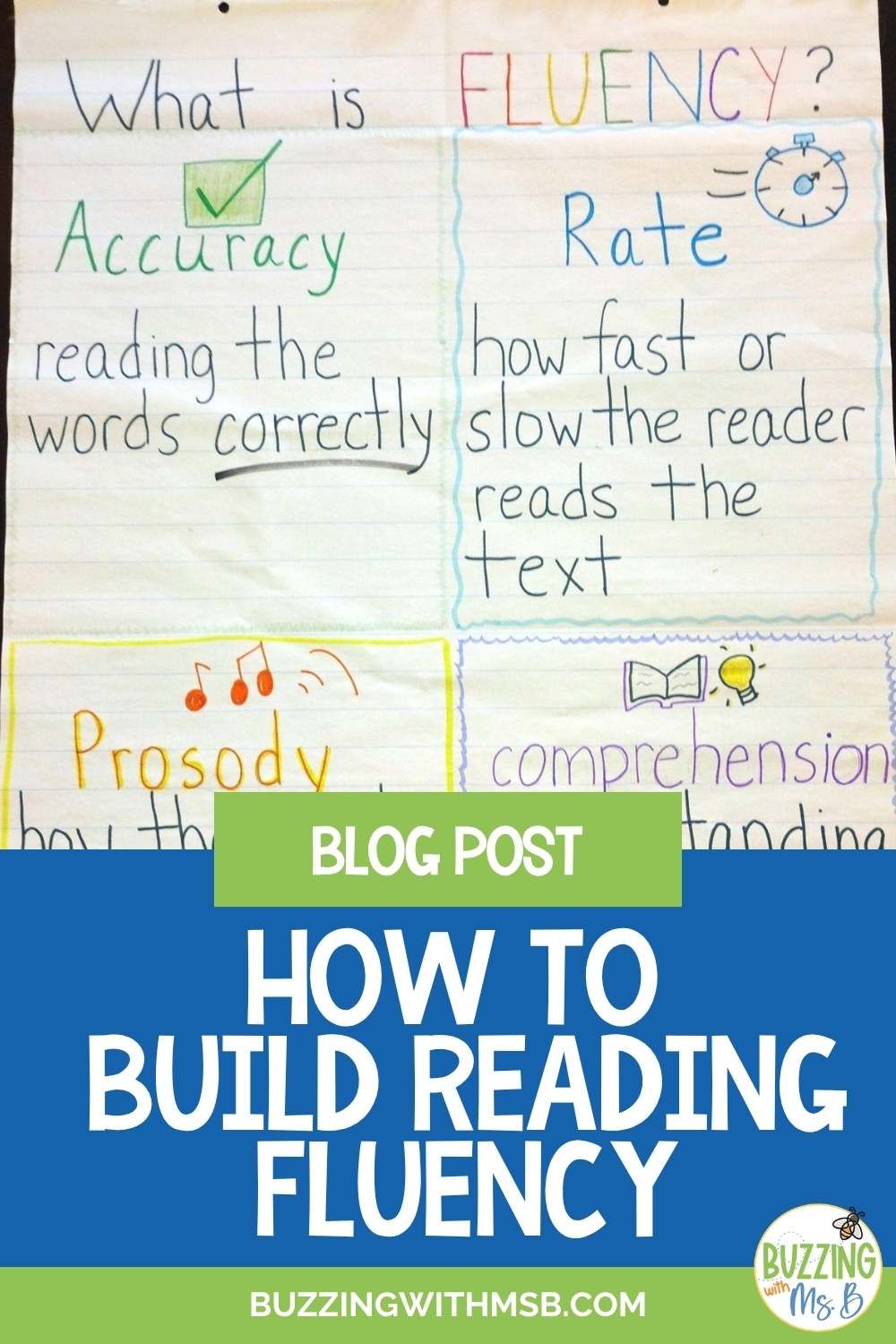
You start reading very slowly and notice your words aren’t coming out fast enough, so you speed up (rate). You start saying words incorrectly, words you already know (accuracy)! You start to feel embarrassed. Taking a deep breath, you reset. You notice that there is dialogue in the text and exclamation marks, so you read with expression and change your tone (prosody). And in the end, when your turn is over and the teacher is onto their next victim, you realize you have to go back and silently re-read everything you just read aloud… because you didn’t understand or remember any of it (comprehension).
And that, my friends, is an example of what doesn’t improve reading fluency: an anxiety-inducing situation that plummets confidence.😓
Reading aloud in front of others will always be part of our classroom reading practices. So how do we build reading fluency while building confidence? Let’s take a look at what the research says.
Why Reading Fluency Matters: How Are Our Students Doing?
Looking at our country as a whole, it’s clear our students need support in reading. In 2024, 40% of 4th graders scored below the NAEP Basic level in reading. That same year, only 31% of 4th graders scored at or above the NAEP Proficient level. NAEP is the largest continuing and nationally representative assessment of U.S. student achievement. If results like this are showing up nationally, zooming into our own schools will most likely reveal similar results.
Before we dive into strategies, let’s break down the components of FLUENCY so that our teacher companions and our students are all on the same page.📝
What Is Reading Fluency? The 4 Components
Fluency is the ability to read words accurately and smoothly, which supports word recognition and understanding. Here are the four key elements of fluency in a nifty anchor chart!😃
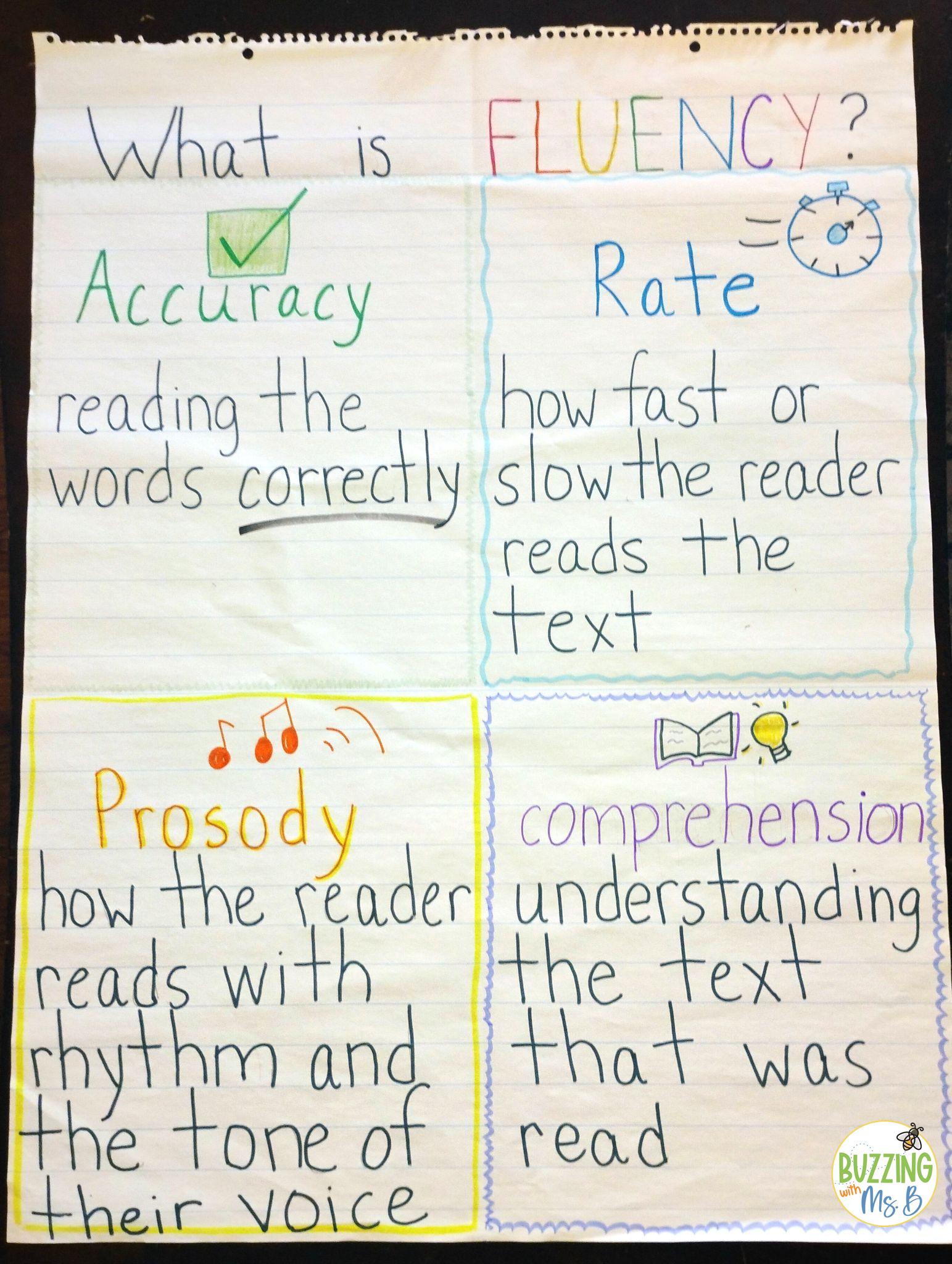
- Accuracy – reading the words correctly
- Rate – how fast or slow the reader reads the text
- Prosody – how the reader reads with rhythm and the tone of their voice
- Comprehension – understanding the text that was read
3 Research-Backed Ways to Build Reading Fluency
Reading out loud is key. The National Reading Panel found that guided repeated oral reading can improve word recognition, fluency, and comprehension.
1. Repetition
Have students read a story or a passage more than once. Receiving feedback and practicing until their reading becomes accurate and natural is vital to fluency. (For more repeated reading ideas, check out Fun and Effective Ways to Improve Reading Fluency in Upper Elementary.)
2. Modeling
Teachers✨ are the best models. We demonstrate fluent reading, help students correct decoding errors, and model rate and prosody. Teachers are fluency builders.🛠️
3. Practice
When students take turns reading and listening, they get feedback and practice. Reading with a partner is so powerful! This type of paired reading builds fluency and confidence. Want to try it tomorrow? Grab my free partner play for reading fluency.
Now we know the importance of getting kids to read out loud, and we’ve learned the elements of fluency. So how do we get kids to practice and repeat? We make reading fun and engaging!🥳
Partner Plays: Reader’s Theater That Builds Fluency and Confidence
There is something about the theater, acting, and imagining taking the stage that brings out the star in all of us.⭐ When we have lines in front of us and know we are responsible for reading a script, suddenly we sit up straighter, clear our throats, and use our best voices to showcase our talents (and in this case, our reading skills!). It’s as if we all have an innate actor within us. Even your shyest kiddos get more enjoyment out of reading aloud when they’re given a part in a play.
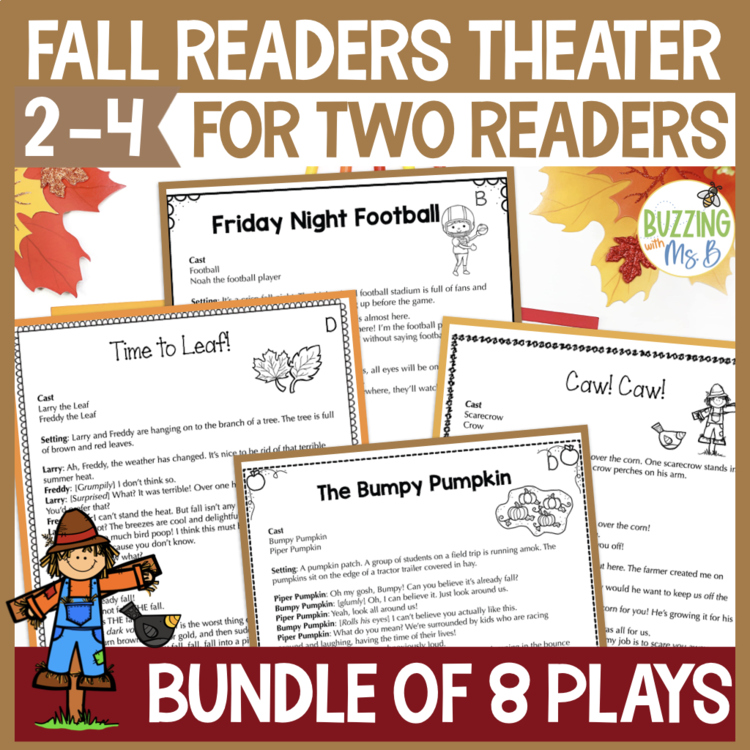
I have created a plethora of partner plays, full of fun themes that foster engagement and build confidence! I use these when I’m modeling reading for a class or small group, and they’re perfect for demonstrating the four components of fluency. Teachers have shared that partner plays are a hit in reading stations, and kids end up reading these short plays over and over again! Ideal for repetition and practice.
Want to try one with your class first? Grab a free Thanksgiving partner play, “The Missing Turkey” (it’s at the bottom of this post!).🦃
Looking for more ways to use scripts? Read 5 Creative Ways to Use Reader’s Theater for Fluency & Fun.
⭐⭐⭐⭐⭐ “These are perfect for morning work or center work! They are also ideal for partner practice. My students love them!”
Debra C., TPT purchaser
Check out these partner plays to help build fluency and grow confidence in your students’ reading today!
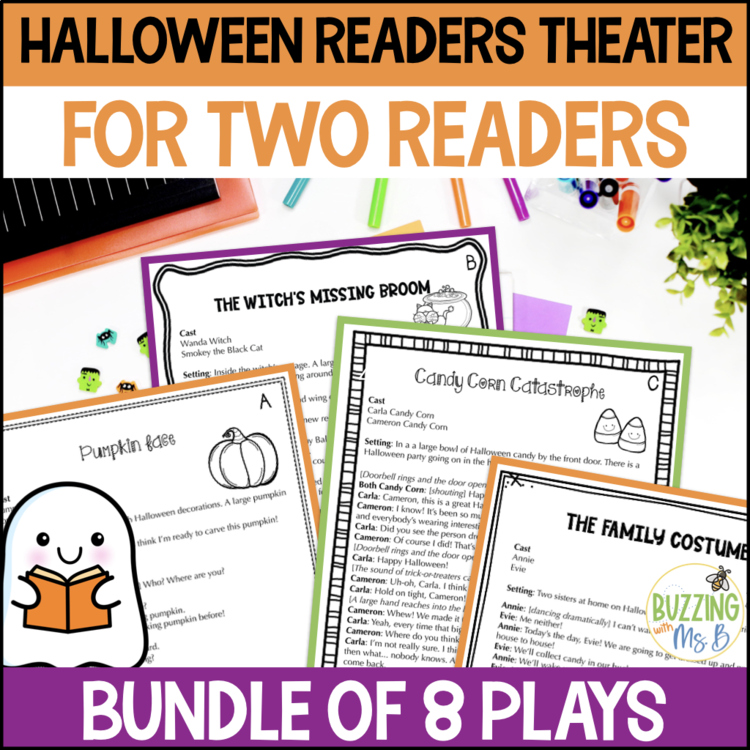
- Halloween Partner Plays Bundle (8 scripts)👻🎃 Buy now in my shop or on TPT🍎
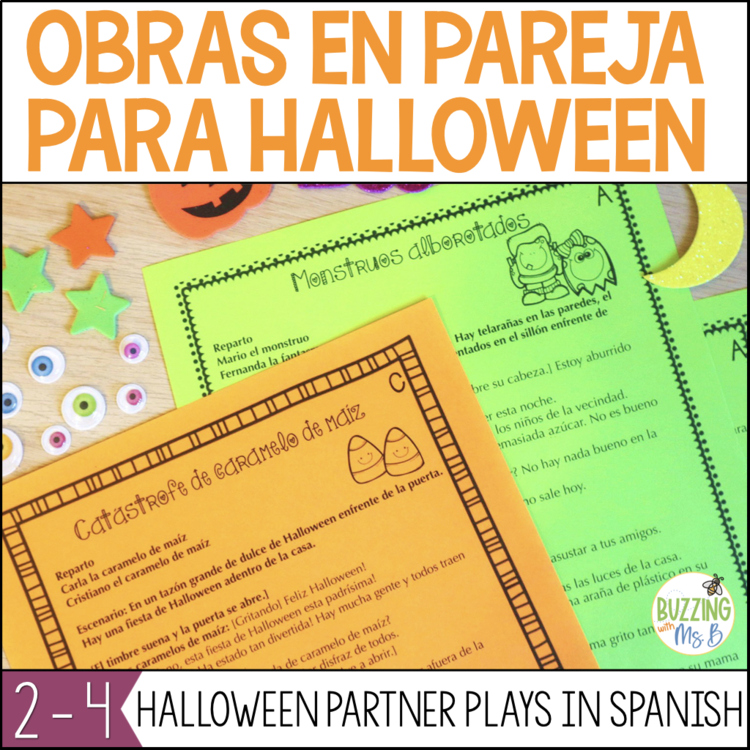
- Halloween Partner Plays in Spanish👻🎃 Buy now in my shop or on TPT🍎
- Fall Partner Plays Bundle (8 scripts)🍁🍂 Buy now in my shop or on TPT🍎
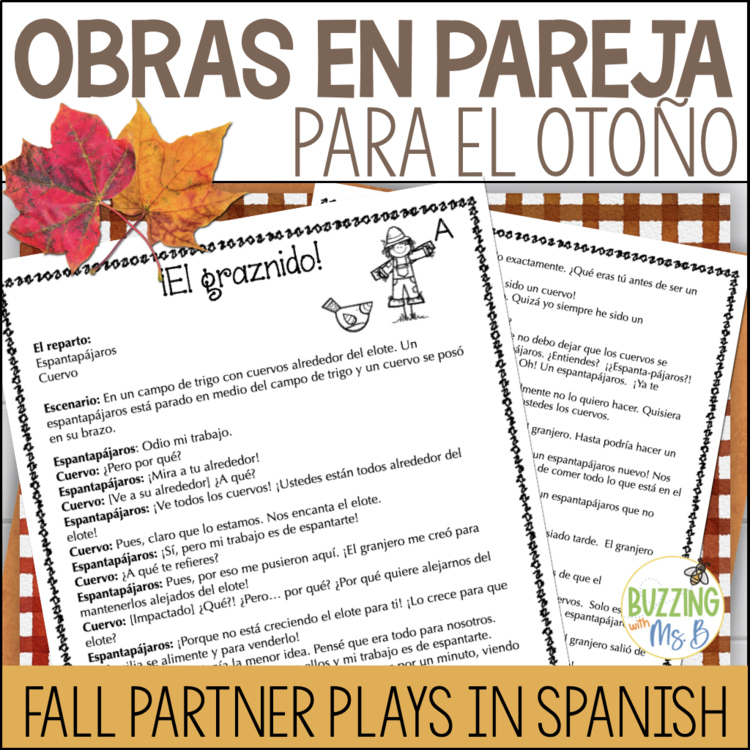
- Fall Partner Plays in Spanish🍁🍂 Buy now in my shop or on TPT🍎
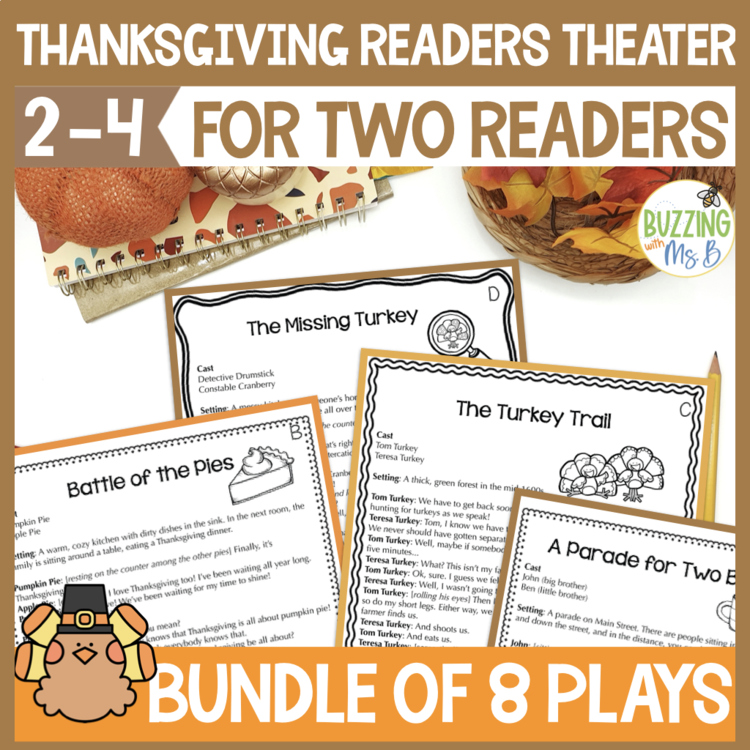
- Thanksgiving Partner Plays Bundle🦃 Buy now in my shop or on TPT🍎
Family Literacy Nights: Build Reading Fluency at Home and at School
If you’re a parent, you know your children are always watching you and imitating everything you do… for better or worse.🤪
Teachers teach reading. Parents teach reading too. Improving reading fluency by bridging the home-to-school connection leads to fantastic results. Hosting a family literacy night📚 can be one of the easiest and most fun ways to get the most bang for your buck when it comes to getting kids excited about reading.
Remember our anxiety-inducing visualization of being called on to read by the teacher? Well, these thought-out family literacy night plans are full of activities that produce smiles and laughs. Kids get a kick out of seeing their teacher in the evening, and parents feel connected and involved in their child’s learning. Literacy nights are a win-win for improving fluency!
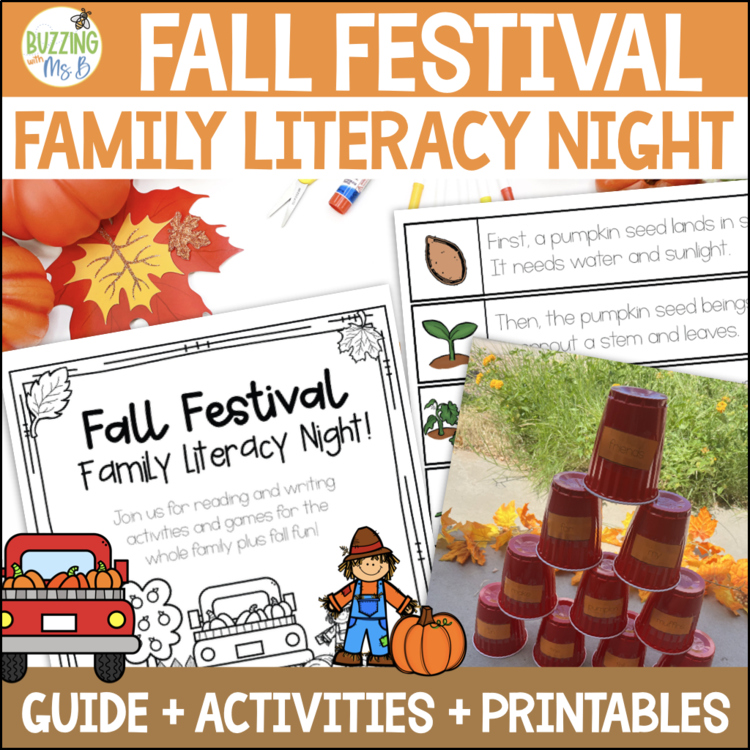
Check out my blog post, How to Host a Fun & Festive Fall Family Literacy Night!🎉🍂 You can grab the Fall Festival Family Literacy Night resource here in my shop or on TPT!🍎
All of my literacy night resources are packed with activities, ideas, and printables to bring the joy of reading to your school community!
You’ve Got This!
I hope after reading this post you feel a little lighter about tackling your students’ fluency goals. You’ve got this.💪
Happy Teaching!
-Chrissy