
Nonfiction Summary Lesson: Important vs. Interesting Facts
Kids struggling to summarize informational text! The process can seem so abstract and they tend to grab random words instead of really thinking about what is most important about the text.
So the other day I shared how I took an article, cut it up, and collaboratively re-created it with my fourth and fifth grade pull-out intervention group. That went really well and you can read about it here.
Nonfiction Summary Lesson: Re-Reading the Article We Rebuilt
Over the past couple days, my students and I took those articles we reconstructed and re-read them in one piece. This was the informational article I read with third and fourth grade.


Using Headings to Write a Nonfiction Summary in 4th Grade
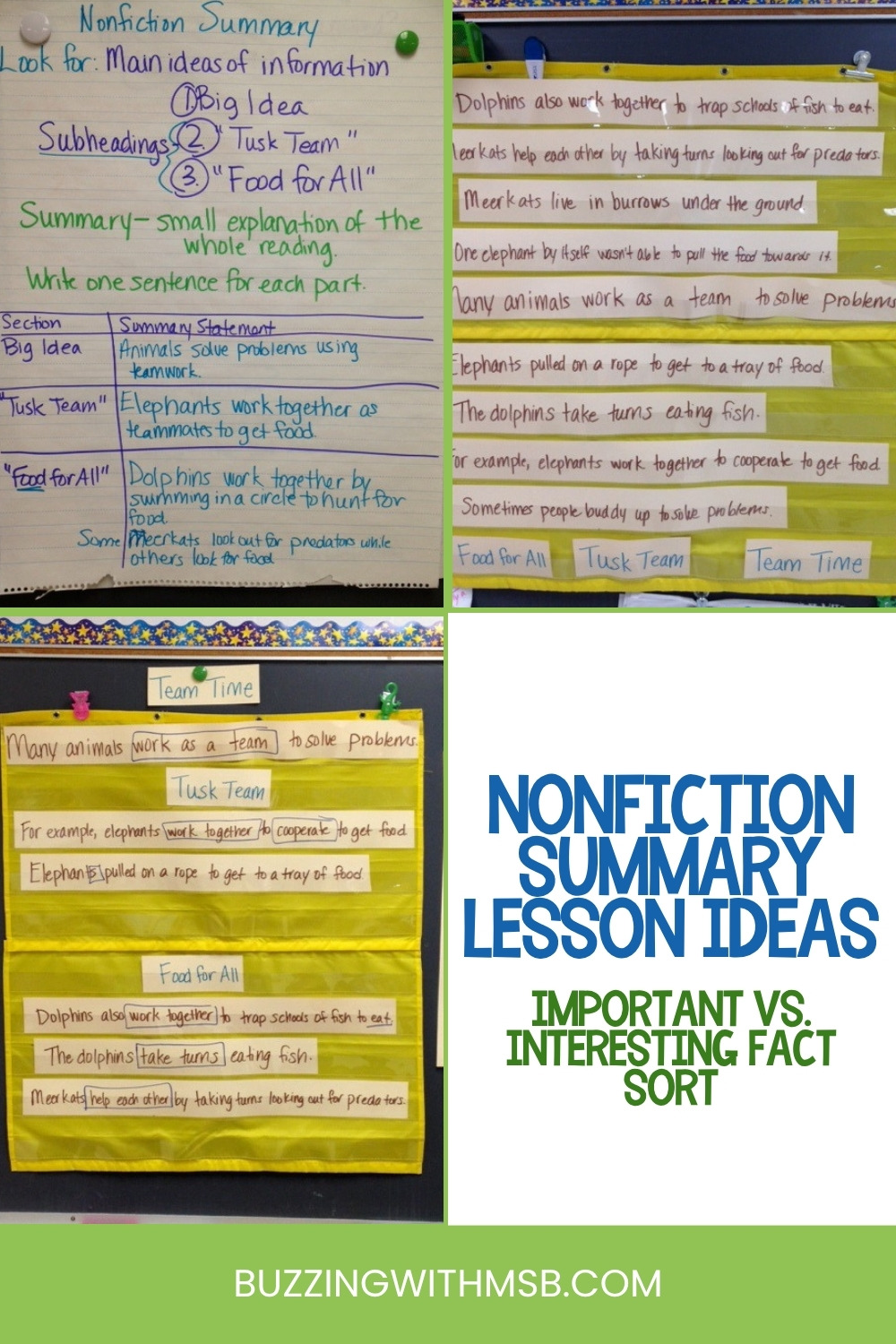
With fourth grade, I used the article as a way to review writing a nonfiction summary to process text. I wanted students to think about using the structure of the article (divided into sections with headings) to help them write their summary.

Main Ideas vs. Specific Facts Pocket Chart Sort in 3rd Grade
With third grade, I wanted to practice the same skill, but my third graders have trouble differentiating between the most important ideas, or main ideas of sections, and specific facts or details. To support this, I wrote a variety of statements from the article on sentence strips.
Some ideas (Meerkats live in burrows under the ground) were very specific facts from the article. Others (Meerkats help each other by taking turns looking out for predators) were main ideas from the article. Using these sentences in a pocket chart, as well as the headings for each section and the title, we made decisions about the following things:
- 1. Which pieces of information are important and which are specific facts?
- 2. Which pieces of information would be included in a summary?
- 3. How can the title/headings help us choose what is important and organize it?
- 4. What order should the important information be sequenced in to be in logical order?

Interesting vs. Important Anchor Chart Ideas
We made a little chart to help us with interesting vs. important. I forgot to take a picture! But this is the general idea:
Interesting: a specific fact or detail. Makes you say, “Wow!” or “I didn’t know that!”. May not be related to the main idea or purpose of the article. (real-life example: toys. They’re not necessary, but we like them)
Important: a big idea. Related to the main idea or purpose of the article. Headings/titles can give you clues about what will be important in the article. (real-life example: food. It might not be fun, but it’s necessary)
Our Finished Summary Sort with Key Words Marked
Still, though, this was tough for my third graders. This is what we came up with. I marked the words in the sentences that helped us identify if the statement was related to the main idea/topic of the article.

Overall, not a bad lesson. Wish I’d had a little more time to spend with them, though. Half an hour was kind of rushed.
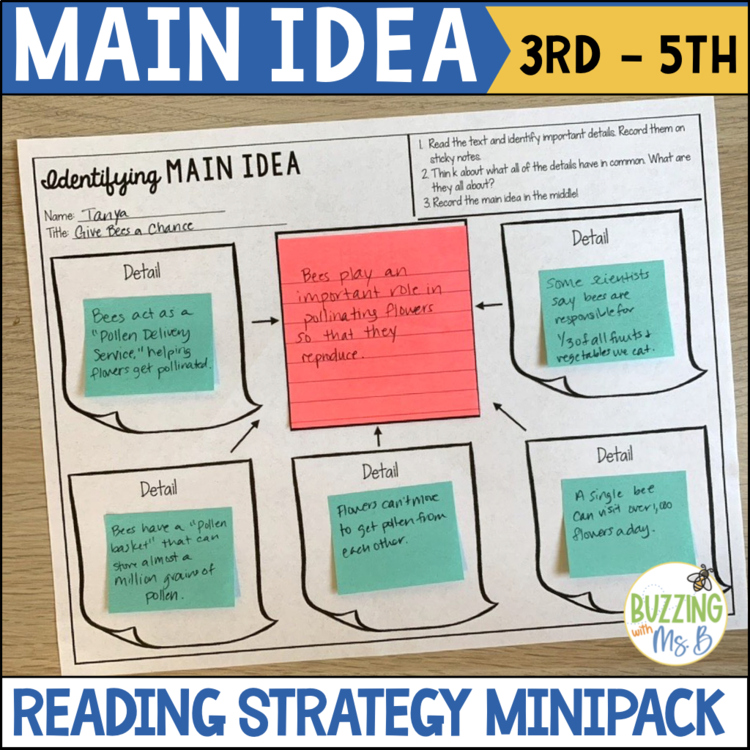
For more nonfiction summary lesson ideas, read about summarizing informational texts using main ideas and how to teach students to find the main idea in nonfiction.
Get the Main Idea and Details Comprehension Unit
Want this ready to go? Grab the Main Idea and Details Comprehension Skills Unit in my shop.



Wow! I think it was a fabulous lesson! I just connected via Google Friend Connect and can't wait to come back to learn more from you! I'm a fifth grade ELA teacher and am so happy I stumbled on to your blog via a link you link in a blog comment. 🙂 Thanks for sharing!
Creating Lifelong Learners
Thank you for the lesson!
Thank you for sharing the lesson. I'm going to be working on this skill with my kiddos next week. I'm your newest follower.
Hunter's Tales from Teaching
thanks