
Six things instructional coaches can do with PLCs

Many coaches lead or facilitate their PLC meetings, but they’re not always sure where to start!
What can PLCs do together?
This post will share six ideas you can use when you’re planning your PLC meetings with teachers.
Before you start creating a PLC structure, I’d recommend that you figure out what the needs are on your campus.
Instructional coaches and administration often jump to creating a PLC agenda that isn’t aligned to staff needs and wants or responsive to where students here.
I describe how to do this in this podcast episode about how to conduct a needs assessment!
Of course, the reality is that many schools are going through changes that teachers aren’t asking for. Sometimes this is necessary.
Using these forms of PLCs to help teachers embrace new learning can help!
So here are six things coaches can do during PLC to support your campus and alignment!
#1 PLCs look at data together
Now, before you start to groan (or imagine your teachers groaning), it’s important to remember that data is information. It’s just information in number form, and it tells us something about what students were able to demonstrate during that snapshot, and what needs they may have.
Is data the whole picture? Nope, but it’s definitely a piece of it!
When we look at data, we want to understand it and then use it to make a plan that adjusts our teaching. If we’re not using data to plan, we’re wasting our time when we look at it.
It can also help instructional coaches and your teachers make decisions about program and structures in school!
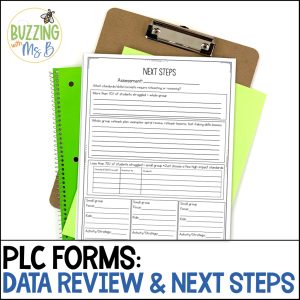
Get the PLC Forms for Reviewing Data here!
#2 PLCs plan together.
Planning with a team of teachers during a PLC meeting can be stressful. It definitely took me a long, long time to be comfortable facilitating a PLC planning meeting with different personalities all in the same grade level or team!
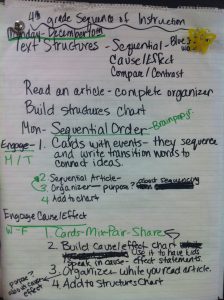
But there is so much value in putting plans on paper together. The conversations you can have can be so informative and thought-provoking for teachers! Here are some of the conversations you can have around planning with your PLCs:
- understanding your standards
- discussing assessment
- working backwards to plan lessons from assessments
- lesson plan structure
- academic vocabulary
- engagement strategies
- student checks for understanding
- instructional strategies and methods
- sharing expertise
These conversations can help teachers learn from each other, too, in true PLC fashion!
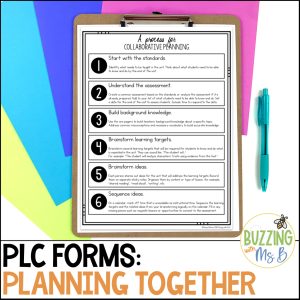
Get the PLC Forms for Planning Together here!
#3 PLCs look at student work together
When teachers go into their rooms, close the doors, and do their own thing, are we doing what’s best for kids? What do grades represent? How are we scoring writing? Do we agree on what it means to “master” something?
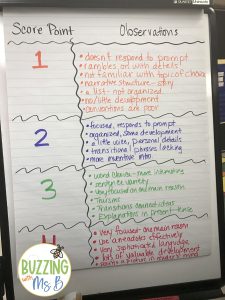
So many of the struggles of school happen because teachers don’t have enough time to see what’s going on in other classrooms. One great way to support PLCs is to look at student work together!
You can discuss what you see kids can do in other classrooms, how the teacher made that happen, what “mastery” looks like, how assignments are graded, and really understand rubrics together!
Looking at student work helps teachers align practices and assignments, too!
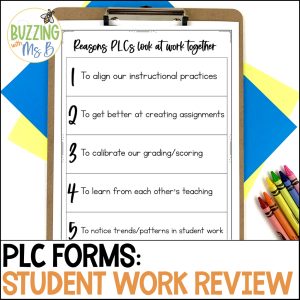
Get the PLC Forms for Looking at Student Work Together here!
#4 PLCs can learn together
Digging into a new strategy or trying to solve a problem across your campus? PLCs that learn together, grow together!
Engage your teachers in dialogue about different methods, read articles and books together and try out new things!
After you’ve learned something new together, whether it’s from a video, article, or a modeled lesson from you or a teacher, it’s important to have a discussion about how this will be implemented in the classroom.
Building the bridge from PLC to the classroom is so important, so you want a dedicated spot on your PLC agenda to make time for it!
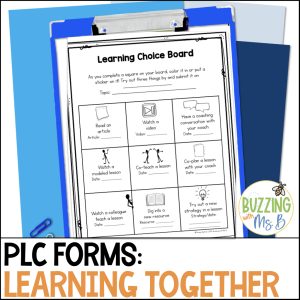
Get the PLC Forms for Learning Together here!
#5 PLCs create assessments together
Creating common assessments is more than just whipping up a test.
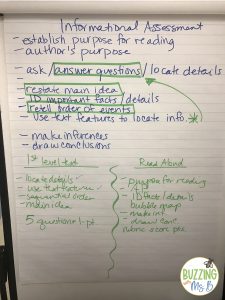
PLCs that create common assessments together explore
- standards
- types of questions
- levels questioning
- academic language
- modes of assessment
- scoring
- test administration and more!
I recommend figuring out what you want students to know and do by the end of the year. The way we hold students accountable should be the way we assess them throughout the year so they are prepared to demonstrate their learning in that mode.
Identify major or power standards in order to figure out where to focus your assessment. Wording matters! Ensure that questions are clear and asked at the level you want. A variety of levels of rigor is helpful.
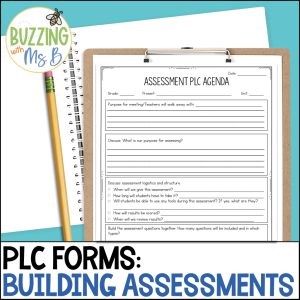
Get the PLC Forms for Building Assessments Together here!
#6 PLCs solve problems together
Struggling with behavior? attendance? tutoring? hallway monitors?
Whatever challenges you’re having as a school, you can use your PLCs to solve them! Get your teachers together to identify and understand the problem, brainstorm possibilities, and figure out a possible solution!
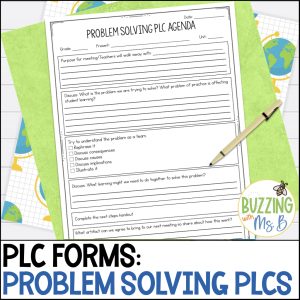
Get the PLC Forms for Problem Solving Together here!
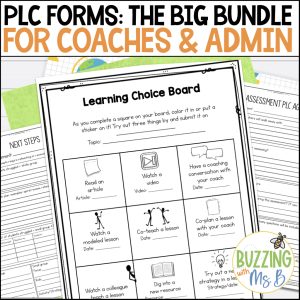
And get the all the PLC forms and more PLC tools in one handy PLC Toolkit Bundle here!


