
Text Evidence Anchor Chart: Nonfiction Questions and Evidence
I told this joke to my kids yesterday:
Why does everybody want to hang out with the mushroom?
Cause he’s a FUNGI!
HAHAHAHAHA!
They didn’t laugh. I don’t think they got it.
Anyway, this is why I told them that joke: This week, with my struggling fourth and fifth graders, I wanted them to read with a purpose! The kids I’ve started pulling out recently have some pretty rough reading habits. Fake reading, mostly, and when I ask a question about their comprehension, a couple of them read a random phrase in the hopes that I will
- 1. Say. “Close!” and then magically make their phrase into an answer.
- 2. Tell them a response that should replace their response.
- 3. Give up and move on to another kid.
I’m pretty stubborn. I don’t do those things.
Choosing a Nonfiction Article for a Text Evidence Anchor Chart
Kids must be accountable for their thinking and responding! So this week, I pulled out an old Scholastic article about the chytrid fungus attacking frogs in their natural habitats. Hence, the fungi joke.
I chose it for several reasons: Earth day is April 22nd, fourth and fifth graders are currently studying life science (habitats, ecosystems, niches, etc.), and also the pictures of frogs are pretty neat. I hoped it would be high-interest and easily connected to by the kids.
It was!
Preview Nonfiction Text Features and Make Predictions
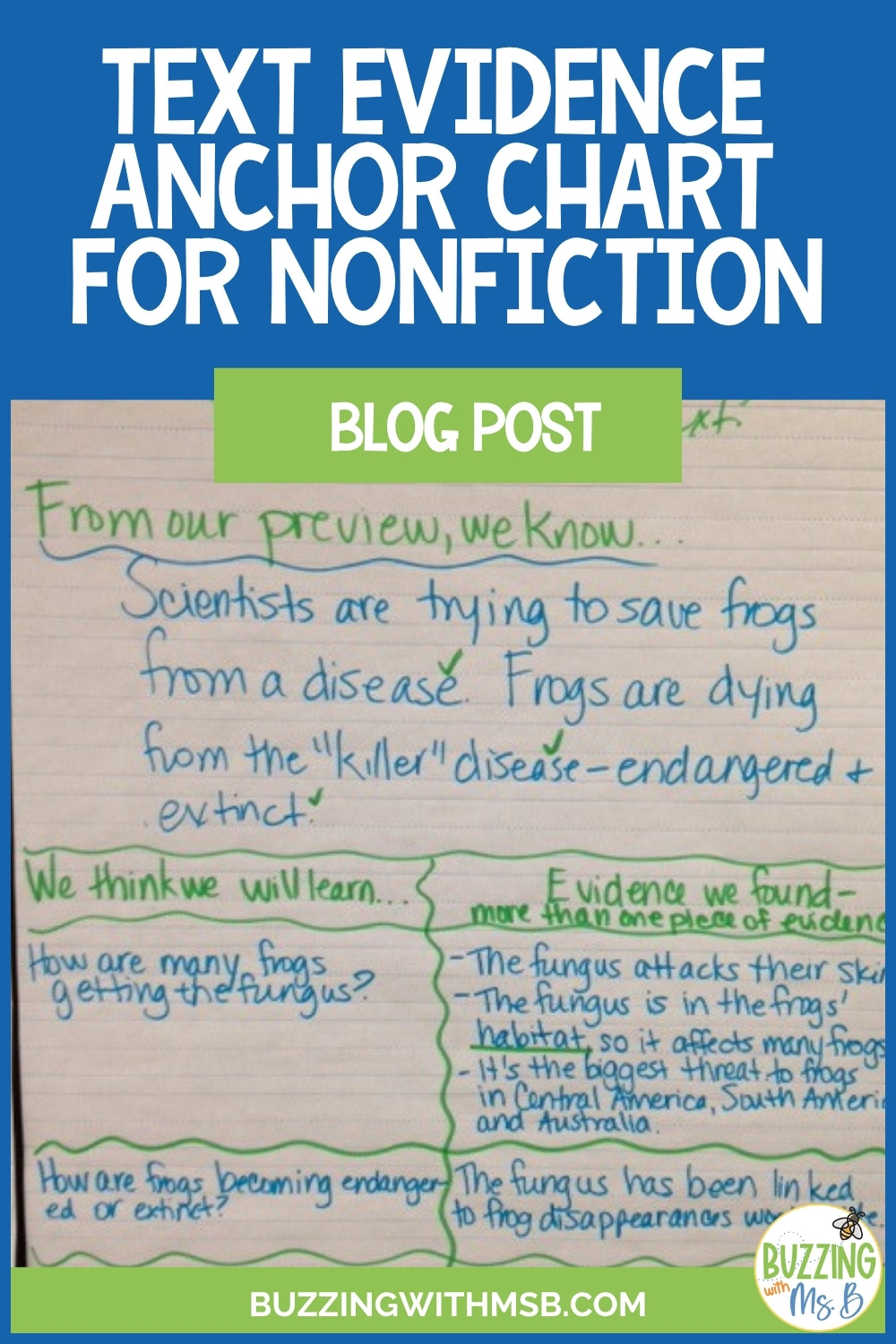
We first previewed the features and made predictions using the information in them. We completed the top half of this chart.
For more on helping kids use features, see this text features anchor chart showing why each feature is included.
For more on previewing and predicting before you build a text evidence anchor chart, read about nonfiction comprehension strategies for making predictions.
Students Write Questions and Read for Evidence
Then I had each student write a question that they expected could be answered in the text. They recorded these on a post-it. As they read, their purpose was to read for evidence that could help them answer their question. I think that, because the kids wrote their own questions, they were actually pretty engaged and read very deliberately. That was a big improvement.
They read closely and added their evidence to their post-its. Afterwards, we shared and charted out our questions and evidence. The student who originally wrote about the question shared his/her evidence first, and then other students filled in with additional pieces of information they gathered during their reading. This helped us create well-rounded responses to many of the questions.
Want students asking stronger questions before they read? Try these asking questions reading comprehension lessons.
4th and 5th Grade Text Evidence Anchor Charts
Here’s my fourth grade chart:

I really wanted to encourage kids to find specific pieces of evidence that contributed to their understanding of the question as a whole. This means that they often needed to find more than one piece of evidence for each question.
Here’s a similar chart with fifth grade (the second half, where we recorded questions and evidence):

When the Evidence Doesn’t Answer the Whole Question
Two questions were so specific that there was not enough evidence to completely answer the question. This was a good conversation – students realized they could only find a piece of the answer but not the exact answer. This was a good talking point: making sure our evidence actually answered the complete question, instead of just being related to the question; a habit they are very guilty of!
Get the Nonfiction Text Structure Reading Comprehension Unit
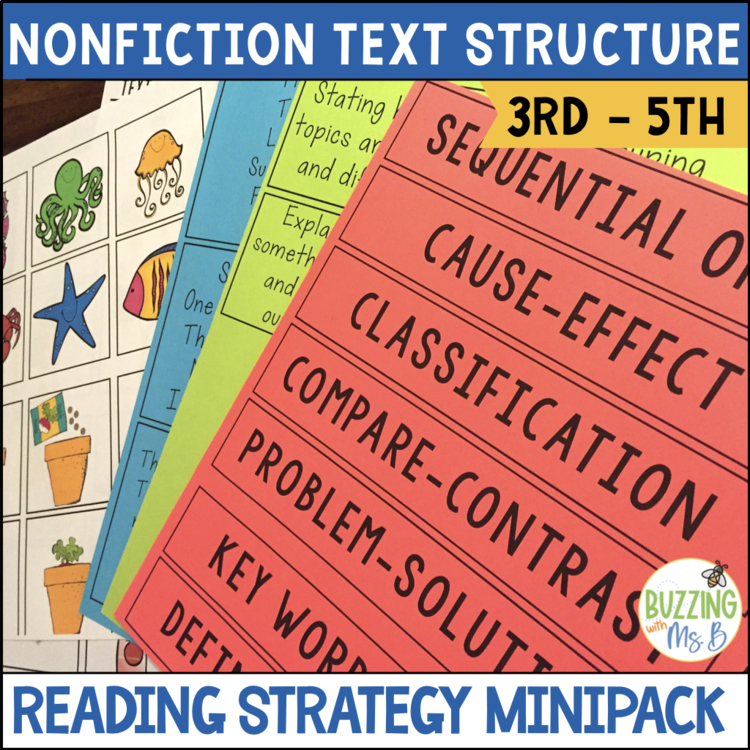
Want this ready to go? Grab the Nonfiction Text Structure Reading Strategy Comprehension Unit in my shop.


Love , love, love your joke!! 😉
Creating Lifelong Learners