| |

Instructional Coaching Priorities for School Growth with Dave Stuart Jr., ep. 288
Teacher and students in the classroom. These words are at the bottom "Instructional Coaching Priorities for School Growth with Dave Stuart Jr., ep. 288".

Today, I’m chatting with author and teacher Dave Stewart Jr. about instructional coaching priorities for school growth. During the episode, we discuss his book These 6 Things: How to Focus Your Teaching on What Matters Most.

Dave shares the five beliefs at the root of student motivation. We talk about how tracking moments of genuine connection can make a big impact on students (and teachers). Plus, he offers ideas for how instructional coaches can support teachers when the work gets tough.

Whether you’re a new coach or you’ve been coaching for 10+ years, you’re going to learn a lot about the six things that matter most in the classroom! Be sure to listen! Here are the highlights!

These 6 Things: Focusing on What Matters Most

In Dave’s book, These 6 Things: How to Focus Your Teaching on What Matters Most, he explains the areas teachers need to prioritize in their practice. During the episode, he walks us through his bullseye model, which puts mastery at the center and shows the six things teachers should focus on to help students move toward it.

These six things go around the bullseye:

The First Ring: 5 Key Beliefs

1️⃣  5 Key Beliefs (Student Motivation): Helping students care about learning and develop skills in that area. More on this below!

Starting out as an instructional coach can be so overwhelming! It can feel like there are too many things to do, and you just don’t know where to start. This resource includes a guide, printables, and fillable forms (PDFS) to build relationships, have a dialogue with your administrator, review data and make a plan, visit classrooms, and more! Get the First 20 Days of Instructional Coaching Start Up Kit and Forms today!

The Second Ring: Knowledge and Argumentation

Dave developed this ring with teachers across all content areas in mind, considering what mastery looks like in different subjects. He says you’ve got to “build knowledge about things, then you’ve got to be able to do something with that knowledge”.

2️⃣ Knowledge Building: Creating a classroom environment where students build the background knowledge they need to understand the content.

3️⃣ Argumentation: Encouraging students to use their knowledge to make sense of the world through activities like problem solving and debates.

During the episode, he shares an example of his high school students having a debate about North Korea and how learning more reshaped the discussion. We also dig into how building background knowledge helps students develop curiosity and engage more deeply with what they’re learning about.

The Third Ring: Literacy Moves (Reading, Writing, Speaking/Listening)

4️⃣ Reading: Regular reading that builds knowledge, vocabulary, and critical thinking skills.

5️⃣ Writing: Opportunities to express ideas, explain thinking, and build understanding through writing.

6️⃣ Speaking/Listening: Meaningful experiences to participate in classroom discussions and listen to others.

Dave says that a lot of his writing in the book is about “minimizing the noise for teachers”. They see these super long evaluation rubrics and get so many initiatives thrown at them that they can get lost in the weeds. He says when instructional coaches focus on these six things and teachers get good at them, it addresses much of what the evaluation measures and solves a lot of problems seen in the classroom.

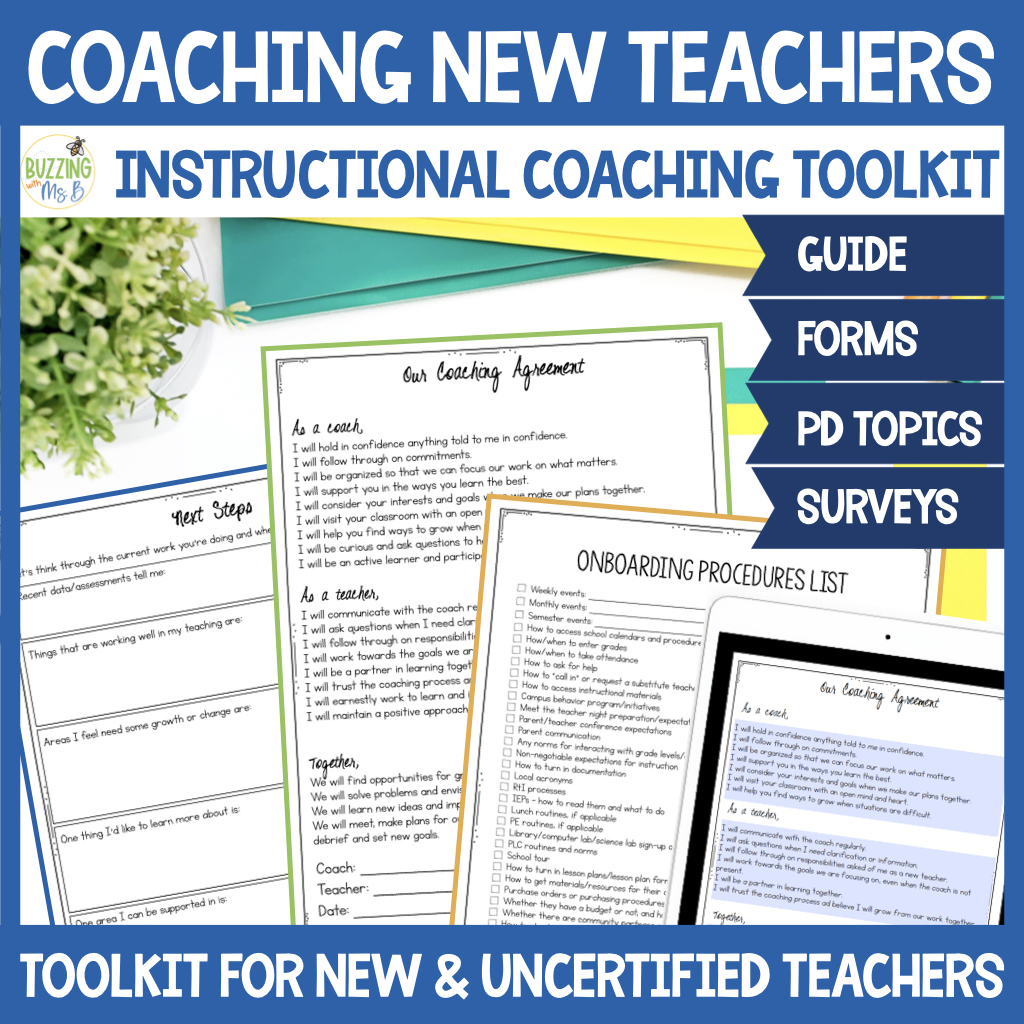
Have a plan for working with new and uncertified teachers with the Coaching New Teachers Toolkit!

It includes forms, templates, and everything you need to help your new and uncertified teachers! Figure out what support the need and provide PD and coaching with these resources. Grab the Coaching New Teachers Toolkit in my TpT Store!

⭐⭐⭐⭐⭐ “I support & coach new teachers and this resource is so valuable. I purchased it several months ago and often use tips you suggested when working with teachers. It is an essential section of my “Teacher Support Provider Binder” that I carry around with me everywhere.”
The Five Key Beliefs That Support Student Motivation and How Schools Can Support Them

Dave explains that at the root of student motivation are five key beliefs, which can be visualized as a pyramid. Here are the beliefs in order. Effort and efficacy are on the same tier.

  1. Teacher Credibility (Bottom Tier): When students believe they have a good teacher who cares about them, they do better in class.
  2. Value: Students view the work as worthwhile, interesting, enjoyable, or useful.
  3. Effort: The belief that if the students work at something, they will get better. Essentially growth mindset.
  4. Efficacy: The belief that “I can succeed at this”.
  5. Belonging (Top Tier): Students identify with the work. “I’m a math student”. “I’m a writer”. Belonging naturally happens if teachers focus on the bottom four beliefs.

So, what can schools do to support these five beliefs?

Dave says one of the easiest ways to get started is by tracking moments of genuine connection with students. This is a 30- to 60-second interaction where a teacher takes a moment to make the student feel valued, known, or respected. For example, they might ask about the student’s spring break or compliment the cool shirt they’re wearing.

Teachers keep a printed roster on a clipboard and check off each time they have a meaningful interaction, aiming to connect with a few students each day. This ensures nobody in “the middle” slips through the cracks. This simple practice can make a big difference because students feel like their teacher is paying attention to them and values them.​

How Can Instructional Coaches and School Leaders Support Teachers with Their Motivation

These same five beliefs can support teacher motivation as well. I asked Dave how coaches and school leaders can help teachers stay connected to what makes the work meaningful.

He suggests tracking moments of genuine connection with teachers. Credibility is built when coaches and school leaders show they care, demonstrate competence, and have passion.

Just like students, teachers can struggle to see the value in something they’re being asked to do. A simple thing leaders and coaches can do in a moment of connection is invite teachers to remember why they got into teaching or ask them to tell you something exciting their student did recently. Coaches can also share stories about the teacher’s impact or about a positive comment from a parent. This helps teachers remember that this is demanding work, but it’s really important too!

Be ready for anything with the Instructional Coaching Editable Binder Megapack!

It includes forms, templates, and everything you need to get organized for instructional coaching! Coach teachers and document your coaching work with these printable and editable tools. Grab the Instructional Coach Binder Megapack in my TpT Store!

Instructional Coaching Priorities for School Growth

That was such a great chat with Dave about instructional coaching priorities for school growth! I really enjoyed learning about the six things teachers need to focus on and the five key beliefs that support student motivation. Dave offered a lot of practical tips that I know you’re going to love!

This is the final episode in the Get Focused on Instructional Coaching! theme. These episodes are designed to give you things to think about as you approach your work for the whole school year. They focus on the foundational ideas you need to keep at the forefront of your mind as you coach teachers. Be sure to listen to this episode and the rest of the series. The links for all of the past episodes are in the Learn More section below!

Topics and Questions Discussed in Episode 288 – Instructional Coaching Priorities for School Growth with Dave Stuart Jr.

  • Instructional coaching priorities for school growth
  • Reducing the noise for teachers and focusing on the 6 things they need to prioritize
  • Why building background knowledge is so important for student engagement and success
  • 5 key beliefs at the heart of student motivation and how schools can support them
  • Tracking moments of genuine connection with all students, including those “in the middle” who are often overlooked
  • The impact of intentional interactions on students’ sense of belonging and teacher credibility
  • Ways instructional coaches can support teacher motivation and well-being
  • Helping teachers reconnect with the reasons they got into teaching through reflection and storytelling

About Dave Stuart Jr.
Dave Stuart Jr. is a high school teacher in West Michigan, where he writes books and creates PD for teachers while living a quiet life with his family. You can find Dave at davestuartjr.com.

Turning Insight Into Action: Practical Steps You Can Take After Listening

Here are simple actions you can take today:

1️⃣ Download the FREE First 20 Days of School Checklist!

If you’re feeling a little overwhelmed with figuring out the beginning of the school year, I’ve got a handy dandy resource for you! The first 20 days of school checklist is perfect for helping you narrow down the millions of things you could be working on to the specific tasks you need to do in the first 20 days of school to set yourself up for a successful, impactful year of coaching! Grab this handy checklist at buzzingwithmsb.com/first20 and be ready to coach your teachers this school year!

2️⃣ Track Moments of Genuine Connection with Teachers

Print a list of all the teachers you work with. Each day, intentionally have a brief, genuine interaction with one or two teachers. Ask a question, check in, celebrate something, or simply take a moment to connect. As you interact with each teacher, check off their name. Once you’ve connected with everyone, start the list again. This will ensure you’re regularly connecting with every teacher you work with and creating opportunities to build credibility over time.

Ready to listen?

  • Ready to listen? You can listen below with the media player, or search for Buzzing with MS. B: The Coaching Podcast anywhere you listen to podcasts!

This post contains links to products from one or more of our advertisers. This means I may receive commissions for purchases made through links in this post when you click on links to those products. Thank you for your support!

Learn more

Helpful Resources


Listen on: Apple Podcasts, Spotify, or your favorite listening app


Thank you for listening to Buzzing with Ms. B: the Coaching Podcast. Want more coaching ideas

Check me out at buzzingwithmsb.com and on Instagram @buzzingwithmsb.

If you love the show, share it with a coach who would love it too, or leave me a review on iTunes! It’s free and it helps others find this show, too. Happy coaching!

Podcast produced by Fernie Ceniceros

Instructional Coaching Priorities for School Growth with Dave Stuart Jr., ep. 288, Instructional Coaching with Ms. B Podcast

Chrissy Beltran [00:00:00 – 00:01:17]

Hey, coach, and welcome to Instructional Coaching with Ms. B. Today, we are chatting with my guest, Dave Stewart Junior, about instructional coaching priorities for school wide growth. So this is part of the get focused on instructional coaching theme for this month, and the idea is that it’s gonna give you some things to think about as you’re approaching your work for the whole school year. What are the foundational things that we need to keep in the forefront of our minds as we are working with teachers across our school? My guest, Dave Stewart Junior, is a high school teacher in West Michigan where he writes books and creates PD for teachers while living a quiet life with his family. You can find Dave at davestewartjunior.com. Now if you are starting school and you’re like, I am super overwhelmed. I don’t know where to start. I need to figure out where to focus my time this first month. I have a lovely dandy handy dandy checklist for you, and I think it’s gonna be really helpful to help you narrow down the millions of things you could be working on into the things you actually should be working on. It’s called the first twenty days of school checklist, and it’ll help you set yourself up for a really impactful year of coaching. You can go to buzzingwith missb.com/firsttwenty, that’s first two zero, and really be ready to coach your teachers this year by focusing on the foundational pieces. So without further ado, we’re gonna welcome our guest. Welcome to the podcast, Dave, and I really appreciate you being here today.

Dave Stuart Jr. [00:01:18 – 00:01:19]

Yeah. My pleasure, Crissy.

Chrissy Beltran [00:01:20 – 00:01:38]

Well, I’m really excited to get started and really just jump in on what coaches can focus on because this episode is all about instructional coaching priorities. So in your book, These Six Things, How to Focus Your Teaching on What Matters Most, you explain the areas that teachers need to prioritize in their practice. Can you introduce us to the six things?

Dave Stuart Jr. [00:01:39 – 00:02:58]

Sure. I’ll, basically describe it like a bull’s eye. So in the middle of the bull’s eye is the goal of a of a of a teacher, which is to help us master things. Okay? So the six things are gonna go around that bull’s eye. The first ring around that bull’s eye is what I call, the five key beliefs, or we could think of it as just student motivation. So we gotta help young people to care about the work of learning and develop skill in that area. The next ring in the bull’s eye is gonna be knowledge building and argumentation. So I developed this ring thinking about teachers all across the content areas. And what does it look like to grow in mastery of different content areas? And, typically, you gotta you gotta get build knowledge about things, then you gotta be able to do something with that knowledge. Maybe it’s, problem solving. Maybe it’s, having an actual debate in class, but this argumentative thinking, is is how I frame that. So we’ve got student motivation and then knowledge building and argumentation. And then that final ring are just your basic literacy moves, reading, writing, and speaking slash listening. And I think that, again, teachers all across content areas can think about how do I meaningfully use these types of things in my classroom, how to get good at facilitating the learning through reading, through writing, through speaking listening. So, yeah, that that’s what the book’s about. Those are the six things.

Chrissy Beltran [00:02:59 – 00:03:20]

Yeah. I like that. I think that bringing an awareness, especially sometimes at the secondary level or even in content areas in primary, you know, elementary, middle school classrooms, We don’t see as much thought as we should be maybe around the idea of reading and writing, listening and speaking within those areas. You know, that those are the tools that we use to learn the thing.

Dave Stuart Jr. [00:03:21 – 00:03:55]

Yeah. And a and a lot of my writing is a in this book, especially, is about how do we minimize the noise for teachers. Because a lot of teachers, they see the evaluation rubric, which is, you know, super, super long and complex, and they can just get lost in the weeds. So what I encourage teach coaches to think about is, you know, whether you use these six things or something else, but it’s just helping teachers to see if you can just get really good at a few things. You know, that would take care of a lot of the things on the eval rubric, a lot of the problems you see in the classroom. That’s kind of the smartest way that you can approach getting better at teaching.

Chrissy Beltran [00:03:56 – 00:04:12]

Yeah. Can you talk a little bit more about the knowledge building and implementation? I think it might seem like it’s common sense. I mean, even whenever we we dig into standards, for example, we’re like, okay. What’s what are the nouns? What are the verbs? Right? What are we looking for the kids to know? And then what do they need to do with it? But can you share a little bit more about that?

Dave Stuart Jr. [00:04:13 – 00:05:41]

Yeah. It’s just it it was mind blowing to me when I was researching this book just how critical it is that students know things about a subject. I mean, when students are given a chance to just learn lots of things in a knowledge rich classroom, a knowledge rich curricula, then all of a sudden things like, argument and writing and reading and all these things just naturally will increase in quality. Yeah. It’s just you’re just given a chance to get better. Quick story, my students were debating, North Korea. What what should be done about North Korea? This was years ago now, but North Korea had done something. And we read an article about it. And my students had I gave my students a debate. And that many of them were just describing we should bomb them. We should you know, and I I stopped the debate because it was just very much kinda jokey, non critical approach to the problem. And all I did is just gave them a series of articles over the next couple of weeks, giving further knowledge about the North Korea situation, what it’s like to live in North Korea, how China is involved, the history of Korea. Just these little bit of articles, and they gave the same pop up debate prompt. And all of a sudden, no one wants to bomb the whole country. Mhmm. People are the the students it’s the same exact students. Just a month later, more knowledge. I never scolded them for their first go at the pop up debate. I just I just gave them a chance to build knowledge. So, yeah, this is just so important to understand that students knowing things unlocks a lot of possibility.

Chrissy Beltran [00:05:42 – 00:05:58]

Yeah. I think think that’s a good point. I think that we’ve seen a lot of that with the science of reading research, right, that we know that back knowledge is such an important component of reading comprehension, and that should have been obvious. Right? But I think it was kind of missing. For a long time, people are like, well, I just they just need to know how to find information. Right? Right.

Dave Stuart Jr. [00:05:58 – 00:05:58]

But

Chrissy Beltran [00:05:58 – 00:06:18]

then you know the kids who do the best are the kids who know the most stuff. Whenever you talk to your students, the kids who are like, oh, I was looking at this insect yesterday, and it’s and they they can share all about it, and then they read a book about it and they, you know, investigated it further. Those kids who are curious, they tend to be the ones who are the most successful because they have that background knowledge.

Dave Stuart Jr. [00:06:19 – 00:06:46]

Right. Yeah. And that curiosity often stems from knowing at least something about a topic. Right? I’m not very curious about about, Russian ballet, I always say. I don’t I just don’t know anything about it. Yeah. You know? No no offense to it. I just don’t know anything about it. There’s nowhere for, like, curiosity to kinda grow its little good tentacles from. But, yeah, when kids have a chance to learn lots of stuff, all of a sudden, they realize there’s a whole bunch out there to learn. Makes them curious.

Chrissy Beltran [00:06:46 – 00:07:27]

Yeah. We have to establish like, give them a little bit and establish that purpose, I think. Whenever I was a a new teacher, I remember I went to a workshop, and this was KWL. Like, in college, I feel like that’s one of the six things I learned probably was a KWL chart. Right? And so I went to this workshop and this teacher was talking the the presenter was talking about, KWLs, and she goes, here’s the problem with the KWL. You say, okay, we’re gonna learn about the spleen. What do you know about the spleen? And the kids say, I don’t know anything about the spleen. You say, what do you wanna know about the spleen? They go, I don’t wanna know anything about the spleen. Right? So it’s like there’s no purpose there because you haven’t engaged. So we have to kind of engage the thinking by prevent presenting a little bit of engaging information to start and giving them that purpose for their inquiry, I think.

Dave Stuart Jr. [00:07:28 – 00:07:36]

Yeah. It’s like the KWF. It was just after a brief enticing, you know, YouTube video or brief little article, infographic.

Chrissy Beltran [00:07:36 – 00:07:37]

Yes.

Dave Stuart Jr. [00:07:38 – 00:07:52]

You know, it just really changes the power of the k w l. It’s not a bad idea, but you’re right. It’s missing the fact that if my answer to the k is nothing. Right. Probably my answer to the w is also gonna be nothing.

Chrissy Beltran [00:07:52 – 00:08:10]

That’s right. Yeah. I remember when I was a teacher, I used to save tons of, like, comics comic strips that were related to some kind of scientific principle that we were gonna learn about, you know, anything. Any kind of engaging material you’re you have your little files. Right? But now you just Google it, and it’s all out there.

Dave Stuart Jr. [00:08:10 – 00:08:11]

Right.

Chrissy Beltran [00:08:11 – 00:08:19]

You can find little clips like you said. It was not like that before. We had this Yeah. This bank of videos, I remember, that we paid for. Okay? We paid for

Dave Stuart Jr. [00:08:19 – 00:08:20]

this bank

Chrissy Beltran [00:08:20 – 00:08:34]

of videos that was, like, clips from the Mythbusters and stuff. Right? Now it’s so easy to find, but this was, like, in the old time. And so it was, like, it’s Yeah. Engage kids so much more easily now if we’re thoughtful about what we’re putting in front of them.

Dave Stuart Jr. [00:08:35 – 00:09:00]

Right. And really focus on the knowledge richness, you know. And and the teaching move with that is just point out a vocab word, have students recorded in their notebook. Do something to just be more than passively watching a video being entertained by, you know, cool animations. But, yeah, like, mostly, all you need to do is provide that knowledge rich source to students and then just do some simple teaching with it.

Chrissy Beltran [00:09:00 – 00:09:05]

Mhmm. Okay. So then in one of the rings that you mentioned, the first ring, you mentioned five key beliefs. Right?

Dave Stuart Jr. [00:09:05 – 00:09:06]

Yeah. Right.

Chrissy Beltran [00:09:06 – 00:09:21]

About motivation. So can you talk a little bit about about these five beliefs and what we can do at the school level to support them? Because I feel like sometimes that’s where it falls apart. We have some classrooms that are really good at it, and then we have others that need some work. And at the school level, we’re not really consistent.

Dave Stuart Jr. [00:09:22 – 00:13:29]

Yeah. Yeah. So so I’ve I’ve unpacked this a lot on my blog and, in my most recent book, The World to Learn. But here, you got a picture of pyramid. Okay? And all these beliefs come from the research. I didn’t make these up. So the the bottom of the pyramid for student the student motivation pyramid is is credibility, teacher credibility. Huge effect sizes in John Hattie. And it’s a real hokey idea. When students believe they have a good teacher, then they tend to do better. Almost twice as better, than if they think that their teacher is not good at their job. So I can give the same lesson as a teacher next door to me, but if this student that I’m talking to thinks mister Stewart doesn’t doesn’t really know what he’s doing, he doesn’t care, And this other student thinks, well, that teacher is really good. They’re gonna do about twice as good. So credibility is on the bottom. Value is next. Just is this work worth it? Is it worthwhile, interesting, enjoyable, beautiful, meaningful, useful? There’s a lot of different ways to approach, the value belief. Okay? But, that’s next on the pyramid because it’s like, okay. I got a good teacher, but is this work actually worth doing? Okay. The next tier on the pyramid has two beliefs, effort and efficacy. The effort belief is essentially growth mindset. If I work at this, I’ll grow. I’ll get better. My effort will pay off. Then efficacy is I can succeed at this. Okay? So working up the pyramid. I got a good teacher. Great. Is this actually worth doing? Yeah. Okay. Great. Now can I actually do it? So if a student has a good teacher, believes they have a good teacher, they believe the work is valuable, but if all of a sudden they get an assignment and they’re like, I can’t do this. I don’t know how to do this. No matter how hard I try, it’s not gonna pay off. Then motivational breakdown in that tier. And then finally, the top of the pyramid is belonging. This I identify with this work. I am a math student. I am a history student. I am a reader. I’m a writer. And what I usually tell teachers is you can just forget about belonging because if you focus on those bottom four beliefs, belonging is gonna naturally happen. It’ll naturally come to pass if the student identifies with your class if you’re taking, if if you’re paying attention to building those bottom beliefs. So what can schools do? Probably the simplest, easiest thing to explain is schools can lead teachers through, tracking moments of genuine connection. So a moment of genuine connection is just a brief interaction with the student. Teachers have them all the time. Leaders have them all the time. But what we don’t do is keep track of them. And as a result, there’s a lot of students in our schools, especially secondary schools where teacher have large numbers of students. There’s a lot of students who just don’t don’t get regularly checked in with by their teacher. And so at the school level, when schools do this, schools that I work with, my my own leaders have taken, you know, this this on as an initiative. All of a sudden, you just create a school where these teachers have these simple little clipboards where they’re checking off, their little conversations with students. And you just start to have amazing results in terms of students feeling like, man, these people really pay attention to me. And and that’s an individual thing. They pay attention to me. Right? Every school I’ve ever visited has teachers that care, leaders that care. Every school. I’ve never met a school where it’s like, yeah, nobody cares about kids. Most of us do. But the problem is a student doesn’t know that unless we regularly shine the light of our attention on them. So that that’s, like, you know, one thing. I mean, the book has 10 strategies in it that that schools can do, but that’s, like, the easiest to understand quick win. Mhmm. And I say quick, but, like, this whole idea of every teacher with a clipboard keeping track of most general action, it takes, I mean, it it takes a couple years for a school to become, to to have that practice really embedded in the culture. And it’s just not it’s not something I’m being told to do. It’s something that that we do here. But it it makes a big difference. There’s there’s good data to support that strategy implemented at a school Mhmm. Just being beneficial for student and teacher motivation and well-being.

Chrissy Beltran [00:13:30 – 00:13:38]

Can you tell me what that looks like whenever a school is supporting this? Like, what the interactions look like, what how frequency, anything like that?

Dave Stuart Jr. [00:13:38 – 00:14:57]

Yeah. So so a moment of genuine connection is a thirty to sixty second moment where a teacher is trying to make a student, feel valued, known, or respected. And that’s language from from the research. So it could be talking to them about their spring break next week. It could be talking about, you know, the cool t shirt they’re wearing. It could be addressing something in class. It could be pulling them aside and saying, hey. I’ve been noticing a a problem, and I’m worried about you. I’m concerned. The key is you’re trying to make sure that you’re signaling to the student, I I value you. I respect you. You’re you’re worth my time. So, I mean, literally, you’re just doing this in the midst of class. When the students are walking in, you’re you’re doing a check-in. Students are leaving, you’re you’re doing a quick moment of genuine connection. While they’re engaged in independent work, you’re doing one of these. And then the key part is the teacher goes back to their roster, print it out on a clipboard, and they just put a check mark next to that student’s name. So I always tell secondary teachers who, you know, I’m I’m a high school teacher. I always tell secondary teachers that if you can do this with two to three students per class per day, that that’s really good. You’re overachieving. Because in a class of 30 students, you know, you’re gonna get through the whole list about once every month.

Chrissy Beltran [00:14:57 – 00:14:58]

Okay.

Dave Stuart Jr. [00:14:58 – 00:15:12]

And you’re gonna do that every month. And what’s gonna happen is over time, by by the end of the school year, every single one of those students is gonna have at least one memorable moment with you where they’re gonna be like, yeah, that teacher really really cares.

Chrissy Beltran [00:15:12 – 00:15:13]

Mhmm.

Dave Stuart Jr. [00:15:13 – 00:15:55]

And care is an important component of credibility. So, yeah, it it looks so basic, Chrissy. I literally get embarrassed when I’m starting to explain this in a PD. Like, I’m I’m I’m coming in from out of town. I’m the PD guy, mister expert, and I’m talking about, like, a clipboard and names and something that we all do. But the power is in the tracking because that’s what we uncover. Oh, there are certain students I don’t do this for. Like, there’s certain students that I just avoid. And we kinda hide that from ourselves, but the clipboard says, no. Look. Look. And it’s amazing what happens for those students, especially through this strategy.

Chrissy Beltran [00:15:56 – 00:16:15]

That is such an interesting point because I think, yeah, the powers in the intentionality and the consistency. And so we miss we do miss kids. I was as as you were talking, I was I hope I’m not sure if you can tell what I was thinking, but I was thinking about my own students in my own classroom. Now as itself you know, an an elementary teacher, you have the same kids all day. Right? Or I did.

Dave Stuart Jr. [00:16:15 – 00:16:15]

Yeah. Right.

Chrissy Beltran [00:16:16 – 00:16:43]

So it it does look a little different. There are more opportunities for those interactions. But I was thinking, I wonder if I had actually kept a record. Because I know there were kids I was picturing individual kids. Right? There were kids who were at my table 70% of the time. Right? They were my because they needed that support. Right? And they were the kids who needed the most assistance. So I know I was interacting with those kids, but was I interacting I was trying to think about examples of personal interactions.

Dave Stuart Jr. [00:16:43 – 00:16:43]

Yeah.

Chrissy Beltran [00:16:44 – 00:17:06]

I was thinking about those kids who are in the middle who can kind of Right. They they don’t need your help all of the time, but they also are not complete independent with a lot of things. And I was thinking about those kids and how easy it is to miss those kids because they are so sometimes so quiet because they’re like, don’t look at me. I don’t wanna, you know, I don’t wanna be assert. I don’t want you to notice struggling on this. And so I’m thinking about those kids in the middle who tend to get lost a lot.

Dave Stuart Jr. [00:17:07 – 00:17:12]

Yeah. There’s and every teacher in the country I’ve ever talked about this is like, oh, yeah. The middle.

Chrissy Beltran [00:17:13 – 00:17:14]

Yeah. The middle. Yeah.

Dave Stuart Jr. [00:17:14 – 00:18:16]

The middle. That that kid you just described who you can just feel, they don’t really want me to do this. You know? Yeah. It’s it’s uncomfortable for them. Mhmm. But I reliably find that pushing into that, you know, gently, not again, you’re not trying to get their life story out of them. You’re not trying to develop a deep, deep relationship. You’re just trying to signal, hey. I think about you. You know? I I enjoy you. I’m worried about you. I wanna help you. Mhmm. So it doesn’t have to be this big invasive thing, but it is a little uncomfortable with some kids. And I just always encourage teachers, and I say, me too. Mhmm. And and you just you just push in gently Mhmm. But firmly on a regular basis. And it’s kinda crazy what happens at parent teacher conferences. You know, someone comes in, they’re like, oh, the famous mister Stewart. Oh my gosh. My kid talks about you all the time. And I’m just thinking, your kid looks mad every minute of my class. Like, they they can’t stand me. You know? Yeah. And I and I attribute that a 100% to moments of genuine connection tracking.

Chrissy Beltran [00:18:17 – 00:18:25]

Interesting. Yeah. That makes sense. So then these key key beliefs you mentioned a a little while ago, it actually supports teacher motivation as well, these interactions.

Dave Stuart Jr. [00:18:25 – 00:18:26]

Yeah.

Chrissy Beltran [00:18:26 – 00:18:35]

How can an cult instructional coaches and school leaders support teachers with their own motivation, including I mean, you mentioned this one area, but is are there other ways that we can support this?

Dave Stuart Jr. [00:18:35 – 00:18:58]

Yeah. Right? So so leaders and coaches should track mom’s genetics and actually with their teachers. It works very well. What is that gonna help? It’s gonna help with their credibility. Anytime a coach is interacting with a teacher, credibility is at play. Mhmm. This teacher either consciously or unconsciously has a judgment of a belief about whether or not that person is good at their job.

Chrissy Beltran [00:18:58 – 00:18:59]

Right.

Dave Stuart Jr. [00:19:00 – 00:19:49]

And so for credibility, it basically comes on to care. That’s one one way that we decide someone’s good at their job. Do they actually care about me? Competence, they actually know what they’re talking about. So listening to your podcast, Chrissy, is a great credibility enhancing move. Right? Because that’s how we build competence Mhmm. Professional learning. And then passion. Like like, is this person going through the motions? Right. Or are they actually a little bit on fire about this? You know, and I always tell people with the passion piece, it doesn’t need to don’t think of passion as something that’s not in line with your personality. You don’t have to be bigger than life to signal passion to people. I’m a very mellow, low key, probably obvious from this podcast person. But I think it comes through when I talk to teachers, like, I’m immensely passionate.

Chrissy Beltran [00:19:49 – 00:19:50]

Mhmm.

Dave Stuart Jr. [00:19:50 – 00:21:37]

You know? And and and I would say, you know, one other thing is, I think administrators, coaches, in terms of like the value belief, so that next tier on the pyramid, teachers also struggle with valuing, is this really worth it? I mean, how many teachers ask that every year? I’ve never met a teacher I respect who doesn’t ask that. Every year, is this really worth it? That’s a value question. So so a simple thing that leaders and coaches can do right there is, you know, they can ask teachers periodically, maybe in a moment of genuine connection. Hey, tell me again why why did you get into teaching? What what drove what drew you into this? So have the teacher remind themselves. You’re you’re guiding the teacher to remind themselves why they do this. What’s something really cool that you’ve seen a student do recently? So So you can ask questions to build the value belief. And then another another thing to do real quick would be just to share stories. And a lot of coaches and leaders are good at this, but I always just tell people, you know, a lot of the strategies I share are things you already do. But what I’m saying is, you don’t do them nearly enough. So anytime you can just share a brief story about a teacher’s impact, about a positive parent comment, you know, like, communicate in a way that helps teachers to remember. Oh, yeah. This is really hard, but it’s really good too. Mhmm. So, yeah, I’m actually working on a book about this right now. So this this is still a topic that I’m exploring, but it’s it’s gonna be called the will to teach, and it’ll basically be for people like your listeners who are thinking, okay. Does that five key beliefs apply to my work with teachers? And, you know, the answer is absolutely.

Chrissy Beltran [00:21:39 – 00:21:45]

Yeah. That’s great. Thank you so much for sharing about that. Whenever that comes out, you can send us a link, and we will add it to, podcast notes.

Dave Stuart Jr. [00:21:45 – 00:21:46]

Great.

Chrissy Beltran [00:21:46 – 00:21:53]

Yeah. Well, how can people keep learning from you if they wanna learn more about this? Because I think this is like, we were just scratched the surface of so many big ideas.

Dave Stuart Jr. [00:21:53 – 00:22:31]

For sure. Easiest easiest way would be davestewartjunior.com/newsletter. Mhmm. So my my my name will be, Don Bonnella’s show notes. Stewart is spelled s t u a r t, but that’s that’s where I write articles two times a week for educators, many of whom are coaches and leaders, and also a lot of teachers. Every every week during this school year, I write two articles a week. And, yeah. And then from there, you’ll kinda get a sense of my thinking, my style, and, you know, you can decide about further explorations into things like books or videos, things like that.

Chrissy Beltran [00:22:31 – 00:22:34]

Awesome. That’s great. Thank you so much for being here today.

Dave Stuart Jr. [00:22:34 – 00:22:36]

Yeah. Yeah. My pleasure, Chrissy. Thank you.

Chrissy Beltran [00:22:39 – 00:23:53]

Alright, coaches. I really enjoyed my chat with Dave. First of all, he’s like super calming, which I don’t know. If you know me at all, you know that is not my strong suit. So it is really nice to talk to people like that. And also I think that, like I said, scratch the surface. I really think there is so much to what he’s talking about. He’s hitting some really important pieces that we sometimes skip. I feel like we jump to the belonging. Like, in classrooms, we’re like, oh, everybody’s part of the puzzle and all these good things. Right? But you can’t feel like you belong and like you are a student and you are, you know, doing the good work of the classroom unless these other things have been established. And so that’s something really to bring to light and talk about. I really love that. And it’s something to consider as you’re working with your teachers this year, planning your priorities. It’s so so important to focus on on credibility, on knowledge, on on value, on all these things that we know that are essential. So definitely check out Dave’s work. Next week next week, we are starting a podcast miniseries about staff development. So this is like a lovely segue. It’s all about staff development that coaches can use with their teachers, and we’re kicking kicking off with an episode about building teacher knowledge. So this is I I couldn’t have planned this better if I had tried, which I did not intentionally do this, but it just really worked out. So I will see you next week, and until then, happy coaching!

Share:

Similar Posts

Leave a Reply

Your email address will not be published. Required fields are marked *