
My 5 Favorite Fall Read Aloud Books with Lesson Ideas
My 5 Favorite Fall Read Alouds Books with Lesson Ideas
It’s that time of year again – the leaves are changing and pumpkin spice lattes are in season! So let’s take a look at five of my favorite fall read aloud books to embrace this beautiful season, along with what to teach with each book.
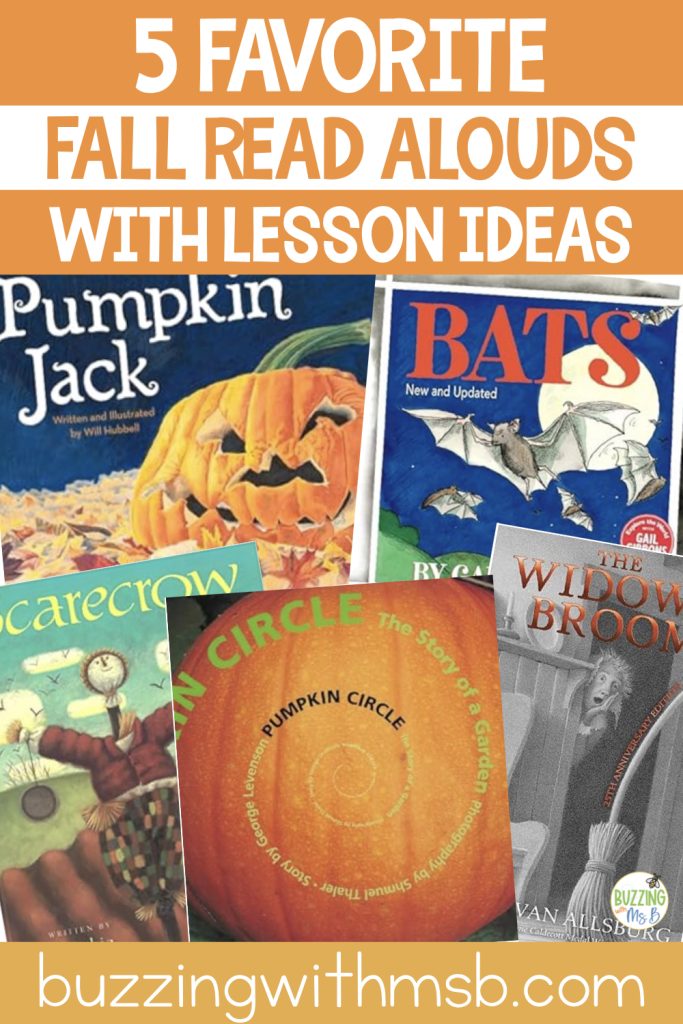
1. The Widow’s Broom – Predictions & Inferences

The Widow’s Broom by Chris Van Allsburg is about a lonely widow who finds a magical broom left by a witch, which helps her make new friends and protect herself from some mean neighbors. This story gives you the perfect opportunity to teach your kids about making predictions and inferences. Stop at various points in the story and model thinking aloud and give your kids a chance to do the same.

I like to stop right before the end, when it’s revealed that the widow painted the broom to scare her neighbors. We gather clues about the broom since the farmers burned it, and can usually infer that the widow gave the farmers an ordinary broom instead of her magical broom!

I’ve created a great resource to introduce and provide practice for making inferences available on TPT or my website. It includes a picture card group activity that teaches kids that good inferences include multiple “clues”, along with a mentor text list and graphic organizers for independent work. There are also differentiated task cards to promote independent thinking and get your kids making inferences all on their own!
2. Pumpkin Circle – Vocabulary & Sequencing

Pumpkin Circle by George Levenson is a book that shows how a tiny pumpkin seed grows into a big pumpkin, teaching kids about the life cycle of a pumpkin in a fun and simple way. This book is perfect for focusing on fall-related vocabulary and sequencing.
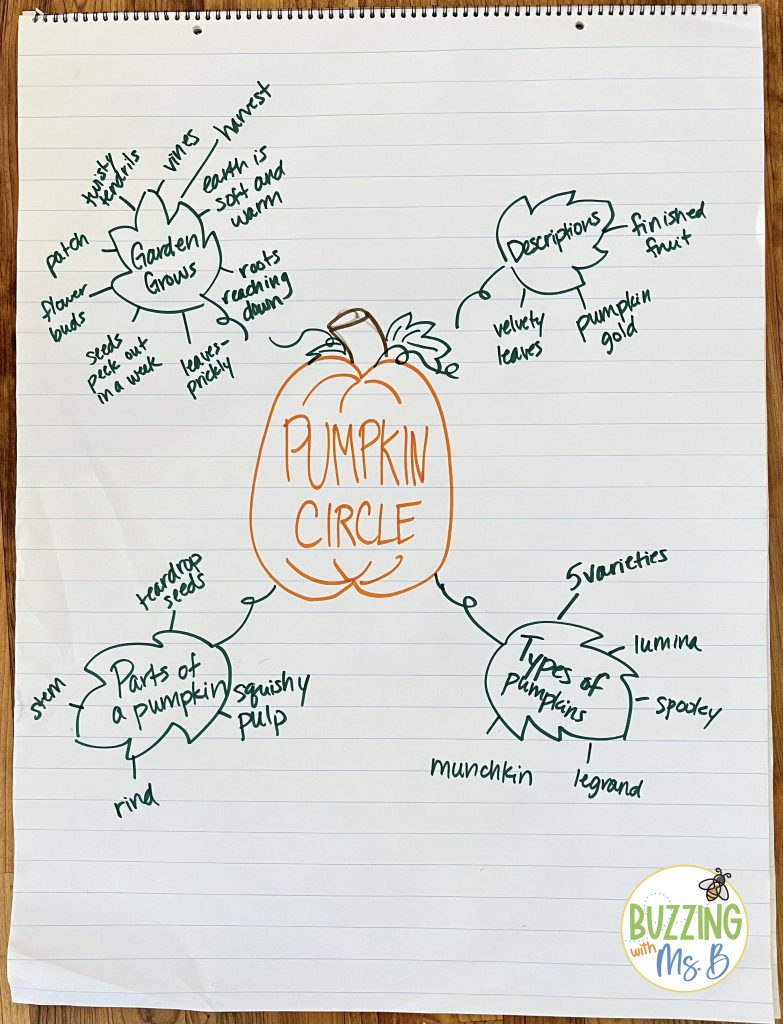
To teach vocabulary with Pumpkin Circle, I love to make a semantic map! As we read, we notice new words and add them, making connections between words that make sense to the kids, and categorizing them. This helps them move words into their long-term memories!
Sequencing is great for teaching kids to retell stories in more detail and to improve their summarizing skills!

One way to do this is to record the main events of the story, or in this case, the stages of the pumpkin life cycle! Record each stage on post-its or pre-prepare on cards – depending on the level of your kids. After reading, ask your kids to help order the stages and display them on an anchor chart. Then you can practice retelling the life cycle of a pumpkin verbally or record the process using the anchor chart as a visual reminder.

My Sequencing Events of a Story Reading Comprehension resource includes everything you need to introduce and practice sequencing and can be used with any book! It includes teacher tips for using the gradual release model, a mentor text list, task cards, response sheets, and much more. Find it on TPT or my website.
3. Scarecrow – Visualizing
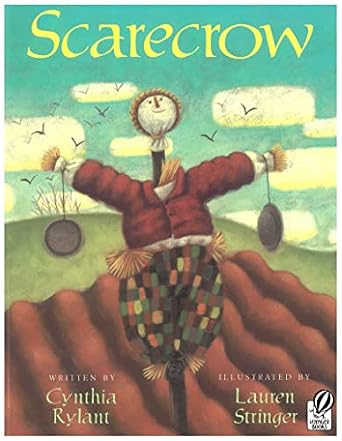
Scarecrow by Cynthia Rylant is a gentle story about a scarecrow who stands quietly in a field, watching over everything around him, and finding joy in the beauty of nature. This book lends itself well to exploring visualization with your kids as the story invites readers to take on the emotions of the scarecrow and see the world from its perspective.
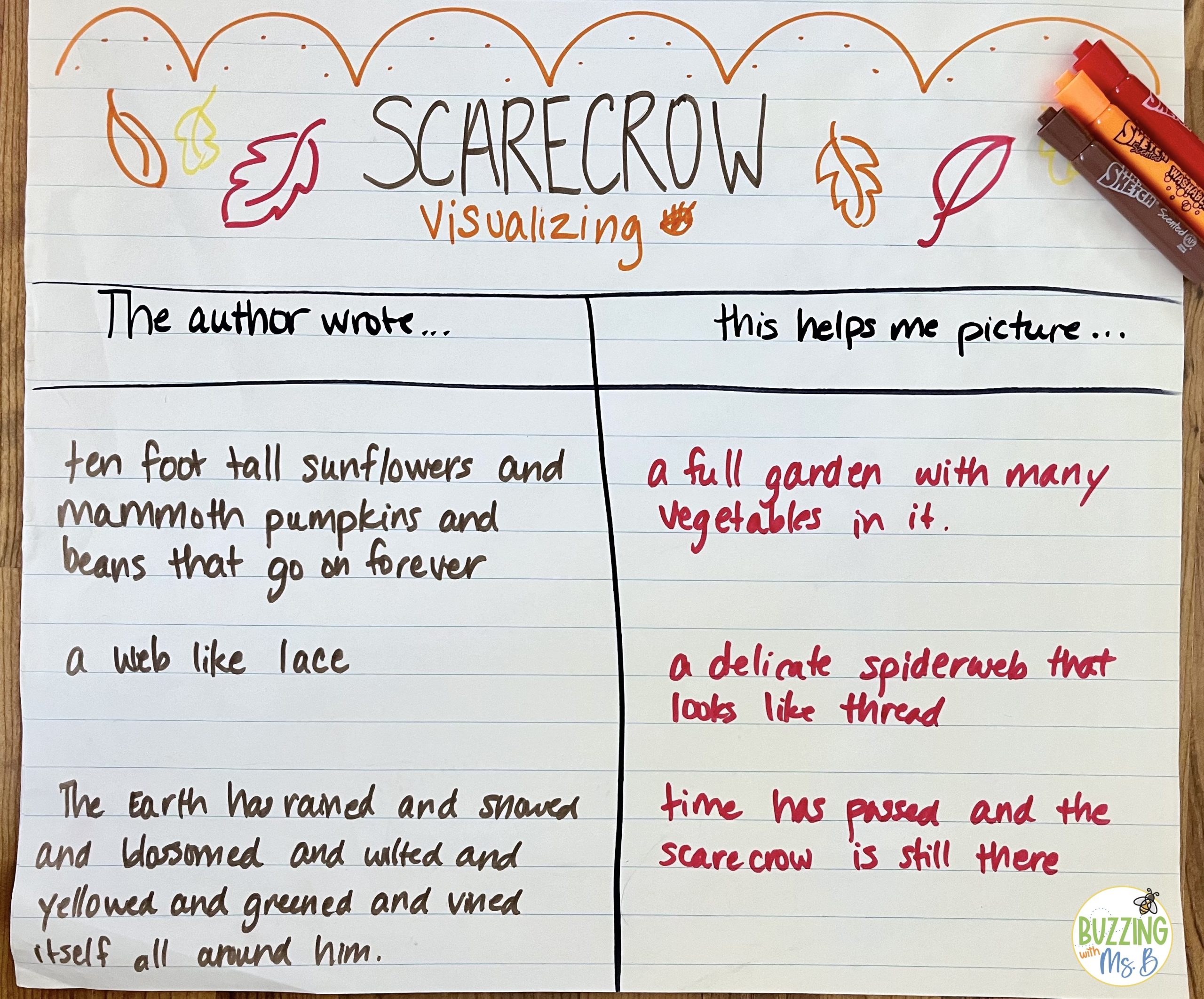
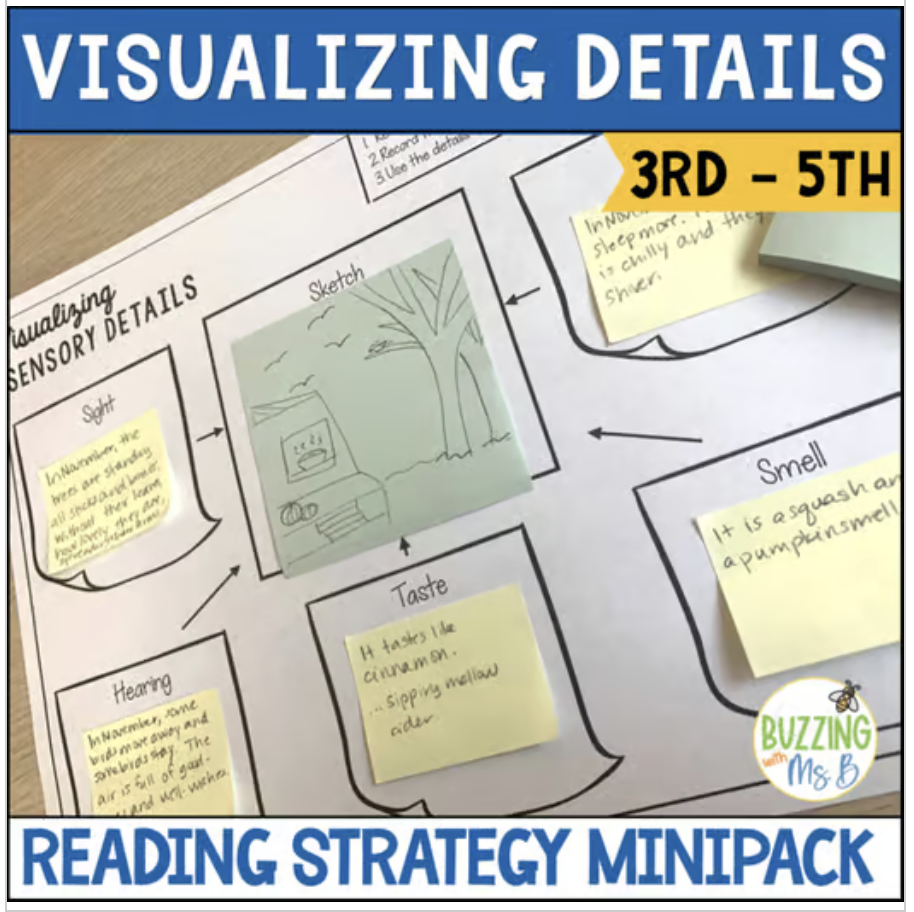
A great way to engage your kids in visualizing is to invoke their senses! Pause at particular points of the story and create an anchor chart with space for recording what the author wrote and what image those words help you picture. Read the passage several times focusing on each sense and record what your kids suggest. This exercise brings attention to adjectives and figurative language used within stories and the effect they have on the reader. Also, a great way to encourage your kids to use visualization in the planning and writing stages of their own writing!
I’ve put together a number of visualization tasks, activities, and printables to help you engage your kids in this multi-sensory strategy. It’s available on TPT or my website.
4. Pumpkin Jack – Transitions in Writing

Pumpkin Jack by Will Hubbell tells the story of a boy named Tim, who carves a pumpkin for Halloween and then watches it slowly decompose in his garden, eventually turning into a new pumpkin plant, teaching him about the life cycle of pumpkins. This story involves the passing of time and is great for teaching transitions in writing. Asking your kids to focus on transitional phrases, helps with their comprehension and can improve transitions in their own writing.
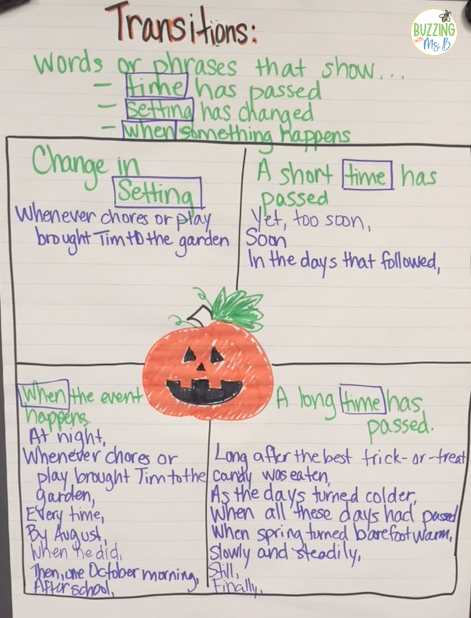
One way to approach this is to create an anchor chart that focuses on words or phrases that describe a change in setting, time that has passed, or when an event happens. As you read through the story, record examples of each. After multiple opportunities to practice this, your kids can then try editing passages of text to include transitional phases – either pre-prepared texts or their own writing. For more on how to teach this, I’ve created a free resource you can download at the bottom of this page – Transition Words for Narrative Writing with a Mentor Text – Pumpkin Jack.

5. Bats – Context Clues & Vocabulary

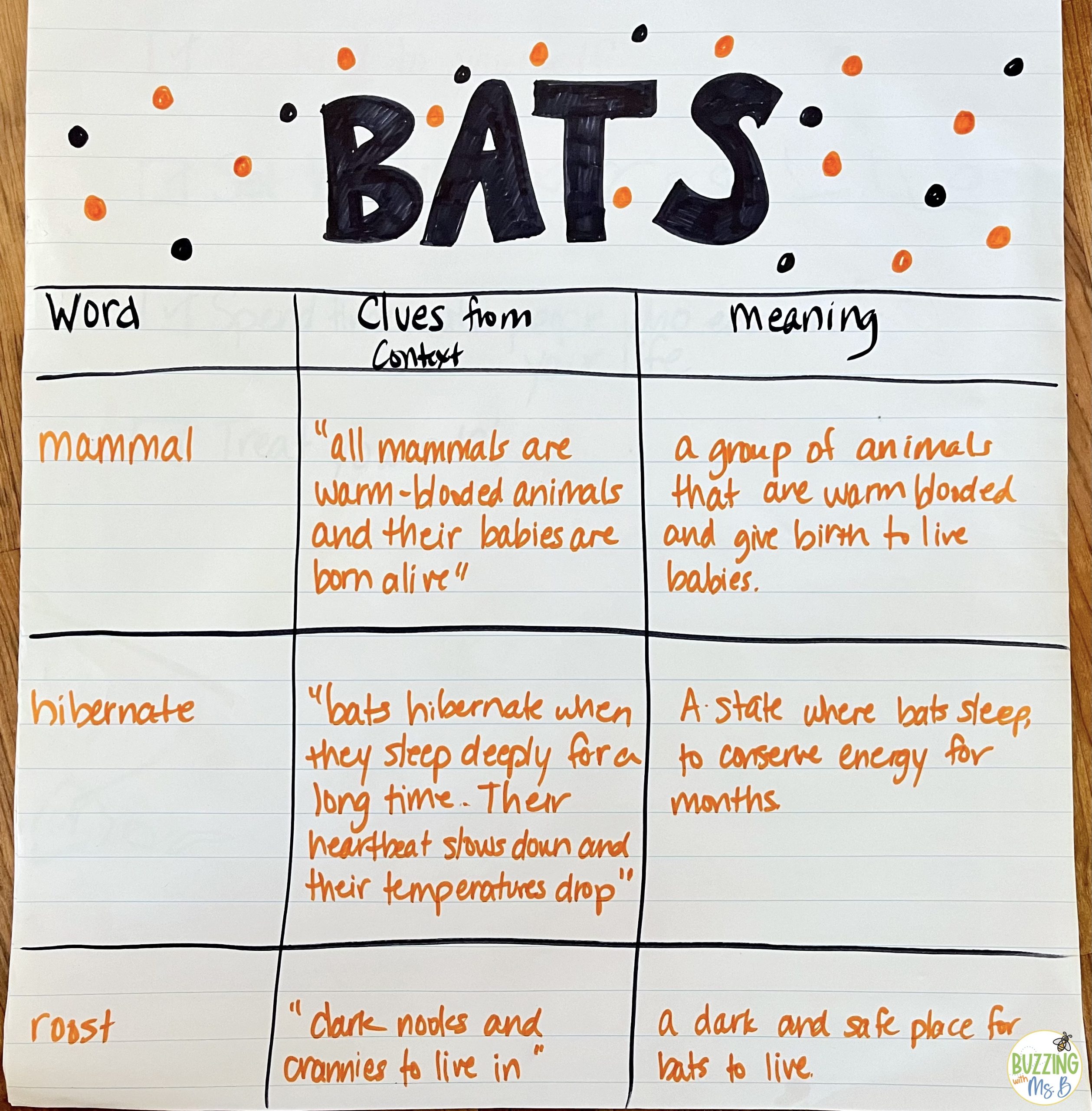
Bats by Gail Gibbons is a nonfiction book that teaches kids about different kinds of bats, their habits, where they live, and why they are important to our world. This book is perfect for exploring vocabulary and context clues including making inferences about the meaning of words, suggesting synonyms and antonyms, and providing opportunities to use new vocabulary in a sentence.
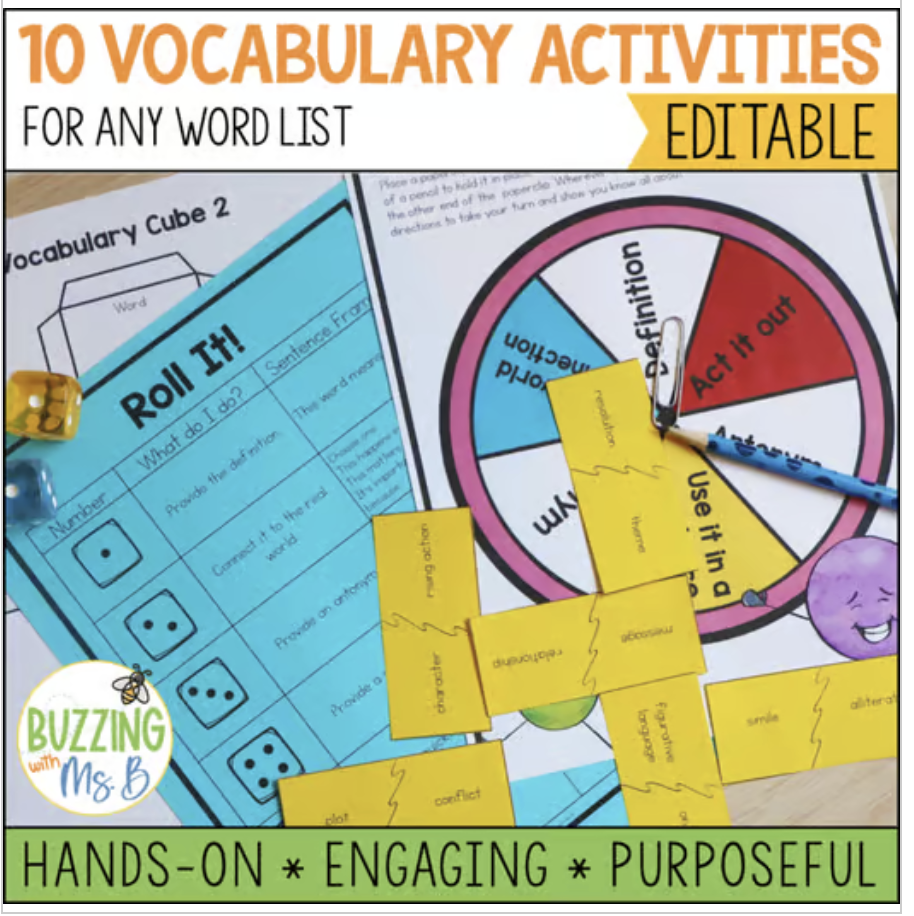
I’ve created a set of vocabulary activities that can be used with any book or word list! The resource includes a detailed teacher guide and ten vocab activities including word sorts, bingo, dominoes, mix and match, and more. For more info, find it on TPT or my website.
Grab the books and ready-to-go activities to use with these fall read aloud books!
Here are the links to purchase the book and all of the resources mentioned in this post:
1. The Widow’s Broom by Chris Van Allsburg – Buy on Amazon
Making Inferences Reading Passage and Activities – Buzzing with Ms. B
Making Inferences Reading Comprehension Passage + Anchor Chart for Inferencing
2. Pumpkin Circle by George Levenson – Buy on Amazon
Sequencing Events of a Story Reading Comprehension Passage and Activities
Sequencing Events of a Story Reading Comprehension Lessons – Buzzing with Ms. B
3. Scarecrow by Cynthia Rylant – Buy on Amazon
Visualizing Reading Comprehension Passage and Activities for Sensory Details
Visualizing Reading Comprehension Unit for Sensory Details – Buzzing with Ms. B
4. Pumpkin Jack by Will Hubbell – Buy on Amazon
Transition Words for Narrative Writing with a Mentor Text – Pumpkin Jack
5. Bats by Gail Gibbons – Buy on Amazon
Vocabulary Activities + Strategies for Any Word List with Editable Templates
10 Vocabulary Activities for Any Word List with Editable Templates – Buzzing with Ms. B
**Some links on this page are affiliate links**


