
Drama Reading Test Prep: Strategies & Activities That Work!
Reading tests can be tricky for students, but when you throw in a drama passage? Oh boy!
Many kids aren’t as familiar with the structure of a play as they are with fiction and nonfiction, so they need a game plan.
Here are some tried-and-true strategies to help your students tackle drama texts with confidence—and maybe even have a little fun along the way!

1. Make a Plan of Attack!
Before students dive into a drama passage, they need to be able to recognize the genre and adjust their reading strategy accordingly – especially when tackling a drama reading test. Using a Testing Strategies Chart, have them identify the passage as a play and jot down their plan.
This might include:
✅ Checking for stage directions
✅ Noting who is speaking and when
✅ Thinking about the setting and how it changes
✅ Watching for character emotions and relationships
When students have a strategy in place, they feel more in control of the passage—and the test!

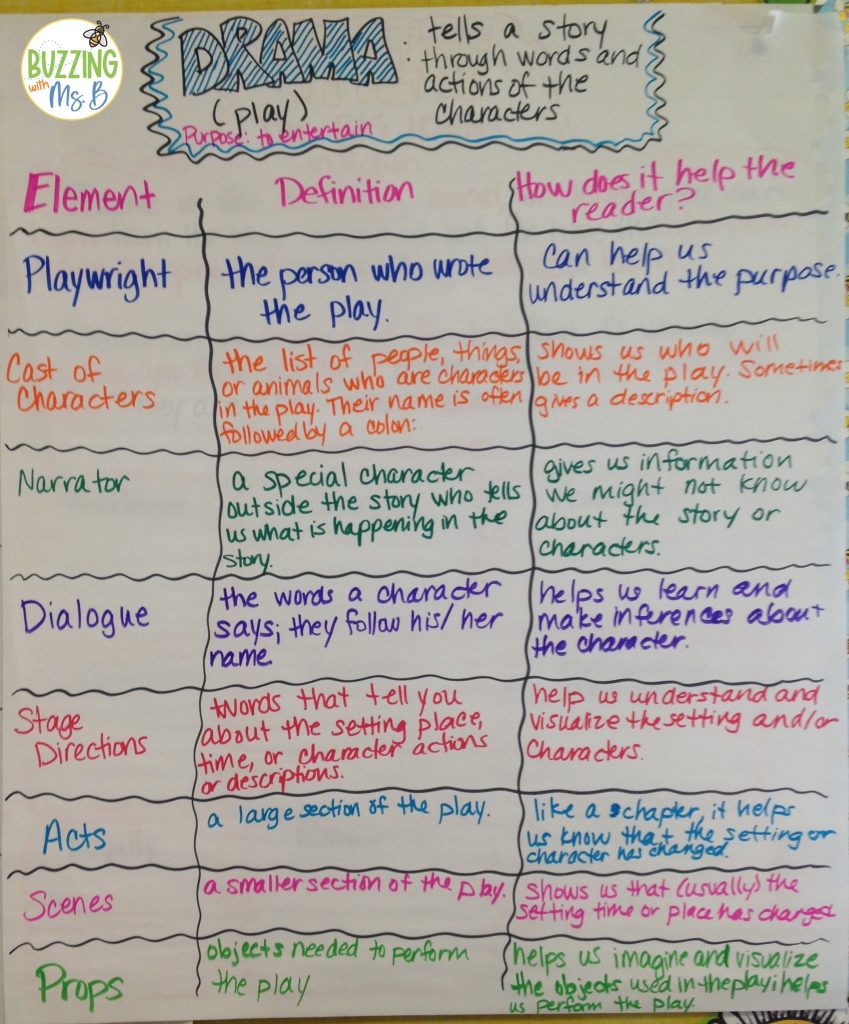
2. Sketch the Stage Directions
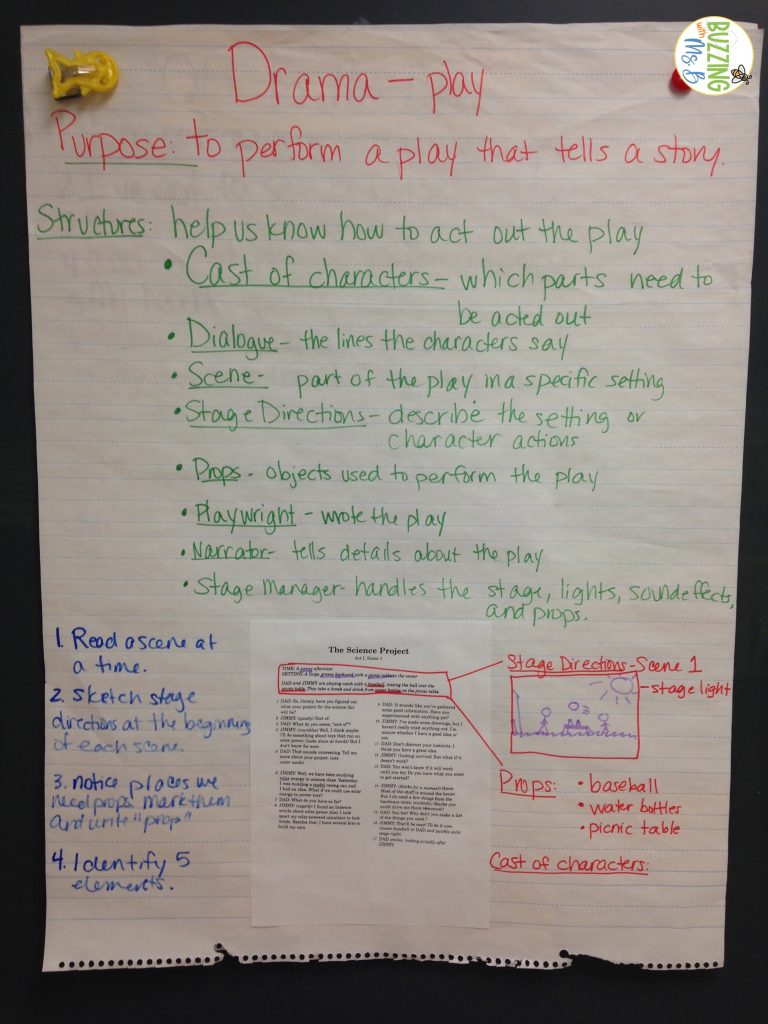
Stage directions are GOLD when it comes to understanding a play! Before students even begin reading the dialogue, have them sketch out the stage directions at the beginning of each scene.
– What does the setting look like?
– Where are the characters positioned?
– Are there any key props mentioned?
This quick activity helps students visualize what’s happening in the play before they even get into the conversation. Bonus: It’s fun and keeps them engaged!

Here’s an example of what this looks like with a fourth grade drama:
3. Speedy Drama Feature Hunt!
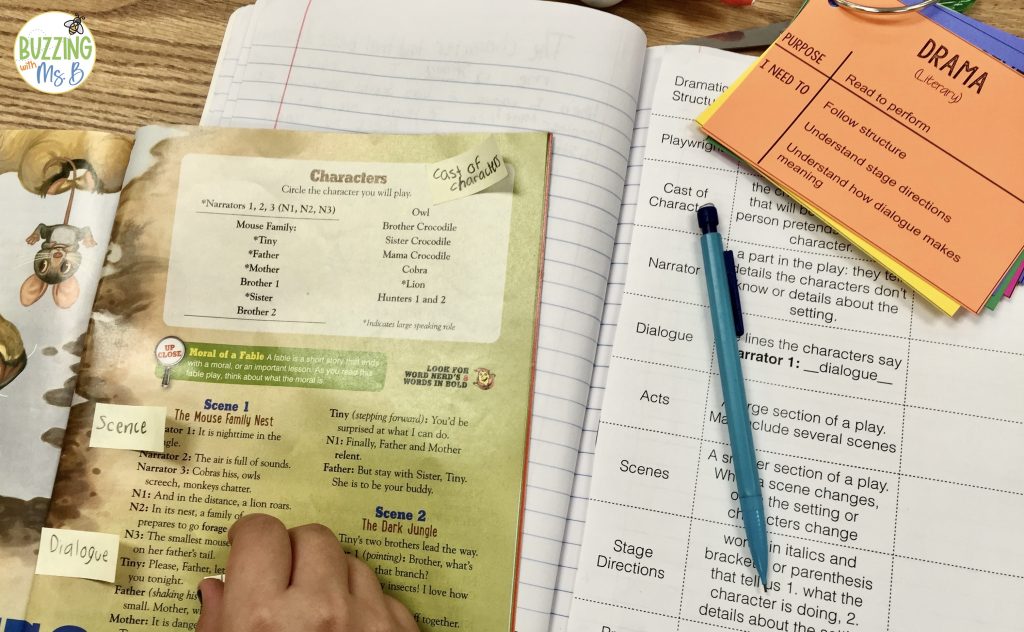
Plays have unique text features that students need to recognize—like character names, stage directions (often in italics), and scene changes. Turn this into a fast-paced sticky note challenge!
1. Give students small sticky notes.
2. Set a timer (1-2 minutes).
3. Have them hunt for different drama features and mark them!
After time’s up, discuss why each feature is important and how it helps comprehension. This activity gets kids scanning the text quickly, which is a great skill for testing!
4. The “Big 5” Summary Strategy
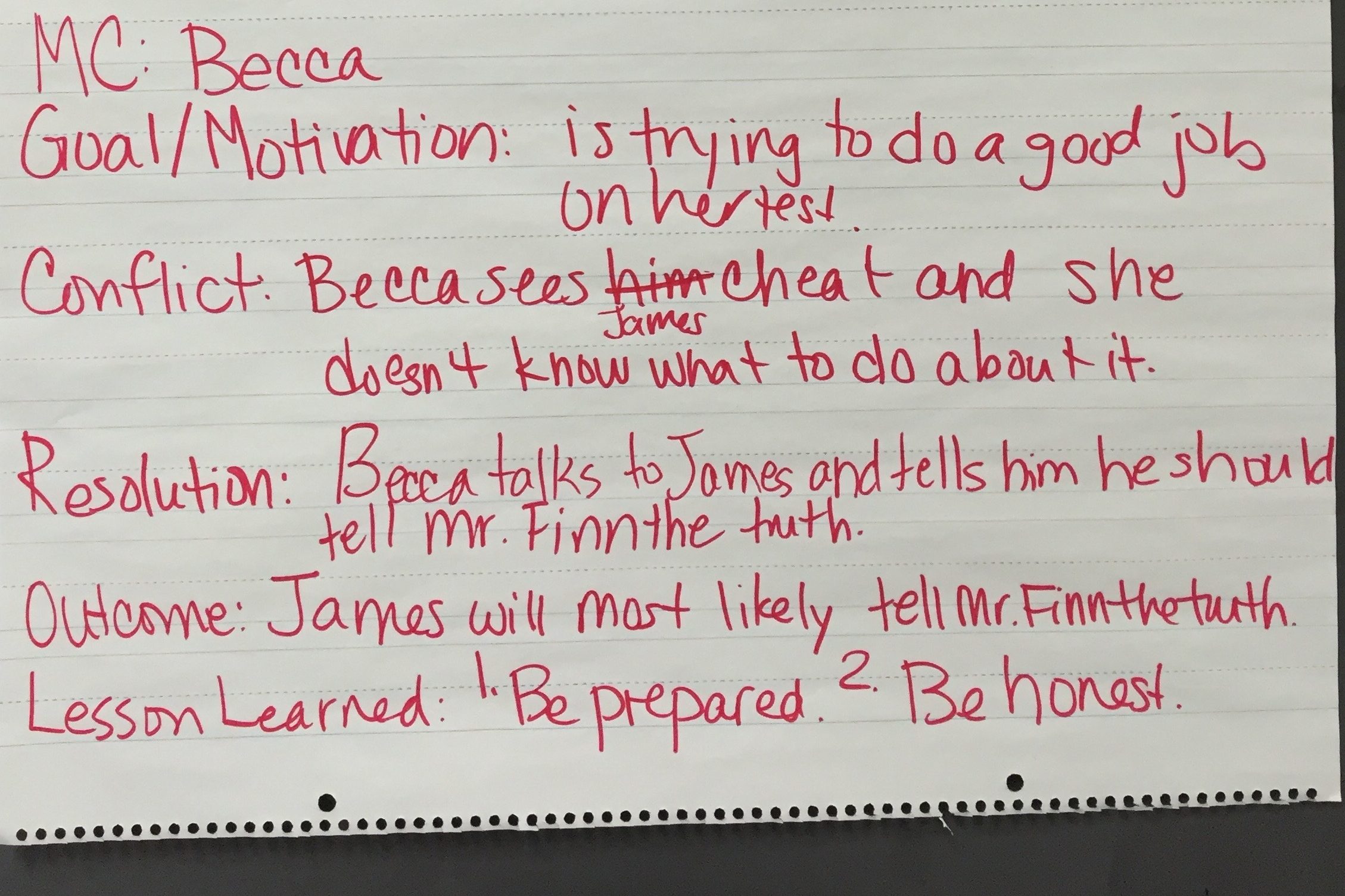
Instead of summarizing every little detail, have students focus on five key elements:
- Characters – Who is in the play, and what roles do they have?
- Goal/Motivation – What does each main character want? What drives them?
- Problem/Conflict – What challenge or obstacle do the characters face?
- Solution/Resolution – How is the conflict resolved?
- Lesson/Life Message – What theme or lesson can be learned from the play?
A simple chart or five-box graphic organizer works wonders here. Having a structured way to summarize keeps students from getting overwhelmed!
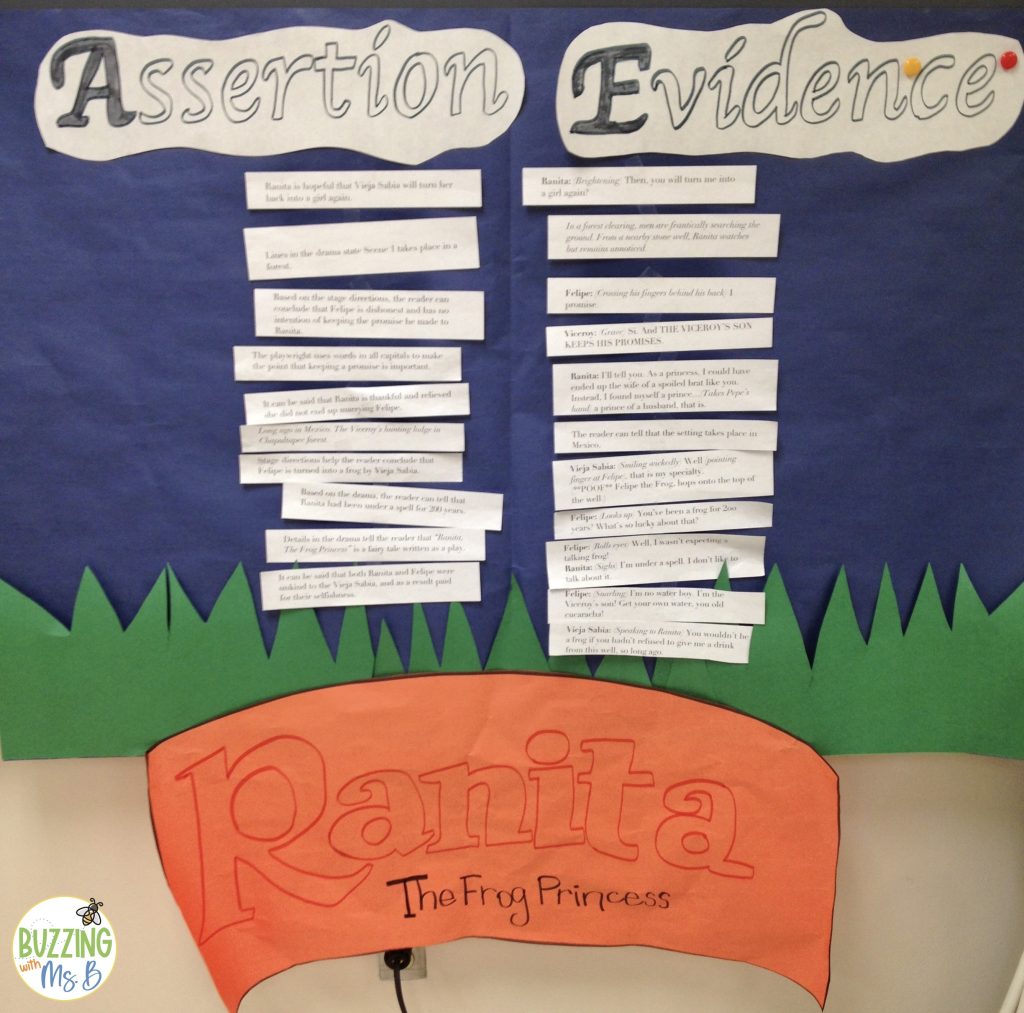
5. Evidence & Inference Mix & Match
Inference questions can be tough, but this hands-on game makes them easier!
- Write pieces of evidence (direct lines from the play) on half the index cards.
- Write inferences that could be made from those lines on the other half.
- Pass out one card per student.
- Have students mix around the room to find their match!
- Once paired up, students share out why their evidence supports their inference.
This activity gets kids thinking about how to justify their answers—a key skill on reading tests!
6. Code the Questions
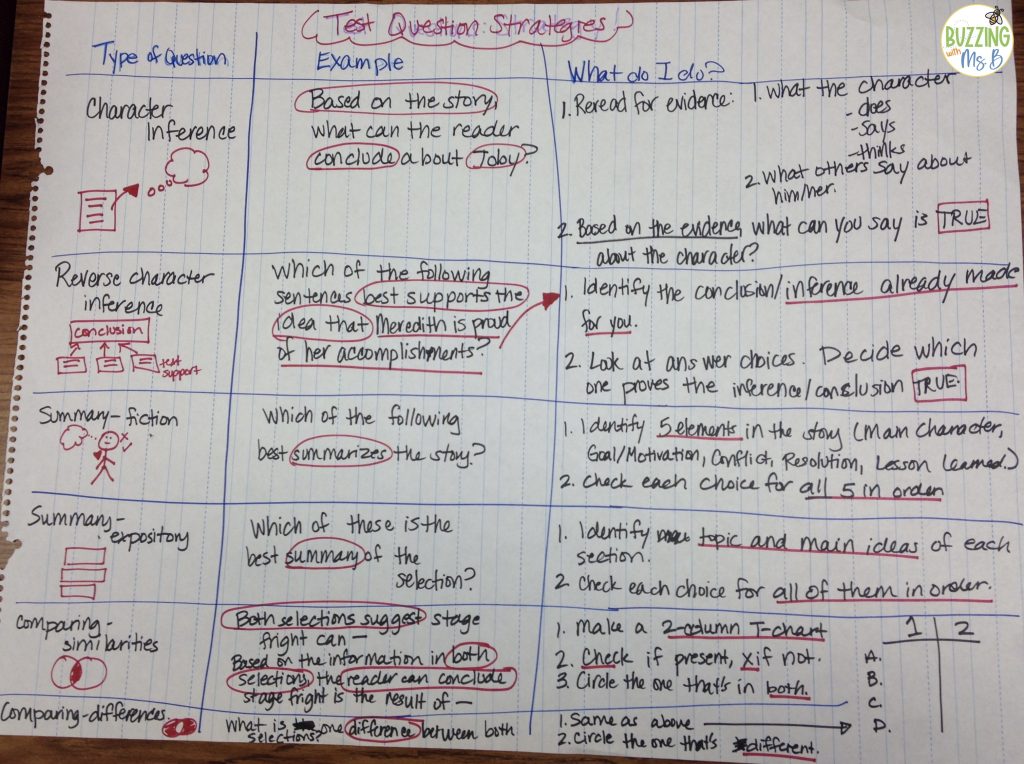
Students need to decode test questions to figure out exactly what’s being asked. Have them underline keywords and identify:
📌 Is it asking about the elements of drama?
📌 Is it asking about stage directions?
📌 Is it asking for an inference?
📌 Does it involve predicting (like from a picture)?
Using color coding (highlighting different question types in different colors) can also help students quickly recognize patterns in test questions.
These strategies will give your students a solid game plan for tackling drama passages in their next drama reading test—and hopefully, make test prep a little less painful!
Test Prep Resources, Ready to Go!
Looking for resources to help prepare your students for fiction reading tests? I’ve got you covered!


