Story Elements Pocket Chart: A Simple Fiction Summary Activity
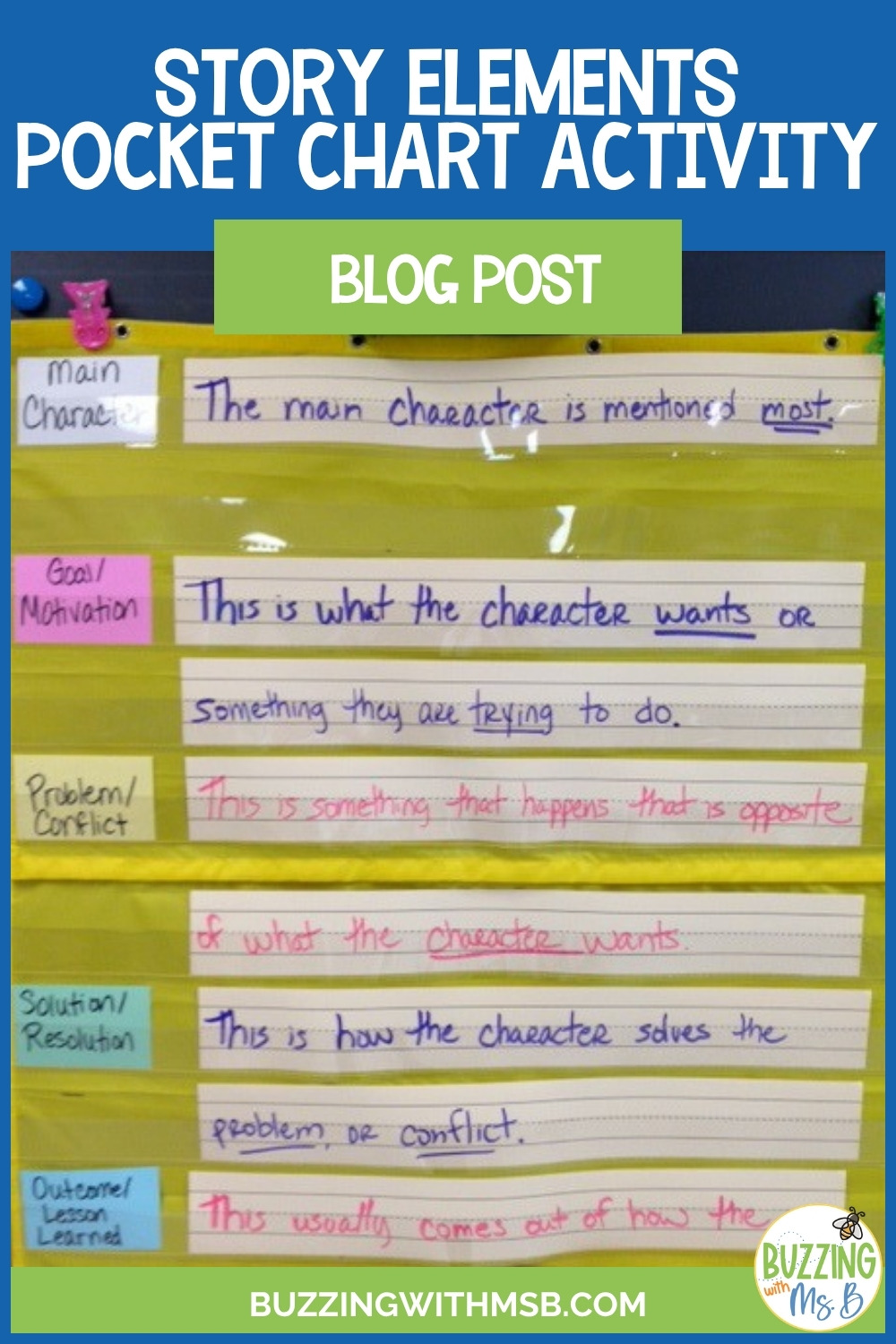
To help kids process a text, now that they had some of the language they needed to think about fiction, we used a pocket chart.
Last year was kind of the year of the pocket chart. I found so many more uses for it than I ever used in my actual classroom!
Story Elements Pocket Chart: Five Things Kids Identify in Fiction
We started out with the five basic things we wanted kids to identify in order to basically comprehend a fictional piece (this included literary nonfiction and drama, as well!)

Predict, Revise and Summarize with Sentence Strips
First, we had the kids make predictions about each element on a sentence strip. Then we stuck them in the pockets!
After that, as we read, we re-read our prediction strips and altered them, if necessary.
At the end, we taped them all together and had a nice, brief summary of the fiction story!
Simple Story Elements Graphic Organizer
We also used this simple (and goofy) graphic organizer for kids to fill out while reading.

It was basic enough that kids were able to recreate it as they read a fictional piece! And you know what, they actually did use it on their Test. My babies.
Moving On to Fiction Text Structure
We also use Freytag’s Pyramid for fiction, but we needed our kids to have a simple anchor to hold on to before we complicated things too much.
How do you support fiction text structure?
When your class is ready for more after the story elements pocket chart, read about fun and effective ways to teach narrative structure and summarizing in fiction.
Get the Story Elements Anchor Chart and Graphic Organizer
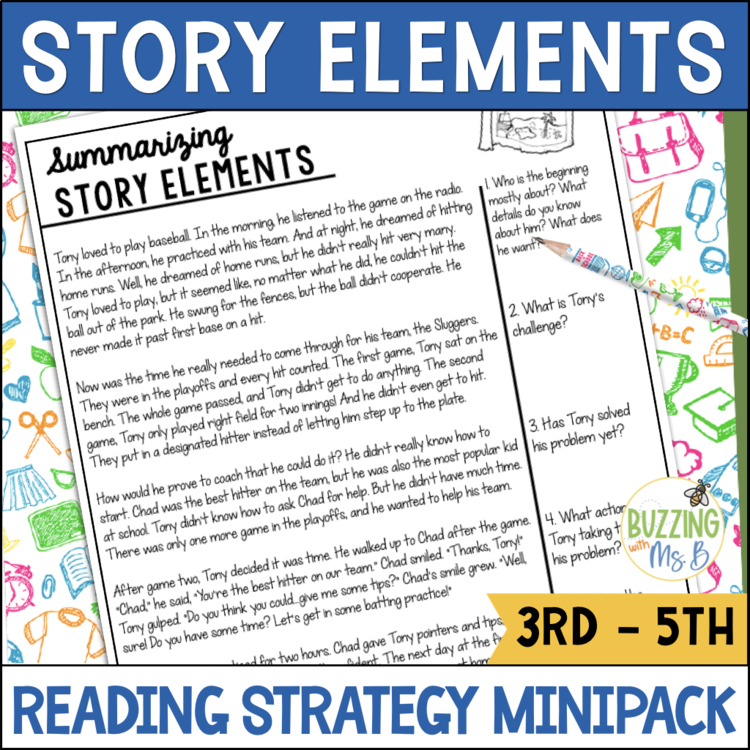
Want this ready to go? Grab the Fiction Story Elements Anchor Chart, Organizer, Guided Passage & Activities in my shop.