
In November Visualizing and Sensory Details Lessons
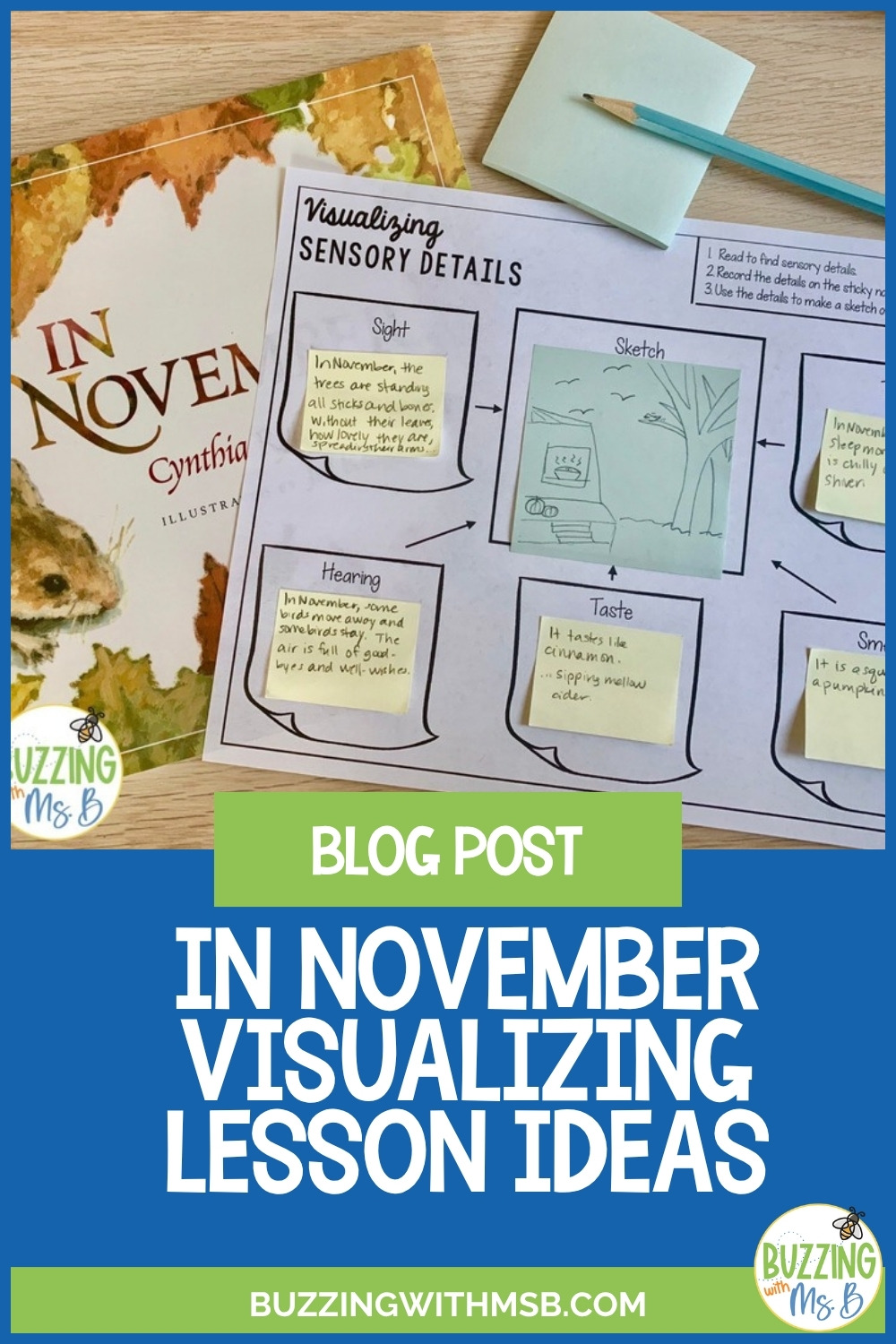
This last week of November, I am going to start something new in writing – we are going to work on poetry! To lay a foundation for the kinds of language kids need to be using for poetry, we are going to read In November by Cynthia Rylant.

These In November visualizing and sensory details lessons take students from noticing Rylant’s imagery as readers to using sensory details in their own writing.
In November Visualizing: Sorting Sensory Imagery
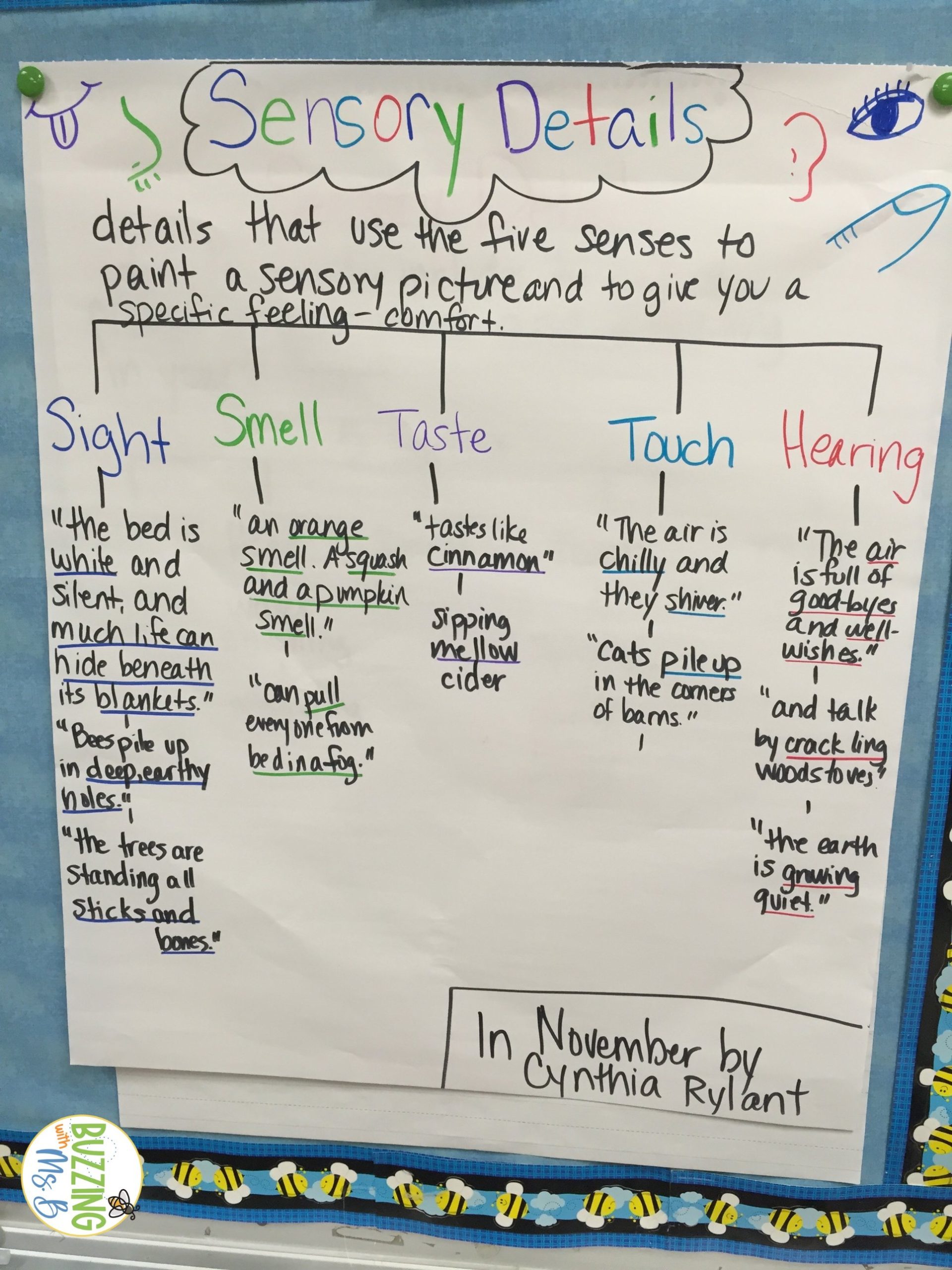
I have the text typed up and I’m going to give a copy of the text to each kid. I don’t want them to see the pictures yet. Then we’re going to sort some of the lines of imagery from the book onto this chart.

More In November Visualizing and Sensory Details Activities
In November is a mentor text you can come back to again and again. Here are more ways to use it to teach visualizing and sensory details, from collecting the details in Rylant’s own words to brainstorming our own.
First, we collect sensory details from In November on an anchor chart, sorting Rylant’s lines by sight, smell, taste, touch and hearing.
Then readers record the sensory details they find in the book on sticky notes and use them to visualize, sketching the scene on a visualizing sensory details organizer.
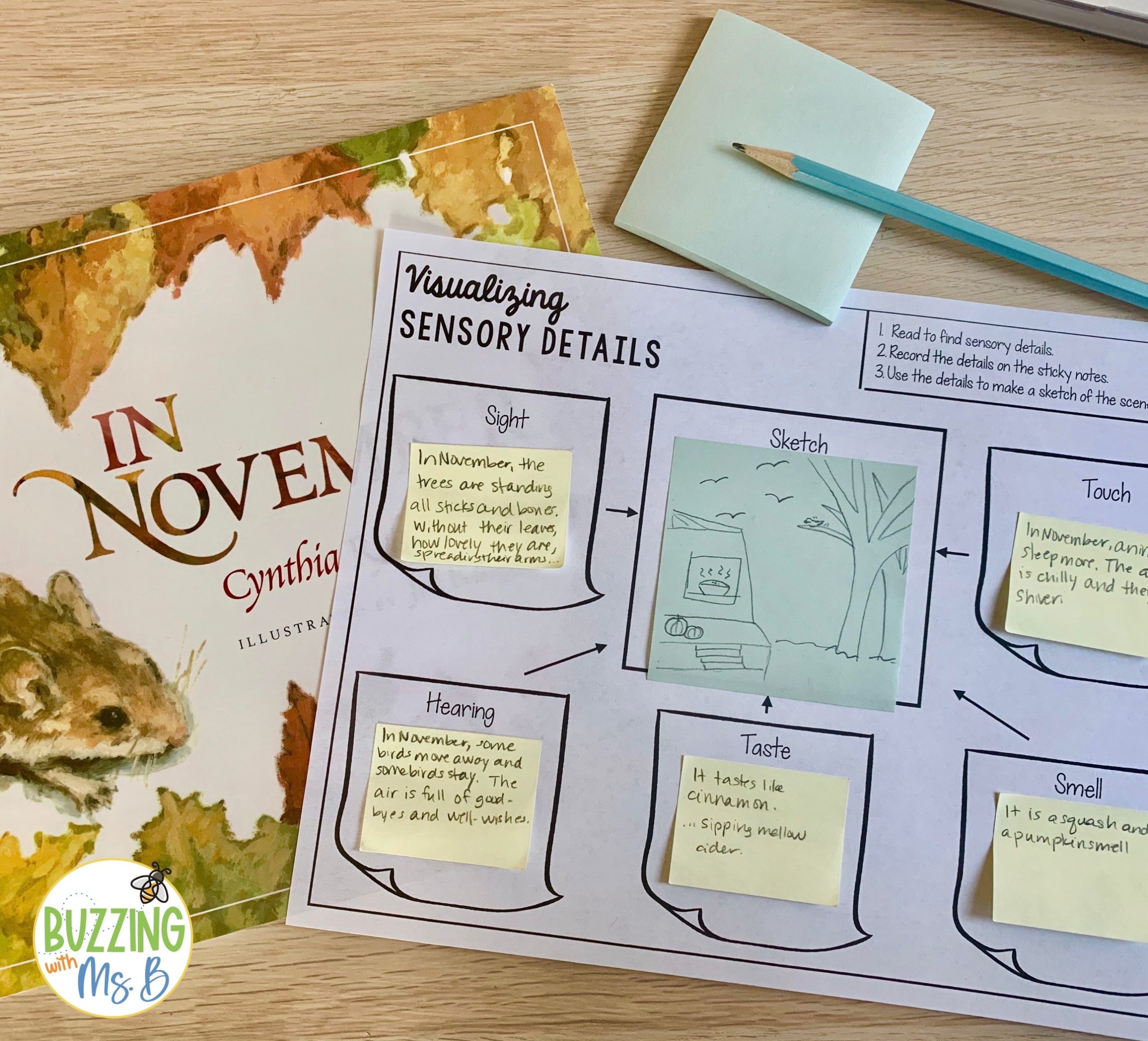
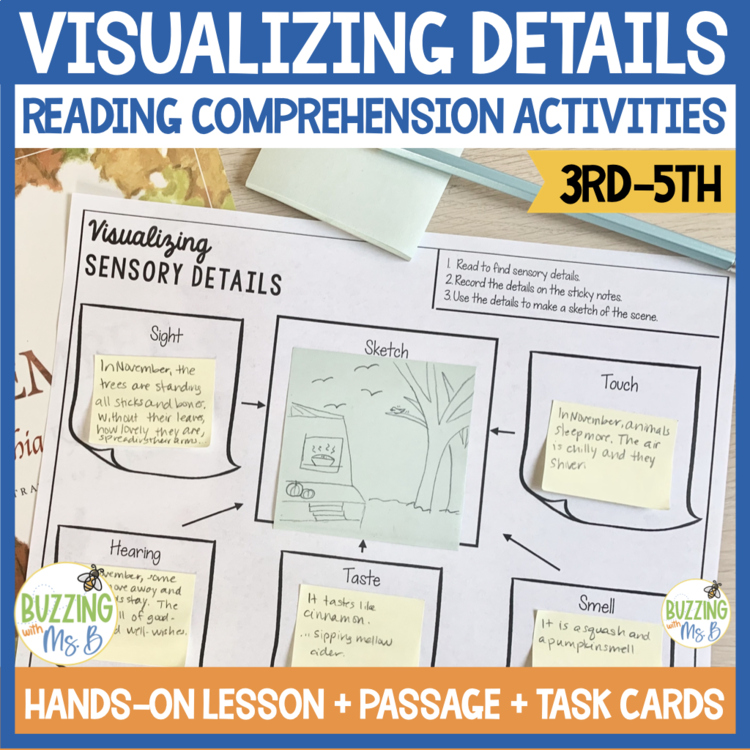
To help readers visualize with sensory details in any text, try my Visualizing Sensory Details reading comprehension unit.
For more mentor texts and an anchor chart, read about visualizing during reading.
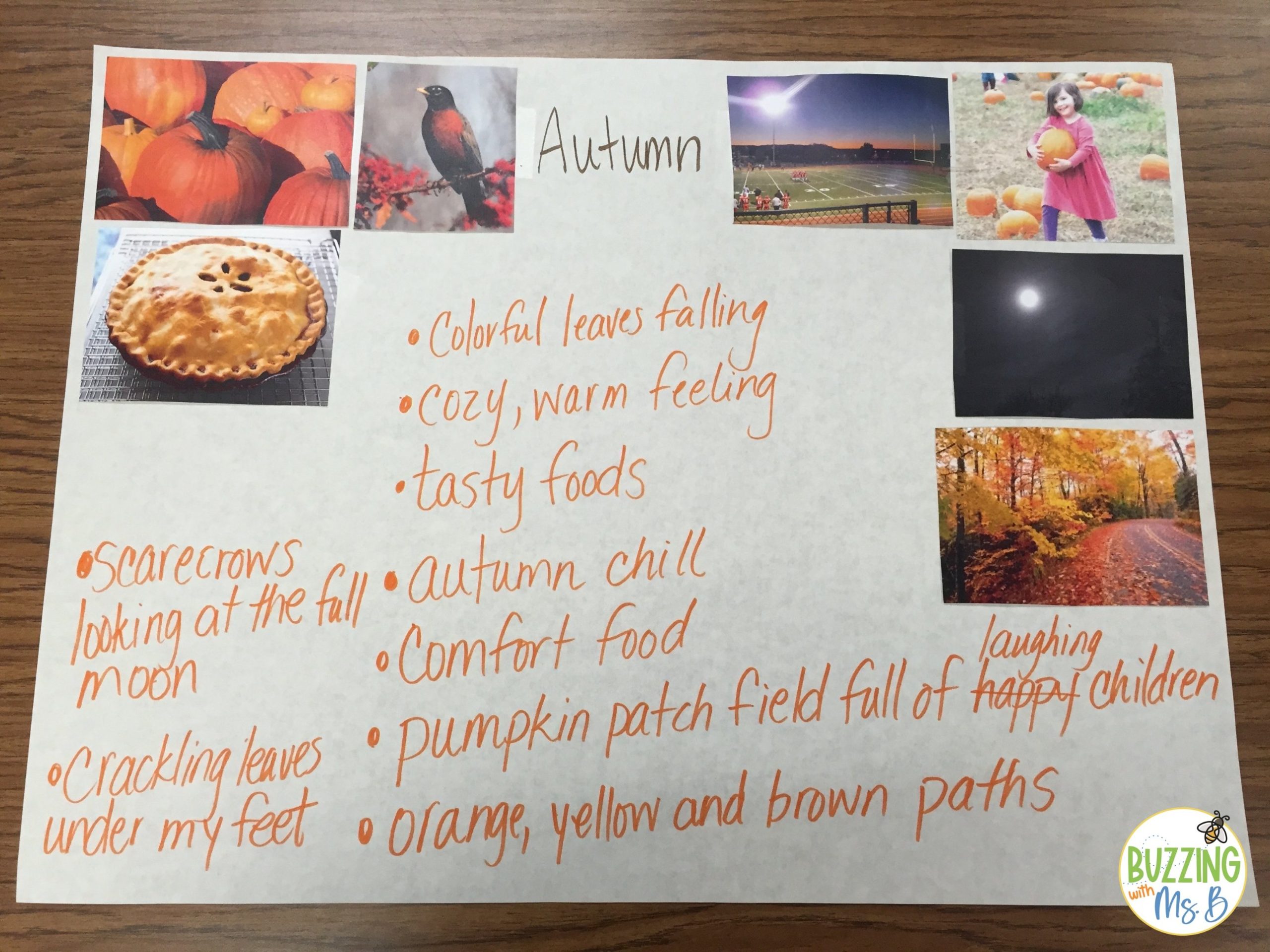
Before writing, we brainstorm sensory details about the season. On this fall chart, we sorted our ideas by the five senses around photos of fall favorites.
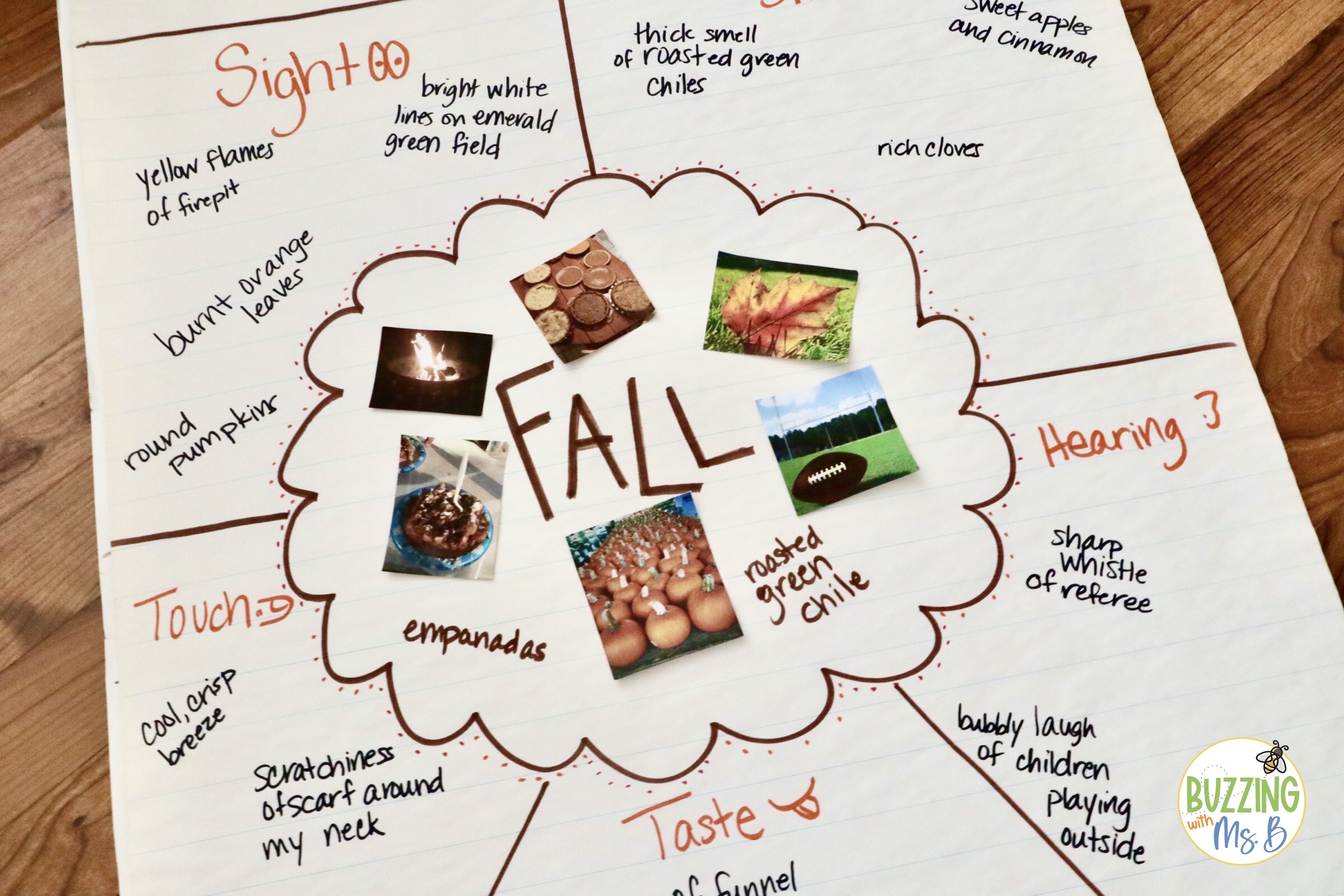
Photos are a great way to spark ideas, too. Students used these autumn pictures to brainstorm details like crackling leaves under their feet and a pumpkin patch field full of laughing children.
Visualizing In November: Illustrating a Class Book
After that, we’re going to illustrate a class book. Each kid will get one page to illustrate using the details from the text and we’ll compile them into a book! This is what some of our pages look like so far.
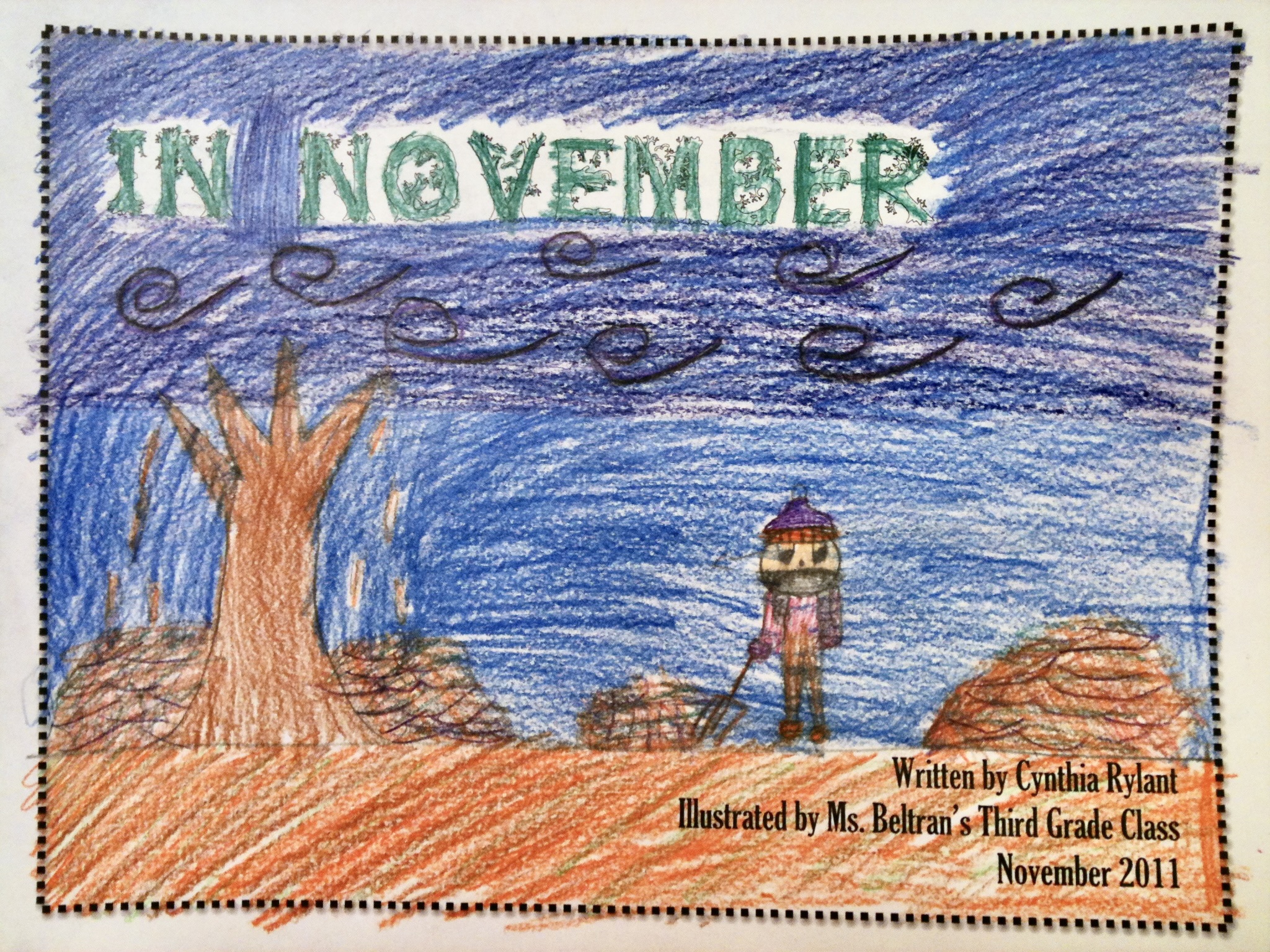
LOL Love the scarf.
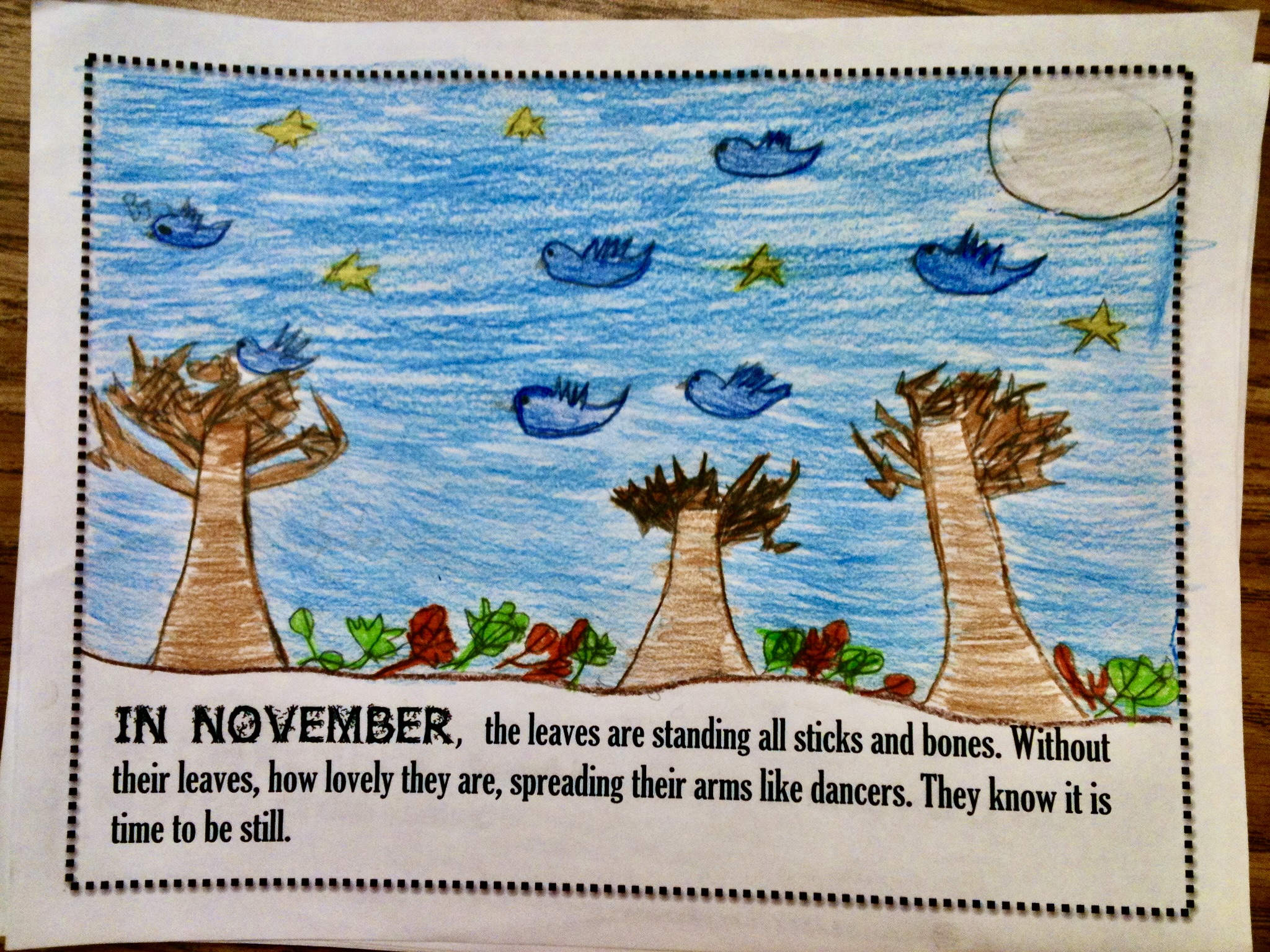
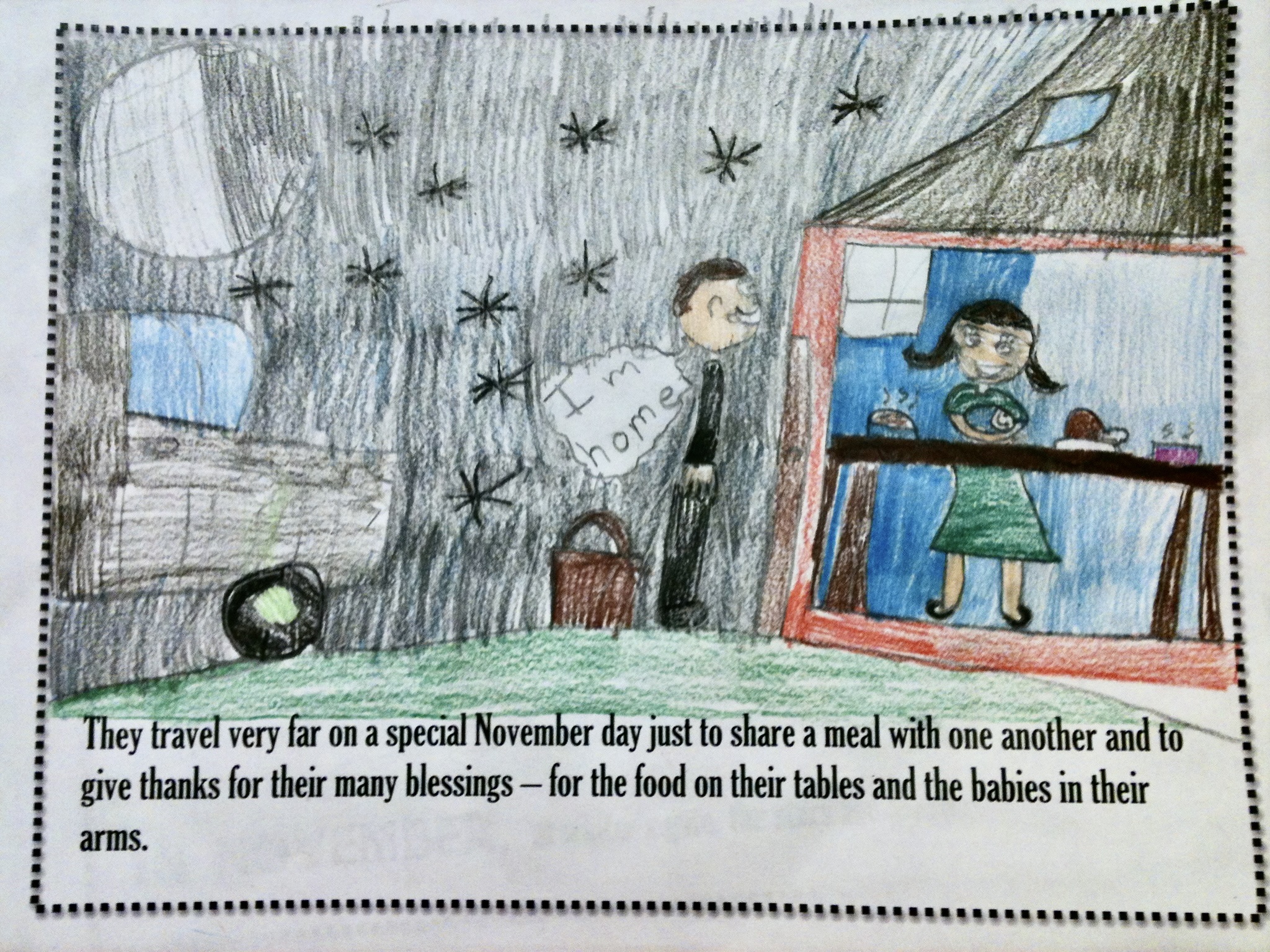
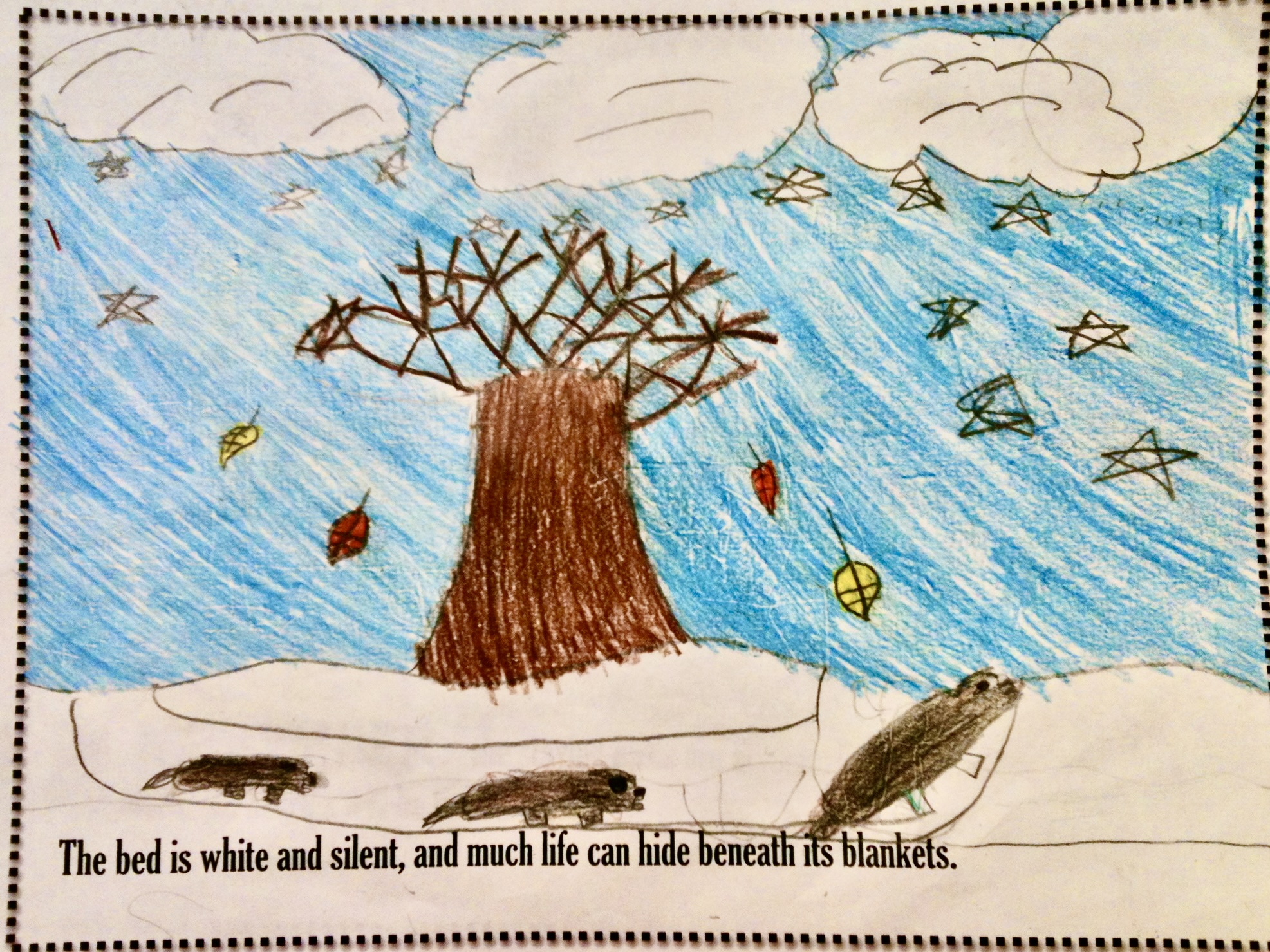
This text prompted a LOOOONG conversation about the meaning of the word ‘beneath’.
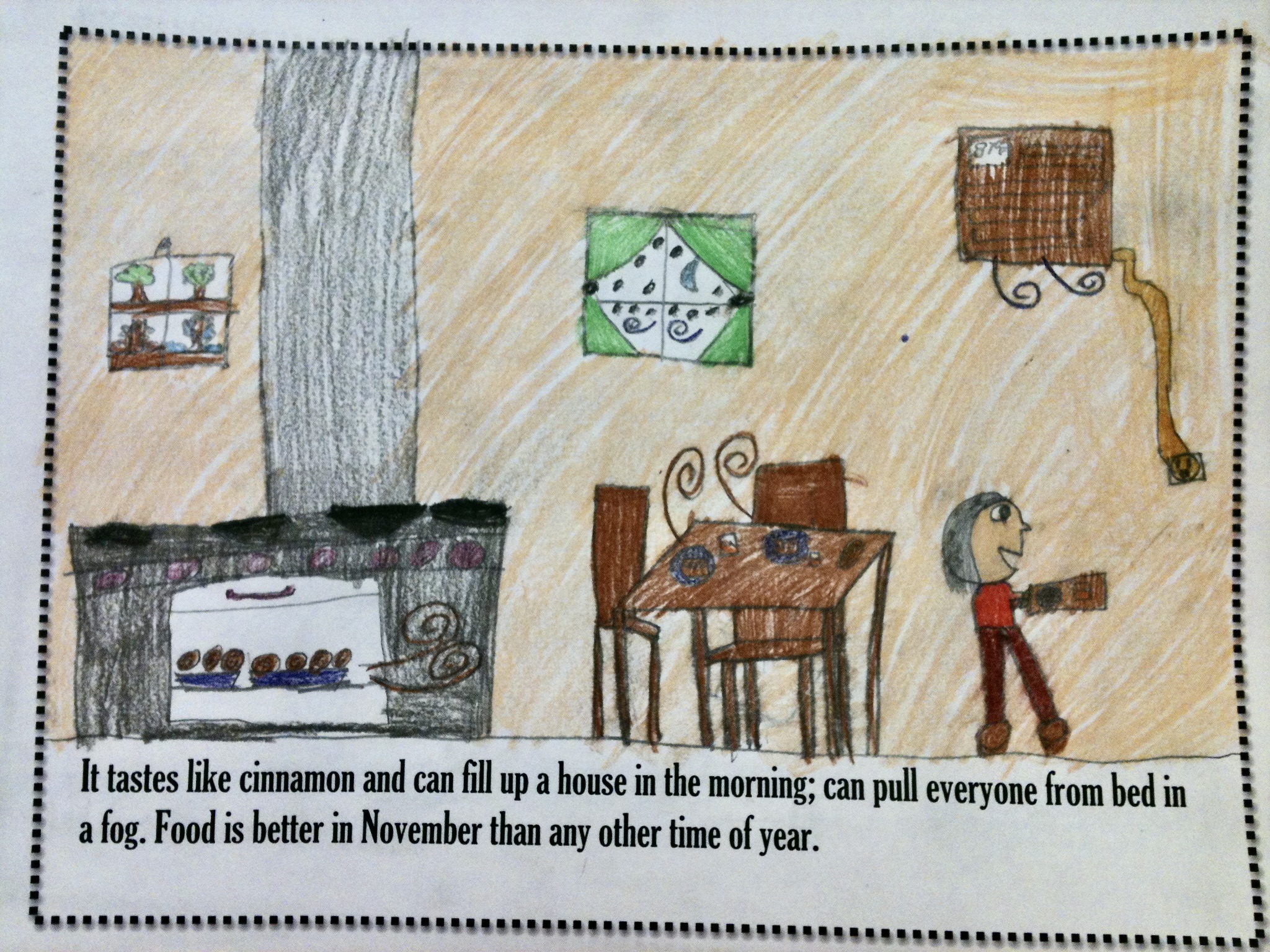
Writing Beautiful Lines with Sensory Details
Next, I want to start working on using the kinds of language we found in In November to help us create some of our own beautiful language. I’m going to divide the class into teams and give each team a picture of a December-like scene. They’re going to record the details they can observe with their five senses on this chart.

Then we’re going to practice using the details to write some beautiful lines, using language like Rylant does in In November.
This is all just prewriting to get the kids thinking about the kinds of language and details they’ll include in their poem.
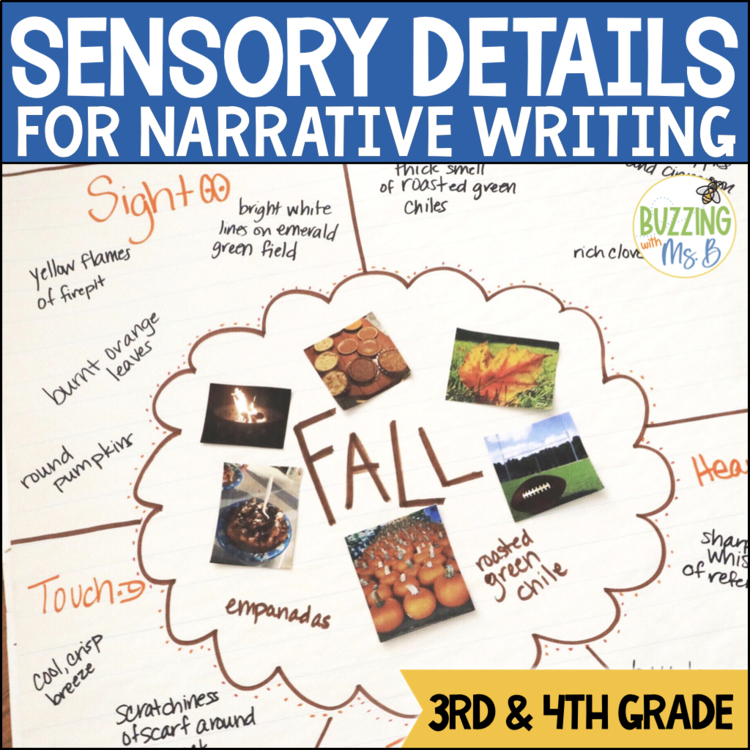
For more ways to teach this skill, read about adding sensory details in narrative writing.
Planning and Publishing In November Poems
Once we’ve practiced writing beautiful lines, we’re going to plan out our poems using this graphic organizer (based on the main ideas from In November, but simplified).

Then, after we revise, and edit, we will publish on some pretty paper.

Get the Visualizing and Sensory Details Lessons
This post includes affiliate links. Nothing extra is charged to you, but I receive a small percentage.


Hey Chrissypoo! That is so cute! I like that the imagery chart covers the five senses. We're focusing on poetry too. There are so many different literary elements to remember for poetry! At least imagery is one they usually understand pretty quickly. Do you have any resources or ideas for personification? We've already covered this but they have a hard time identifying examples on their own, especially when it comes to complex poems with unfamiliar vocabulary.