First 20 Days of Instructional Coaching – Free Checklist
The first few weeks of instructional coaching matter more than most coaches realize.
What you do during those early days shapes:
- how teachers view your role
- the relationships you build
- the systems you put into place
- and the kind of coaching culture you create for the rest of the year
The problem?
Most new coaches feel pressure to do everything immediately.
You want to support teachers, organize systems, plan PD, start coaching cycles, review data, build relationships, and somehow figure out your role all at once.
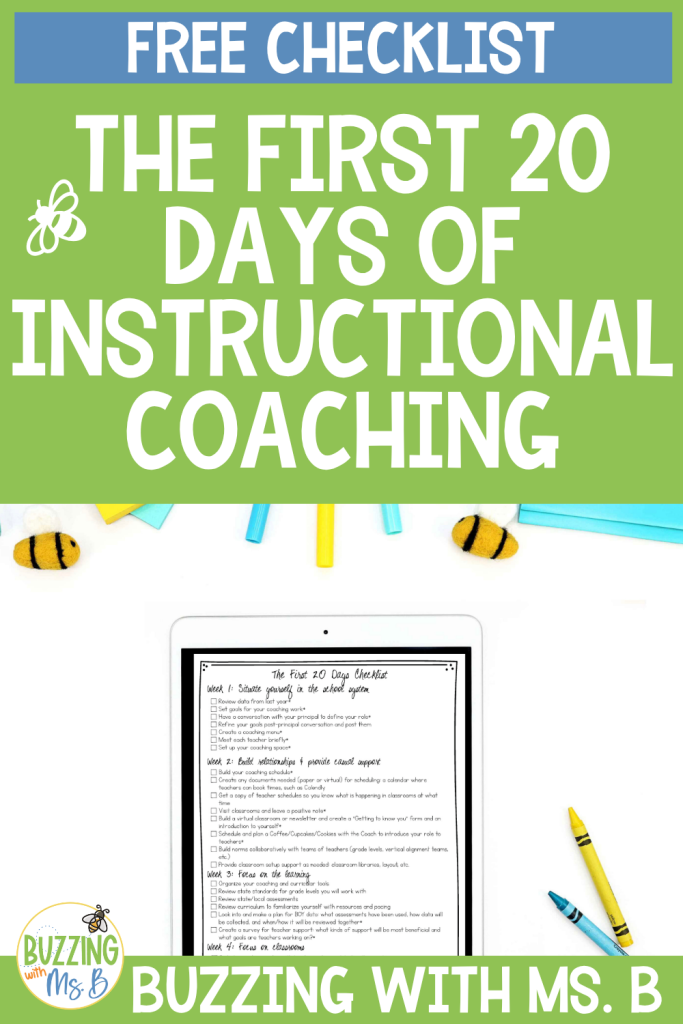
That’s why I created this First 20 Days of Instructional Coaching Checklist — a free roadmap to help instructional coaches focus on the right things first.
Why the First 20 Days Matter
The beginning of the school year sets the tone for everything that follows.
If coaches jump straight into “fixing problems” before building relationships or understanding the school culture, teachers may become hesitant or resistant.
But when coaches take time to:
- listen,
- build trust,
- clarify their role,
- and learn the needs of the campus,
they create a much stronger foundation for meaningful coaching work.
The goal of the first 20 days isn’t to do everything.
It’s to intentionally build the systems and relationships that make coaching sustainable long-term.
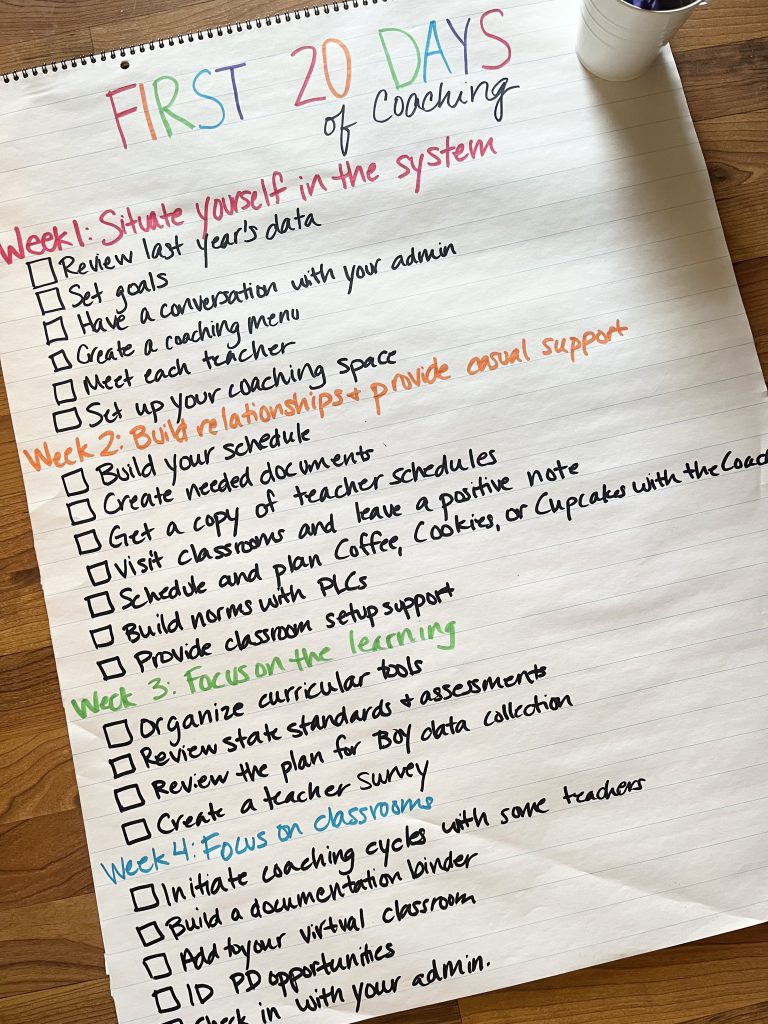
What Should Instructional Coaches Focus on First?
One of the biggest challenges for new coaches is figuring out what to prioritize.
This checklist organizes the first month into four clear phases so you can move forward with purpose instead of overwhelm.
Week 1: Situate Yourself in the School System
The first week is all about clarity and organization.
During this stage, coaches focus on:
- reviewing school data
- setting coaching goals
- defining their role with administrators
- creating a coaching menu
- meeting teachers
- setting up systems and schedules
These early steps help coaches understand the school context before diving into deeper coaching work.
Week 2: Build Relationships & Provide Casual Support
Relationships come before coaching cycles.
This week focuses on:
- visiting classrooms
- leaving positive notes for teachers
- introducing yourself and your role
- creating opportunities for connection
- supporting teachers informally
Small relationship-building moments matter more than most coaches think.
Trust is what opens the door to future coaching work.
Week 3: Focus on the Learning
Once systems and relationships are starting to form, coaches can begin digging deeper into instruction.
This includes:
- reviewing standards and curriculum
- studying assessments and BOY data
- gathering teacher input
- identifying school-wide needs and trends
This helps coaches make decisions based on actual data instead of assumptions.
Week 4: Focus on Classrooms
By this point, coaches are ready to begin more intentional classroom support.
The checklist guides coaches through:
- initiating coaching cycles
- organizing coaching documentation
- identifying PD opportunities
- adding resources teachers may need
- checking in with administrators
Instead of rushing into formal coaching too early, this structure helps coaching grow naturally and sustainably.
Why This Checklist Helps Coaches
One of the most overwhelming parts of starting a coaching role is feeling like you should already know exactly what to do.
This checklist helps simplify the process by giving you:
- a clear starting point
- manageable weekly priorities
- a realistic roadmap for the first month
- reminders of the systems and relationships that matter most
Sometimes having a simple checklist is enough to replace panic with clarity.
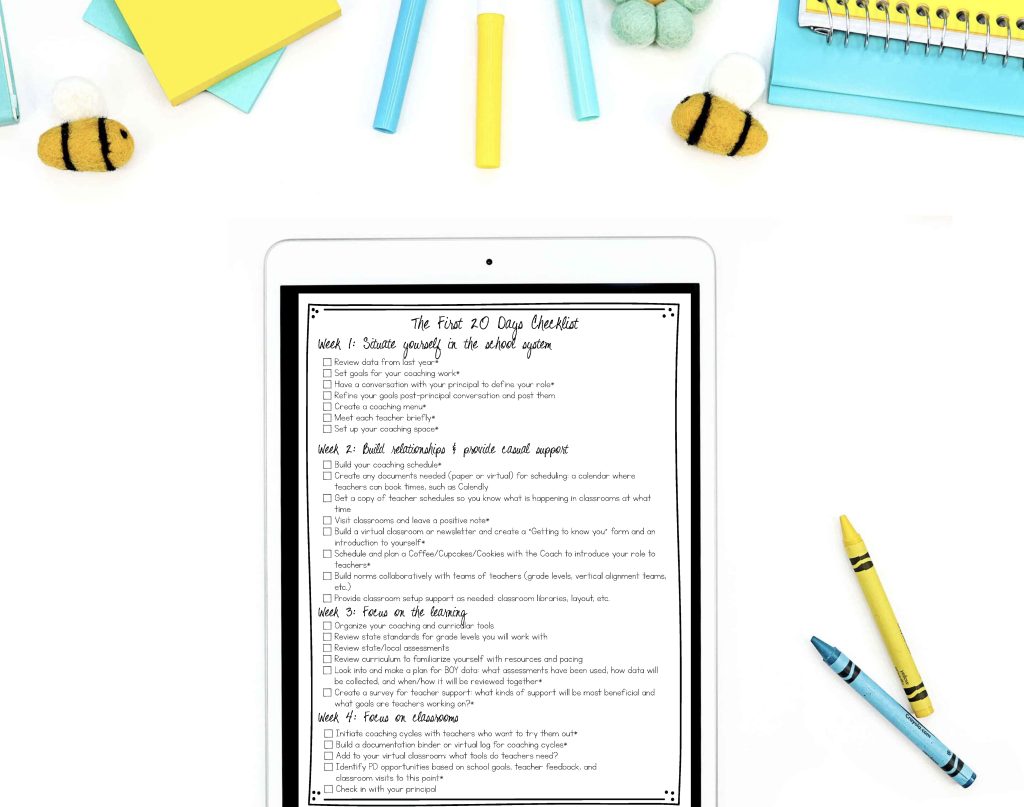
Free Download: First 20 Days of Instructional Coaching Checklist
If you’re starting a coaching role and wondering where to begin, this free checklist will help you focus on the most important work first.
Coaching isn’t about doing everything immediately.
The strongest coaching programs are built slowly — through trust, systems, consistency, and purposeful support.
Start there first.