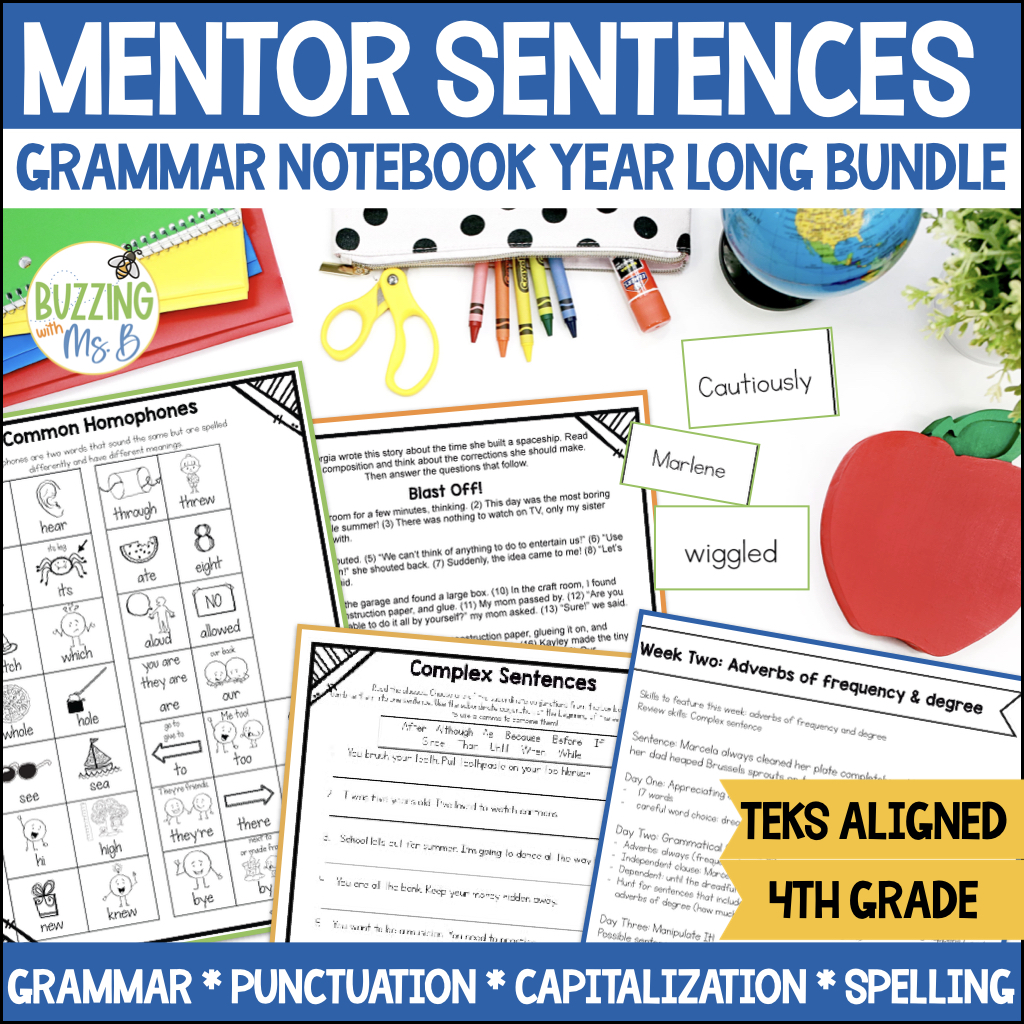
Mentor Sentences: A Fun Way to Teach Simple, Compound & Complex Sentences
If you’ve ever explained sentence structure to your class and been met with the blank stare of doom, you’re not alone!
One of my favorite ways to make sentence types click is through mentor sentences. These are examples of correctly written sentences that we label, manipulate, and use as models for our own writing. They’re like the sentence version of a master chef’s recipe—you show the kids the “perfect dish” first, then let them experiment with their own flavors.
By working with simple, compound, and complex sentences in this way, students don’t just memorize definitions—they see how the sentence works, play with the pieces, and then write their own. Here’s how I break it down:

Simple Sentences
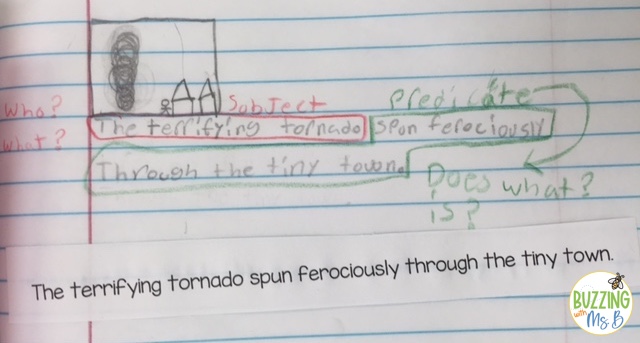
Start with the basics—a simple sentence has a subject and a predicate. That’s it! I use the questions “who?” and “does/is what?” to help kids identify the subject and predicate in a sentence.
Example: The cat slept.
- Subject (who?): The cat
- Predicate (does/is what?): slept

and talk about the parts of sentences and give them something to refer back to!
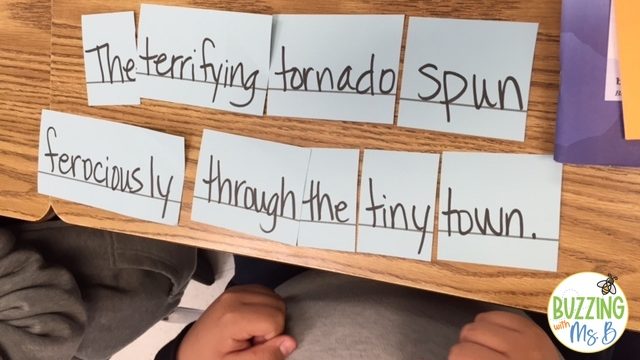
Have students build their own simple sentences, making sure they have subject/verb agreement. Then, we label the parts, move them around, and add extra words so they can see where different parts of speech can go. It’s a great way to show that sentences can be short but still powerful.
ACTIVITY Now You Try: Let students “steal” the structure of your mentor sentence to write one of their own. If the mentor sentence is The dog barked loudly, they might write The rain fell softly.


Compound Sentences
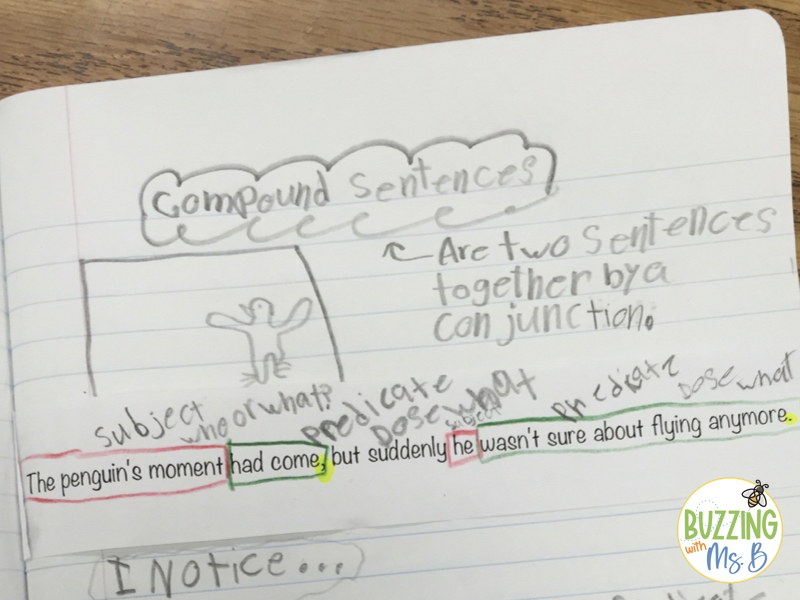
Here’s where things get a little more exciting! A compound sentence is basically two simple sentences joined by a conjunction.
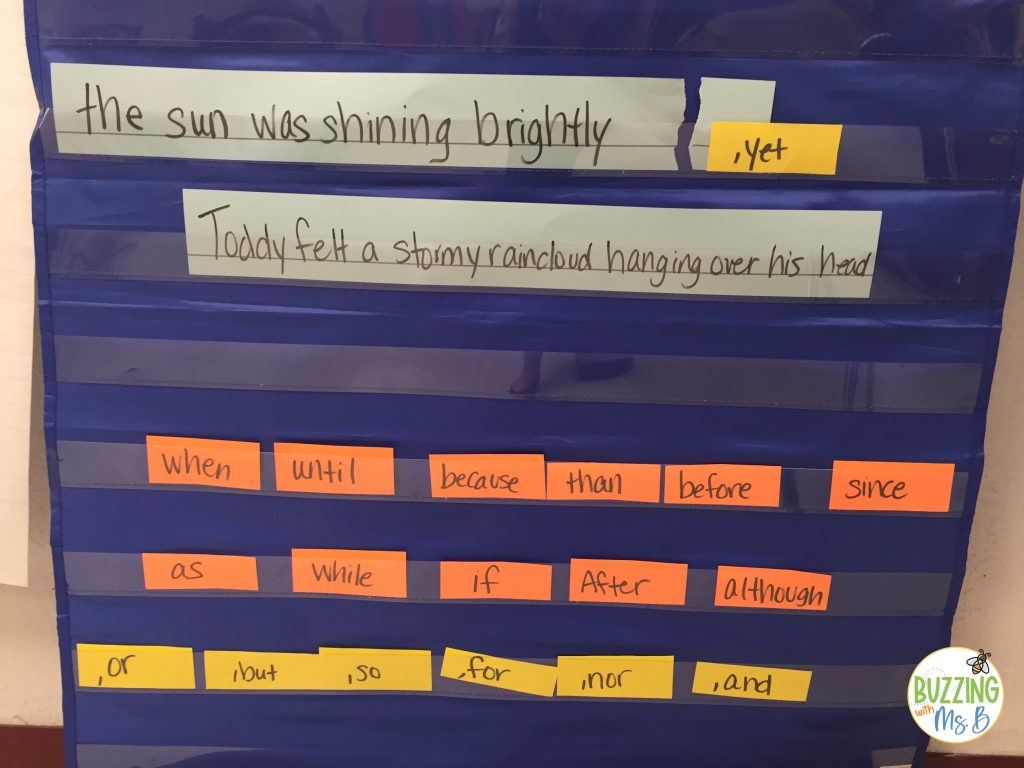
The secret code to remember? FANBOYS – for, and, nor, but, or, yet, so.
Example: The sun set, and the stars appeared.
- Subject/predicate #1: The sun set
- Conjunction: and
- Subject/predicate #2: the stars appeared
ACTIVITY Color Code: I love to color-code the subjects and predicates in different colors and circle the conjunction—visual learners eat this up! Then, give students two simple sentences and let them choose the right conjunction to match the meaning. Do they need contrast? Use but. Do they want to show cause? Use so.
Complex Sentences
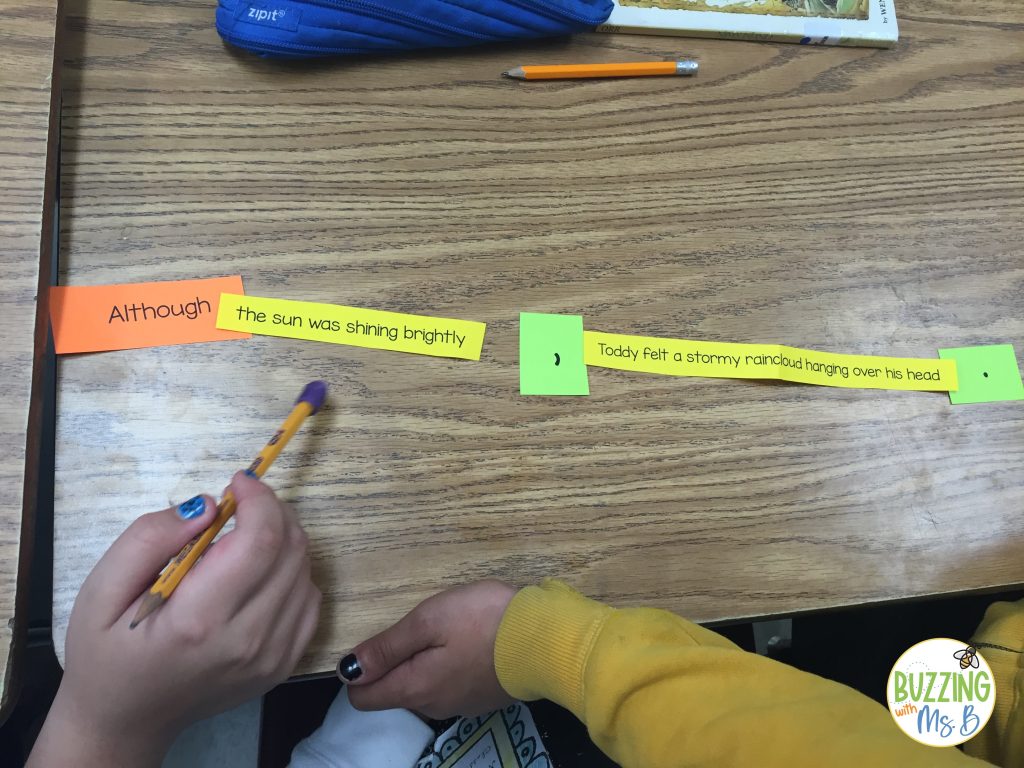
Now we’re getting fancy! A complex sentence has an independent clause (a complete sentence) and a dependent clause (not a complete sentence), joined by a subordinate conjunction.
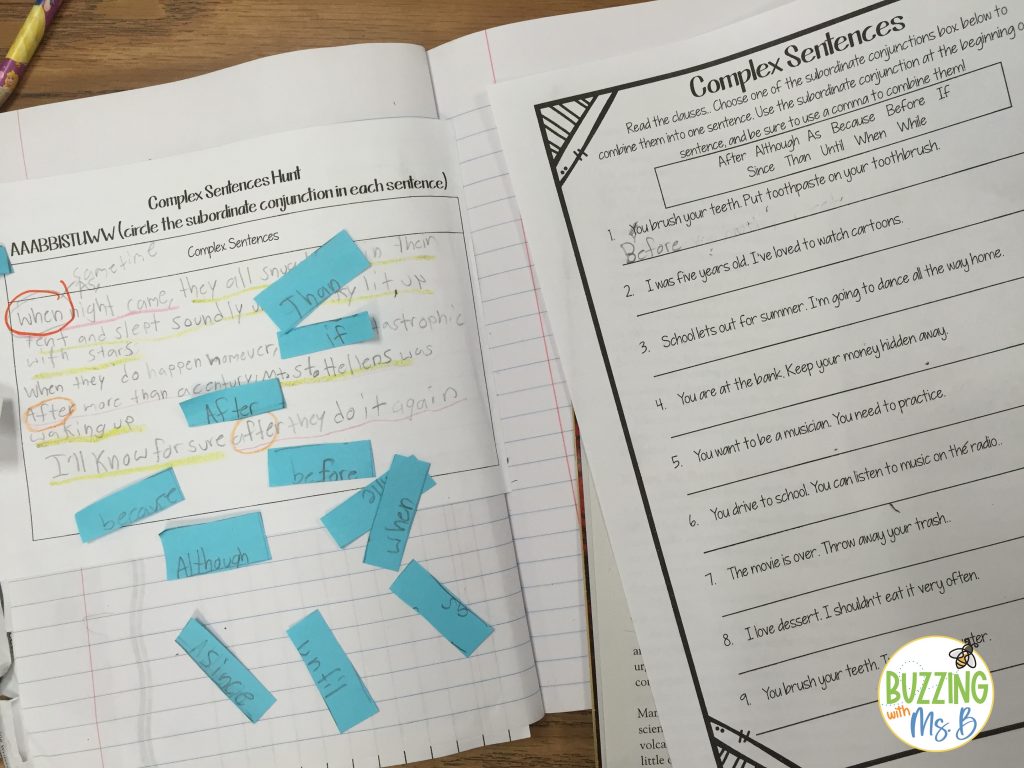
Common subordinate conjunctions: after, although, as, because, before, if, since, then, until, when, while.
Example: I stayed inside because it was raining.
- Independent clause: I stayed inside
- Dependent clause: because it was raining
- Conjunction: because
Again—color-coding for the win! One color for the independent clause, one for the dependent clause, and a circle around the conjunction. Have students practice picking the right conjunction to clarify meaning—before feels different than because!
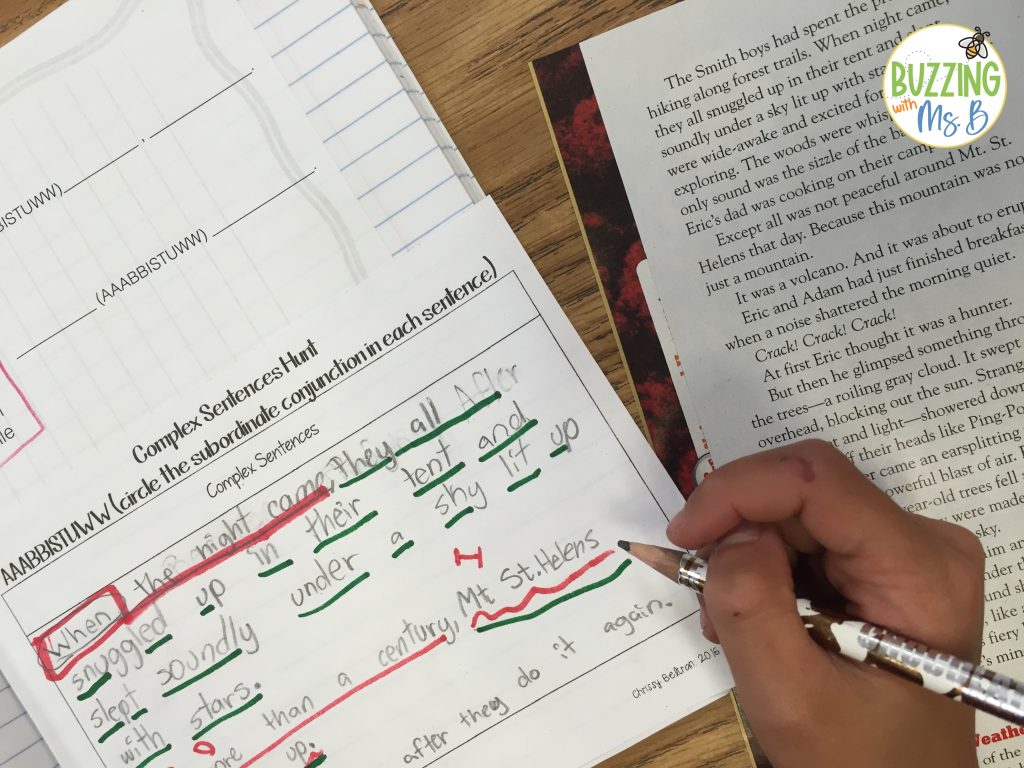
ACTIVITY: Complex Sentence Hunt – Give students a short passage or page from a class text and send them on a complex sentence hunt! As they read, they jot down any complex sentences they find. Then, they color-code the independent clause in one color, the dependent clause in another, and circle the subordinate conjunction. This hands-on search not only gets them identifying sentence parts in authentic writing, but also sparks “aha!” moments when they spot how authors use complex sentences to add depth and detail.

Mentor sentences make these concepts stick because kids aren’t just listening to a rule—they’re working with real examples and creating their own. If you want ready-to-go mentor sentences for all three sentence types (and aligned activities so you don’t have to reinvent the wheel), check out my 4th Grade Mentor Sentences for Sentence Structure TEKS-Aligned Activities.
Once you try teaching sentence structure this way, you may never go back to plain definitions again—because your students will actually get it… and use it!