
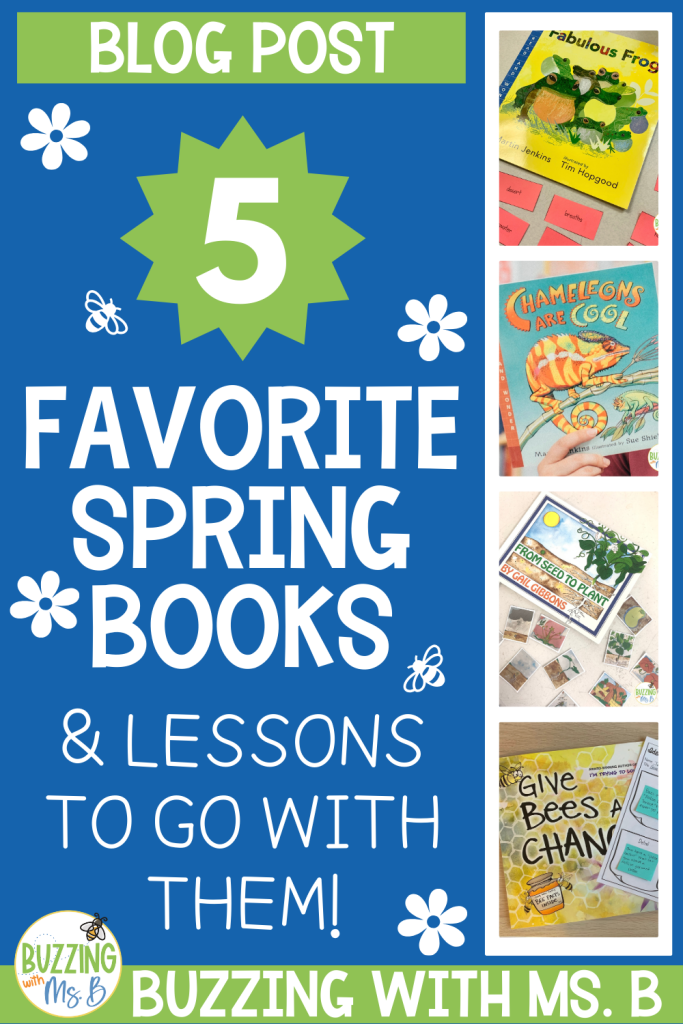
5 Favorite Spring Books & Lessons to Go With Them!
Spring is a wonderful time to bring nature-themed nonfiction into your classroom. Books about plants, animals, and ecosystems naturally spark curiosity, and they also make fantastic mentor texts for teaching reading and writing skills.
Below are five spring books I love using with students. Each one includes a quick summary and a few lesson ideas you can use right away, along with a classroom resource that makes the activity easy to implement.
1. From Seed to Plant by Gail Gibbons

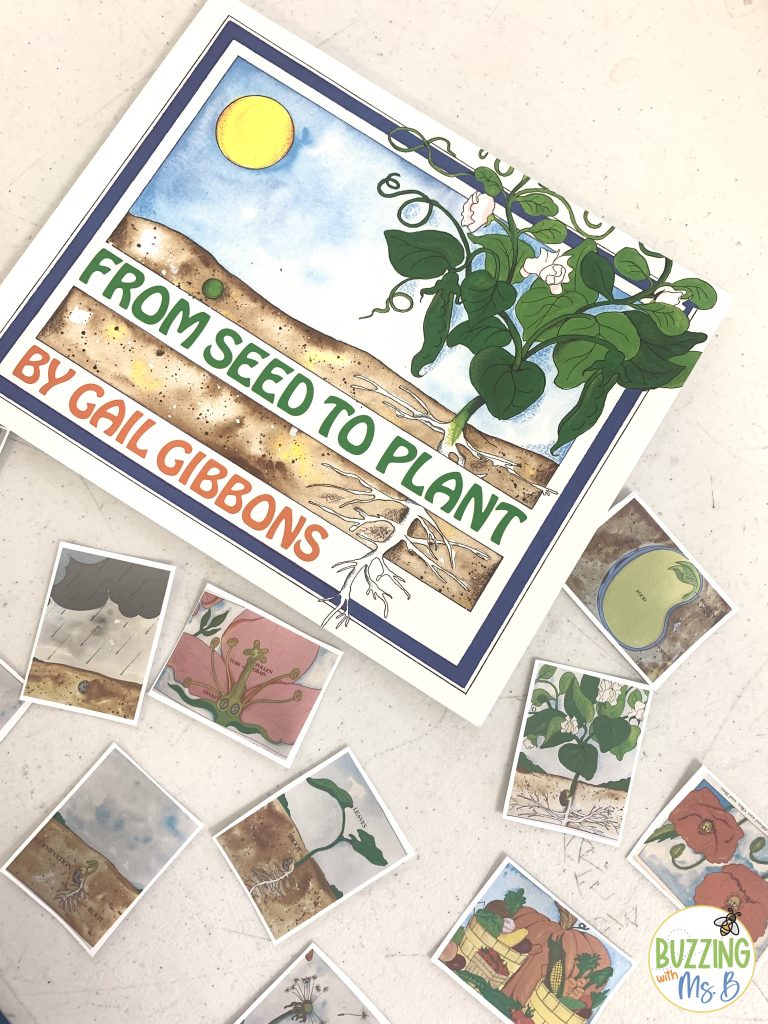
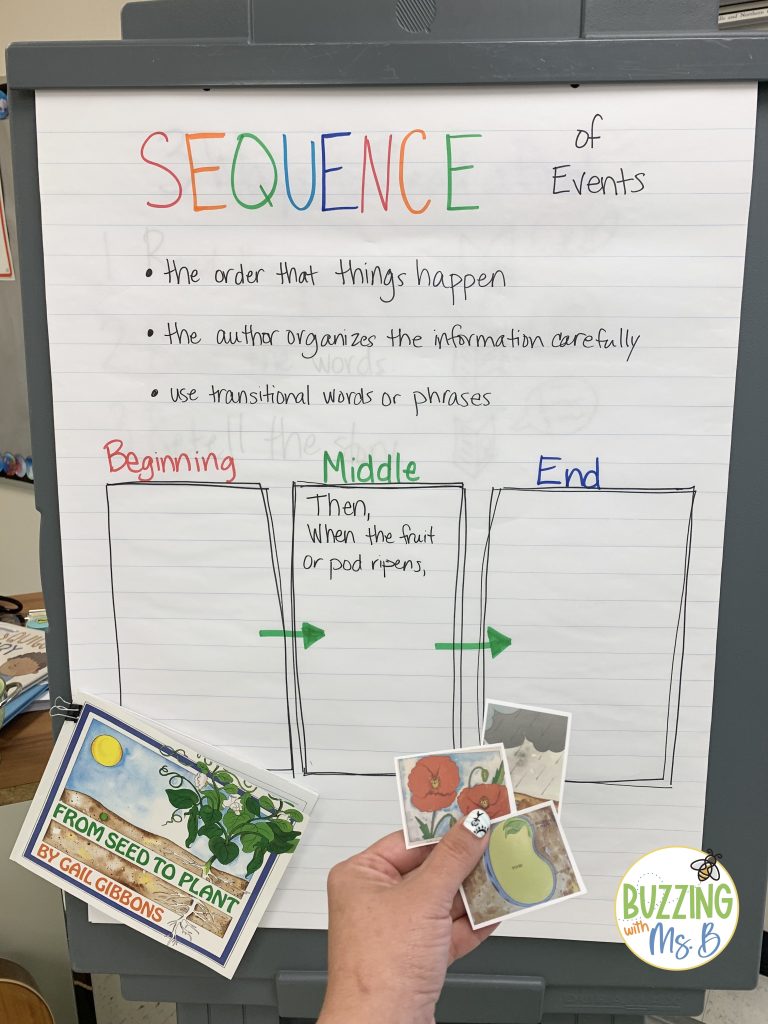
This clear and engaging nonfiction book explains how plants grow, from seed to full plant. The step-by-step structure makes it an excellent mentor text for teaching sequence and chronological order.
Lesson Ideas
- Give students picture cards showing the plant life cycle before reading and have them predict the order.
- Read the book together and resequencing the events afterward.
- Hunt for transition words and phrases such as first, next, then, and finally.
- Add those phrases to a class chart of sequencing language.
- Use the cards and transition phrases to orally retell the process of plant growth.
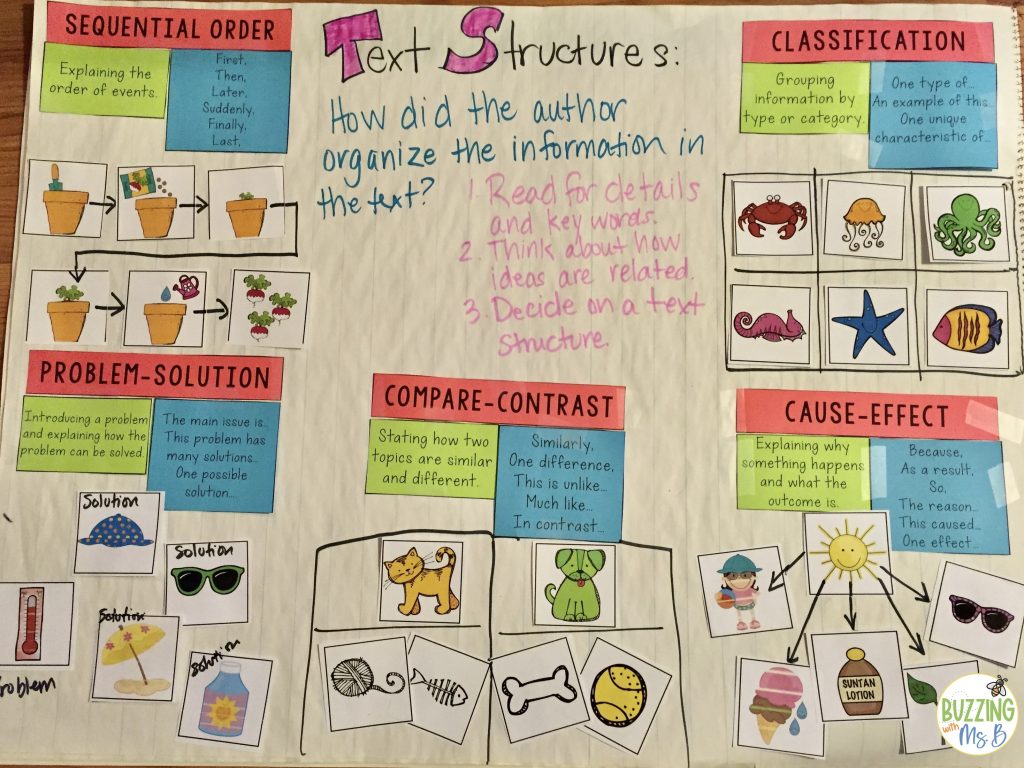
- Add this text to a nonfiction text structure anchor chart so students can see how sequence works in informational texts.
Resource connection

Nonfiction Text Structure –
Reading Strategy MiniPack
Use activities from the Nonfiction Text Structure Anchor Chart Passage Task Cards: Cause, Effect & More to help students identify and compare different nonfiction text structures.
From Seed to Plant in Action…
2. Give Bees a Chance by Bethany Barton

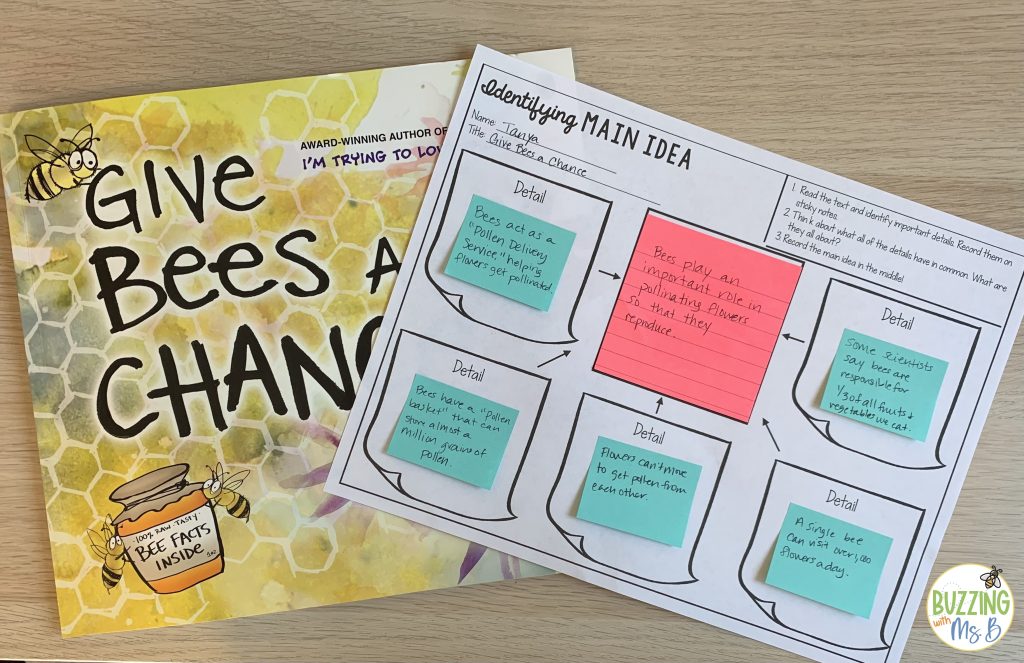
This humorous and informative book shares fascinating facts about bees while encouraging readers to rethink common misconceptions. The repeated information throughout the text makes it perfect for teaching main idea and supporting details.
Lesson Ideas
- Read the book and have students hunt for interesting facts about bees.
- Record details on sticky notes while reading.
- Sort the details into groups and discuss what they have in common.
- Use the grouped details to determine the main idea of the text.
- Discuss how repeated ideas often signal important information.
Resource connection

Main Idea & Supporting Details –
Reading Strategy Minipack
The graphic organizers and charts from the Main Idea and Supporting Details – Anchor Chart & Reading Comprehension Activities help students organize the details they collect and determine the main idea.
Give Bees a Chance in Action…
3. Chameleons Are Cool by Martin Jenkins

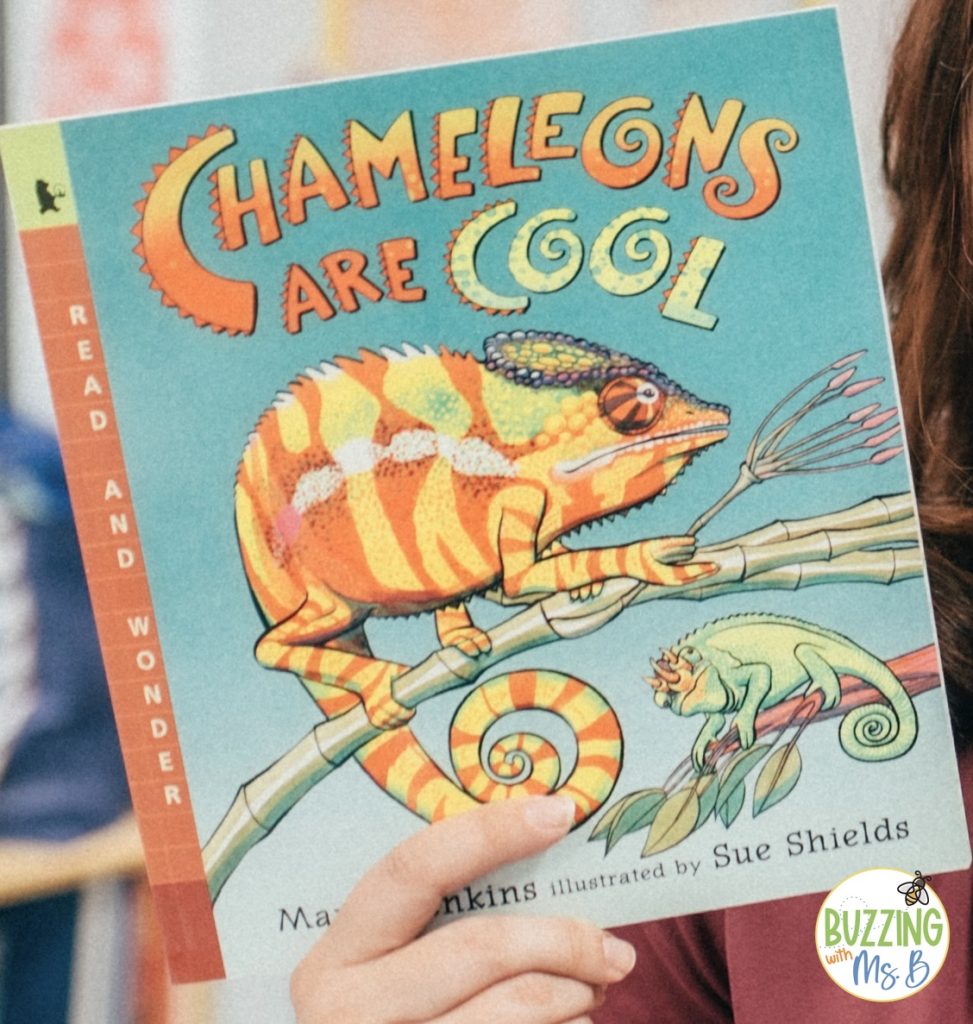
This fascinating informational text explores how chameleons survive in their environments. It’s a strong mentor text for helping students notice how authors include different types of details to explain a topic.
Lesson Ideas
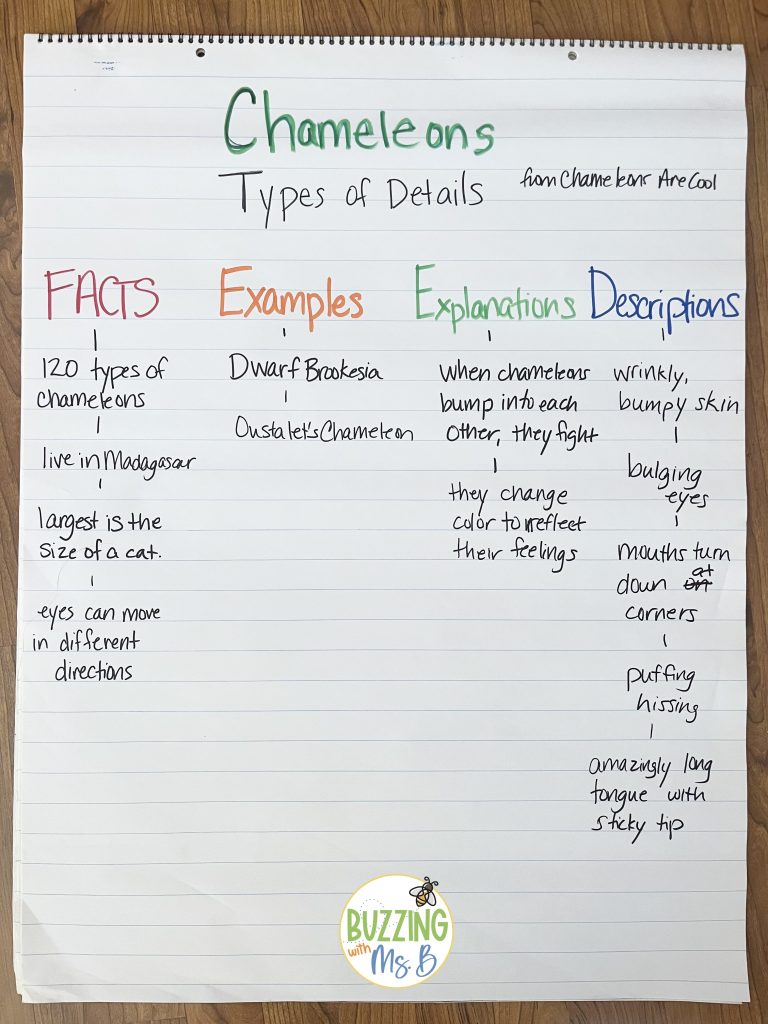
- As you read, collect examples of details from the text.
- Sort those details into categories such as facts, explanations, examples, and descriptive details.
- Discuss how each type of detail helps readers understand the topic.
- Create a classroom chart showing different ways authors add information.
- Have students brainstorm details they could add to strengthen their own informational writing.
Resource connection

Types of Details for Expository Writing
Students can apply these ideas using the lessons and materials in the Adding Relevant Details – Informational Writing Unit Lessons Plans, which focuses on expanding informational writing with meaningful details.
Chameleons Are Cool in Action…
4. Fabulous Frogs by Martin Jenkins

This engaging nonfiction book introduces readers to the incredible variety of frogs around the world. The rich vocabulary and scientific terms make it perfect for vocabulary exploration and building background knowledge.
Lesson Ideas
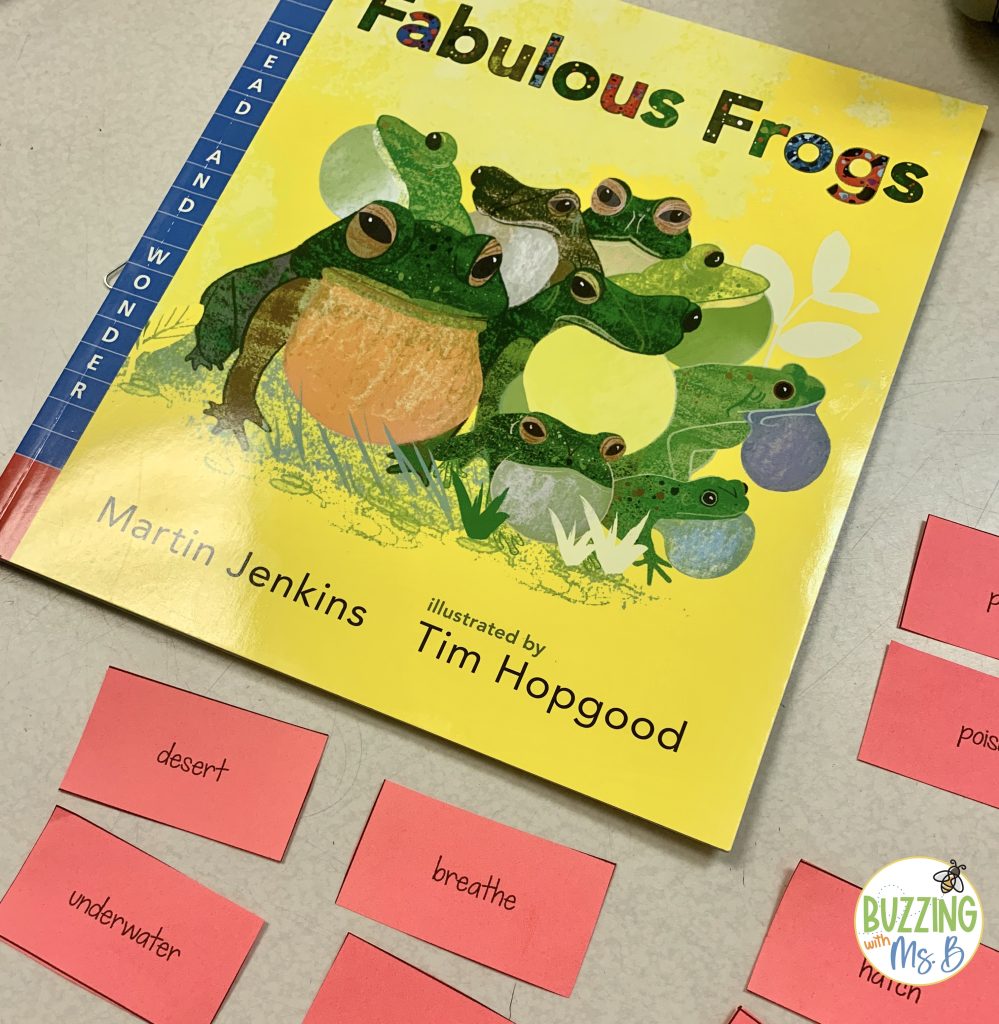
- Introduce vocabulary words from the book and give students word cards to sort.
- Ask students to group the words based on their background knowledge.
- Read the book and then revisit the word sorts.
- Encourage students to reorganize their groups based on what they learned.
- Have students explain the connections between the words in each category.
Resource connection

10 Vocabulary Activities for Any Word List
The Editable Vocabulary Games & Activities for Any Word List includes an editable template for word sorts plus additional vocabulary activities that work with any word list.
Fabulous Frogs in Action…
5. One Tiny Turtle by Nicola Davies

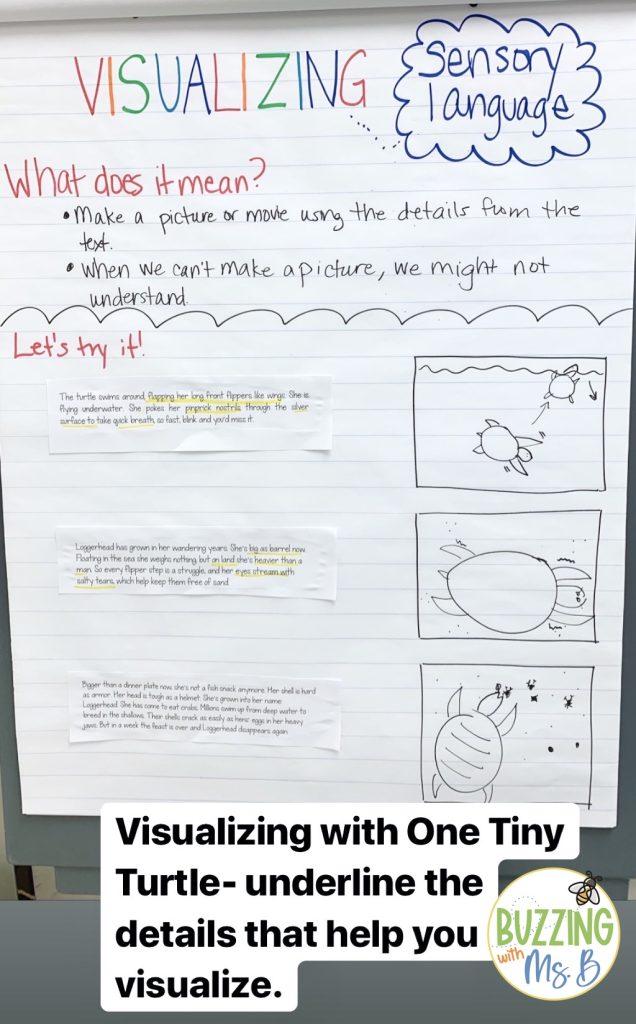
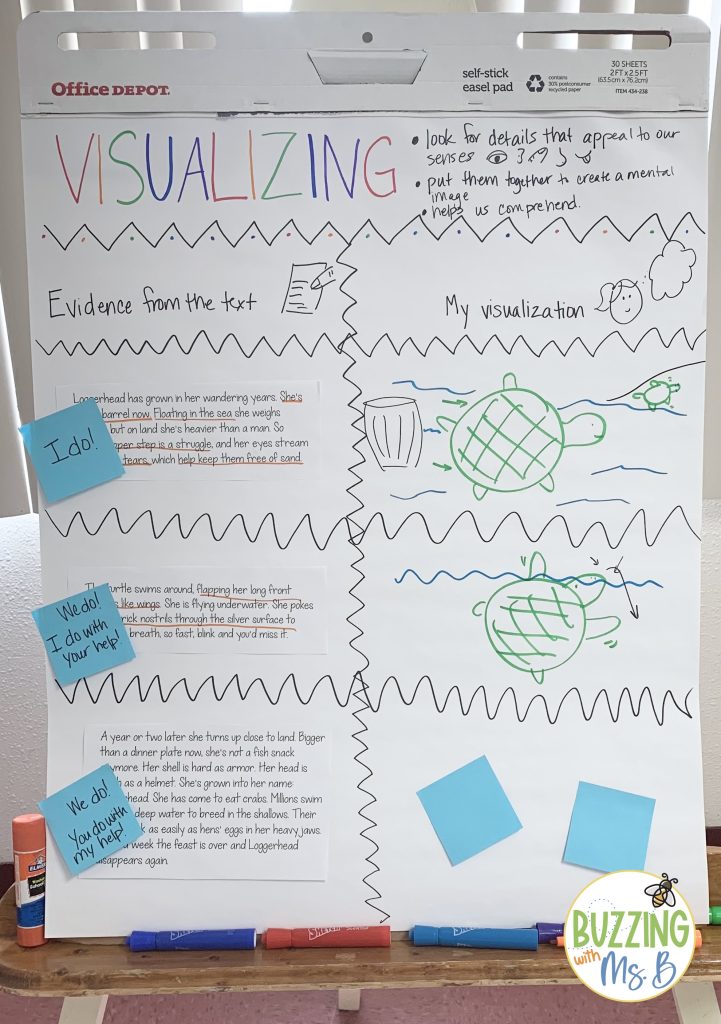
This beautifully written book follows the life cycle of a loggerhead turtle while describing the ocean environment in vivid detail. The poetic language makes it an excellent mentor text for visualization and studying descriptive writing.
Lesson Ideas
- Read a short passage and ask students to close their eyes and visualize the scene.
- Have them sketch what they imagine based on the description.
- Ask students to underline the words or phrases that helped them picture the scene.
- Discuss how the author’s word choices create strong imagery.
- Collect powerful lines from the text and add them to a class chart of descriptive language.
Resource Connection

Visualizing Details –
Reading Comprehension Activities
A perfect pairing for exploring One Tiny Turtle and visualization is the resource, Visualizing Lessons: Anchor Chart, Comprehension Passage – Sensory Details. Includes a hands-on activity for sorting details into five senses.
One Tiny Turtle in Action…
Bringing Spring Books Into Your Literacy Block
Seasonal read-alouds are a great way to connect literacy with science topics students are already curious about in the spring. With the right mentor text, a simple read-aloud can quickly turn into a meaningful lesson on comprehension, vocabulary, or writing craft.
Pairing strong spring books with purposeful activities helps students see how reading and writing skills apply across subjects—and it makes your literacy block both engaging and memorable.
PLUS Free Lesson to Help Students Identify Theme!
**This post includes affiliate links.


