
Better Reading Responses in Upper Elementary

*Grab free responses below!
One Friday, I pulled a stack of reading logs over to my desk. I’d planned to check the kids’ responses for three weeks, and every week, I found something else that was more immediately urgent to do. I had no idea what I’d find buried in these grubby notebooks.
I opened up Madeline’s and started reading. She’d had time to read during independent reading in class every single day that week.
I’d also given the kids time to write their responses every day, so she should’ve had five good, solid responses in her notebook. After all, I’d spent weeks at the beginning of the year teaching them how to do it, right?
It was only December. Surely they can’t have forgotten August already?
I read Maddie’s first response. It was a full paragraph of sentences, written in her super teeny handwriting (which made the paragraph about two lines long.
She was also fond of teeny weeny pencils). Unfortunately, each sentence basically meant the same thing: This is a good book.
Her second response was slightly less impressive.
By the end of the week, she was basically recording page numbers and drawing a smiley face.
Clearly, my kids had no clue what they were supposed to be doing when they wrote a response. And if this was the kind of response I was getting, was there any point to it? Or was I just tossing ten minutes of the day into the trash can?
At this point, many teachers say, “They’re not writing good responses, so why bother? Let’s just cut out independent reading time.”
As tempting as that may be, that is not the answer. Independent reading and responding to that reading are two of the most important things you can do with your time! But it has to be time well spent for it to count.
Here’s how to get the most out of your reading responses and make them work for you and your kids! Plus, scroll to the bottom to grab three free reading responses for fiction!
1. Model, model, model how to write a reading response
If your kids were yelling and dancing down the hallway, what would you do?
You definitely wouldn’t say, “Well, I guess we’re not walking down the hallway anymore!” You’d teach them how to do it, and you’d demand that they do it right, every time.
It’s the same with academics. Model a poor response. Discuss why it’s useless. Then model a good response. Discuss how it helped you become a better reader.

2. Set the response before kids start reading.
Instead of letting kids finish their reading time and asking them to write a response about whatever happened in their brains, give them the purpose for reading before they start.
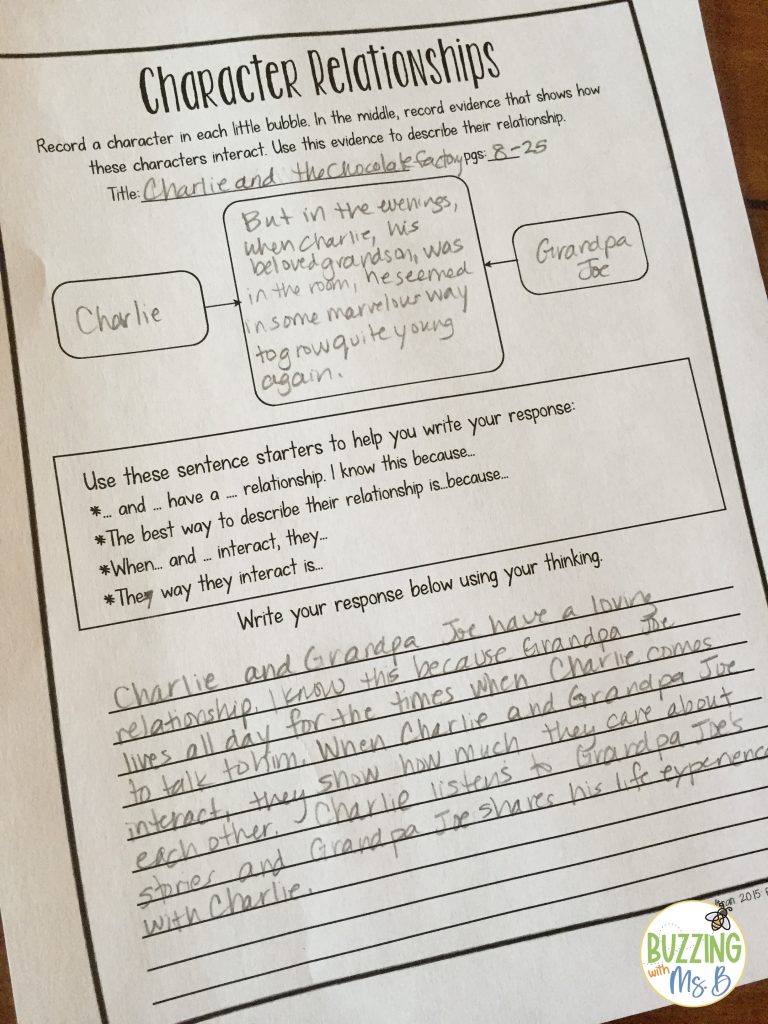
Provide them with a paragraph frame or a graphic organizer, or just something to think about, like “Find evidence to describe your character. Look for their words, actions, and the things other characters say about them.”
Put it in writing and make sure everyone knows what to look for.
As kids read, they can mark their thinking about this idea with post-its so they will be ready to write about it afterwards.
3. Inspect what you expect.
I know, it’s cheesy, but my principal told me this one and it’s actually true.
If you want kids to write better responses, you have to actually hold them accountable for it. Accepting, “I like the character,” as a response doesn’t do anything for your students as readers.
If you expect a paragraph, check the response and make sure that’s what you’re actually getting. If not, the kids need to know their responses are missing the mark and how to make them better.
Need some help getting your kids responding to their reading?
Get the Scaffolded Reading Responses for each genre! This resource includes reading response forms for fiction, informational, drama, and poetry!
Each one has a graphic organizer so kids can record specific kinds of details and evidence, and then sentence starters to help them structure a good response to their reading.

Get the Bundle of Reading Responses


