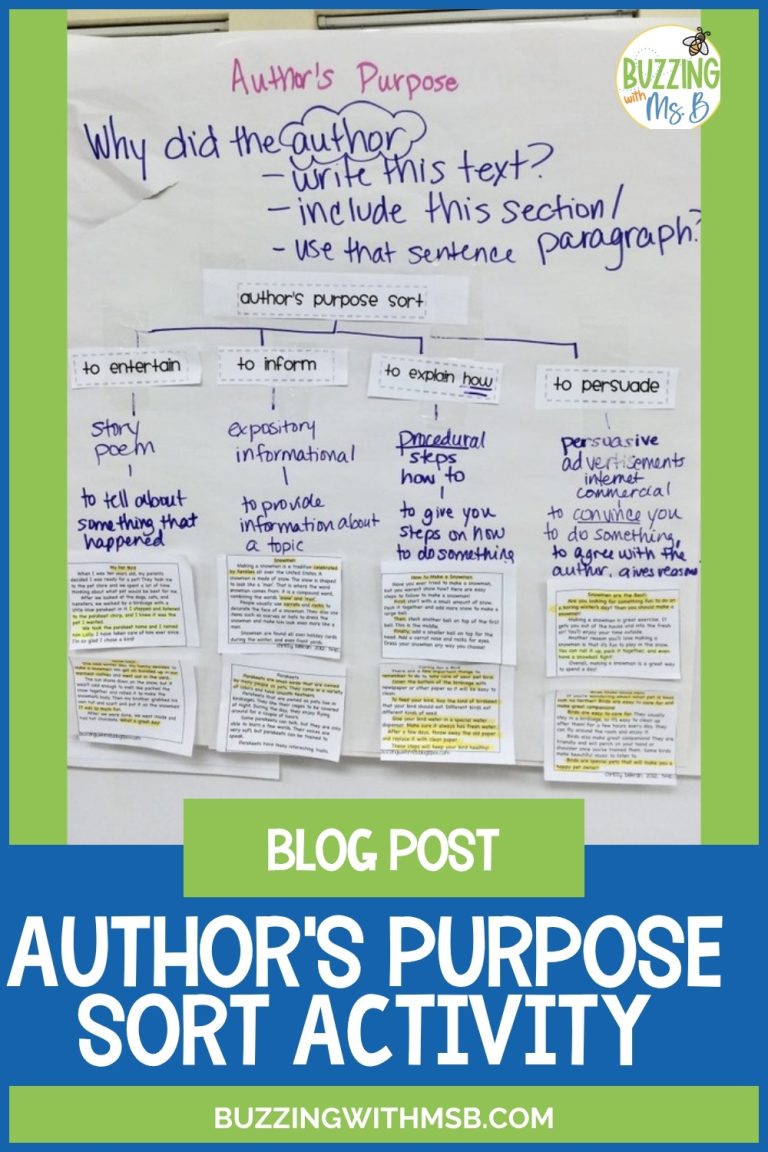
Hands-on Activity for Author’s Purpose and Genre

Author’s purpose can be a challenge for students! Helping them wrap their heads around the author’s intent for writing something is easier said than done!
So when I teach author’s purpose, I try to connect it to genre! This makes so much more sense to kids and helps them use it to comprehend, too.
On top of that connection to genre, including some hands-on activities and opportunities to practice will help students move their learning into long-term memory so they don’t forget it all tomorrow!
For example, if someone wants to tell a twisted story that will leave people on the edge of their seats, they likely end up writing a fictional story for entertainment.
Overall, students understanding of author’s purpose may seem minor, but it has some substantial impacts on student comprehension!
What Is Author’s Purpose?
Author’s purpose is the reason an author writes a text. Before they write a single word, authors decide what they want their readers to do: enjoy a story, learn something new, change their mind, or follow steps.
Many teachers use the acronym PIE (persuade, inform, entertain). I like to add a fourth purpose, explain how, because procedural texts show up so often in reading and on tests.
- 🎭 To entertain: “The dragon sneezed, and the whole birthday cake caught on fire!” (a funny story)
- 📚 To inform: “Sea turtles can hold their breath for up to five hours while they sleep.” (a nonfiction article)
- 📣 To persuade: “Our school should have recess twice a day because moving helps us learn!” (an opinion letter)
- 🛠️ To explain how: “First, fold the paper in half. Next, cut along the dotted line.” (a how-to text)
Understanding the genre and purpose influences how we read a text.
As I’ve mentioned over the past few months, you need to summarize genres differently and evaluate different literary elements based on the genre.

👉 Accurately identifying the genre before reading …
can help students think about what they might expect to find as they read the text. For example, they might expect a poem to have stanzas and rhythm. Whereas they would expect a nonfiction text to have sections and supporting graphics.

Need more tools for teaching genre? Get the Teaching Reading by Genre Teaching Guide & Tools here!
Author’s Purpose and Genre: A Quick Guide
When students can name the genre, they can usually figure out the purpose. Use this chart as a quick reference or turn it into an anchor chart with your class.
| Genre | Usual Purpose | Clues to Look For |
|---|---|---|
| Fiction & drama | Entertain | Characters, a problem, dialogue, a story told in order |
| Poetry | Entertain or express feelings | Stanzas, rhythm, rhyme, figurative language |
| Expository / informational | Inform | Facts, headings, captions, diagrams |
| Argumentative & persuasive | Persuade | Opinion words, reasons, “you should,” a call to action |
| Procedural | Explain how | Numbered steps, materials list, words like first, next, last |
Teaching author’s purpose with hands-on activities
Here’s a fun activity for working through author’s purpose with short paragraphs:
💡 Introduce students to the different types of author’s purpose: to entertain, to inform, to persuade, and to explain how.
💡 Give students various paragraphs, each with a different purpose. Have them look it over and identify the purpose.
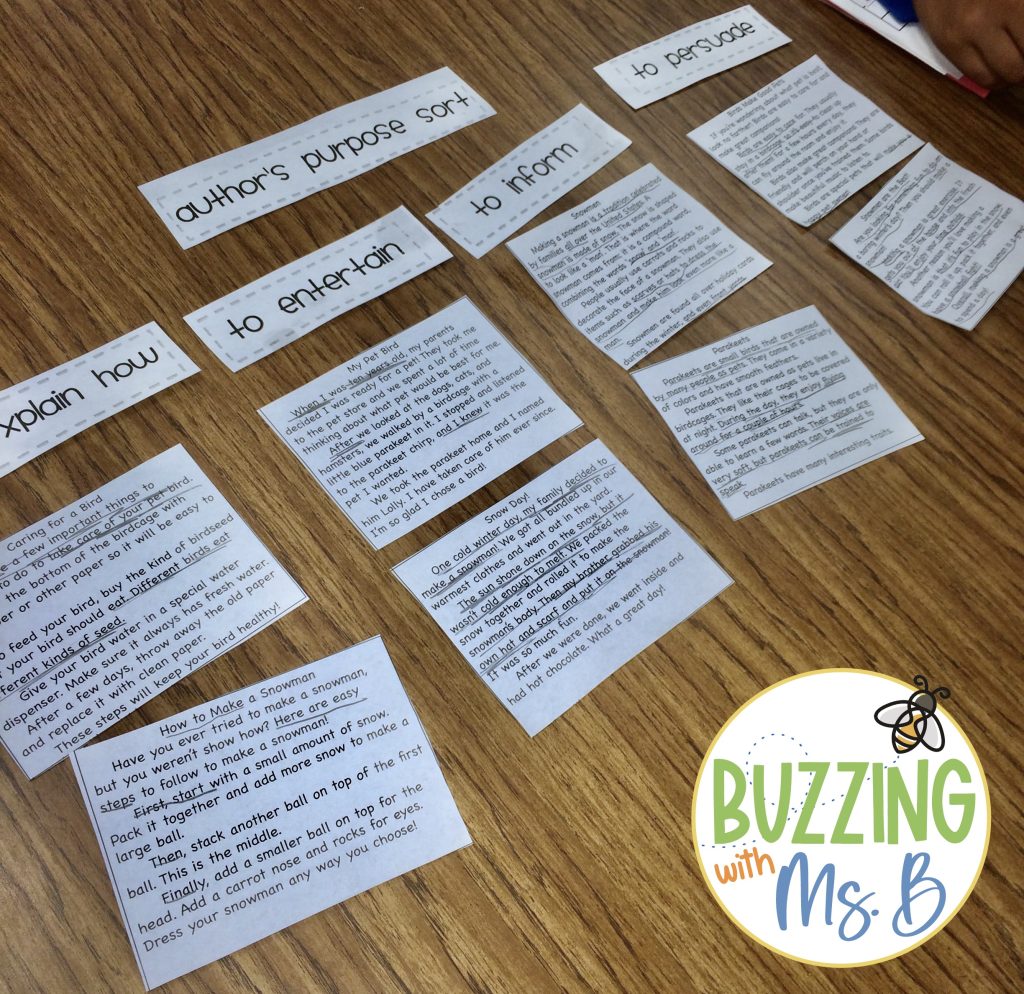
💡 Then, talk about the clues that gave the purpose away. Was it the genre? Characters? Organizational structure?
It helps to turn them into an anchor chart so you can refer back to it later!

More Author’s Purpose Activities to Try
Once students know the purposes, keep the practice quick and active:
- Real-world text hunt: Bring in cereal boxes, ads, recipes, menus, and comic strips. Students sort them by purpose and explain their thinking.
- Clue word highlighting: Give students a short paragraph and have them highlight the words that gave the purpose away.
- Same topic, different purpose: Pick one topic (like dogs) and have small groups write a sentence for each purpose. Compare how the writing changes!
- Purpose sort race: Partners race to sort a stack of short paragraphs into entertain, inform, persuade, and explain how.
Get these paragraphs and more in the Author’s Purpose Posters and Activities Pack!
This resource includes posters of each type of purpose, word wall cards, a sorting activity (like discussed above), and texts with comprehension questions.
Giving your students enough practice in this area can be difficult, too. Short paragraphs with differentiated, scaffolded questions can help you move students forward one step at a time!
These author’s purpose task cards are part of my Author’s Purpose Unit. Grab that, an anchor chart activity, and modeled passage here!
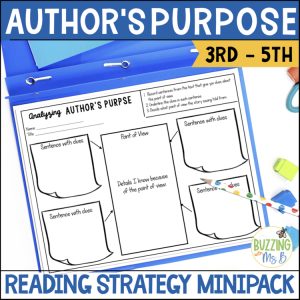
Author’s Purpose Task Cards & Unit
Give students the practice they need with short passages and differentiated, scaffolded questions. Includes task cards, an anchor chart activity, and a modeled passage.
Get the task cards