Cause and Effect Anchor Chart and Mix-Pair-Share Activity
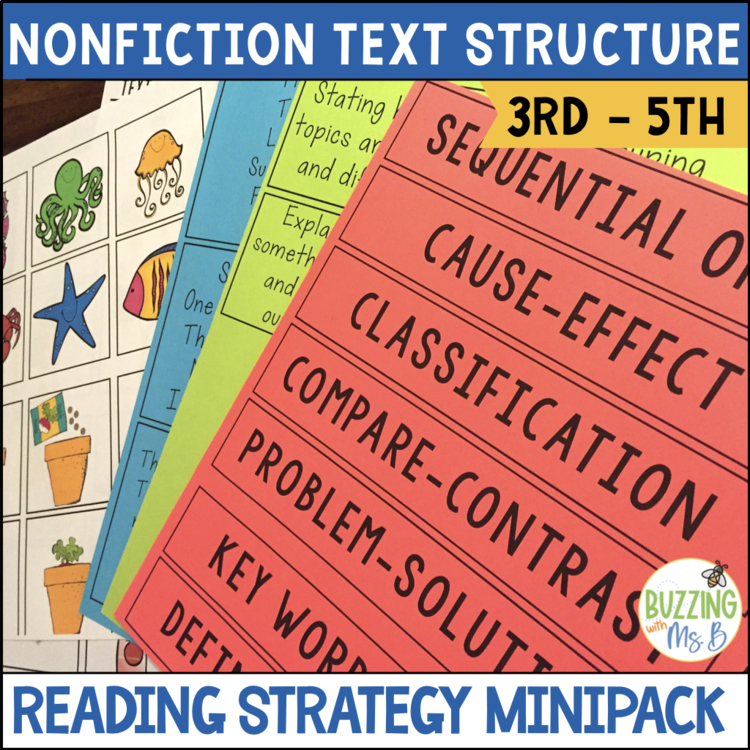
Our school has spent about a month in an expository unit already, and a lot of the grade levels are currently working on text structures. The structures that third grade works with are sequential order and cause and effect. Fourth grade adds compare-contrast, and fifth grade adds logical order and classification scheme.
We have worked hard on starting with a tangible experience – something hands-on designed to have the kids notice patterns in language, etc., and then bridging to application in a text. We’re trying to scaffold students’ understanding of the ideas.
Text structures always seems to be the key for students to really comprehend. I feel like students often read superficially, skimming and browsing through the text, but not really noticing or reading closely enough to consider the relationships between words in sentences, paragraphs, and the overall text. This happens in fiction and nonfiction, but it’s especially difficult in nonfiction.
Cause and Effect Anchor Chart for Third Grade
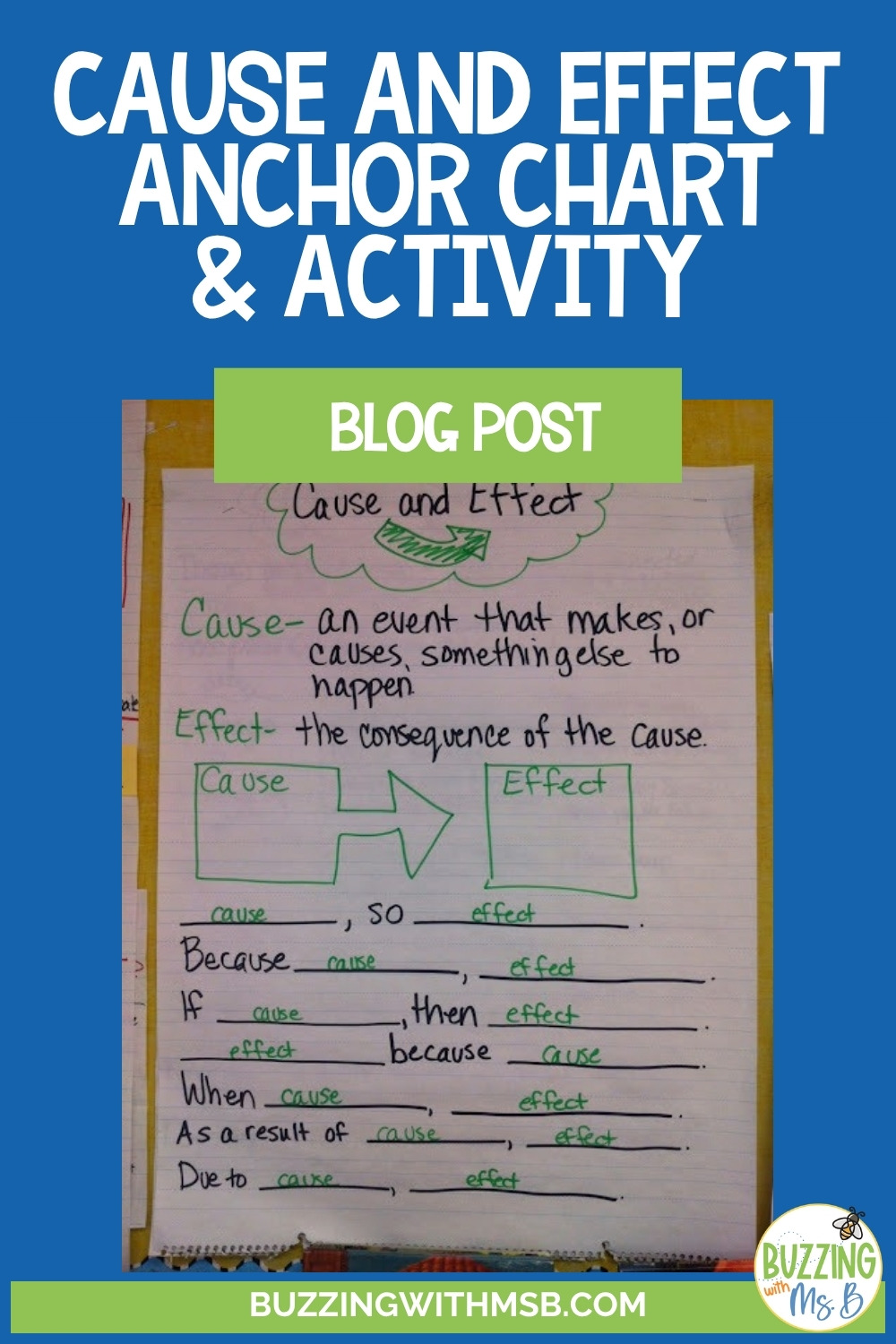
For cause and effect – a difficult standard introduced and tested in third grade, we decided to start with an anchor chart and Mix-Pair-Share activity with statements on cards. This is the anchor chart we created as a sample:

Mix-Pair-Share Cause and Effect Activity with Sentence Stems
First, kids will receive a set of cause and effect statements on cards. Each student receives a card. They mix-pair-share to find their cause-effect match. Then, in their partners, they use the sentence stems on the anchor chart to build sentences including their cards.My favorite part is the sentence stems on the bottom. We’re trying to get kids to use the stems in speaking and writing. We’re hoping this will help them think about the relationship between ideas and how sentence structures contribute to that.
Where Cause and Effect Text Structure Shows Up in Nonfiction
One common misconception I’ve found with text structures is where we see them. In the standards, it feels like the entire text will be a cause-effect structure, or a sequence, but in reality, it’s usually a few sentences, a paragraph, or a section of text that are organized that way. Several different types of text structures can be used in one text.
To see sequential order, logical order, classification, cause and effect, and compare and contrast together, read about this expository text structures anchor chart with signal words.
Get the Nonfiction Text Structure Unit and Cause and Effect Activities
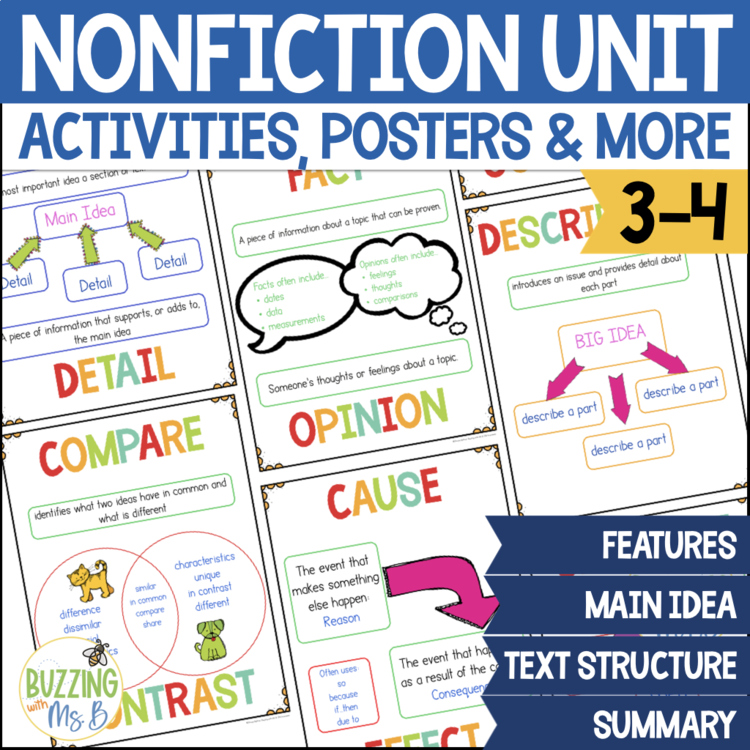
To help other teachers out with these topics of nonfiction, I created a Nonfiction Reading Unit with activities like these and many others! It has anchor charts, graphic organizers, posters, and worksheets to help students comprehend and respond to informational text.
For more practice after the cause and effect anchor chart, try the cause and effect reading passage, task cards and hands-on activities.
Want this ready to go? Grab the Nonfiction Text Structure Reading Strategy Comprehension Unit in my shop.