How to Build Teacher Knowledge with Michelle Ruhe, ep. 289
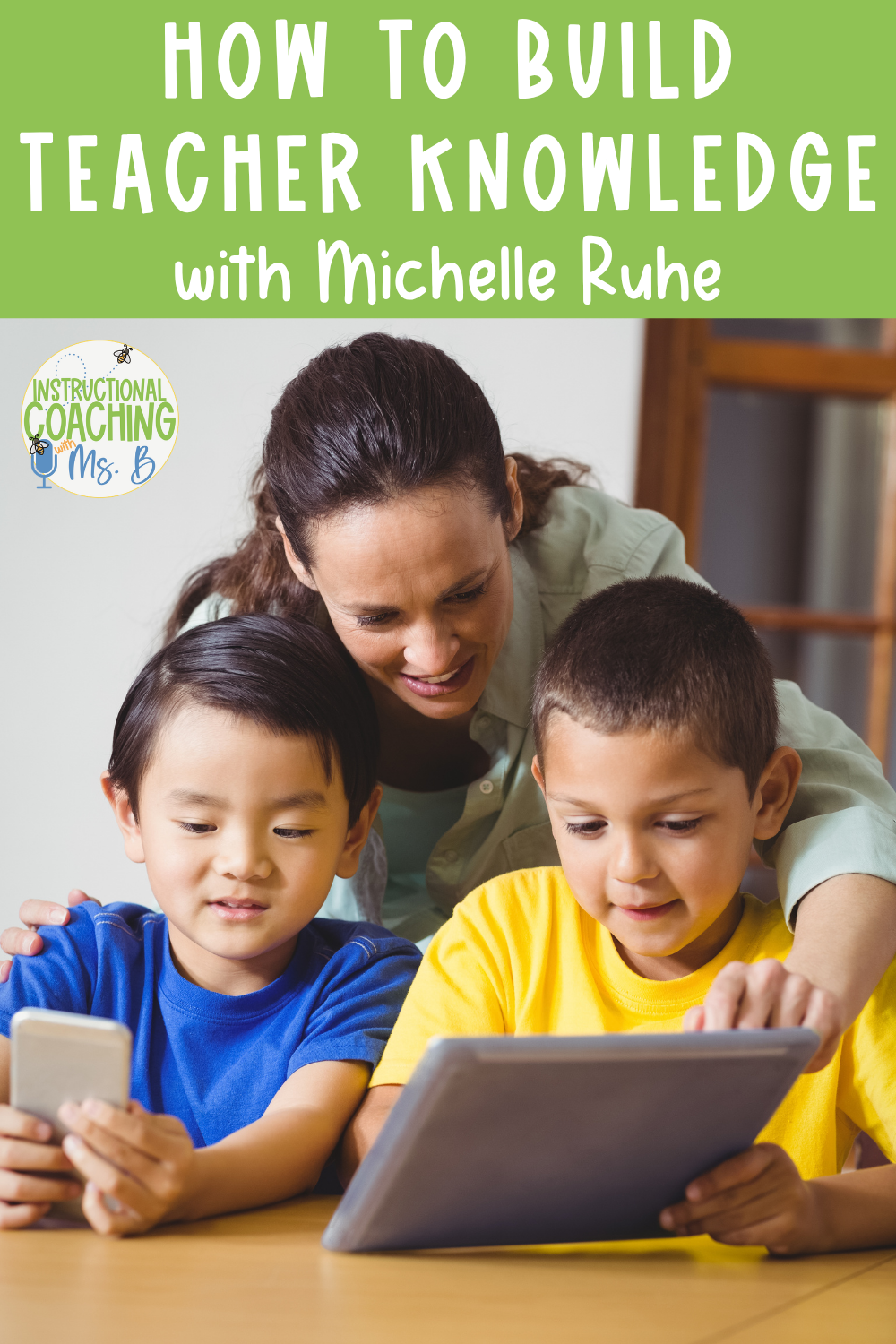
Wondering how to build teacher knowledge that supports instruction? You’ve come to the right place.
This week, I’m excited to kick off a brand-new mini-series filled with staff development ideas for coaches! We’re going to talk about PD, PLC meetings, and working one-on-one with teachers to build skills and knowledge in the classroom.
The first thing we’re going to look at is how to develop teacher knowledge because that’s really the foundation. Michelle Ruhe, of Coach from the Couch, joins me as we examine what really matters when building teacher knowledge schoolwide and in those quick moments in the copy room!
We explore the types of teacher knowledge coaches can build, ways to support individual teachers, and how to identify schoolwide PD needs. Plus, Michelle explains how she created a three-year professional learning plan for her school and how she knows when it’s time to move on to the next focus area.
Be sure to listen to the full episode to hear all the details about how to build teacher knowledge. Here are the highlights!

Starting out as an instructional coach can be so overwhelming! It can feel like there are too many things to do, and you just don’t know where to start. This resource includes a guide, printables, and fillable forms (PDFS) to build relationships, have a dialogue with your administrator, review data and make a plan, visit classrooms, and more! Get the First 20 Days of Instructional Coaching Start Up Kit and Forms today!
Essential Categories of Teacher Knowledge Coaches Can Build
To begin our discussion, I asked Michelle about the different types of teacher knowledge that coaches can build. She acknowledged that there were many. Here are a few that stand out:
Content Knowledge: Michelle says teachers must know what their content is and where it’s going across the year. This requires them to know their standards and what they mean.
Assessment Knowledge: This means understanding which assessments are available, what they can tell you, and what they can’t. It also means knowing which assessment to use at different times and how to interpret the data to make informed instructional decisions.
Instruction and Delivery: Michelle calls this “a whole ballgame in itself”. It’s about developing strategies to meet students’ needs and adjusting practices as needed.
Knowing Your Students: Effective instruction starts with knowing the whole student, not just the data points in front of you. Take time to understand their motivation, interests, and challenges. As Michelle emphasized, we need to truly know who is in front of us because that helps drive instruction and creates learning experiences that meet them where they are.
Pedagogy: Teachers are being handed a lot of programs right now and being told to implement them. Many don’t fit what teachers or students need. Michelle explains that knowing pedagogy helps teachers make decisions about what to pull from them, how to ramp it up, and how to make it stronger.
Classroom Management Practices: This is one I brought up because it’s closely connected to knowing your students and pedagogy, and I think it’s really important. So many teachers leave college without adequate training in classroom management. Many teachers need support translating the theory they learned in school into effective, practical strategies they can use in the classroom.
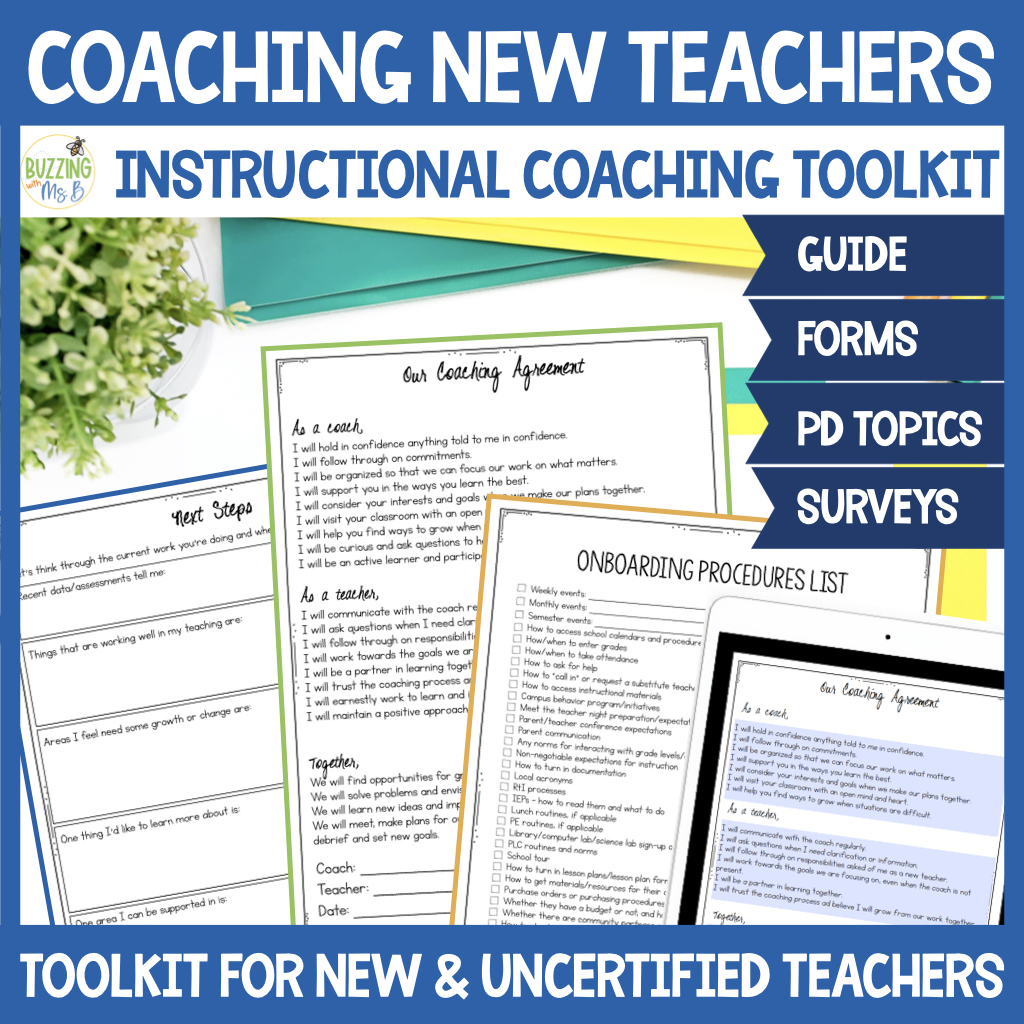
Have a plan for working with new and uncertified teachers with the Coaching New Teachers Toolkit!
It includes forms, templates, and everything you need to help your new and uncertified teachers! Figure out what support the need and provide PD and coaching with these resources. Grab the Coaching New Teachers Toolkit in my TpT Store!
⭐⭐⭐⭐⭐ “I support & coach new teachers and this resource is so valuable. I purchased it several months ago and often use tips you suggested when working with teachers. It is an essential section of my “Teacher Support Provider Binder” that I carry around with me everywhere.”
What Opportunities Exist to Build Knowledge When Coaching Individual Teachers?
Michelle and I discussed different ways instructional coaches can build teacher knowledge one-on-one. Of course, we talked about the power of coaching cycles, where so many opportunities for learning unfold naturally as students’ needs emerge and teachers see opportunities to grow.
The pre-conference is the perfect time to build knowledge, address misunderstandings, and develop a plan together. It gives coaches a chance to understand where a teacher is in the process, gauge what they already know, and identify what they may need next. This allows coaches to tailor their support and make the learning more meaningful and responsive to the teacher’s needs.
Another idea Michelle offered was seizing those little moments in the copy room or in the hallway with teachers. She tells us that being visible and having informal conversations with teachers often leads to bigger learning. It’s something I’ve talked about many times on the podcast because this is such a good one! I really hope you give it a try!
Being present in classrooms offers coaches another chance to build knowledge. Michelle explains that coaches can notice things teachers may not see themselves and name them, especially when they’re connected to a goal you’re working on together. Coaches can be that lens because it’s difficult for teachers to notice everything while they’re in the moment.
Modeling and peer visits are also powerful opportunities for building knowledge. Watching someone else teach a lesson can show teachers strategies to try and help them see what effective practice looks like in action. I think this is one of the most valuable learning tools we have, and one we don’t use nearly enough. And as Michelle points out, it’s FREE!

Be ready for anything with the Instructional Coaching Editable Binder Megapack!
It includes forms, templates, and everything you need to get organized for instructional coaching! Coach teachers and document your coaching work with these printable and editable tools. Grab the Instructional Coach Binder Megapack in my TpT Store!
Identifying Areas of Focus for PD Across the School
During the conversation, we talk about how to decide which knowledge areas to focus on for schoolwide PD. Michelle acknowledges the challenges and tells us it’s a bit like a chess game, trying to think several steps ahead.
She suggests using a deliberate, data-driven approach that draws on multiple sources of information. Rather than relying solely on students’ test scores, we should also consider anecdotal data, observations, and teacher reflections to gain a complete picture of their strengths and areas of need.
Michelle also highlights the importance of knowing what’s coming next and being prepared to have those conversations with teachers. She gives the example of hearing about the Science of Reading gaining traction in the UK and being prepared to support teachers when those ideas eventually made their way into our schools.
Developing a Three-Year PD Plan
Once we have the data, we need to examine it and identify a couple of focus areas in a stair-stepped way. For her school, she creates a three-year PD plan, so she knows her overarching goals and the direction she’s heading, while still allowing her to pivot and make adjustments as needed. She explains that having that “big picture” helps her keep her messaging cohesive and connected.
To develop the plan, Michelle looks at where the school is now, what’s missing, and what could help fill the gaps. From there, she picks a focus, honing in on one thing that can make a meaningful difference, and she stays true to it. Michelle gives teachers plenty of examples and different methods to try in the classroom. Instead of moving quickly from one topic to the next, she gives teachers time to really use the learning, refine their practice, and build confidence.
Michelle also explains that the leadership team must be aligned with the plan because it makes the work feel less confusing and more realistic for teachers. With a three-year plan, the team can regularly revisit it to reflect on where they are, where they’re going, and whether they need to make adjustments.
Her school has one overarching instructional goal and builds content knowledge alongside it. The focus is on pedagogy, helping teachers build the knowledge and skills they need to strengthen instruction, no matter what subject they teach.
I love the idea of a long-term plan because it gives the coach a roadmap while giving teachers multiple opportunities to engage with the content and deepen their understanding over time. As Michelle points out, “we can’t possibly expect to see it in action if we don’t really give teachers the time to try it and iterate on it and reflect on it.” She goes on to say it’s got to be focused and relevant. I couldn’t agree more!
Michelle says she knows it’s time to move on to the next topic when the practice is seen consistently in classrooms and becomes a natural part of the language used in planning. Only when there’s clear, widespread implementation does she shift her focus to the next instructional goal.
How to Build Teacher Knowledge
That was a really great conversation with Michelle, and I’m sure there’s something you can apply at your school today. My biggest takeaway is simple: don’t try to do everything at once. We often try to build knowledge across too many areas and then expect teachers to become proficient in everything immediately. It’s impossible! I love the idea of focusing on one thing for a while, giving teachers the time and support to really engage with it, and allowing it to make its way into classrooms in meaningful and lasting ways.
Topics and Questions Discussed in Episode 289 – How to Build Teacher Knowledge with Michelle Ruhe
- How to build teacher knowledge
- Types of teacher knowledge that coaches can build
- Opportunities for building knowledge with individual teachers
- Leveraging coaching cycles and informal interactions to build knowledge
- Pre-conferences, modeling, and co-teaching to boost knowledge
- Identifying PD needs across the school
- Using multiple sources of data in decision-making
- Developing a 3-year PD plan for your school and knowing when it’s time to move on to the next focus area
- The power of modeling and peer classroom visits to build teacher knowledge
About Michelle Ruhe
Michelle Ruhe works alongside K-5 teachers in classrooms every day, supporting literacy instruction through coaching and collaboration. She also partners with educators beyond her school through virtual coaching, helping teachers strengthen and streamline their reading and writing instruction.
Turning Insight Into Action: Practical Steps You Can Take After Listening
Here are simple actions you can take today:
1️⃣ Join the Instructional Coaching Club!
The Instructional Coaching Club is an online membership designed to help instructional coaches improve instruction at their schools. It gives coaches the tools to go out and do it.
2️⃣ Create a 3-Year Plan!
In this episode, Michelle explains how she developed her 3-Year Plan. After listening, have a conversation with your leadership team about giving it a try. Let me know how it goes in the Instructional Coaching with Ms. B Facebook group or on Instagram @buzzingwithmsb!
Ready to listen?
This post contains links to products from one or more of our advertisers. This means I may receive commissions for purchases made through links in this post when you click on links to those products. Thank you for your support!
Learn more
- Episode 154 – Instructional Coaching Schedules
- Buzzing with Ms. B on Instagram
- Join My Facebook Group: Instructional Coaching with Ms. B
- FREE First 20 Days of School Checklist
- Michelle Ruhe Website – Coach from the Couch
- Email Michelle Ruhe
- Michelle Ruhe’s Facebook Group – Literacy Lessons for Elementary Teachers
Helpful Resources
- Join the Instructional Coaching Club
- First 20 Days of Instructional Coaching Start Up Kit and Forms
- First 20 Days of Instructional Coaching Start Up Kit and Forms on TpT
- Instructional Coach Binder Megapack – Editable Forms, Calendars, Planning Tools
- Instructional Coaching Binder Megapack – Editable Forms, Documents & Tools on TpT
- Buzzing with Ms. B TpT Store
Listen on: Apple Podcasts, Spotify, or your favorite listening app
Thank you for listening to Buzzing with Ms. B: the Coaching Podcast. Want more coaching ideas
Check me out at buzzingwithmsb.com and on Instagram @buzzingwithmsb.
If you love the show, share it with a coach who would love it too, or leave me a review on iTunes! It’s free and it helps others find this show, too. Happy coaching!
Podcast produced by Fernie Ceniceros