Coaching Uncertified Teachers with Lindsay Deacon, ep. 275
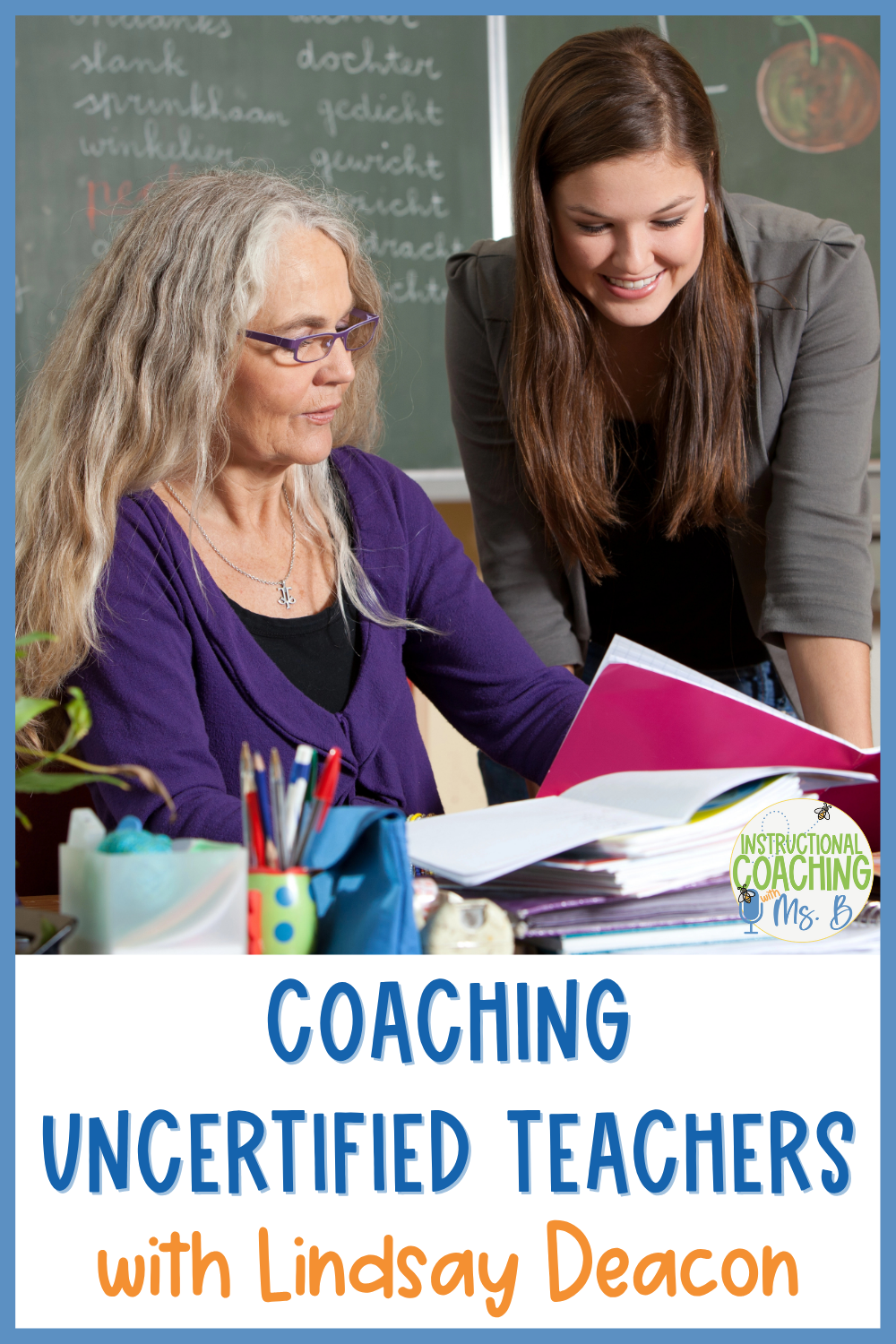
Today I’m sitting down with one of my favorite repeat guests, instructional leadership coach and author, Lindsay Deacon. She’s been doing extensive research into coaching uncertified teachers, and I have so many questions about this topic that I knew I had to have her on!
During the episode, Lindsay and I talk about the different paths uncertified teachers take to the classroom and why more schools are hiring them. She explains the specific needs these teachers have when they start out in their own classroom, based on the research.
She shares how instructional coaches can support uncertified teachers while also meeting the diverse needs of other staff members. Plus, Lindsay breaks down how schools and districts can support uncertified teachers.
Lindsay offers lots of research-based ideas for coaching uncertified teachers, and she gives us so much hope, too. Be sure to listen to the entire episode! Here are the highlights from Coaching Uncertified Teachers!
Uncertified Teachers Backgrounds
Lindsay has been coaching teachers who are new to the field and in alternative certification or uncertified programs. To begin, I asked her to tell us about the typical background of uncertified teachers.
Lindsay says when it comes to uncertified teachers, there isn’t a typical background. They have different levels of experience, and they’re all ages. Some of the teachers Lindsay mentors previously worked as a crime scene investigator, a Wendy’s manager, and in the LA film industry.
While there isn’t a typical background for uncertified teachers, Lindsay tells us that the data shows most people who went through traditional teacher prep programs and ended up in the field were white women. Alt-cert or uncertified programs have opened the door to a lot of people who didn’t have the privilege or opportunity before. This offers a wonderful opportunity to have teachers with different backgrounds in the classroom.
Why Are There More Uncertified Teachers in Classrooms These Days?
All across the country, we’re seeing more uncertified teachers in schools. Lindsay explains that the data has been warning of this for years. We knew we would have an aging teacher population who are retiring, combined with not enough new people going into the profession. Today, there’s a big gap between the teachers needed in classrooms and the ones available.
There’s an argument that we need warm bodies, but Lindsay says she likes to think of it in a more positive way. She highlights that many of the uncertified teachers coming to the profession are incredibly special people who have had other careers and experiences. We should honor that, rather than assume they don’t have experience.
As Lindsay and I discussed, even with degrees from a traditional teacher program, most of us had no idea what we were doing when we first walked into the classroom. It was trial by fire.
We may learn a lot of pedagogy and content in college, but we don’t really know what to do in an actual classroom. It’s the same for the uncertified teachers we’re coaching. As Lindsay said, we need to “normalize that we feel unprepared, regardless of how much training we get.”
What Do Uncertified Teachers Need When They First Start Out?
When you’re a student teacher, you have the opportunity to fail because the students are still engaged with a high-quality teacher in the classroom. When you’re an uncertified teacher starting out, the students are there in front of you every day, and that’s a lot of pressure.
So, what do uncertified teachers need to get started?
Lindsay says the research points to two specific areas of need:
The gap between having content expertise and teaching it effectively: Knowing something is not the same as breaking it down and teaching it to students. Lindsay compares it to being a skilled mechanic; they may be able to fix cars, but that doesn’t translate into being able to teach someone else how to do it.
Limited awareness of pedagogy: They don’t really understand the mechanics of teaching and the technical pieces that go into it.
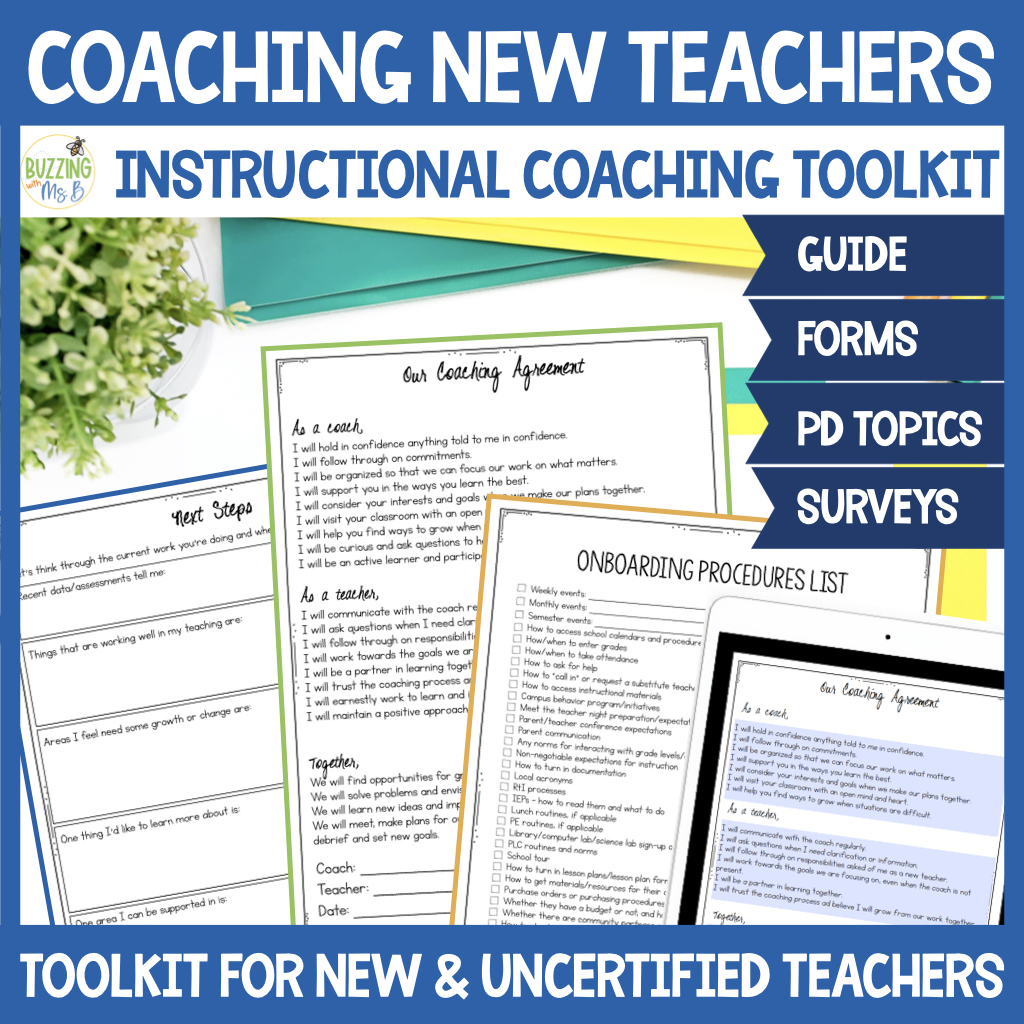
Have a plan for working with new and uncertified teachers with the Coaching New Teachers Toolkit!
It includes forms, templates, and everything you need to help your new and uncertified teachers! Figure out what support the need and provide PD and coaching with these resources. Grab the Coaching New Teachers Toolkit in my TpT Store!
⭐⭐⭐⭐⭐ “I support & coach new teachers and this resource is so valuable. I purchased it several months ago and often use tips you suggested when working with teachers. It is an essential section of my “Teacher Support Provider Binder” that I carry around with me everywhere.”
Coaching Uncertified Teachers
When I asked Lindsay how instructional coaches can support uncertified teachers with no experience in the classroom, she pointed out that people make a lot of assumptions about what these teachers actually need. They assume uncertified teachers mostly need help with the day-to-day logistics of teaching, things like entering attendance or requesting a sub. However, according to long-term research on uncertified and alternatively certified teachers, what really makes the biggest impact is rigorous, deep coaching that helps them understand pedagogy.
The question becomes: how do we support someone who is still building foundational teaching knowledge, while also ensuring we are supporting other staff members’ needs too?
Lindsay shares several ideas:
Provide structured opportunities for deeper learning
Offer intentional support that helps uncertified teachers understand the profession more deeply and connect teaching practices to student learning.
Separate day-to-day logistical support from coaching work
Research suggests a two-prong approach works best:
- A mentor who can help with day-to-day logistics and school procedures. Things like how to enter attendance or request a sub.
- An instructional coach who focuses on coaching work, including modeling, observation, and feedback.
Build relationships with teachers by being helpful
Lindsay says as an instructional coach, there’s a lot of value in taking on the helper’s role because that’s how we build relationships with teachers. We just need to be mindful of what the real purpose of coaching is, so we don’t get sucked into the helper role long term. That’s not going to help anybody; it’s the deeper coaching work that really makes an impact.
Modeling as a powerful coaching tool
Lindsay tells us that there is a lot of literature about the importance of teachers seeing effective instruction in practice. Modeling lessons and facilitating peer observations can help uncertified teachers better understand what strong teaching looks like in practice.
Helping teachers grow takes time
One important point Lindsay raises is the sense of urgency principals feel to see results quickly. But teaching is a sophisticated profession, and becoming a master teacher doesn’t happen overnight. As coaches, we have to balance supporting growth with being realistic and patient. There’s only so much anyone can absorb in one meeting, session, or day.
Role play with teachers
There’s a lot of value in modeling a practice or role-playing with teachers. Basically, it gives them the opportunity ahead of time to walk through the lesson before teaching it to students. Lindsay says that this may not seem like a big deal, but it’s a really impactful move coaches can make.
Be ready for anything with the Instructional Coaching Editable Binder Megapack!
It includes forms, templates, and everything you need to get organized for instructional coaching! Coach teachers and document your coaching work with these printable and editable tools. Grab the Instructional Coach Binder Megapack in my TpT Store!

How Schools and Districts Can Support Uncertified Teachers
Our final topic of the episode was what schools and districts can do to support uncertified teachers at the beginning of the year and throughout. Lindsay notes that while school systems know what needs to be done, most lack the capacity to do it.
The research points to the importance of providing uncertified teachers with plenty of structured time for formal, professional learning on pedagogy and assessments, along with direct work with a coach. This is a major time investment. Schools are hiring these folks because they need people in the classroom, and getting a sub is very challenging.
Lindsay recommends that leaders limit extracurricular activities or meetings that new teachers must engage in. If we want teachers to improve on the business of teaching, that needs to be the focus. It’s OK to swap a staff meeting for working with a coach.
Coaching Uncertified Teachers
Everybody brings something special to the classroom, including new uncertified teachers!
I really loved my conversation with Lindsay and the ideas she shared about coaching uncertified teachers. There was so much hope and many actionable tips,
Be sure to listen to the entire episode!
Topics and Questions Discussed in Episode 275 – Coaching Uncertified Teachers with Lindsay Deacon
- What research tells us about coaching uncertified teachers
- Backgrounds of uncertified teachers and pathways into the profession
- Why we’re seeing more uncertified teachers in classrooms
- Information about alternative certification and uncertified teacher programs
- Specific needs uncertified teachers have when they start teaching
- Coaching uncertified teachers while supporting other staff members with different needs
- The importance of modeling and seeing lessons in real classrooms
- The value of role-playing with teachers to practice lessons
- Ways schools and districts can support uncertified teachers
About Lindsay Deacon
Lindsay Deacon is an instructional leadership coach and the co-author of The EduCoach Survival Guide book series, committed to achieving real, lasting growth in educators at every level. She is based in Las Vegas, NV and regularly collaborates with top authors and researchers in the field, bringing cutting-edge coaching insights to the educators and organizations she serves.
Turning Insight Into Action: Practical Steps You Can Take After Listening
Here are simple actions you can take today:
1️⃣ Coaching New or Uncertified Teachers?
Helping a teacher get their classroom under control is a challenge. Get a FREE list of procedures and the proactive management strategies! It’s perfect for supporting a new teacher or an uncertified teacher! Enter your email below!
2️⃣ Join the Instructional Coaching Club
The Instructional Coaching Club is an online membership designed to help instructional coaches improve instruction at their schools. It gives coaches the tools to go out and do it.
Ready to listen?
This post contains links to products from one or more of our advertisers. This means I may receive commissions for purchases made through links in this post when you click on links to those products. Thank you for your support!
Learn more
- Episode116 – Problem Solving the Principal-Coach Relationship with EduCoach Survival Guide
- Episode 246 – How Do I Support All Classrooms with Instructional Coaching? with Lindsay Deacon
- Episode 273 – The First Step to Take When Coaching Resistant Teachers
- Episode 274 – Social Justice in the Classroom with Rachael Lucille
- Buzzing with Ms. B on Instagram
- Join My Facebook Group: Instructional Coaching with Ms. B
- Free First 20 Days of Coaching Checklist
- The EduCoach Survival Guide Website
- The EduCoach Survival Guide on Instagram @theeducoachsurvivalguide
Helpful Resources
- Join the Instructional Coaching Club
- Instructional Coach Binder Megapack – Editable Forms, Calendars, Planning Tools
- Instructional Coaching Binder Megapack – Editable Forms, Documents & Tools on TpT
- Buzzing with Ms. B TpT Store
- The Confident Literacy Coach
- Simply Coaching Summit
- Book: The EduCoach Survival Guide: Tips. Tools. Inspiration. And an occasional escape hatch. by Lindsay Deacon, Angela Scotto Harkness
- Book: The Presenter Survival Guide: Tips, tools, and a compass for leading adult learning without losing your way by Lindsay Deacon, Angela Scotto Harkness, Silke Spingies
Listen on: Apple Podcasts, Spotify, or your favorite listening app

Thank you for listening to Buzzing with Ms. B: the Coaching Podcast. Want more coaching ideas
Check me out at buzzingwithmsb.com and on Instagram @buzzingwithmsb.
If you love the show, share it with a coach who would love it too, or leave me a review on iTunes! It’s free and it helps others find this show, too. Happy coaching!
Podcast produced by Fernie Ceniceros