| |

Technology in Schools: The Good, the Bad, and the Ugly with Stephanie Howell, ep. 276
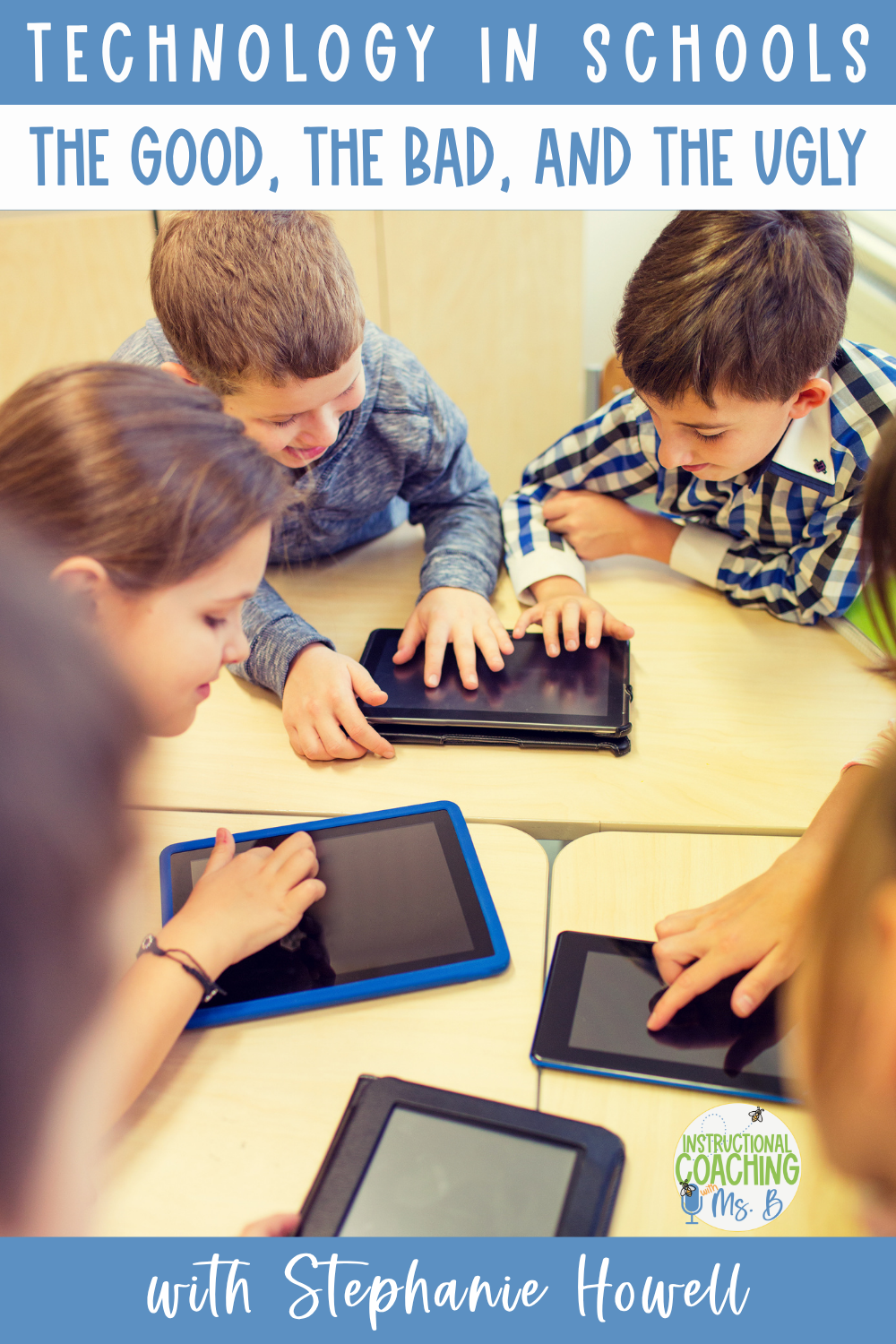
Kids in a classroom using tablets. This is written on the image, "Technology in Schools: The Good, the Bad, and the Ugly with Stephanie Howell".

Technology isn’t the problem; the real issue is how it’s used in schools!

Today, educational leader Stephanie Howell joins me for this episode, Technology in Schools: The Good, the Bad, and the Ugly! This is our last episode in the Hot Topics in Coaching series, and it’s a really great one!

We’re all spending a lot of time thinking about technology. Every day, there are stories about data leaks and AI in the news. We’re also hearing concerns from parents and educators about kids getting too much screen time.

As instructional coaches, it’s our job to figure out what appropriate use of technology looks like. Because honestly, friend, we’re just not there yet!


During the conversation, we dig into how schools use technology and what the research says about it. You’ll get ideas for how instructional coaches can help teachers build confidence in using technology and integrate it meaningfully into their teaching. Find out how technology can deepen learning and help students bring out their creative side.

There is a lot about how schools use technology that I don’t love, but there are ways to use it purposefully. Listen to the full episode to learn more!

Below are the highlights!

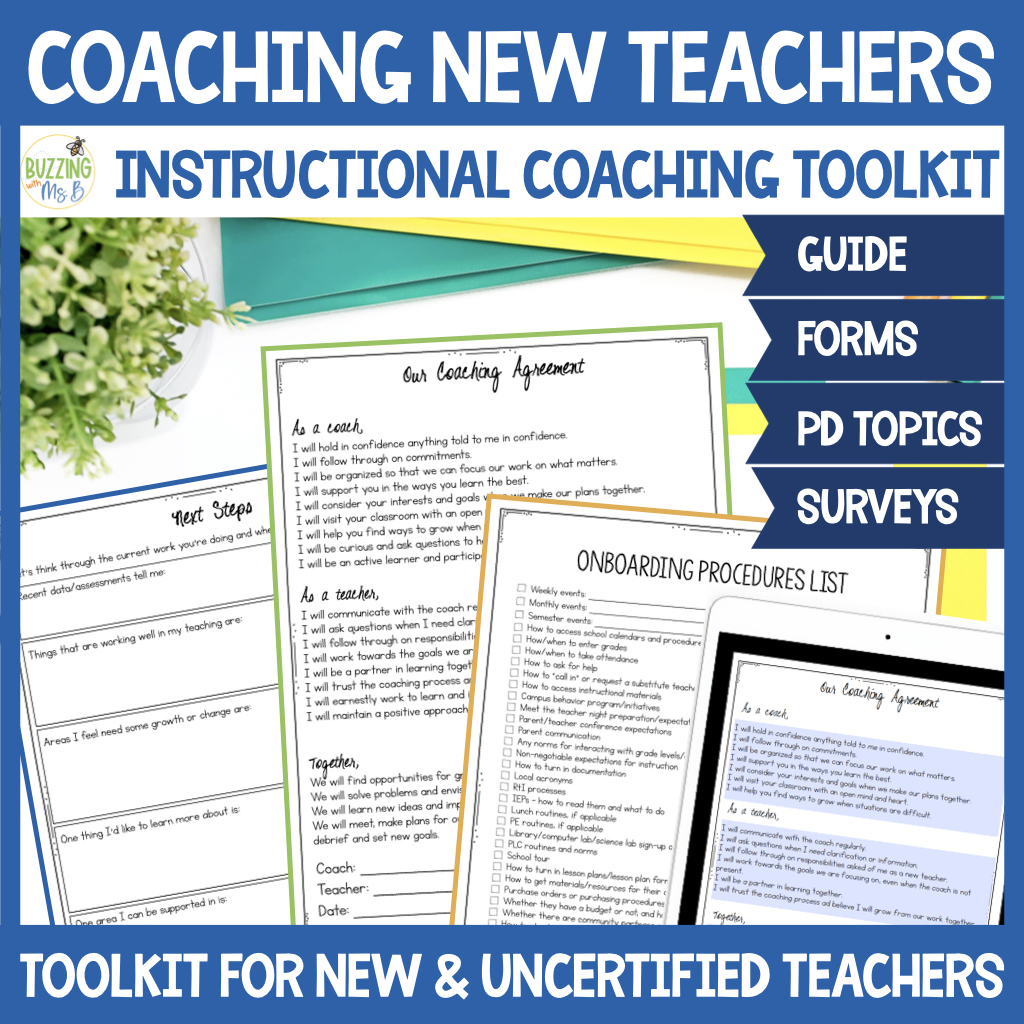
Have a plan for working with new and uncertified teachers with the Coaching New Teachers Toolkit!

It includes forms, templates, and everything you need to help your new and uncertified teachers! Figure out what support the need and provide PD and coaching with these resources. Grab the Coaching New Teachers Toolkit in my TpT Store!

⭐⭐⭐⭐⭐ “I support & coach new teachers and this resource is so valuable. I purchased it several months ago and often use tips you suggested when working with teachers. It is an essential section of my “Teacher Support Provider Binder” that I carry around with me everywhere.”
Research on the Use of Technology in Schools

To kick things off, I ask Stephanie to share what the research is showing about extensive technology use in schools. She points out that technology itself isn’t the issue. Instead, it’s the passive, unfocused, and sometimes excessive use that we’re seeing in many classrooms.

Stephanie tells us that when she coaches, she sees schools use programs where students have to be on tech tools for 45 or 90 minutes per week. That’s a lot of time on technology. Worse, when students aren’t able to meet these requirements during class time, they have to miss recess or don’t receive a reward.

The first piece of research Stephanie highlights emphasizes the importance of focusing on learning outcomes. She explains that technology in classrooms is sometimes used only for basic recall activities, such as vocabulary skills. The issue is that there might not be much critical or higher-level thinking.

Another issue Stephanie brings up is parents’ concerns about technology. There are many parent groups advocating for less screen time. She says this is why we’ve got to be aware of how we’re using technology, and I wholeheartedly agree! For many, sticking a kid in front of a computer or giving them a tablet has become a go-to habit.

Here are some questions Stephanie offers that we can ask to become more thoughtful about technology use:

  • Are we using it for passive learning?
  • Are we using it to create strong instructional design and active learners?
  • Do we have clear goals when implementing it?

During the episode, we also talk about how technology has changed over time. In the past, putting a worksheet on an iPad may have seemed engaging, but today’s students are surrounded by technology, so activities like that no longer feel exciting or novel.

We also discuss how technology misses one of the most important parts of the learning experience: relationships. We learn through relationships. Technology is kind of a solo endeavor. If you really want kids to talk, you might need to get them off the screen!

Be ready for anything with the Instructional Coaching Editable Binder Megapack!

It includes forms, templates, and everything you need to get organized for instructional coaching! Coach teachers and document your coaching work with these printable and editable tools. Grab the Instructional Coach Binder Megapack in my TpT Store!

Supporting Teachers in Integrating Technology Meaningfully and Purposefully

Technology is the medium. It’s the vehicle that gets us to where kids want to go. It’s not the end game. The point isn’t to put them on technology, and that’s the destination. We don’t want our use of technology to become extreme.

So what are the best practices to keep front and center when supporting teachers in integrating technology meaningfully and purposefully?

Start with a Learning Goal

During the discussion, Stephanie says we need to focus first on the learning goal. It’s easy to get caught up in the bells and whistles of a new tech tool, but we actually need to start with the instructional purpose at the center.

Some questions we can consider are:

  • What do my students need to know?
  • What barriers are there?
  • How can it deepen that learning?

Help Teachers Become More Confident with Technology

I mentioned to Stephanie that I was recently having a conversation with a parent about iPad use in their home. The parent didn’t want to limit the time too much because she wanted her child to be comfortable with technology. But the truth is, kids today are steeped in technology; they can’t be uncomfortable that they haven’t used it enough. Plus, these days it’s so intuitive!

Stephanie explains that students are highly adaptable when it comes to technology and are quick to learn how to use it. Often, teachers are more afraid to use technology than the students.

Reflection

Stephanie tells us how there are small shifts we can make to really support teachers, so they don’t feel like technology tools are one more thing! She says reflection is huge when it comes to instructional strategies. Often, teachers run out of time for reflection, but it’s a really great way to make that tech learning sticky for students.

Be ready for anything with the Instructional Coaching Editable Binder Megapack!

It includes forms, templates, and everything you need to get organized for instructional coaching! Coach teachers and document your coaching work with these printable and editable tools. Grab the Instructional Coach Binder Megapack in my TpT Store!

The Blended Learning or Station Rotation Model

In this model, the students are not on the computer for the entire class period. Instead, there are usually four stations.

1️⃣ Teacher small group station – students are working with the teacher

2️⃣ Digital content – where the student may be on the computer

3️⃣ 4 C’s project-based activity – students are talking, collaborating, and working together on an activity

4️⃣ Independent practice – this is usually offline for students to practice what they’ve been learning

Getting Assistance from AI

One thing Stephanie loves is when teachers can use compliant AI resources to help create their small groups. You can put student resources, data, and information in and ask AI to help you create groups from it. For many teachers, the time and brain power they spend on creating small groups can be challenging. AI can make it faster and easier.

Using Technology to Deepen the Learning

There are multiple ways to use technology to deepen students’ learning. Here are Stephanie’s top suggestions:

  • Use interactive AI spaces: Students interact with AI in these spaces and receive feedback. This supports metacognition and reflection. It can make the students  go deeper depending on how the teacher sets up the prompting. Teachers can also use dashboards to view and track student data.
  • Have students get creative: Students can explore tools like Canva, Google Slides, or Adobe. They can create infographics, podcasts, and videos, too!

Technology in Schools: The Good, the Bad, and the Ugly

There’s a wide range of uses for technology in the classroom, but just sticking a kid on a program is not effective. As Stephanie puts it, we must think about how we can use technology tools for higher-level learning, not as a babysitter.

It’s not about passively watching a video. We need to teach students how they can press pause and take notes or drop questions. This builds metacognition support and helps them take ownership of their learning. Plus, they have evidence from their notes and are making connections.

This episode is packed full of information you can start using today. Listen now!

Topics and Questions Discussed in Episode 276 – Technology in Schools: The Good, the Bad, and the Ugly with Stephanie Howell

  • Technology in schools: the good, the bad, and the ugly
  • What the research is telling us about extensive technology in schools
  • How to support teachers in integrating technology purposefully
  • Helping teachers become more comfortable with technology
  • The importance of reflection for making learning sticky
  • The blended learning or station rotation model with technology
  • Using AI to create student groups
  • How to use technology to deepen learning
  • Ideas for implementing interactive spaces where students interact with AI
  • Getting creative with technology

About Stephanie Howell
Stephanie Howell is an education leader, speaker, and education strategist who helps schools use AI and technology in practical, human-centered ways that support personalized learning, executive functioning, and accessibility. A former classroom teacher and instructional technology coach, she is passionate about helping educators create engaging learning experiences while keeping strong instruction and student connection at the center.

Turning Insight Into Action: Practical Steps You Can Take After Listening

Here are simple actions you can take today:

1️⃣ Try One Strategy to Support Your Teachers’ Use of Technology

During the episode, Stephanie gives us plenty of ideas for how to use technology in schools. Pick one and give it a try!

2️⃣ Join the Instructional Coaching Club

The Instructional Coaching Club is an online membership designed to help instructional coaches improve instruction at their schools. It gives coaches the tools to go out and do it.

Ready to listen?

  • Ready to listen? You can listen below with the media player, or search for Buzzing with MS. B: The Coaching Podcast anywhere you listen to podcasts!

This post contains links to products from one or more of our advertisers. This means I may receive commissions for purchases made through links in this post when you click on links to those products. Thank you for your support!

Learn more

Helpful Resources


Listen on: Apple Podcasts, Spotify, or your favorite listening app


Thank you for listening to Buzzing with Ms. B: the Coaching Podcast. Want more coaching ideas

Check me out at buzzingwithmsb.com and on Instagram @buzzingwithmsb.

If you love the show, share it with a coach who would love it too, or leave me a review on iTunes! It’s free and it helps others find this show, too. Happy coaching!

Podcast produced by Fernie Ceniceros
Technology in Schools: The Good, the Bad, and the Ugly with Stephanie Howell, ep. 276, Instructional Coaching with Ms. B Podcast

Chrissy (00:01.243)
Thank you so much for being here, Stephanie.

Stephanie Howell (00:03.746)
Yeah, thanks for having me.

Chrissy (00:06.117)
So I am really excited to have this conversation today because it’s something I’ve been thinking about a lot and I feel like it’s definitely coming up in the zeitgeist as far as coaches being concerned and parents and schools really doing some rethinking about the way that they have used technology over time and kind of settled into these patterns. So can you share a little bit about what research is showing about extensive technology use, especially in schools that we need to be aware of as instructional leaders?

Stephanie Howell (00:34.414)
Yeah, and I think also to point out like sometimes technology itself isn’t the problem, but it’s the passive, unfocused, and sometimes excessive use that maybe we’re seeing in classrooms. When I have been coaching, like there are certain programs where like students have to be on for 45 minutes a week or 90 minutes a week. And that is a lot of time on technology. And also if they don’t do it, I mean, I’ve seen teachers, even myself, I’m like, well, they’ve got to stay in for

recess they’re not going out for extra recess or to get this reward so we’re going to use that as like a motivator right but that always doesn’t sometimes work so I think some of the research that we’re kind of seeing is the research behind technology when it comes to learning outcomes there was some research that I was recently looking at and it was talking about how when it comes to technology sometimes we’re using it for basic recall there’s some technology

tools where you’re able to go in and students are just recalling vocabulary knowledge. There might not be a lot of critical thinking or higher level thinking happening in those certain tools. And also I think what parents are concerned about, there’s a lot of parent groups right now advocating for less screen time. And when it comes to that, I think what they’re seeing is those 90, 45 minutes of being on that I was kind of seeing in my own classroom or with my own teachers that I’m coaching.

And so again, we got to think about how are we using technology because it’s not the problem. It’s how we’re using it as maybe for that passive learning. Are we using it to create strong instructional design, active learners? Do we have clear goals around it even as well when we’re implementing it?

Chrissy (02:23.471)
Yeah, I feel like what we’re missing is some of the thoughtfulness around using technology. Like you’re saying, we’re just, it’s become sort of like a go-to or a habit. You know, I’ve worked with schools where the principal had to keep telling teachers, not put kids on a program for tutoring. If they are with you for tutoring, that is not going to meet the needs that they have. You need to differentiate to meet those needs during tutoring. And so like we see things like in primary classrooms,

I asked a primary student the other day what the teacher had read aloud the day before. And they told me the name of the book, but then they said, but she doesn’t read it. It’s always like they just play the video of somebody else reading it. And so where’s the read aloud? Doesn’t even look like a read aloud. If the teacher is using that as like, I’m gonna play this and then I’m gonna go straighten up my desk. Now does that sometimes happen? Sure. But if that’s like every single day, then we’re not getting the benefit out of a read aloud. We know that.

Stephanie Howell (03:06.958)
you

Chrissy (03:19.589)
that like infants, for example, they do not learn language from a screen. And so whenever we have parents who are putting small children on screens in the hopes that they will like advance their academics or their language, that’s not how they learn. We learn through relationship. And so I feel like we’ve kind of lost the thoughtfulness in terms of how are we using these as tools instead of like, this is our main curriculum. And like you mentioned, those, have to use these programs with fidelity, which I have very little patience for those.

Half the time they don’t even really line up with what the kid needs even though they’re well they they’re reactive they’re responsive to the kid okay, but it’s still not the same as a highly trained teacher who’s looking at that child and seeing what they’re doing in the moment and so you have these children clickety clicking through these lessons and then you know I remember once as a instructional coach I had a Teacher who I was supposed to tell her that she needed to have her kids on these programs more and I said What is it that you’re doing?

you know, what are the kids doing instead? And she said, I’m meeting with them in a small group. And I was like, I’m never going to tell you to put them on a program instead of meeting with them in a small group. Not going to do that, you know?

Stephanie Howell (04:25.741)
Yeah. And it’s funny too because I’ve walked into classrooms and kids are watching a video, right? They don’t even have their headphones in. Like you’re not even engaging with them.

Chrissy (04:38.981)
We’re not even pretending anymore, guys.

Stephanie Howell (04:41.387)
Like you’re just hitting play, it’s muted. Sometimes they’re like on another tab playing games while they should be watching that video. But again, it’s all about how we use technology and there are some powerful ways. But then again, if you just have a worksheet, it’s still a worksheet on a screen, right? Like some of those activities. so technology, it can really amplify great teaching, but it’s not gonna replace it. Like you said, like small group teaching, the relationship, that teacher.

Chrissy (04:48.259)
Yes. Yeah.

Chrissy (05:01.329)
Sure, that’s right.

Stephanie Howell (05:11.311)
technology can never replace that.

Chrissy (05:14.085)
Yeah, yeah, know, like you’re saying, I think that people used to feel like technology was so novel that just putting a worksheet on an iPad felt like something more engaging, right? And that may have flown for a short time because kids did not have that, but now they are inundated with it and the technology is actually, it’s signaling something to that child that it’s not like a big deal or it’s not.

I don’t know, there’s something that is being signaled to, like my friend who’s a high school teacher, they had so much of their stuff, all of their curriculum was virtual online, was all like watch a video, do this Google forum, all of this. And he said, just felt like kids were like, it was like they were turning off to everything outside of that screen. And so he said he dumped it all and went to paper pencil. He didn’t change a single thing. Same questions, but on paper. And the engagement went up.

Stephanie Howell (06:08.812)
Yeah.

Chrissy (06:09.327)
And that was so interesting to me. makes total sense, you know, really, because technology is kind of a solo, you know, endeavor. And so if you want your kids to talk, you might need to take them off of the screen, right?

Stephanie Howell (06:18.219)
Yeah.

Stephanie Howell (06:22.903)
Yeah, first order.

Chrissy (06:24.911)
So then as coaches support teachers in integrating technology meaningfully and purposefully, what are some of the best practices or the values that we want to keep front and center?

Stephanie Howell (06:34.829)
Yeah, I think some of the things that I did wrong as a coach starting out my first couple years as I started with the tool, right? I’m like, oh, look at this tool. This is how you can use it. It’s shiny. It’s beautiful. And I wasn’t starting with that learning goal. Is our learning goal to give feedback? Is our learning goal focused on student creation? Is it for them to research, practice writing? And so focusing first on that learning goal is so much more important than that tool that I was like,

Chrissy (06:44.72)
Yeah.

Chrissy (06:48.069)
Yes.

Stephanie Howell (07:04.845)
Look at this!

so pretty, right? And it took me a few years to get out of that, right? Of like, actually, I need to start with that instructional purpose at the center. And I need to consider some questions like what do my students need to know? What barriers are there, right? Technology can support that universal design for learning, right? So many of our students need different accommodations to be successful and have that level playing field in the classroom. And I also think like how can technology deepen

Chrissy (07:07.067)
Yeah.

Stephanie Howell (07:35.475)
that learning. Where like a piece of paper because sometimes technology can give students feedback. Where when you’re teaching and sometimes you have 25-30 students in your class, I can’t, I mean I could run around everyone and keep prompting them deeper and deeper. But now with technology there’s certain programs where it can do that for me and prompt students to really think deeper. So again I got it wrong and so hopefully you learned from me that it’s not about the tool but it’s

about those learning goals that you can really start with.

Chrissy (08:08.785)
Mm-hmm, yes, if we’re thinking about, the point is of the technology is the medium, it’s the interface or it’s the vehicle that gets us to where we want kids to go. It’s not the end game. The point isn’t to put them on the technology and that’s the destination. And I feel like that’s, it’s become, I think it’s teachers responsibilities are mounting and they’re expected to do more and more and more. It has become a way that teachers can say, I don’t have to be in charge of the learning for this 30 minutes.

somebody else can handle it, you know? But then you have situations like, it becomes so extreme. A second grader I was talking to about what they were reading, and she says, well, we can only read books that are on Epic. And they have independent reading time. She’s like, I can’t read, like, I have a book that I have from home that I’m reading, but I can’t read that here. And I said, well, did you ask the teacher? And she said, well, no. I said, well, so she might say yes, but just everybody’s reading on Epic. So the child is assuming that’s all I can do.

Stephanie Howell (09:02.307)
Yeah.

Chrissy (09:06.383)
You know, and so that’s not really purposeful, right? Epic was supposed to broaden reading options, not minimize them, like limit them. And then something that that I have a question about is, OK, so I was having a parent with a conversation with a parent and they were talking about iPad use in their home and they were saying, you know, I don’t want to limit it too much because I want my kids to be comfortable with technology. And my

instinctive reaction of that is they are never these children cannot be uncomfortable with technology. They are steeped in it. It’s not like I could I could like literally have exploded a computer when I was a kid. You know, like I could have deleted everything and it would have been just an expensive brick. You know what I mean? They can’t do that. They cannot delete the hard drive. They cannot like put in like the wrong code or put in the wrong, you know, DOS command and ruin the entire thing.

It’s they’re not learning how to do what like this is my I guess my question is are we thinking about kids engaging in technology because they will learn how to use these as tools because I feel like if we’re just putting them on an iPad that’s not they’re not learning about how to use a tool necessarily because they’re so intuitive so then they can’t really like troubleshoot you know and I get I don’t want to be like comparing like a you know elder millennial or is any or whatever but we

we had to troubleshoot and figure things out when things went wrong and there’s really only a few couple of things that can go wrong, you know? And I think that helped us be more comfortable with technology because we figured out how to get ourselves out of mess.

Stephanie Howell (10:42.53)
Yeah, yeah. And I think, too, I mean, a lot of times I feel like sometimes teachers are a little bit more afraid to use technology than the kids. Like, kids, I mean, I was like on my phone and my son’s like scrolling and he’s like three. And I’m like, how do you know how do that? how do we know? And then he’s like, go

Chrissy (10:58.127)
Yes. They’re like, shoom, shoom, shoom, shoom, shoom, Like, they don’t even think twice.

Stephanie Howell (11:04.526)
see that picture and I’m like how do you know how to go back like what? So sometimes I think our students are really adaptive to technology and learning about how to use it. I think sometimes

Chrissy (11:11.985)
Yes.

Stephanie Howell (11:19.68)
You have those teachers though that are really afraid like, what if this happens? What if that happens? Like there’s just so much on the teacher’s plate that we’re being told, right? Like we have to personalize learning. We have to differentiate. We have to support classroom management. We have to support accessibility. These students are five grade levels behind. These two are two grade levels behind. These ones are ahead of grade level. Like there’s just so much wide range in a classroom that I think technology can help with it, but just putting them on a

program is not effective in my opinion. But I think there’s small shifts that we can do to really support teachers in not thinking it’s one more thing, to really support in high impact ways.

Chrissy (12:04.187)
Can you share a little bit about those small shifts?

Stephanie Howell (12:06.435)
Yeah, so when I think about how we can support teachers with technology, a couple of different ways is with reflection is huge when it comes to instructional strategies. And I feel like a lot of times we run out of time for reflection. We’re like, the bell’s ringing. we got to switch. we got to do this. But reflection is such a great way to make that learning just sticky for students. And so having that part of that piece can be really great.

Chrissy (12:23.515)
Yeah.

Stephanie Howell (12:36.369)
that love is when teachers use blended learning or like a station rotation model. So it’s not they’re on the computer is the entire 45 minute class period or if you have 90 minutes or however long your class period is. But there’s usually four stations. One of them is that teacher small group station. One of them is a digital content. So that is where the students might be on the computer. There’s usually like a four C’s project based type of activity where students are

talking, collaborating, working together on some type of activity, and then an independent practice, which again, is usually offline for the students to practice what they’ve been learning. And what I love is like when teachers can use, especially with AI now, can, depending again, use FERPA, COPA compliant resources, but I can take my students resources and data and information and say, help me create small groups out of this information. I remember sitting there and like,

having like a big board of my whiteboard, I’m like, okay, who’s gonna be in which group? these personalities don’t get along. this person can’t be with this person. I need to see this person first. This person I can see last because they’re gonna be able to do the independent practice. If I don’t see this kid and he doesn’t go to the independent practice next, then we’re gonna have issues, right? And it was like a whole thing that I had to like map out. And it took a lot of time. And so I think sometimes teachers go away from station rotation because it takes so much time.

Chrissy (13:40.229)
Yes.

Chrissy (13:46.129)
Mm-hmm.

Chrissy (13:58.865)
Right.

Stephanie Howell (14:06.095)
like figuring out your groups and figuring out little pieces there where I think AI as a teacher side can kind of help you look for those patterns, look through that data, help you even with if you’re doing writing conferences, it can help you pull out conversations to have with your students. I had, you know, a teacher that had over 159 kids in junior high. I can’t see those patterns of, this kid mistransitioned words on these five paragraphs, but AI can pick that stuff up. And so

I think that can be sometimes helpful for a teacher if you’re able to really look into that. But having that kind of station where again, they’re not on it the entire time, but they’re on it for certain pieces. So maybe it’s 10 minutes out of your 45 minutes. Maybe it’s 10 minutes out of the 90 minute block. Maybe it is 20 minutes here or there. Maybe they are working on a project, but you only have one person on there. Like that’s the student’s role of they’re there on the computer while everybody else is talking, collaborating together on that activity.

So I think there’s multiple different ways that you can use technology to really deepen students learning. So you can use, I really love using interactive spaces where students can interact with AI because they’re able to get feedback. It’s pushing metacognition. It’s pushing reflection. It’s pushing students to go deeper depending on how the teacher set up that prompting. And then typically there’s like a mission control or data dashboard where they can see

Chrissy (15:06.897)
Mm-hmm.

Stephanie Howell (15:36.058)
all of their students’ You can also have your students get really creative with like Canva, Google Slides. They can dive into Adobe. So depending on maybe what your school has adapted, your students can create infographics, podcasts, videos, which are going to prepare them for the real world, right, when they go out and start to think about, maybe I want to go into this career. Well, I’ve got to know how to communicate. I’ve got to know how to deliver a message. So depending on the tools that are available in

your district, you know, thinking about how can I use those for higher level instead of just, okay, you’re going to be babysat by this, by this tool for a minute. think also, you know, students can watch videos, but it’s all about not just passively watching it. It’s teaching them how can I use a piece of paper, take notes, pause the video. If I have questions, drop those questions down and building that metacognition to support students and not just putting them on a video, but

Chrissy (16:22.192)
Right.

Chrissy (16:27.665)
Right.

Stephanie Howell (16:35.621)
really using it in a whole new way where you’re making them take ownership of their learning and they’re having that evidence from their notes and jotting it down and then pausing the video making those connections.

Chrissy (16:49.285)
Yeah, I love that. You know what I’m hearing is a little bit of thinking, helping teachers think about whether the technology use is the input and what like the actual direct instruction that kids are getting or whether it’s like their output and how they’re processing their learning and creating something. Because there are different reasons to do both things through technology, but we have to be really thoughtful about it. So if we are using a video for instruction, for example, and maybe it’s for everybody.

We as a teacher have to designate places where we’re going to chunks, you know, cut it into little chunks, pause the video, have the dialogue, have kids do the strategy or whatever it is that we’re asking them to do, and then move on to the next part. We have to set the stage at the beginning by having the discussion or by doing the pre-teaching or whatever it is that we’re, you set a purpose for viewing. It’s just like you’re reading a book. You’re using this as a tool to convey the information, but you don’t just read a book and go, okay, now you know everything there is to know. It’s just…

Stephanie Howell (17:38.564)
Yeah.

Chrissy (17:45.649)
You still use your strategy.

Stephanie Howell (17:47.482)
Yeah, and like I was just on a field trip today with my son and in the library and we went to like the library for reptile day and she just set it up in a way. She didn’t just read the book. She had these like stuffed animals and she’s like, what is this? You know, to all these kindergartners, what is this? And it’s like setting it up and getting that prior knowledge built. The kids are so much more excited to listen to that book and we can’t just throw them on technology. We have to teach them how to watch a video. We have to teach them how.

Chrissy (18:15.109)
Yes.

Chrissy (18:43.078)
Right.

Chrissy (18:47.557)
Yes. I mean, I think that part of the issue is that teachers might look at a four-year-old, see that they’re zipping around on the iPad like you mentioned earlier, you know, and they’re like, well, they know how to do these things, but it’s not the same thing at all. And that is very, I think sometimes we feel like, well, they should know how to do these things, especially as they get older. If they knew how to do it, they would probably be doing it. Either they don’t know how to do it or they don’t know that you expect them to do it. So either way, you have to directly teach that.

And I think that because it’s become kind of like a catch-all, like, well, I’ll just stick them on this, or I’ll just play the video from whatever curriculum, you the next video. It’s become like a tool we fall back on instead of one that we’re purposely like preparing for.

Chrissy (19:33.755)
Yes.

Chrissy (19:45.041)
And I think that that’s a point because I think that we’re not even, if you think about PLC meetings or PD around this, do teachers have the time to play with the technology for one and to be comfortable with it because we do know, yes, teachers are from the generation, some of them, where they could blow up the computer. They’re just trying to play TAPs and they blow up the computer. so they, I mean, it’s just a very different perspective. And so if…

That’s who is trying to teach our kids about technology. Well, they really need time to become comfortable. And then they need to do some thinking about how am I going to roll this out? Not just where is it going to go, but how am I going to instruct kids about it? And this is where I’m thinking about the work that Nicole is doing. I know you’re working with Nicole Turner. That the work that she is doing around strategy instruction and really having a sequential process through which we

You know, have teachers practice things and make bridges to the classroom so that they’re not just completely like, here’s a new thing you should be doing, now go do it, right? We’re missing all these links in the chain when we do that. And so if we can build that into the process through which teachers are actually learning about technology and applying it to their lessons, then they can have opportunities to practice the verbiage and say, this is what I’m going to say to kids. This is where I’m going to pause the video. This is a strategy I’m going to use while they’re doing this. This is how I’m going to manage my rotations or whatever.

All those things are decisions teachers have to make, but we don’t always give them the time to figure it out.

Chrissy (21:18.705)
Yes, I’m actually, I’m publishing with them with ASC, DISDE, and I’m going to the conference in Orlando this summer. Oh, yay, you’ll be there.

Chrissy (21:40.784)
Yes.

Chrissy (22:02.32)
Right.

Chrissy (22:41.425)
Mm-hmm.

Chrissy (22:45.873)
True, yeah, yeah, that’s a good point. And I love that thinking about bringing in those standards into the ways that we work with our teachers, even if you’re not a technology coach specifically, it can have value because it can shape the work that you do. Any good coach is going to be, and it takes time to get comfortable with that role, right, to be the partner where we’re learning alongside teachers and trying things out and looking more like inquiry and what would happen if we do this. At first, I think it’s very common to, in our classrooms, we’re the like,

We have to have the answer because nobody’s coming to save you, right? So then you move into coaching and you’re like, how can I have all, it’s impossible to have all these answers and you just feel really deficient. And the truth is that’s never supposed to be our job, even though sometimes we’re introduced that way. Like here’s the expert and they’re gonna tell you everything you need to know, right? It’s just terrible. So it’s a horrible feeling. But yeah, once we can get our head around that, that we are like.

We are a work in progress as well and we are learning alongside. That can definitely change the work that we do with our teachers. So thank you so much for sharing all this. How can people keep learning from you if they want to learn more?

Chrissy (24:12.881)
Perfect, thank you so much.

Chrissy (00:01.585)
So do you have any thoughts about how some, seems like kids are so comfortable with technology at home. use it all the time.

Stephanie (00:44.55)
I think you’re muted. Hold on. was like trying to, I was like, I didn’t want to interrupt you in case it was my end, but yeah. Okay. Now I’m like, why can’t I hear you?

Chrissy (00:47.841)
sorry, that’s weird. yeah. Whoa, yeah.

Chrissy (00:55.067)
Okay, let’s try again. Okay, so what are some of the the assumptions that we might be making about kids and technology because you know, for example, my daughter is in second grade. She had to do a project recently and she had to do it at home and then take it they sent home a science fair board. It was just like a research project about science fair about Siamese cats, which is I recently found out she could have chosen any topic in the world and she picked like kids are picking all these like the bubonic plague and she picked Siamese cats because she’s obsessed with cats. So

Stephanie (00:56.546)
Okay.

Chrissy (01:23.543)
she is able to access on my laptop because that’s like the computer we have, she was able to access, you know, word processing document and she’s able to hunt and peck. But you know, we used to be, I was taught typing skills in school, for example, you know, I was taught, like I had a class in middle school where, and I was not expected in elementary to be able to type, right? They didn’t expect me to be able to type until after they taught me how to type. And I was taught how, like, what’s the difference between RAM and ROM? And we had tests.

on technology, which is so funny. Nowadays it’s so ubiquitous, what, like, how are we addressing these foundational skills? Are we, are we missing the boat? Are kids like, are we expecting that kids know how to do stuff? Cause they can zip around on an iPad or their mom’s phone.

Stephanie (02:09.25)
Yeah, I think there’s definitely that expectation. I know with my kids too, right? I have a three year old and a six year old and my three year old, he’ll just grab my phone and start scrolling. And we were looking at an image and I like kept scrolling and he was like, go back. And I’m like, you know, I’m just keep scrolling. And he takes his finger and he goes back and I’m like, how do you know how to do this? Right? Like, how do you know how to do this? And I think we see that. We see that speed. We see them getting on. We see them being quick.

Chrissy (02:29.135)
Yes, his little baby finger, they know how

Stephanie (02:39.866)
because they are problem solvers. And we assume that sometimes they know how to maybe use or learn with technology and that’s not always the case. I know I saw a lot of different teachers when we were trying to implement station rotation in the classroom and we would have four stations. One would be the teacher station, one would be a student station maybe watching a video, another would be like independent practice, practicing that skill.

and then maybe like a group work activity. And there might be computers at that group work activity, but there’s definitely computers at the digital content station where you’re watching that video or whatever the students are doing. And I walked over one class period and I was like, what is the video about? The kid had his headphone out, it was playing, but he couldn’t hear the video. And so I just wonder like, how many times do we teach kids how to take notes while watching a video? How to…

be invested, how to ask questions that we might not know. And so for in that moment, it was really eye-opening to me, like, yes, my three-year-old knows how to scroll, but do they know how to pause and actually use these tools for instructional meaning? Because if we just hit play and we’re not actually listening, you’re missing half the video, right? Like you might be able to speak up on visuals. And then also like if they are working on a group project,

Chrissy (03:57.692)
Yes.

Stephanie (04:03.478)
I mean, sometimes I’ll see kids, like everybody’s computer is open and maybe we just need one person. That’s their job is to take notes or to design the slide deck or to create the resource while everybody else is talking because we still need those communication skills too as humans and to teach our students that as well.

Chrissy (04:21.851)
Yes, yeah, such a good point. think that with like state testing now being online in so many places, which I am 100 % against by the way, I think it really is shaping the way that kids interact with technology at schools. It’s like they’re expected to know how to do all the things without having been taught how to do all the things. I mean, it’s no different. We have to teach a child to start writing on a piece of paper by the red line, right? Or I’ll say just start in the middle, but you know, for whatever reason.

That’s what they do and that’s something I’m still working on with my second grader who would much rather start in the middle. And I just don’t understand, like it’s kind of like, come on, they have to be explicitly taught like in any other thing. If you want them to do it a certain way, you got to teach them how to do it that way. And I wonder how much of that is like teacher comfort with technology as well. Like are they a little bit uncomfortable in terms of…

Well, they know how to do it better than I do. Like I’ve been in classrooms where the kid was like the media manager and they would like plug all the stuff in and the teacher was kind of like a little iffy about it. how can we actually support teachers in becoming better at using technology and we’re comfortable in that?

Stephanie (05:26.83)
I think it starts with professional learning. So when we are doing sessions, I mean, I’m even guilty of it where I’ve done whole group, you’re gonna listen to me for 45 an hour long session. And I think we have to get them exploring as a student. So if we are exploring new technology, hey, you get on, you try, add that, you talk to a partner.

use those strategies so teachers can see it in action where they’re kind of that adult student learning about new strategies or even if you’re talking about state testing, right? Like get the teachers actually into the programs so that they feel comfortable. I think that comes though with some safety as well of like psychological safety because a lot of times it’s nerve wracking to try something new in front of your peers.

Right. And I just know a lot of teachers are like, no, Stephanie’s going to make us do something. Like I’ve had people say, like, I can’t attend your session because I’ve got so many emails and I know you’re going to make us do stuff. Like I know you’re going to make me an active learner. And I think that’s hard for teachers to realize like, I’m not going to sit and get, I actually have to do. But I think that’s where the professional learning becomes more relevant and more valuable is when they are that active. Hey, we’re going to try this new tech tool and see how it goes.

I’m gonna be able to see all of your feedback. And so then you’re modeling how you’re using that data, how you’re using the ideas and thoughts that are coming in from those students. And it’s not just a get on the computer, do this activity, but it’s actually a part of the learning process supporting each stage that makes learning great.

Chrissy (07:07.121)
Yes, that makes so much sense. I think something that you’ve done some work around are the ISTE standards. And I would love for you to share a little bit about that because those are a great place to start. I also know you’re gonna go to ISTE this summer, right? And I will be there too. So I’m looking forward to that. I’ve never been and it’s just because I’m publishing with ASCD ISTE. And so then they were like, you should apply to go to the conference. So I’m really excited to see how it goes.

But can you talk a little bit about the IST standards and what that can look like whenever we roll this out with teachers?

Stephanie (07:38.946)
Yeah, there are standards for technology. So ISTE, ISTE, it stands for International Technology Resources for Educators. And there’s a whole website that’s free that you can use. There’s different parts that might require some payment. But with the ISTE standards, you are able to really start to see how technology can transform learning. So it focuses in on

student ownership, student agency. There’s a lot of different areas. There’s even standards for coaches, tech directors, administrators. And so it goes from teachers, coaches. And like, that was really helpful for me when I was first starting coaching, because I was like, I don’t really know what resources to even dive into. And so as going through those ISTE standards, there’s a certification course where you really start to dive in and build a portfolio of how you use the ISTE standards in practice.

And so one of the standards that really stick out to me is one where I thought I had to be the expert as the tech coach. I had to know everything. I had to know every tool, every strategy, everything. I felt like I had to be the owner of all of the knowledge, right? And so teachers would sit down with me and they’re like, hey, I was on social media the other day, or I was talking to this teacher and they’re using this tool. And I’m like, if I didn’t know it, I was like, uh-oh, I have to learn it. Or if they said it in an email, I’m like,

I’m meeting with them tomorrow and I have to learn this tool. Okay, so I’m gonna work late at night tonight, right? Like I would do kind of all-nighters learning tech tools or learning strategies or resources. And the standard that really stuck out to me is that we don’t have to be the expert. We can sit right next to a teacher and we can use our think aloud. We can talk through the tool, talk through the strategy, whatever they want to kind of dive into. They’re hearing our brain for the first time kind of see.

Chrissy (09:25.255)
Yeah.

Stephanie (09:33.71)
Hey, what do you think this does? What do you think that does? And so I started to model that in my coaching. And I think it made teachers realize that they don’t have to be the experts in front of their students either. They can go and be like, hey, you know, let’s what do you guys think this button does over here? What do you think if we click over here and we can start to create that environment where it’s OK to not know and not be the expert and to really rely on the community and rely on that like, OK, what do you guys think? You know, using questioning to

prompt and to drive that inquiry of, okay, what do think this does?

Chrissy (10:08.411)
that because you you’re modeling that that phase where you’re kind of uncomfortable and you don’t really know what’s going on which is normal for any technology if you like it’s not they’re not all you know structured the same way they have different interfaces and you have to play with it to figure it out but I think teachers feel like if they don’t get it right away some teachers you know if they don’t get it right away then they that’s not for them and I think that if you can model that for a teacher say look I’m just clicking around I’m not gonna blow anything up it’s gonna be okay

then they can feel like, maybe I’m allowed to do that. I am allowed to explore things without knowing what’s going on. It’s more like inquiry, you know, rather than so many teachers feel like they have to have the dog and pony show to work with their coach or their principal. So I think that’s a great way to approach that. And it’s also the standard that you mentioned, what a good way for a coach, like so many coaches are like, I don’t know how I’m supposed to evaluate my work.

What a great place to start if you’re needing to demonstrate some kind of strength to teachers, or to principals about what you’ve done and kind of justify your work that you’ve done. That’s a good place to look.

Stephanie (11:11.65)
Yeah, we made our coaching rubric based off of those ISTE standards. So feel free to reach out if you’re wanting to see what that copy looked like. We’d love to share it with anybody that’s interested, but it was really helpful because again, like we were like, how do we show our worth? How do we advocate for the work that we’re doing? And so having that rubric, having those standards really helped share the good things and advocate for our position.

Chrissy (11:19.802)
Awesome.

Chrissy (11:35.643)
That is perfect. Well, so if people do want to reach out to you, where can they do that and where can they follow you to keep learning from you?

Stephanie (11:41.612)
Yeah, I’m on all of the social medias, so feel free to reach out to me at misshow24. I would love to connect and just chat a little bit more. We can always hop on a video call or just email back and forth or just chat through direct messages.

Chrissy (11:56.079)
Awesome, thank you so much for being here today.

Stephanie (11:58.328)
Yeah, thanks for having me.

Share:

Similar Posts

Leave a Reply

Your email address will not be published. Required fields are marked *