| |

Coaching Through the Seasons, ep. 260
Open planner. These words are at the bottom "Coaching Through the Seasons"

Welcome to season seven of Instructional Coaching with Ms. B! We’re kicking things off with an episode about coaching through the seasons. When I look back at my photos from my first couple of years as an instructional coach, I noticed there were some big differences in my work depending on the month.

In August, there are new materials and tidy spaces. You can see even in the pictures how much time I invested in teacher learning and preparing to work with teachers.

Mid-year, my photos look a bit different. They’re focusing on family literacy nights and working with PLC teams. Lots of my photos from this time of year are preparing for team meetings and introducing new content.

By May, there’s a complete shift. I’m supporting kids in small groups, doing lots of work in classrooms, and helping with intervention.

The picture is clear! Coaching looks different at various times of the year! We are responsive to our school’s needs, and while some things are ongoing, many of those needs shift, and priorities change as we move through the school year.

So how can we coach through the seasons and feel good about it?

In this episode, I share three things to think about to help you coach through the school year. Let’s take a look at each one!

Teacher Morale Changes Throughout the Year

New teachers go through the teaching roller coaster! They start out super excited, and they end up very quickly in survival mode and disillusionment. And while that roller coaster is pretty extreme, I’d say veteran teachers go through these cycles too, with every new year. Especially if they start with a lot of hope! Then reality sets in, and they’re like I’m running out of energy, and it’s only October!

Being a coach means keeping that in mind. Morale looks different depending on the time of year, and we should prepare to be responsive to that.

Teaching is Seasonal – The Content and Strategies Need to Look Different

The second thing we need to think about is that teaching is seasonal. When I left the classroom to become a coach, I could still feel the tug when the seasons changed. When I started seeing back-to-school supply lists and bins of bright new crayons at the store, I felt like I should be stocking up on materials, new books, and decor for my room.

In the fall, I would try out new things with kids, digging into interesting content and doing tons of hands-on work.

After winter break, the tide turns towards test prep. Teachers are really working with those small groups and figuring out where they need support. Some are starting to panic when they look at their data. They’re thinking about review and how to spiral while still having so much content to teach.

When spring comes, and the sun is warm, things change again. Even as a coach, my brain turned to all the fun things we could do now that testing was out of the way. As a coach, I didn’t really get to do those things, but the season told me I should be doing them as a teacher.

Teaching is seasonal, and what’s happening in classrooms changes over the year. If we’re really going to support teachers, we need to recognize the changing seasons and what teachers need from us.

One thing you can do now to help you in the future is to start recording notes about the kinds of support and questions you are asked about each month. Then, look for patterns. From there, you can build a proactive plan for the next year, keeping your main focus front and center while addressing needs with timely training and resources. I include the tools to do this in my Year Long Instructional Coaching Planner, which you can learn more about and get at buzzingwithmsb.com/planner.

Keep Your Priorities…But Be Flexible

As an instructional coach, you want to keep your priorities front and center but be flexible. You want to build in small steps even when things feel chaotic.

So what can that look like?

You are going to want to identify your big three for the year. These are the big three things you will accomplish, essentially goals, that will positively affect teaching and learning at your school. From there, you’ll break them down into steps over each semester and month.

As you plan your week, look at those three things for the month and think about how you can work towards them, even in a small way. Sometimes the steps we take are very small, and it feels like there’s little progress. There are months  where slow progress is huge because you’re going to be pulled in so many different directions. Just keep moving towards the goal!

Coaching Through the Seasons

Those are the three things that I want you to think about as you move through the school year and you coach through the seasons.

1️⃣ Understand that teacher morale changes throughout the year.

2️⃣ Recognize that teaching is seasonal. Content and strategies need to look different depending on the month.

3️⃣ Build in small steps towards your priorities, even in the midst of chaos.

Listen to the full episode to hear everything I cover!
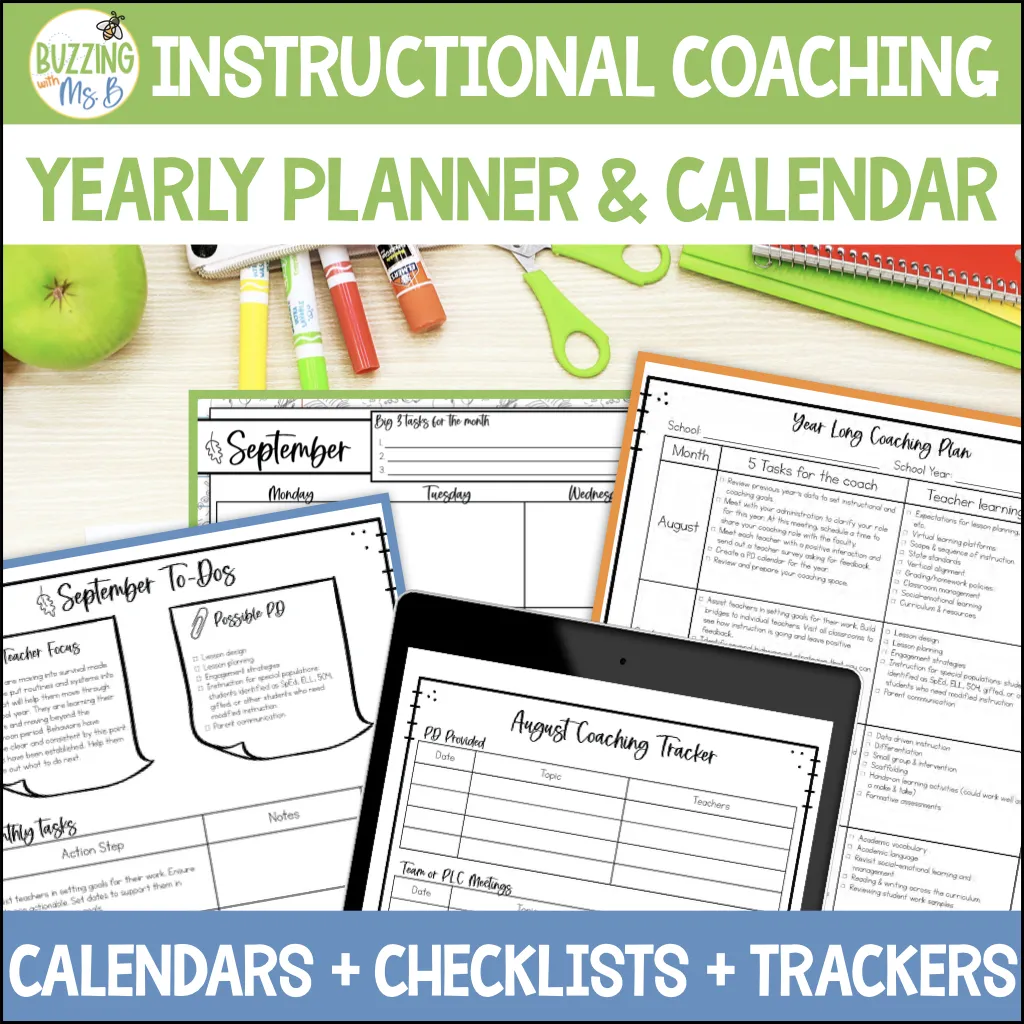
If you’re looking for resources that’ll help you do this, please check out the Year Long Instructional Coaching Planner at buzzingwithmsb.com/planner. It’ll walk you through everything you need to make a monthly plan for coaching, set up your coaching calendar, document your work, and reflect for the next month. It gives you PD ideas and topics, depending on the month. You’ll set goals, use them to plan your big three tasks, and you can follow the coaching checklist to make sure you’re doing what needs to be done each month of the year.


Topics and Questions Discussed in Episode 260 – Coaching Through the Seasons

  • Coaching through the seasons: How coaching changes throughout the school year
  • Understanding seasonal changes in teacher morale
  • How the seasons of teaching shape coaching needs and support
  • Strategies and tips for coaching through the seasons
  • Tips for documenting patterns and planning proactive PD
  • Creating and sticking with your “big three” priorities
  • Building in small steps, even when things feel chaotic

Ready to listen?

  • Ready to listen? You can listen below with the media player, or search for Buzzing with MS. B: The Coaching Podcast anywhere you listen to podcasts!

This post contains links to products from one or more of our advertisers. This means I may receive commissions for purchases made through links in this post when you click on links to those products. Thank you for your support!

Learn more

Helpful Resources


Listen on: Apple Podcasts, Spotify, or your favorite listening app

Thank you for listening to Buzzing with Ms. B: the Coaching Podcast. Want more coaching ideas

Check me out at buzzingwithmsb.com and on Instagram @buzzingwithmsb.

If you love the show, share it with a coach who would love it too, or leave me a review on iTunes! It’s free and it helps others find this show, too. Happy coaching!

Podcast produced by Fernie Ceniceros

Coaching Through the Seasons, ep. 260, Instructional Coaching with Ms. B Podcast

Chrissy Beltran[00:00:00]:

Hey, coach, and welcome to episode two sixty of instructional coaching with Ms. B. Today, we are talking about coaching through the seasons. This episode is the season seven kickoff episode. And if you’ve been with me over the years, I think you should know that I’m gonna make a couple of adjustments to the podcast based on some feedback that I got. You know, every year, I send out my podcast survey and coaches submit their thoughts and their feedback, so it helps me plan a really good season. And while I personally love a long podcast episode, I’m talking talk for an hour and a half about the topic because I’ll I’ll listen to all of it. And there are tons of long episodes you can go back to and listen to from the first seasons. I had so many people say that they really like ten to fifteen minute episodes that give them something actionable that will fit into their commute. So they’re driving to work and they wanna get all the info they need in fifteen minutes, so they go door to door. And I totally get that. We’re gonna really focus on that this year. Episodes where I’m chatting to the wind, which is just by myself, will be no more than fifteen minutes, and I’m gonna really try to keep guest episodes to twenty minutes. So wish me luck. I love to chat, especially with a wonderful guest, so so it’s gonna be a challenge for me, but we’re gonna do it. We’re gonna kick off season seven with some lighter episodes that I think you will love that will help you navigate some of the big ideas of coaching and add some tools to your toolbox. One free course that will really help you with what we’re talking about today is the action plan mini course. So while you’re responsible for PDs, PLCs, and individual coaching, it can be really easy to fall into a reactive mode. And instead of reacting to every situation, we wanna have a school wide coaching plan that’ll shift you from reacting to problems into intentionally leading instructional change. So with that clear plan in place, you can stay focused on your goals, you can make faster coaching decisions, you can align your PD, your PLC meetings, and your coaching conversations, and you can show administrators visible evidence of your impact. All of this really reduces the overwhelm that you feel as a coach. So in this free mini course, I will walk you through creating a three tiered coaching plan that will support your entire school. And it won’t add more to your plate. It’ll actually really help you focus. So you’ll map it all out with me in the little course. And if you go to buzzingwithmissb.com/actionplan, you can grab it for free. Okay. So let’s dig in to coaching through the seasons. When I look back at my photos from my first couple of years

Chrissy Beltran[00:02:17]:

as a coach, the thing that really stands out is how different a photo from my work in August looks from maybe December or April or May. In August, there’s all these, like, tidy spaces and new and exciting materials. I have a new haircut. I invest did I invested, and you can see it in the pictures, so much time in teacher learning and in preparing for work with teachers. Right? And then midyear, my my photos look a little different. They start focusing on, like, our family literacy night and working with the PLC teams. Lots of photos are preparing for team meetings and what we’re doing in those meetings. Working in classrooms alongside teachers and introducing new content and strategies to what teachers are already doing. And then in May, it’s a complete shift. April and May, it’s like tons of supporting kids in small groups, lots of work in classrooms, but supporting kids, not as much the teacher. I mean, teacher, you know, because I’m present, but, also intervention, you know, working with kids who have have needed to retake the state test. And so it really shifts. The picture is clear. So whether this looks like your coaching year or not, I’m sure you’re gonna agree that coaching looks different at different times of year, and sometimes that can feel really frustrating. It can feel like I’m supposed to know what I’m doing, and if I’m doing something different all the time, how can I be sure that it’s right? And the other question that I got in the coaching survey was, how can I get good at anything when I’m asked to be a jack of all trades and my job looks different every day? And then the last thing I want you to think about is how can I know for sure I’m spending time in the right way when my choices are limited to what my school needs at that moment? Right? You don’t always get to choose what you’d spend your time on. The truth is what a coach does is going to change over the year. We’re responsive to our school’s needs and while some things are ongoing, many of those needs shift and priorities change as we move through the school year. So how can we coach through the seasons and feel good about it? I’m gonna give you a couple of ideas, three things to think about that are gonna help you as you coach through the school year. The first one is that if you consider new teachers specifically, they go through that teaching roller coaster. Right? We’ve all probably seen that graph where they start out, like, super excited and then they end up very quickly in survival mode and disillusionment, and then they start rising up again. And while that roller coaster is pretty extreme for a new teacher, I mean, that’s just what we go through whenever we’re just starting, and I venture to

Chrissy Beltran[00:04:39]:

say coaching is a little bit like that too. I would say that veteran teachers go through these cycles too with every new year. Right? They start the year with a lot of hope. And then, you know, the reality sets in and we’re like, oh, I’m already running out of energy and it’s only, you know, October. So being a coach means keeping all that in mind. Morale looks different at different times of year and we should prepare for that as well as be responsive to that. We have to know that it’s gonna look different, and then we have to respond to what we see our teachers going through at different times of the year. The second thing I want you to think about is that teaching is seasonal. When I left the classroom to become a coach, I could still feel the tug when seasons changed, and you probably can feel it too. When the weather was hot and I started seeing back to school supply lists and bins of, like, new crayons and scissors and notebooks at the store, I felt like I should be stocking up on materials, getting new books, you know, setting up new decor for my room. Maybe I’d rearrange it, making a map for my classroom. And in the fall, I would try out new things with kids, digging into interesting content and doing tons of hands on work. And then after winter break, the tide turns towards test prep. Right? So teachers are really working with those small groups and figuring out where they need the support. Some are starting to panic when they look at their data. They’re thinking about review and how to spiral while having so much content that they still have left to teach. When spring is underway and the sun is warm and mild, things change again. I start my brain, even as a coach, started to turn to all the fun things that we could do now that we have that darn test out of the way. And as a coach, you don’t get to do those things, but the season told me I should be doing them as a teacher. Teaching is seasonal, and what’s happening in classrooms changes over time because of the school calendar. So because of that, if we’re really going to support teachers, we have to keep our heads in the game of the changing seasons and know what they need from us. One thing that you can do now to help you in the future is to start recording notes about the kinds of support and questions you are asked about in each month and notice some patterns. From there, you can build a proactive plan for support for the next year, keeping your main focus front and center, but balancing those opportunities to provide proactive training or resources that address those regular concerns that come up every October when you have to look at data, that

Chrissy Beltran[00:06:56]:

come up every August when you’re accessing the the curriculum, that come up every April whenever teachers have questions about test administration. I include resources to do this in my year long instructional coaching planner and you can learn more about it and grab it at buzzywithmissb.com/planner. The third thing that I really want you to keep in mind as we coach through the seasons is keep your priorities your priorities, but be flexible. So that kinda sounds like an, you know, oxymoron but or paradox, but let’s talk about what that can look like. You wanna identify your big three for the year. These are the big three things that you will accomplish, and they’re goals, essentially, that will positively affect teaching and learning at your school. And from there, you wanna break them down into steps over each semester and month. So you’re taking your big goal and you’re chunking it and saying if this is where I wanna get by the end of the school year or by the end of semester, this is how I’m going to accomplish that this month. These are the steps I’m gonna take to get towards that goal. As you plan your week, which I really recommend that you make time for every Friday or at some point, but I did Fridays after school because I could, like, take a second because teachers weren’t generally harassing me at that time. They were, like, on their way home so I could sit at my desk and figure out what was happening in my life. I would take a look at those three things for the month, and I would think about how I could work towards them. And I want you to do that. Think about how you can move towards those goals even in a small way. Sometimes the steps that we take are very small, and it feels like there’s very little progress. But there are months, December, April, and May, right, where slow progress is actually a big deal because you’re gonna be pulled in so many different directions, and slow progress is my probably what’s reasonable to expect, so why set unreasonable expectations? Just keep moving towards that goal. So those are the big three things that I want you to think about as you move through the school year and you coach through the seasons. One, understand that teacher morale is different at different times of the year. Two, recognize that teaching is seasonal and that content and strategy needs look different at different times of the year. And three, build in small steps towards your priorities even when everything feels chaotic. If you’re looking for resources that’ll help you do this, please check out the year long instructional coaching planner at buzzingwithmissb.com/planner. It’ll walk you through everything you need to make a monthly plan for coaching, set up your coaching calendar, document the work you do, and reflect for next month. It gives you PD ideas

Chrissy Beltran[00:09:17]:

and topics that your teachers are gonna like depending on the month of the school year. You’ll set goals. You’ll use them to plan your big three tasks, and you can follow the coaching checklist to make sure you’re doing what needs to be done each month of the year. Next week, we are talking about my favorite coaching goals I’m sorry, goals. I don’t know why. My favorite coaching books. I can’t wait to share these titles with you. I get asked about this a lot, and so it’s finally time to, like, solidify this into a podcast episode and into a blog post that you can access. And, of course, my favorite books will probably change over time. Right? But I’ve got, like, six of them that I’m really excited to share with you, and I cannot wait for next week. So definitely check that out. In the meantime, happy coaching!

Share:

Similar Posts

Leave a Reply

Your email address will not be published. Required fields are marked *